East Williston's Older Homes Don't Leave Room for Half-Measures
When your basement floods, the clock starts immediately. We respond 24/7 with the full licensing stack — mold, asbestos, lead, and general contracting — that East Williston’s historic housing stock actually demands.
I needed a professional consultation explanation of procedure for safe removal of Asbestos in my apartment complex. Without having an account yet, I was very impressed with the caring, knowledgeable and generous advice offered by Jessica, and will look forward to doing business in the future. Thank you so much! I feel much more informed about a sometimes scary endeavor. Peace. Nancy Silva Mineola, NY.
Mia Munoz
Used this company to clean up some water flood in my house. They were fast and easy to work with.very professional, Would recommend to anyone!
Nini Valle
Great company, had a flood and they responded quickly and efficiently. Billed my insurance company directly. I highly recommend this company!
joe colapietro, jr
I had pipe freeze in my basement right before a snow storm and they made to within an hour to help start the clean up process. They we by our side throughout the entire process and even helped with the insurance company. They did such a great job with the cleanup, repair, remidiation, I contracted them to perform the repairs and finishes in the basement. They came with enough manpower and material to get the job done. Leo and Jessica were nothing but a pleasure to deal with!!
Cristian Arredondo c
I had some water damage in my home and Green Island was able to take care of my issue quickly and effectively. I am very pleased with the work they did. They responded quickly and were very professional.
Michael M
Outstanding service! From the office to the field crew everyone was friendly, helpful and responsive. I highly recommend Green Island Group.
A flooded basement in East Williston is not the same as a flooded basement anywhere else on Long Island. A significant portion of homes here — particularly in the Wheatley Ridge neighborhood, which was developed in the 1930s on the former Will Rogers estate — were built decades before modern building materials became standard. That means when water gets in and remediation work begins, there’s a real chance asbestos floor tiles, lead paint, or aging pipe insulation are part of the picture. Most water damage companies operating in Nassau County are not licensed to handle any of that. The outcome of hiring one of them isn’t just incomplete work — it’s potential liability that lands on you.
When the job is done right, what you get back is a dry, documented, fully restored basement — and the confidence that nothing was missed. No hidden moisture sitting inside a wall cavity waiting to grow mold. No disturbed hazardous material left unaddressed. No permit violations from structural work done without a Nassau County General Contractor license. For a home in East Williston — where median sale prices regularly clear seven figures and inventory turns over in days — protecting that asset completely is the only outcome worth paying for.
The 72-hour window matters here more than most people realize. East Williston’s older colonial and cottage-style homes have wood framing, plaster walls, and older insulation — exactly the organic material mold needs to establish itself. After 72 hours, the scope of the problem changes. What starts as a water extraction job becomes a mold remediation project. Getting the right team in fast, with commercial-grade drying equipment and moisture monitoring, is what keeps this a cleanup instead of a full remediation.
We hold a credential stack that is genuinely uncommon in the Nassau County restoration market: NYS DOL Mold License, NYS DOL Asbestos License, USEPA Lead and RRP certifications, IICRC Water Damage certification, and a Nassau County General Contractor license — all in-house. That matters because a basement flood in an older East Williston home rarely involves just one issue. Water, mold risk, potential hazardous materials, and structural rebuilding are often part of the same job. Having one company that can legally handle all of it means you’re not coordinating three separate contractors or discovering mid-project that your restoration company can’t finish what they started.
We serve Nassau County as a core service territory — not as an afterthought. From Wheatley Ridge colonials to homes in the Village Historic District, the conditions here are familiar: older foundations, aging drainage infrastructure, and a housing stock that rewards careful, licensed work over fast and cheap. Customers in East Williston consistently describe the experience from the first phone call through the final walkthrough as professional, clear, and trustworthy — and in a village of roughly 850 homes where word travels fast, that reputation is built one job at a time.
Basement Flooding Remediation Process East Williston
From Standing Water to Dry Walls — Here's the Full Picture
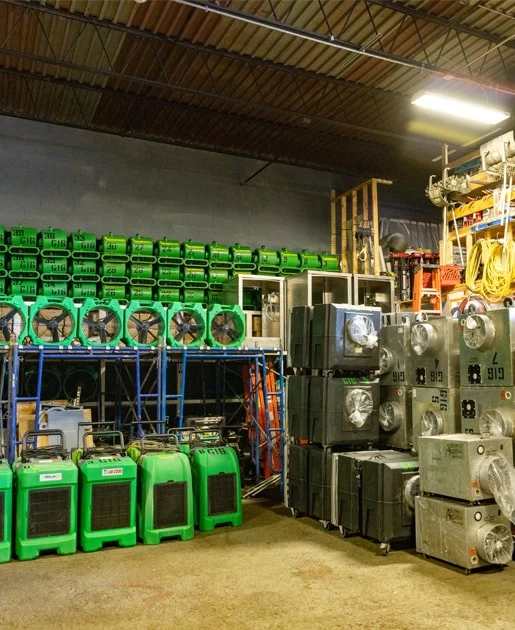
The first call triggers an immediate response. We’re available around the clock — because basement flooding in East Williston doesn’t wait for business hours. Whether it’s a Nor’easter pushing water through an older foundation on a Tuesday night or a burst pipe in January, the response starts the moment you call. A crew is dispatched with industrial extraction equipment, commercial air movers, and dehumidifiers — not the box-fan setup that leaves hidden moisture behind.
Once water is extracted, the assessment phase begins. Moisture meters and thermal imaging identify exactly where water has traveled — inside wall cavities, under flooring, behind older plaster. This step matters especially in East Williston’s older homes, where water doesn’t always stay where you can see it. If the assessment turns up indicators of asbestos-containing materials or lead paint — common in pre-1978 construction — we’re already licensed to handle it. No project pause, no second contractor, no gap in accountability.
Structural drying runs until moisture readings confirm the space is fully dry — not just surface dry. If reconstruction is needed — drywall, framing, flooring — we pull the required permits through the Village of East Williston under our Nassau County GC license and complete the work in-house. The job isn’t done until the basement is restored, documented, and ready for an insurance review if needed.
Flooded Basement Cleaning Services East Williston NY
The Full Scope of What This Service Actually Covers
Flooded basement cleanup isn’t one thing — it’s a sequence of connected steps, and cutting any of them short is where problems develop later. Our process covers water extraction, structural drying, moisture monitoring, mold assessment, hazardous material handling where applicable, and full reconstruction — all under one license and one point of contact. For East Williston homeowners, that last part is particularly relevant. The Village of East Williston has its own building department and permit requirements. Any structural work done without the proper Nassau County General Contractor license isn’t just sloppy — it can create permit violations that surface at resale and complicate insurance claims.
The type of water involved determines the scope of the cleanup. A clean-water event from a burst pipe is a different job than a sewage backup or storm flooding that carries contaminants into the space. Sewage backup is a confirmed cause of basement flooding in East Williston, and it requires full biohazard decontamination — not just extraction and drying. We’re equipped and licensed for all three water categories, including Category 3 black water events that most general restoration companies are not set up to handle safely.
Insurance documentation is part of the service. We help homeowners build the paper trail that supports a clean claim — damage documentation, moisture readings, scope of work records — so you’re not left navigating that process alone after an already stressful event. Whether your coverage falls under homeowners insurance or a separate flood policy, having organized, professional documentation from a licensed contractor makes a real difference in how smoothly that process goes.
Does flooding happen often in East Williston, and what usually causes it?
Yes — flooding is a documented, recurring problem in East Williston. Local waterproofing and restoration providers with dedicated service pages for the village confirm it directly. The causes are a combination of factors that are specific to this area: heavy rainfall from Nor’easters, tropical storms, and summer thunderstorm events that saturate the ground faster than older drainage infrastructure can handle; sump pump failures during extended power outages; poor grading around older foundations; and sewage overflow during high-volume rain events.
The August 2024 flash flooding event is a recent example — Long Island experienced record rainfall on August 18–19, 2024, causing widespread basement flooding across Nassau County and triggering state emergency home repair assistance for affected homeowners. East Williston’s older housing stock, with its aging foundation systems and clay-heavy North Shore soils that limit ground absorption, makes the village particularly susceptible to these events. Spring snowmelt combined with heavy rain is another recurring driver that East Williston homeowners deal with year after year.
How quickly does mold start growing after a basement floods in my home?
The EPA advises that cleanup begin within 24 to 48 hours of a flooding event. The restoration industry’s operative threshold is 72 hours — if a basement is fully dried within that window, mold growth is unlikely. After 72 hours, mold can begin establishing in organic materials, and the scope of the job changes significantly from a cleanup to a remediation.
For East Williston specifically, this timeline is more critical than it might be in newer construction. The older colonial and cottage-style homes that make up most of the village’s approximately 850 homes — particularly in the Wheatley Ridge neighborhood — have wood framing, plaster walls, and older insulation that provide exactly the organic material mold needs to take hold. Hidden moisture inside wall cavities or under flooring that isn’t identified and dried properly is what turns a manageable cleanup into a larger, more expensive problem weeks later. This is why moisture monitoring with actual equipment — not a visual check — is a non-negotiable part of the process.
My East Williston home was built in the 1950s — does that change what's involved in the cleanup?
It does, and it’s an important question. Homes built before 1978 — which includes a significant portion of East Williston’s housing stock, particularly in the Wheatley Ridge neighborhood developed in the 1930s — may contain asbestos-containing materials and lead-based paint. In a basement setting, that commonly means asbestos floor tiles, asbestos pipe insulation, and lead paint on walls or trim.
When a basement floods and remediation work begins — pulling up wet flooring, tearing out damaged drywall, demolishing affected materials — those hazardous materials can be disturbed. Under EPA and New York State regulations, disturbing asbestos requires a NYS DOL Asbestos Handler License, and disturbing lead paint in a pre-1978 home requires compliance with the USEPA Lead-Safe Work Practices under the RRP Rule. Most water damage restoration companies operating in Nassau County do not hold these licenses. We hold both, which means the full scope of an older East Williston home’s basement cleanup — including any hazardous material handling — can be completed without stopping the project or bringing in a separate contractor.
Will my homeowners insurance cover flooded basement cleanup in New York?
It depends on what caused the flooding, and this is one of the most common points of confusion homeowners face after a basement flood. Standard homeowners insurance policies in New York typically cover sudden, accidental water damage events — a burst pipe, a failed water heater, an appliance overflow. They generally do not cover flooding caused by natural events like storm surge, groundwater intrusion, or surface water from heavy rain. That type of flooding requires a separate flood insurance policy, typically through FEMA’s National Flood Insurance Program.
Many East Williston homeowners discover this distinction for the first time after a flooding event, which is why documentation matters so much from the start. If your event was caused by a burst pipe or a sewage backup, your homeowners policy may cover it — but the claim needs to be supported by professional damage documentation, moisture readings, and a licensed contractor’s scope of work. We assist with that documentation process, which gives your carrier what they need to process the claim efficiently and reduces the back-and-forth that delays reimbursement.
What's the difference between water extraction and actually drying out a basement?
Water extraction removes the standing water — the visible flooding you can see and measure. Drying is what happens after, and it’s the step that most homeowners underestimate. Even after all standing water is removed, moisture remains absorbed into concrete, wood framing, drywall, insulation, and flooring materials. That residual moisture is what drives mold growth if it isn’t fully addressed.
Real structural drying uses commercial-grade air movers and dehumidifiers — not fans from a hardware store — running continuously until moisture meter readings confirm the structure has returned to acceptable levels. In East Williston’s older homes, with their plaster walls and wood-framed construction, this process takes longer than it would in a newer home with modern building materials. Thermal imaging is used to identify moisture that’s migrated inside wall cavities or under flooring where it isn’t visible. Skipping or shortcutting the drying phase is the single most common reason homeowners end up with a mold problem weeks after what they thought was a completed cleanup.
Do I need permits for basement restoration work after a flood in East Williston?
Yes — if structural work is involved. East Williston is an incorporated village with its own building department, which means any structural restoration work — replacing drywall, framing, flooring, or any part of the basement structure — requires building permits issued by the Village of East Williston, not just Nassau County. This is separate from the mold remediation licensing requirement, which is a New York State credential issued by the NYS Department of Labor.
The permit requirement catches a lot of homeowners off guard, especially when they hire a restoration company that handles water extraction and drying but isn’t licensed to perform the reconstruction work that follows. If that company doesn’t hold a Nassau County General Contractor license, they cannot legally pull permits or complete structural restoration in East Williston — leaving you to find a second contractor mid-project. We hold the Nassau County GC license and handle the permit process directly, so the job moves from water out to walls back in without you managing multiple vendors or discovering a licensing gap after the fact.