When the Only Road In Is Asharoken Avenue, You Need Someone Who'll Actually Take It
Your basement is flooded, the clock is already running, and you’re on a peninsula with one way in and one way out. We respond 24/7 and we know exactly how to get to you on Eatons Neck.
I needed a professional consultation explanation of procedure for safe removal of Asbestos in my apartment complex. Without having an account yet, I was very impressed with the caring, knowledgeable and generous advice offered by Jessica, and will look forward to doing business in the future. Thank you so much! I feel much more informed about a sometimes scary endeavor. Peace. Nancy Silva Mineola, NY.
Mia Munoz
Used this company to clean up some water flood in my house. They were fast and easy to work with.very professional, Would recommend to anyone!
Nini Valle
Great company, had a flood and they responded quickly and efficiently. Billed my insurance company directly. I highly recommend this company!
joe colapietro, jr
I had pipe freeze in my basement right before a snow storm and they made to within an hour to help start the clean up process. They we by our side throughout the entire process and even helped with the insurance company. They did such a great job with the cleanup, repair, remidiation, I contracted them to perform the repairs and finishes in the basement. They came with enough manpower and material to get the job done. Leo and Jessica were nothing but a pleasure to deal with!!
Cristian Arredondo c
I had some water damage in my home and Green Island was able to take care of my issue quickly and effectively. I am very pleased with the work they did. They responded quickly and were very professional.
Michael M
Outstanding service! From the office to the field crew everyone was friendly, helpful and responsive. I highly recommend Green Island Group.
Mold doesn’t wait for business hours. Within 24 to 48 hours of a flooding event, it starts growing and in the older homes that make up most of Eatons Neck’s housing stock, that timeline hits fast. Basements built in the 1940s through 1970s weren’t designed with modern waterproofing in mind, and once water gets in, it finds its way into wood framing, original insulation, and concrete block walls quickly.
What you get on the other side of this process is a basement that’s been properly dried, tested, and cleared not just mopped up and handed back to you. That matters more on a coastal peninsula than almost anywhere else in Suffolk County. Eatons Neck faces water from three directions: Long Island Sound to the north, and Huntington Bay and Northport Bay to the south and west. Storm surge, saturated soils, and hydrostatic pressure can push water in from below invisible until it’s already inside and that’s a different problem than a burst pipe in an inland home.
If your property sits vacant part of the year, the stakes go even higher. A basement that flooded during a winter nor’easter and wasn’t discovered until spring isn’t just a water damage job anymore. By that point, you’re looking at established mold, potentially disturbed asbestos-containing materials in older pipe insulation or floor tiles, and a cleanup scope that’s grown significantly. Getting the right crew in early one licensed for all of it is what keeps a manageable problem from becoming a major one.
One Company, Every License Required for Older Eatons Neck Homes
We are an environmental restoration contractor not a water damage franchise. That distinction matters the moment a flood in a pre-1980 home on Eatons Neck uncovers asbestos pipe insulation or disturbs lead paint on a basement wall. Most water damage companies operating in the Huntington area aren’t licensed to handle those materials. We are. We hold the NYS DOL Asbestos license, NYS DOL Mold Remediation Contractor license, USEPA Lead certification, and USEPA RRP certification along with General Contractor licenses in Suffolk County, Nassau County, and New York City.
Led by CEO Jessica Dussan and VP Leo Torres, we have completed more than 5,000 restoration projects across New York State over 12-plus years. We’re also an approved emergency response contractor for the NYS Office of General Services a credential that’s independently verified, not self-declared. When you call us from Eaton’s Harbor or North Creek at 2 in the morning, you’re reaching a company that has been vetted by the state to handle exactly this kind of situation.
What Actually Happens From the First Call to a Cleared Basement
When you call, someone answers not a voicemail, not a call center routing your job to whoever’s available. We confirm your location, ask a few quick questions about what you’re seeing, and dispatch a crew. For Eatons Neck addresses, that means coming in via Asharoken Avenue the only land route onto the peninsula and we account for that in our response time. We don’t hesitate at an address on Eaton’s Neck Road.
Once on site, we assess the full scope before anything else. That means identifying the water source, categorizing the type of water involved (clean water from a pipe failure is handled differently than storm surge or sewage backup), and checking for any hazardous materials that may have been disturbed. In homes built before 1978 which describes the majority of Eatons Neck’s housing stock that assessment includes looking at pipe insulation, floor tiles, and wall materials for asbestos and lead. This step isn’t optional, and it’s one most competitors skip because they’re not licensed to deal with what they might find.
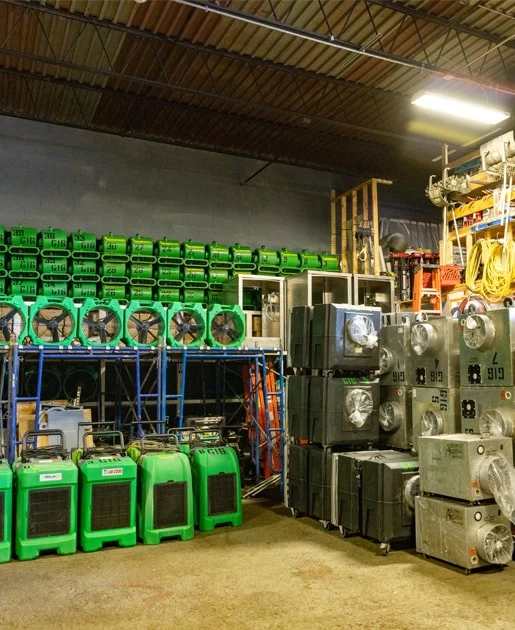
From there, water extraction begins, followed by industrial drying, air quality testing, and mold assessment if the timeline or conditions warrant it. Every step is documented for your insurance claim. We bill the carrier directly and communicate with your adjuster so you’re not stuck in the middle of a process that’s already stressful enough. By the time we’re done, your basement has been dried, tested, and cleared with paperwork to back it up.
Basement Flood Cleanup Services, Huntington Township NY
Full-Scope Cleanup Built for What Coastal Peninsula Homes Actually Face
Flooded basement cleanup in Eatons Neck isn’t a one-size job. The service covers water extraction, structural drying, moisture mapping, mold testing, mold remediation when needed, and full hazardous material assessment including asbestos and lead under a single contract. You don’t manage multiple contractors. You don’t get handed off mid-job. Everything that needs to happen, happens under one roof.
For Eatons Neck’s older homes, the hazardous material piece is especially relevant. The Town of Huntington requires that mold remediation projects affecting 25 square feet or more of material be performed by a contractor holding a valid NYS DOL Mold Remediation Contractor license. Asbestos abatement requires a separate NYS DOL Asbestos Contractor license and follows NYS Department of Labor notification and disposal protocols. Lead disturbance in pre-1978 construction must comply with the USEPA’s RRP Rule. We hold all of these. Hiring a crew that doesn’t even if they’re cheaper can leave you exposed to liability and complicate your insurance claim.
The 18% seasonal vacancy rate in Eatons Neck means a meaningful number of these jobs involve delayed discovery. If your second home on the peninsula flooded while you were away, we’ve handled that situation before many times. The scope changes, the documentation requirements shift, and the remediation process adapts. That’s not a problem for us. It’s exactly the kind of job our licensing and experience were built for.
Does homeowners insurance cover basement flooding in Eatons Neck, NY?
It depends on the source of the water, and that distinction matters a lot on a coastal peninsula like Eatons Neck. Standard homeowners insurance typically covers sudden, accidental water damage a burst pipe, a failed appliance, a roof leak that sends water into the basement. What it generally does not cover is flooding from external sources: storm surge, rising groundwater, or water that enters from outside the structure. For Eatons Neck homeowners, that’s a meaningful gap given the peninsula’s three-sided water exposure during nor’easters and tropical systems.
If your property sits in a designated FEMA flood zone which applies to many coastal parcels in the Eatons Neck area you may have a separate NFIP flood insurance policy through FEMA, and that policy has its own coverage rules, waiting periods, and claim requirements. The documentation you provide after a flood event directly affects what gets paid. We photograph and record every step of the cleanup process and communicate directly with your adjuster, which gives your claim the best possible foundation regardless of which policy applies.
How fast does mold actually start growing after a basement floods?
Mold can begin developing within 24 to 48 hours of a flooding event and in Eatons Neck’s older homes, that timeline is not theoretical. Basements built in the 1940s through 1970s often have original wood framing, older insulation, and concrete block walls that hold moisture longer than modern construction. Once water saturates those materials, the conditions for mold growth are already in place.
The 72-hour mark is the threshold most restoration professionals use as a turning point. Past that point, what started as a water damage job typically becomes a mold remediation project and the cost difference is significant. Industry estimates put the added expense of mold remediation at $2,000 to $8,000 or more on top of the base cleanup cost, depending on how far the growth has spread. For Eatons Neck properties that sit vacant part of the year, the risk of crossing that threshold or far exceeding it before anyone discovers the problem is real. Calling as soon as you find water is always the right move.
Can storm surge actually flood a basement in Eatons Neck, and how is that cleaned up differently?
Yes and it has. During Hurricane Sandy, Eatons Neck recorded wind gusts of 94 mph, among the highest anywhere in New York during that storm. The peninsula projects directly into Long Island Sound, and storm surge from a major nor’easter or hurricane can push saltwater and debris-laden water into basements from multiple directions simultaneously. That’s categorically different from a burst pipe.
Water that enters from storm surge or groundwater intrusion is classified as Category 3 what the industry calls black water. It contains contaminants, potential pathogens, and in coastal environments, salt and sediment. The cleanup process for Category 3 water involves full containment, protective equipment, antimicrobial treatment, and in many cases the removal and disposal of porous materials that can’t be adequately cleaned. It also triggers a more thorough mold assessment because contaminated water accelerates biological growth faster than clean water does. If your basement took on storm surge, the job is more involved and the contractor you hire needs to be equipped and licensed to handle it properly.
My second home in Eatons Neck flooded while I was away what should I do first?
Call a licensed restoration contractor before you do anything else. The instinct to start removing water or pulling up wet materials yourself is understandable, but in a home built before 1980 which covers most of the housing stock on the peninsula disturbing wet insulation, floor tiles, or wall materials without testing them first can expose you to asbestos or lead. Those materials require licensed handling under NYS DOL and USEPA regulations, and disturbing them without the right protocols can create a more serious problem than the flood itself.
Once a professional is on site, the first step is assessing how long the water has been present and what it’s affected. A basement that’s been wet for weeks is a different scope than one discovered within 24 hours. Mold will be established, structural materials may be compromised, and the documentation requirements for your insurance claim become more complex. We have handled delayed-discovery flood situations in seasonal properties on Long Island’s North Shore before. We assess the full scope, handle every phase of cleanup under one contract, and document everything your carrier needs to process the claim.
What's the difference between a water damage company and an environmental contractor for basement cleanup?
A standard water damage company including most franchise operators serving the Huntington area is equipped to extract water, run industrial dryers, and handle mold remediation if they hold the right license. What they typically cannot do is legally handle asbestos-containing materials or lead paint that gets disturbed during the cleanup process. That’s where the distinction becomes critical for Eatons Neck homeowners.
Most homes on the peninsula were built between 1940 and 1980. That era of construction commonly included asbestos in pipe insulation, floor tiles, ceiling materials, and wall insulation and lead-based paint in virtually any pre-1978 structure. When a flood disturbs those materials, they become a regulated hazard. An environmental contractor like us holds the NYS DOL Asbestos license, USEPA Lead certification, and USEPA RRP certification alongside the standard water and mold credentials. That means one crew can handle the full scope legally, without stopping mid-job to bring in a separate abatement contractor which adds time, cost, and coordination complexity you don’t need in the middle of an emergency.
How much does flooded basement cleanup typically cost in the Eatons Neck area?
For a straightforward water damage job clean water source, caught within 24 to 48 hours, no mold or hazardous materials involved costs typically run between $2,000 and $5,000 depending on the size of the affected space. Eatons Neck homes tend to be large, with many properties in the 4-to-5-bedroom range, so the affected square footage is often greater than average, and costs reflect that.
When mold remediation is required, add $2,000 to $8,000 or more depending on the extent of growth. If asbestos-containing materials or lead paint were disturbed, abatement adds to the total but also protects you from the liability of leaving regulated materials improperly handled. In delayed-discovery situations common in Eatons Neck given the number of seasonal properties the scope frequently includes all of the above. The most accurate way to understand your specific cost is a proper on-site assessment, which we provide before any work begins. We document everything upfront so there are no surprises mid-project, and we bill your insurance carrier directly so you’re not advancing costs out of pocket while waiting for reimbursement.