When Elmhurst's Sewers Back Up, You Need More Than a Wet Vac
Sewer backup flooding in central Queens is black water and it needs licensed, certified cleanup fast. We respond within the hour, handle your insurance, and restore your basement completely.
I needed a professional consultation explanation of procedure for safe removal of Asbestos in my apartment complex. Without having an account yet, I was very impressed with the caring, knowledgeable and generous advice offered by Jessica, and will look forward to doing business in the future. Thank you so much! I feel much more informed about a sometimes scary endeavor. Peace. Nancy Silva Mineola, NY.
Mia Munoz
Used this company to clean up some water flood in my house. They were fast and easy to work with.very professional, Would recommend to anyone!
Nini Valle
Great company, had a flood and they responded quickly and efficiently. Billed my insurance company directly. I highly recommend this company!
joe colapietro, jr
I had pipe freeze in my basement right before a snow storm and they made to within an hour to help start the clean up process. They we by our side throughout the entire process and even helped with the insurance company. They did such a great job with the cleanup, repair, remidiation, I contracted them to perform the repairs and finishes in the basement. They came with enough manpower and material to get the job done. Leo and Jessica were nothing but a pleasure to deal with!!
Cristian Arredondo c
I had some water damage in my home and Green Island was able to take care of my issue quickly and effectively. I am very pleased with the work they did. They responded quickly and were very professional.
Michael M
Outstanding service! From the office to the field crew everyone was friendly, helpful and responsive. I highly recommend Green Island Group.
Most basement floods in Elmhurst aren’t from a burst pipe or a leaky window well. They’re from the combined sewer system getting overwhelmed during a heavy storm pushing raw sewage back up through your floor drains and into your living space. That’s not just water damage. That’s a contamination problem, and treating it like a simple wet floor is exactly how mold, structural damage, and health hazards take hold in the weeks that follow.
When the job is done right, you get your basement back not just dry, but genuinely clean, sanitized, and structurally sound. We use thermal imaging to find hidden moisture in wall cavities and under flooring before it becomes a mold problem. The sewage contamination gets properly neutralized, not just mopped up. And because Elmhurst’s housing stock is predominantly pre-1960 construction, a thorough cleanup also means accounting for what’s inside those older walls asbestos insulation, lead paint, materials that become hazardous the moment demolition starts.
For landlords managing two-family homes or small apartment buildings on the blocks near Queens Boulevard or 51st Avenue, that also means getting your rental unit back online faster, with documentation that satisfies both your insurance company and the NYC Department of Buildings.
We’ve been doing environmental remediation and restoration work in New York for over 30 years. That means we’ve been in Elmhurst basements built in the 1930s and the 1960s, we know what pre-war Queens construction looks like from the inside, and we understand the specific flooding patterns that affect the blocks between Roosevelt Avenue and the Long Island Expressway.
We hold the NYS DOL Mold License, NYS DOL Asbestos License, USEPA Lead and RRP certifications, IICRC Water Damage certification, and a New York City General Contractor license more than 17 credentials in total. In New York State, mold remediation without an active NYS DOL Mold License is illegal. That’s not a technicality it’s the law, and it matters when your insurance company reviews the claim.
We’re available 24 hours a day, 7 days a week, and we bill insurance directly so you’re not stuck navigating that process alone during the worst week of your year.
From Sewage Backup to Finished Basement Here's What We Do
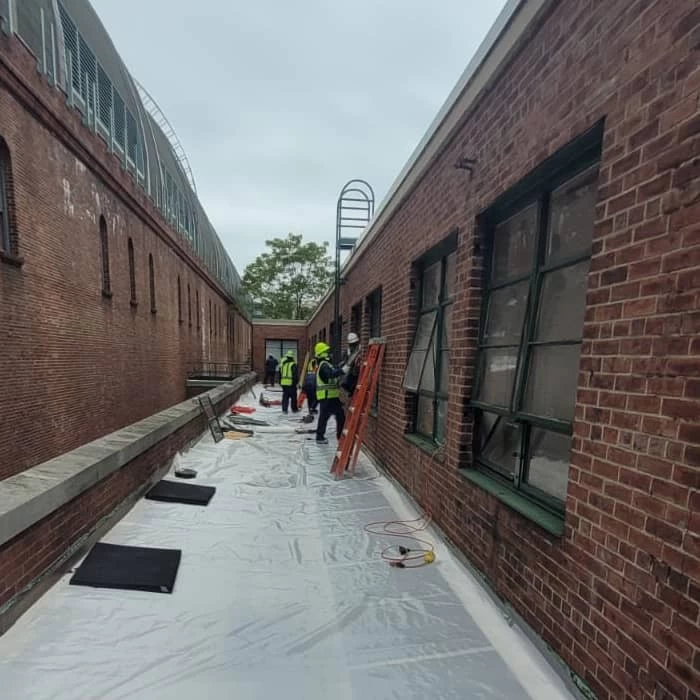
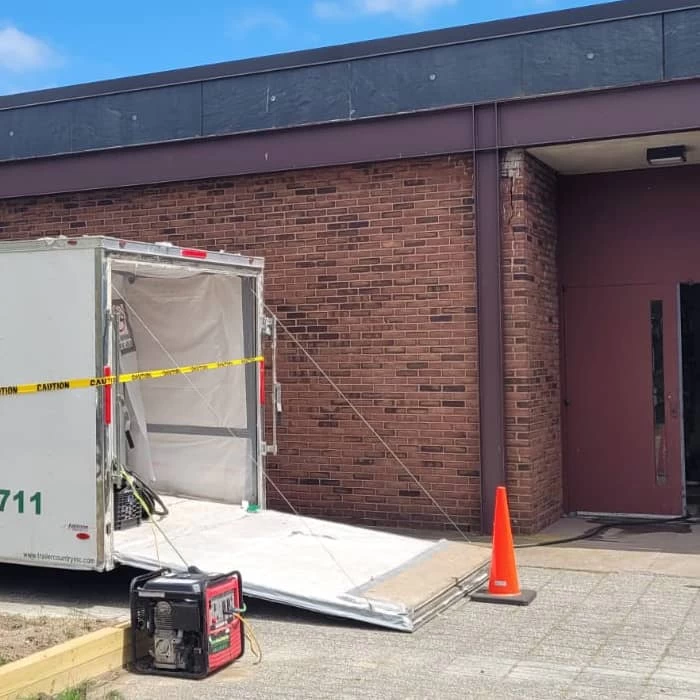
When you call, we’re on our way. We typically arrive within one hour of your call anywhere in Elmhurst including during active storm events. The first thing we do on-site is assess the water source and contamination category. In most Elmhurst basements, that means confirming sewer backup, which classifies the water as black water and determines the full scope of what’s required: not just extraction, but licensed hazmat-level sanitization and proper waste disposal.
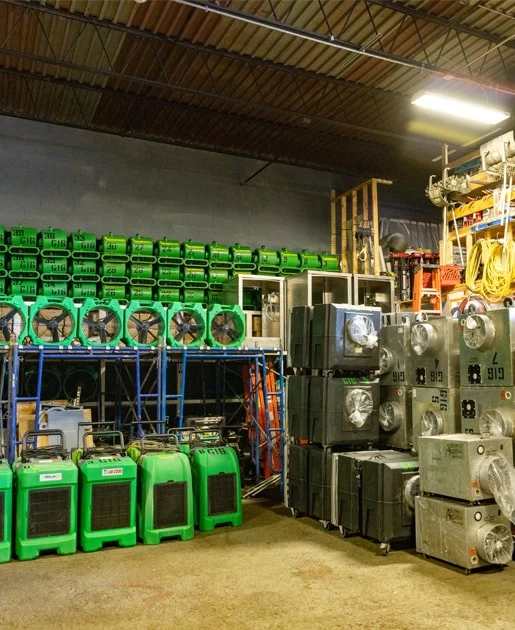
From there, we extract standing water, set up industrial drying equipment, and use thermal imaging to locate moisture that’s already migrated into wall cavities, subfloor assemblies, and insulation. This step matters more than most people realize surface-dry doesn’t mean structurally dry, and hidden moisture is exactly what turns a $3,000 cleanup into an $8,000 mold remediation job three weeks later.
Because the vast majority of Elmhurst homes were built before 1960, we conduct an asbestos and lead assessment before any demolition work begins as required by NYC Local Law and New York State regulations. If hazardous materials are present, we handle the abatement ourselves. No stopping work. No calling in a separate contractor. Once the space is clean, dry, and cleared, we can take the reconstruction all the way to a finished, code-compliant basement pulling the necessary NYC DOB permits and completing the work under our General Contractor license.
Basement Flooding Remediation Services Elmhurst NY
Built for the Flooding Elmhurst Actually Gets
Elmhurst doesn’t have a coastal flooding problem or a groundwater seepage problem it has a sewer backup problem. The neighborhood’s combined sewer system, the density of impervious surface along Queens Boulevard and the surrounding commercial corridors, and the below-grade cut of the Long Island Expressway along the southern boundary all contribute to one of the highest sewer overflow rates in central Queens. Every service we provide here is calibrated to that reality.
That means emergency water extraction and black water sanitization handled under proper hazmat protocols. It means full structural drying with thermal imaging verification not just fans running until things feel dry. It means mold testing and remediation under an active NYS DOL Mold License, which is legally required in New York and often required by insurance carriers before they’ll close a claim. For homes built before 1978 which is essentially every home in Elmhurst it means lead-safe work practices under our USEPA RRP certification, and asbestos abatement under our NYS DOL Asbestos License when demolition is involved.
For property owners who need the space fully rebuilt after cleanup, our NYC General Contractor license covers the complete reconstruction drywall, flooring, utilities, and everything that goes back in. One company, start to finish, with the permits pulled and the paperwork done.
Is sewer backup in my Elmhurst basement covered by homeowners insurance?
Standard homeowners insurance policies typically do not cover sewer backup damage it requires a separate endorsement or rider, and many Elmhurst homeowners don’t realize this until after the flood. If you have a sewer backup endorsement, it will generally cover water extraction, cleanup, and structural repairs caused by the backup event. What it usually won’t cover is pre-existing mold or damage that was present before the loss date, which is one more reason why fast, documented response matters.
For Elmhurst residents dealing with repeat flooding and after Hurricane Ida and the September 2023 storms, there are many the documentation we provide is critical. We photograph and document all damage before any work begins, produce detailed scope-of-loss reports, and communicate directly with your adjuster on your behalf. That process protects your claim and removes the burden of navigating insurance language during an already stressful situation.
How quickly does mold grow after a basement flood in Queens?
Mold can begin establishing in wall cavities and behind drywall within 24 to 48 hours of a flooding event and in Elmhurst’s summer and early fall humidity, that window can be even tighter. The issue is that mold doesn’t grow where you can see it first. It starts in the spaces you can’t see: inside wall assemblies, under flooring, behind baseboards, and in insulation. By the time it’s visible, it’s already a remediation project, not just a cleanup.
Waiting more than 72 hours before beginning professional cleanup typically adds $2,000 to $8,000 or more in mold remediation costs on top of the baseline flood work. For Elmhurst landlords managing attached two-family homes or small apartment buildings, that cost multiplies quickly because mold doesn’t respect unit boundaries it travels through shared wall cavities and HVAC systems. Getting a certified crew in within the first few hours isn’t just faster. It’s significantly cheaper.
Do I need permits for basement repairs after a flood in New York City?
Yes, in most cases. Structural repairs, plumbing work, and electrical work following a basement flood in New York City require permits from the NYC Department of Buildings. This applies whether you’re replacing damaged drywall connected to structural framing, repairing or replacing sewer-connected plumbing, or restoring electrical systems that were submerged. Many water damage companies are not licensed to pull NYC DOB permits they can extract water and run drying equipment, but they legally cannot perform the reconstruction work that follows.
We hold a New York City General Contractor license, which means we can pull the required permits and complete the full scope of work cleanup through reconstruction under a single contract. For Elmhurst property owners, this matters practically: it keeps your project moving without gaps, keeps the work code-compliant, and produces the permit documentation that protects you if you ever sell the property or face a DOB inspection.
My Elmhurst home was built in the 1940s should I worry about asbestos during cleanup?
Yes, and it’s worth taking seriously. Homes built in Elmhurst before 1960 which is the majority of the neighborhood’s housing stock commonly contain asbestos pipe insulation in basement utility areas, asbestos floor tiles, and asbestos-containing joint compound behind drywall. Under New York State regulations and NYC Local Law, an asbestos survey is required before any demolition or renovation work in buildings constructed before 1987. When a flood forces you to tear out wet drywall or pull up damaged flooring, those materials don’t just go in a dumpster.
We hold an active NYS DOL Asbestos License, which means we can conduct the required survey and handle any abatement work ourselves without stopping the project and waiting for a separate contractor to come in. We also hold USEPA Lead and RRP certifications for lead-safe work practices, which are required for renovation work in pre-1978 homes. For most Elmhurst basements, both of these issues are present simultaneously, and having one company licensed to handle all of it keeps your project on track.
Can I clean up a sewage backup in my basement myself?
Technically, yes but it’s not advisable, and in some cases it’s not legal. Sewage backup is classified as black water contamination, meaning it contains bacteria, viruses, and pathogens that pose genuine health risks through skin contact, inhalation, and ingestion. Consumer-grade cleaning products and shop vacuums are not designed for this category of contamination, and improper cleanup can leave pathogens behind in porous materials concrete, drywall, wood framing that continue to pose a risk long after the water is gone.
Beyond the health question, DIY cleanup typically doesn’t produce the documentation that insurance companies require to process a sewer backup claim. Adjusters want to see a licensed contractor’s scope-of-loss report, moisture readings, and evidence that the work was performed to industry standards. If you clean it up yourself and then file a claim, you may have a harder time recovering costs. In Elmhurst, where sewer backup flooding has become a recurring event for many residents, having a documented, professional response on record also matters for future claims.
How long does flooded basement cleanup and restoration take in Elmhurst?
The timeline depends on how much water entered, what the contamination category is, and how far moisture has migrated into the structure. For a straightforward water intrusion event with no sewage involvement and limited structural impact, extraction and drying typically takes three to five days. For a sewer backup flood which is the most common scenario in Elmhurst add time for full sanitization, hazardous material assessment, and the drying verification process. Expect five to seven days for the remediation phase before reconstruction can begin.
If the basement requires full reconstruction new drywall, flooring, rebuilt utility areas that adds additional time depending on scope, material availability, and NYC DOB permit processing. For Elmhurst landlords who need rental units back online quickly, we prioritize the remediation phase and can begin reconstruction immediately after clearance testing confirms the space is clean and dry. The honest answer is that rushing the drying process to shorten the timeline is exactly what creates mold problems later and mold remediation takes far longer and costs far more than doing the drying right the first time.