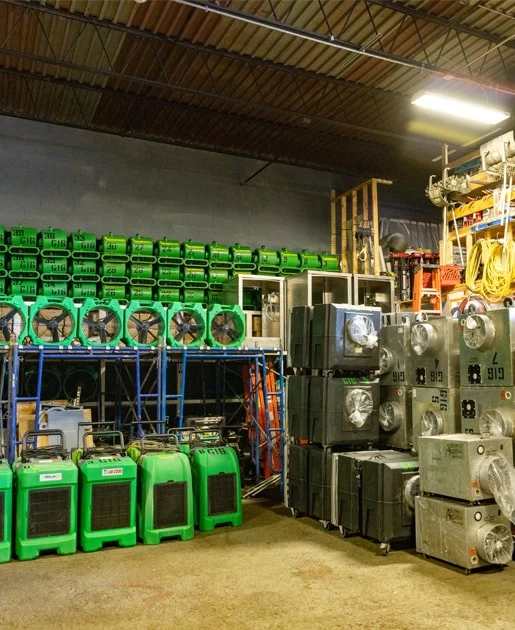
Flooded basement cleanup in Empire State means dealing with century-old building systems, NYC regulations, and a clock that starts the moment water hits the floor. We handle the full scope from extraction through mold remediation to post-remediation clearance without handing you off to a second contractor when complications show up.
I needed a professional consultation explanation of procedure for safe removal of Asbestos in my apartment complex. Without having an account yet, I was very impressed with the caring, knowledgeable and generous advice offered by Jessica, and will look forward to doing business in the future. Thank you so much! I feel much more informed about a sometimes scary endeavor. Peace. Nancy Silva Mineola, NY.
Mia Munoz
Used this company to clean up some water flood in my house. They were fast and easy to work with.very professional, Would recommend to anyone!
Nini Valle
Great company, had a flood and they responded quickly and efficiently. Billed my insurance company directly. I highly recommend this company!
joe colapietro, jr
I had pipe freeze in my basement right before a snow storm and they made to within an hour to help start the clean up process. They we by our side throughout the entire process and even helped with the insurance company. They did such a great job with the cleanup, repair, remidiation, I contracted them to perform the repairs and finishes in the basement. They came with enough manpower and material to get the job done. Leo and Jessica were nothing but a pleasure to deal with!!
Cristian Arredondo c
I had some water damage in my home and Green Island was able to take care of my issue quickly and effectively. I am very pleased with the work they did. They responded quickly and were very professional.
Michael M
Outstanding service! From the office to the field crew everyone was friendly, helpful and responsive. I highly recommend Green Island Group.
Water in a basement or lower-level space is never just a wet floor. In Empire State, where most residential and mixed-use buildings were constructed between 1900 and 1940, water intrusion often means disturbed pipe insulation, deteriorating wall systems, and building materials that predate modern safety standards. Getting the space dry is the starting point. What matters is what you find after the water is gone.
The buildings along the 34th Street corridor from Murray Hill to the Garment District to Koreatown on 32nd Street carry decades of layered infrastructure inside their walls. When flooding happens here, it rarely stays in one place. Water migrates into wall cavities, travels up through masonry, and saturates materials that look fine on the surface but are holding moisture for weeks. That hidden moisture is where mold starts, and in a dense building, mold doesn’t respect unit lines.
When the job is done correctly, you’re not just looking at a dry floor. You’re looking at documented moisture readings, cleared air quality, and a written record that satisfies your building’s board, your insurance adjuster, or an HPD inspector. That’s the difference between a cleanup and a resolution.
Licensed for Everything Empire State Buildings Require Not Just the Easy Parts
We hold active New York State Department of Labor licenses for mold assessment, mold remediation, asbestos abatement, and lead abatement simultaneously. In a city where those licenses are legally required and regularly checked, that’s not a minor detail. It means one contractor handles everything from water extraction through hazardous material assessment to post-remediation clearance, without stopping to refer you elsewhere when something complicated turns up.
Empire State sits directly above New York Penn Station the Manhattan terminus of the Long Island Rail Road and that’s not coincidental to how we operate. We’ve built our service infrastructure across both sides of that connection, serving NYC and Long Island with the same licensed, full-scope capability. Whether you’re managing a pre-war co-op off Fifth Avenue or a mixed-use building in the Garment District, we know what these buildings look like on the inside and what they need when water gets in.
What the Process Looks Like in a Building Like Yours
The first thing that happens is an assessment not a sales pitch. When we arrive, we use moisture meters and thermal imaging to map every wet surface, including the ones you can’t see. In Manhattan’s pre-war buildings, where plaster-on-lath over masonry behaves differently than modern drywall, moisture hides in places a visual inspection completely misses. We document what we find before anything is touched.
From there, the work depends on what the water actually is. NYC’s combined sewer system built for 19th-century rainfall volumes backs up into building lower levels during heavy storms, and what comes back up is Category 3 water: sewage-contaminated and requiring a different protocol than a clean pipe burst. We assess water category on arrival and apply the right process, not a one-size-fits-all approach. If regulated materials like asbestos or lead are present common in buildings of this age our licensed abatement teams handle it within the same scope of work.
Drying, remediation, and clearance testing follow in sequence. At the end, you receive written documentation moisture clearance readings, air quality results, and a record of completed work that holds up to NYC regulatory review. If you’re dealing with an HPD mold violation or need to satisfy a co-op board, that paperwork is what closes it out.
Flooded basement cleanup in Empire State covers more ground than extraction and drying. The service starts with a full moisture assessment using calibrated meters and thermal imaging, followed by water extraction, structural drying, and antimicrobial treatment where contamination is present. If the flooding came from a sewer backup which is increasingly common given the stress on NYC’s aging combined sewer infrastructure the contamination protocol goes further, with full containment and documented post-remediation verification.
For buildings in the 34th Street corridor, Murray Hill, and the surrounding neighborhoods, the age of the structure almost always adds a layer to the job. Pre-1980 construction means asbestos-containing materials and lead paint are a real possibility in any space that gets disturbed during remediation. Our licensed abatement teams are part of the same scope you don’t get handed off to a separate contractor mid-job. That matters when you’re managing a co-op unit, a multi-tenant building, or a commercial space where downtime has a direct cost.
The job ends with post-remediation clearance testing and written documentation. Under NYC Local Law 55 and standard HPD enforcement, building owners need more than a verbal confirmation that the work is done. You get a documented record air quality results, moisture readings at drying goals, and a licensed professional sign-off that satisfies regulators, insurance adjusters, and building boards. We also bill insurance carriers directly, including across multiple policy types when a single event involves both a building master policy and individual unit coverage.
Does flooded basement cleanup in Empire State, NY require a licensed contractor?
Yes and this is one area where New York City is stricter than almost anywhere else in the country. New York State requires separate active licenses from the Department of Labor for mold assessment and mold remediation. Any contractor performing that work in NYC without those licenses is operating illegally, and any remediation they complete may not be accepted by HPD as compliant if a violation is involved.
Beyond mold licensing, buildings in Empire State most of which were constructed before 1940 frequently contain asbestos and lead paint in the materials disturbed during a flood cleanup. Legally, those materials require licensed abatement contractors to handle. If you hire a company that isn’t licensed for both, they’re either skipping the hazardous material work entirely or doing it without authorization. We hold active NYS DOL licenses for mold assessment, mold remediation, asbestos abatement, and lead abatement. When you need documentation that satisfies an HPD inspector or a co-op board, our paperwork holds up because the work was done by licensed professionals from start to finish.
How quickly does mold start growing after a basement floods?
The EPA’s documented timeline is 24 to 48 hours. That’s how long it takes for mold to begin colonizing wet building materials under typical indoor conditions. In a flooded basement or lower-level space in a pre-war Manhattan building, where masonry walls and plaster systems hold moisture far longer than modern construction, that window can close faster than people expect.
What makes this especially important in a dense building like the ones throughout the Murray Hill and Garment District areas near the Empire State corridor is that mold doesn’t stay contained to one unit. It travels through shared wall cavities, HVAC ductwork, and common-area infrastructure. A flooded basement in a 15-story co-op is a building-wide risk, not just a single-unit problem. After 72 hours without professional drying, materials that could have been dried in place typically need full removal and replacement, which dramatically increases both cost and disruption. Speed isn’t just about mold prevention it’s about keeping the scope of the job manageable.
What's the difference between Category 1, 2, and 3 water damage?
Water damage is classified by contamination level, and the category determines the cleanup protocol. Category 1 is clean water a burst supply line or appliance overflow. Category 2 is gray water, which contains some contaminants think washing machine discharge or a slow roof leak with biological growth. Category 3 is black water, which is sewage-contaminated and carries pathogens that require full containment and antimicrobial treatment before any drying work begins.
In Empire State, Category 3 is more common than most people realize. NYC’s combined sewer system handles both stormwater runoff and sanitary sewage in a single pipe network. When that system gets overwhelmed which happens regularly during heavy rainfall events, and happened citywide during Hurricane Ida in September 2021 it backs up into building basements as sewage-contaminated floodwater. If your basement flooded during a rainstorm rather than from an internal pipe failure, there’s a real possibility the water is Category 3. We assess contamination level on arrival and apply the protocol the situation actually requires, not a standard extraction-and-dry approach that leaves biological hazards behind.
Who is responsible for flood damage in a NYC co-op or condo building?
This is one of the most common points of confusion for building owners and tenants in Manhattan, and the answer genuinely depends on where the water came from. In a co-op or condo structure, the building’s master policy typically covers shared systems the roof, foundation, main drain lines, and common areas. Individual unit owners are generally responsible for damage that originates within their unit, including their own plumbing fixtures and appliances. When flooding comes from a shared system failure or an external event like a sewer backup, the building’s coverage is usually primary.
The complication is that a single flooding event in a dense building can trigger multiple policies simultaneously the building master policy, one or more unit owner HO-6 policies, and potentially a commercial tenant’s business interruption policy if ground-floor or basement commercial space is involved. We work directly with insurance carriers and understand how to navigate multi-policy events. We document the source and scope of damage in a way that supports claims across all involved policies, so you’re not left coordinating between your carrier, your building’s carrier, and your adjuster on your own.
Can a flooded basement in an older Manhattan building contain asbestos or lead?
Yes, and in Empire State, it’s not a remote possibility it’s a realistic expectation. The majority of residential and mixed-use buildings in this corridor were constructed between 1900 and 1940, well within the period when asbestos was used extensively in pipe insulation, floor tiles, ceiling materials, and joint compounds. Lead paint was standard in buildings constructed before 1978. When water intrusion disturbs those materials which it often does in a basement or lower-level flood you have a regulated hazardous material situation that an unlicensed contractor cannot legally handle.
Under EPA Lead-Safe Certified Firm requirements, any renovation or repair work in a pre-1978 building that disturbs lead paint requires a certified contractor. Asbestos abatement in New York requires a separate NYS DOL license. If you hire a water damage company that isn’t licensed for both, they either don’t touch the affected materials leaving the hazard in place or they disturb them without authorization. Our licensed abatement teams are part of the same job from the beginning. You don’t get a surprise referral to a second contractor after the water is out.
Does homeowner or building insurance cover flooded basement cleanup in New York City?
Standard homeowner and building insurance policies in New York typically cover sudden and accidental water damage a burst pipe, an appliance failure, or an overflow from an internal source. What they often don’t cover is flooding from an external source, including storm surge, street flooding, or sewer backups, unless you have a separate flood insurance policy through the National Flood Insurance Program or a private flood carrier. After Hurricane Ida flooded basements across all five boroughs in September 2021, a significant number of NYC property owners discovered this distinction the hard way.
The practical step before you assume what’s covered is to call your carrier and ask specifically about the source of the water. If the flooding came from a backed-up drain or a sewer overflow during a storm which is common in Empire State given the age and capacity limits of NYC’s combined sewer system that may fall under a separate sewer backup rider rather than your standard water damage coverage. We bill insurance carriers directly and work with adjusters through the documentation process. We can help you understand what your policy is likely to cover based on how the damage occurred, and we produce the documentation adjusters need to process the claim accurately and completely.