Flower Hill’s elevation drops from 219 feet at Ridge Drive East all the way down to sea level at Hempstead Harbor — and when a storm hits, that water has to go somewhere. If it found your basement, flooded basement cleanup needs to start now, not tomorrow.
I needed a professional consultation explanation of procedure for safe removal of Asbestos in my apartment complex. Without having an account yet, I was very impressed with the caring, knowledgeable and generous advice offered by Jessica, and will look forward to doing business in the future. Thank you so much! I feel much more informed about a sometimes scary endeavor. Peace. Nancy Silva Mineola, NY.
Mia Munoz
Used this company to clean up some water flood in my house. They were fast and easy to work with.very professional, Would recommend to anyone!
Nini Valle
Great company, had a flood and they responded quickly and efficiently. Billed my insurance company directly. I highly recommend this company!
joe colapietro, jr
I had pipe freeze in my basement right before a snow storm and they made to within an hour to help start the clean up process. They we by our side throughout the entire process and even helped with the insurance company. They did such a great job with the cleanup, repair, remidiation, I contracted them to perform the repairs and finishes in the basement. They came with enough manpower and material to get the job done. Leo and Jessica were nothing but a pleasure to deal with!!
Cristian Arredondo c
I had some water damage in my home and Green Island was able to take care of my issue quickly and effectively. I am very pleased with the work they did. They responded quickly and were very professional.
Michael M
Outstanding service! From the office to the field crew everyone was friendly, helpful and responsive. I highly recommend Green Island Group.
The moment water enters your basement, a 72-hour clock starts. After that window, mold becomes likely — and what started as a water extraction job turns into a full remediation project with a much bigger price tag. Getting ahead of that window is the entire point.
For Flower Hill homeowners, the stakes are higher than most. With median home values exceeding $1,000,000, even minor mold or structural damage has real financial consequences — not just for your comfort, but for your property’s value. A basement that looks dry to the eye can still hold moisture inside walls, under flooring, and in insulation for weeks after the visible water is gone.
Flower Hill’s terrain makes this more complicated than it sounds. The village’s mix of sandy and clay-heavy glacial soils — the same Manhasset Formation geology the village is literally named after — means water doesn’t always travel where you expect it to. It migrates laterally through sandy layers, pools in clay pockets, and wicks upward long after the standing water disappears. Add in the mature tree canopy that comes with being a Tree City USA since 2013, and you’ve got root intrusion into aging drain lines on top of everything else. The right cleanup addresses what’s visible and what isn’t.
Licensed Basement Flooding Remediation Flower Hill
Every License the Job Actually Requires — Starting with New York's Mold License
We hold the full credential stack for this kind of work — NYS DOL Mold License, NYS DOL Asbestos License, USEPA Lead/RRP certification, IICRC Water and Fire Damage certification, and a Nassau County General Contractor license. New York is one of only a handful of states that requires a dedicated state mold license to legally perform remediation. A lot of operators advertising water damage services in the Flower Hill area don’t hold it.
That matters especially here. A significant portion of Flower Hill’s housing stock — from the post-WWII Flower Hill Country Estates to the Hewlett Farm and Wildwood developments — was built between the 1940s and 1980s. Homes of that age commonly contain asbestos floor tiles and lead paint in basement areas. When floodwater contacts those materials, you need a contractor who can legally handle them — not one who will walk away or subcontract the problem to someone else. We handle it all under one roof, from extraction through structural restoration, pulling the right permits through the Village of Flower Hill’s own building department, not just the county.
What Actually Happens From First Call to Final Walkthrough
When you call, the first thing that happens is a real conversation — not a voicemail. We operate 24/7, because Flower Hill is a community of LIRR commuters who may step off the Port Washington Branch train late at night and walk into a flooded basement. That first call matters. You’ll get clarity on what to do immediately, what not to touch, and when our crew will arrive.
On-site, our team starts with a full assessment — not just the standing water you can see, but the moisture you can’t. Professional moisture meters and thermal imaging identify water that has migrated into walls, under flooring, and behind insulation. In Flower Hill’s older homes, that assessment also includes a check for asbestos-containing materials before any demolition or debris removal begins. Skipping that step isn’t just dangerous — in New York, it’s illegal.
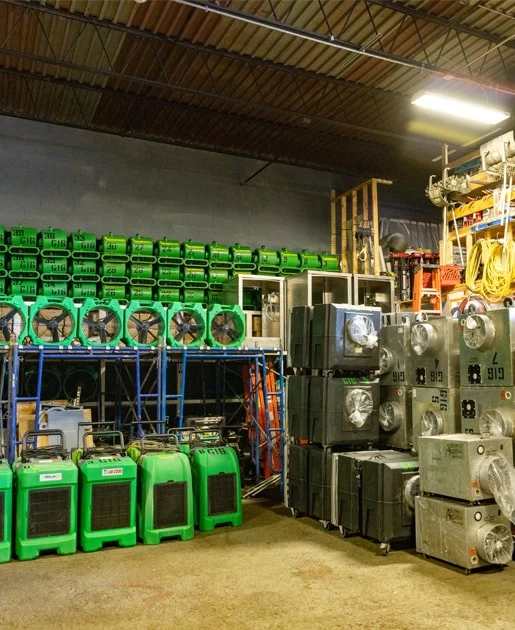
From there, industrial extraction equipment removes standing water, followed by commercial-grade air movers and dehumidifiers that run until moisture readings confirm the space is genuinely dry — not just visually dry. If structural materials need to come out and be replaced, that work is handled by our team under our Nassau County General Contractor license. Because Flower Hill is an incorporated village with its own building permit process — separate from the Town of North Hempstead — permits are pulled correctly, from the right authority, the first time.
Flooded Basement Cleaning Services Flower Hill, NY
One Call Covers Water, Mold, Hazmat, and Rebuild
Flooded basement cleanup isn’t a single service — it’s a sequence of connected decisions, and the quality of each one affects the next. We handle the full sequence: emergency water extraction, structural drying, moisture verification, mold assessment and remediation, asbestos and lead evaluation where applicable, debris removal, and full structural restoration including drywall, flooring, and framing.
For Flower Hill specifically, that multi-hazard capability isn’t optional — it’s necessary. The village’s lower-elevation properties near Hempstead Harbor and the Leeds Pond and Whitney Pond watersheds face groundwater intrusion and surface flooding that can carry sewage contamination into finished basement spaces. Category 3 black water flooding requires full decontamination protocols, not just extraction and drying. That’s a different scope of work, and most operators aren’t equipped or licensed for it.
On the insurance side, there’s a gap most Flower Hill homeowners discover too late. Standard homeowners insurance covers sudden accidental events — a burst pipe, a failed water heater — but does not cover natural flooding from groundwater or storm surge. For properties in the lower-elevation Roslyn-area and harbor-adjacent portions of the village, that distinction matters. We help you document damage correctly and understand which policy applies to your specific event, so you’re not left navigating a coverage denial after the fact.
How quickly does mold grow after a basement floods in Flower Hill, NY?
Mold can begin developing within 24 to 48 hours of water exposure — and the EPA recommends starting cleanup within that same window. In Flower Hill, the combination of humid North Shore summers and the village’s mixed sandy-clay soil profile means moisture doesn’t just sit on the surface. It moves laterally through the ground, wicks into walls, and gets trapped behind insulation in ways that keep humidity elevated long after the visible water is gone.
What that means practically is that a basement that looks dry after 48 hours may still have moisture readings inside the wall cavity that are high enough to support mold growth. The only way to know for certain is with professional moisture meters and thermal imaging — not a visual check. If you’re past the 48-hour mark and haven’t had a professional assessment, it’s worth calling regardless. Catching mold early is a fraction of the cost of remediating it after it’s established.
Does homeowners insurance cover basement flooding from heavy rain or groundwater?
Generally, no — and this catches a lot of Flower Hill homeowners off guard. Standard homeowners insurance covers sudden, accidental events: a pipe bursts, a water heater fails, a washing machine overflows. It does not cover flooding that originates outside the home — groundwater intrusion, storm surge, or surface water from heavy rain. That type of flooding requires a separate flood insurance policy, typically through FEMA’s National Flood Insurance Program.
For Flower Hill homeowners in the lower-elevation portions of the village near Hempstead Harbor or the Manhasset Bay watershed area, this distinction is especially important. Approximately 15% of Flower Hill properties face severe flooding risk over the next 30 years according to First Street Foundation modeling. If you’re in one of those areas and you’re not sure what your current policy covers, it’s worth reviewing before the next storm season — not after a claim gets denied. We can help you document damage in a way that supports whichever policy applies to your specific event.
Could there be asbestos in my flooded Flower Hill basement, and does that change the cleanup?
If your home was built before 1980, there’s a real possibility. Asbestos was commonly used in floor tiles, pipe insulation, ceiling tiles, and joint compound in homes built through the late 1970s. Flower Hill has a significant portion of housing stock from that era — the Flower Hill Country Estates, Chanticlare, and early Hewlett Farm developments were largely built between the 1940s and 1970s, and many of those homes have original basement finishes that have never been disturbed.
When floodwater contacts asbestos-containing materials, the cleanup process has to change. You cannot remove water-damaged floor tiles or insulation without first assessing whether they contain asbestos — and if they do, that material must be handled by a licensed contractor under New York State Department of Labor regulations. We hold the NYS DOL Asbestos License, which means we can assess, contain, and remove asbestos-containing materials as part of the same cleanup project. You don’t need to find a separate abatement company, wait for their schedule, and then bring a restoration crew back in. It’s handled in sequence, by one team.
What's the difference between water extraction and full basement flooding remediation?
Water extraction is the first step — removing standing water with industrial pumps and wet vacuums. Remediation is everything that comes after: structural drying with commercial air movers and dehumidifiers, moisture verification with meters and thermal imaging, assessment for mold or hazardous materials, removal of damaged structural components, and rebuilding what came out. Extraction without remediation is like mopping a floor without fixing the leak — it addresses the symptom, not the problem.
In Flower Hill’s older housing stock, the gap between extraction and full remediation is where most of the risk lives. Water that gets into wall cavities, under subfloors, or behind insulation in a 1960s or 1970s home doesn’t dry on its own in a reasonable timeframe. It stays elevated long enough to create mold conditions, and by the time you see or smell it, the remediation scope has grown significantly. Full basement flooding remediation means you’re not just dry on paper — you’re dry in the places that matter, verified with equipment, not guesswork.
How long does flooded basement cleanup typically take in Nassau County?
For a straightforward Category 1 water event — clean water from a burst pipe or appliance failure — extraction and initial drying typically takes one to three days, with monitoring continuing for three to five days until moisture readings confirm the space is dry. The full structural restoration, if drywall or flooring needs to come out and be replaced, adds time depending on scope — typically another few days to a week for a standard finished basement.
More complex situations take longer. A Category 3 sewage backup requires full decontamination before any drying or restoration work begins. A basement with asbestos-containing materials needs assessment and abatement before demolition can proceed. In Flower Hill, where the Village has its own building permit process separate from the Town of North Hempstead, permits for structural work need to go through the right channel — which adds a step but ensures the work is done correctly and doesn’t create issues at resale. We handle that permitting process directly, so you’re not managing it yourself while also dealing with an insurance claim.
What causes recurring basement flooding in Flower Hill homes, and can it be prevented?
The most common culprits in Flower Hill are a combination of factors that tend to compound each other. The village’s glacial soil profile — sandy layers over clay — creates unpredictable groundwater movement. After a heavy rain or snowmelt, water travels through the sandy layers toward foundations and then gets trapped by the clay, building hydrostatic pressure against basement walls. Older drainage systems in homes built in the 1950s through 1980s were typically sized for storm volumes that today’s nor’easters and tropical systems regularly exceed.
Add in the root intrusion that comes with Flower Hill’s mature tree canopy — the village has been a designated Tree City USA since 2013, and those root systems grow into aging drain lines and foundation wall cracks over time — and you’ve got a recurring problem that water extraction alone won’t solve. After completing cleanup, we assess the underlying infiltration points: where water is entering, whether the sump pump capacity is adequate, and whether drain lines show signs of root intrusion or blockage. Addressing the entry point is what separates a one-time fix from a basement that floods every spring.