When Your Forest Hills Basement Floods, Every Hour Counts
Forest Hills basements flood fast and the damage compounds faster. We respond within the hour, handle everything from sewage backup to mold remediation, and work directly with your insurance so you don’t have to fight that battle alone.
I needed a professional consultation explanation of procedure for safe removal of Asbestos in my apartment complex. Without having an account yet, I was very impressed with the caring, knowledgeable and generous advice offered by Jessica, and will look forward to doing business in the future. Thank you so much! I feel much more informed about a sometimes scary endeavor. Peace. Nancy Silva Mineola, NY.
Mia Munoz
Used this company to clean up some water flood in my house. They were fast and easy to work with.very professional, Would recommend to anyone!
Nini Valle
Great company, had a flood and they responded quickly and efficiently. Billed my insurance company directly. I highly recommend this company!
joe colapietro, jr
I had pipe freeze in my basement right before a snow storm and they made to within an hour to help start the clean up process. They we by our side throughout the entire process and even helped with the insurance company. They did such a great job with the cleanup, repair, remidiation, I contracted them to perform the repairs and finishes in the basement. They came with enough manpower and material to get the job done. Leo and Jessica were nothing but a pleasure to deal with!!
Cristian Arredondo c
I had some water damage in my home and Green Island was able to take care of my issue quickly and effectively. I am very pleased with the work they did. They responded quickly and were very professional.
Michael M
Outstanding service! From the office to the field crew everyone was friendly, helpful and responsive. I highly recommend Green Island Group.
A flooded basement isn’t just an inconvenience. In Forest Hills, where the majority of homes were built before 1960 and the combined sewer system backs up every time a major storm rolls through Queens Boulevard, it’s a layered problem. Water gets in, it hides inside original plaster walls and under older flooring, and if it isn’t fully extracted and dried not surface-dried, but structurally dried you’re looking at mold growth within 72 hours. By then, the remediation cost has jumped by thousands.
When the job is done right, you get your basement back. Not just dry, but tested, treated, and cleared. No moisture pockets hiding in the walls. No mold spores waiting to surface six months later. No guessing about whether the cleanup was thorough enough. You get documentation your insurance company will accept, a clear record of what was done, and the confidence that your home is actually safe again.
For Forest Hills homeowners especially those in Forest Hills Gardens, where some homes are over a century old and worth well over a million dollars that level of certainty isn’t optional. It’s the whole point of calling a professional in the first place.
Licensed Basement Flooding Remediation in Forest Hills
The Credentials That Actually Matter in a Pre-War Forest Hills Home
We’re a full-service environmental remediation and restoration company serving Forest Hills, Queens, and the broader New York metro area around the clock. When it comes to flooded basement cleanup in Forest Hills specifically, the credential stack matters more than it does almost anywhere else in the borough.
New York State requires a NYS DOL Mold License for any mold remediation work exceeding 10 square feet. That’s the law not a preference. We hold that license, along with an IICRC Water Damage Certification, NYS DOL Asbestos License, USEPA Lead and RRP Certifications, and an active NYC General Contractor license. In a neighborhood where nearly half the housing stock predates 1950, these aren’t just impressive credentials they’re what legally authorizes a company to handle what’s actually inside your walls.
Most water damage companies operating in Forest Hills and the surrounding Rego Park and Kew Gardens area hold none of these. That gap matters when your basement flood disturbs asbestos pipe insulation or lead paint which, in a pre-war Forest Hills home, is a realistic possibility, not a worst-case scenario.
When you call, someone picks up day or night, including during the kind of overnight storm events that have historically hammered the Forest Hills area. The first priority is getting water out. That means industrial extraction equipment, not shop vacs. Depending on what’s in the water and if it’s coming from a backed-up sewer line, it’s Category 3 contaminated water the extraction process includes proper containment and biohazard-level handling from the start.
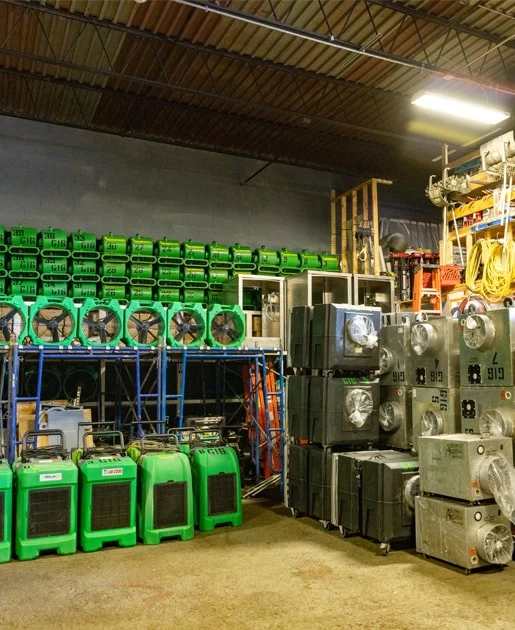
Once the water is out, the drying process begins. This is where most DIY attempts and underprepared companies fall short. Forest Hills homes, particularly the older attached houses and co-op buildings along the Queens Boulevard corridor, have dense wall construction that traps moisture invisibly. We use thermal imaging to identify every hidden moisture pocket before setting up commercial-grade drying equipment. You don’t just need the floor to feel dry. You need the structure to be dry.
After drying comes testing. If mold is present or if conditions are right for it to develop remediation follows under the NYS DOL Mold License that New York law requires. If any asbestos or lead materials were disturbed during the flood, those are handled under separate licensed protocols before any reconstruction begins. From there, the work moves into full restoration: drywall, flooring, finishes, whatever your basement needs to be usable again. One company, one call, start to finish.
Flooded Basement Cleaning and Mold Remediation Forest Hills
Built for What Forest Hills Basements Actually Face
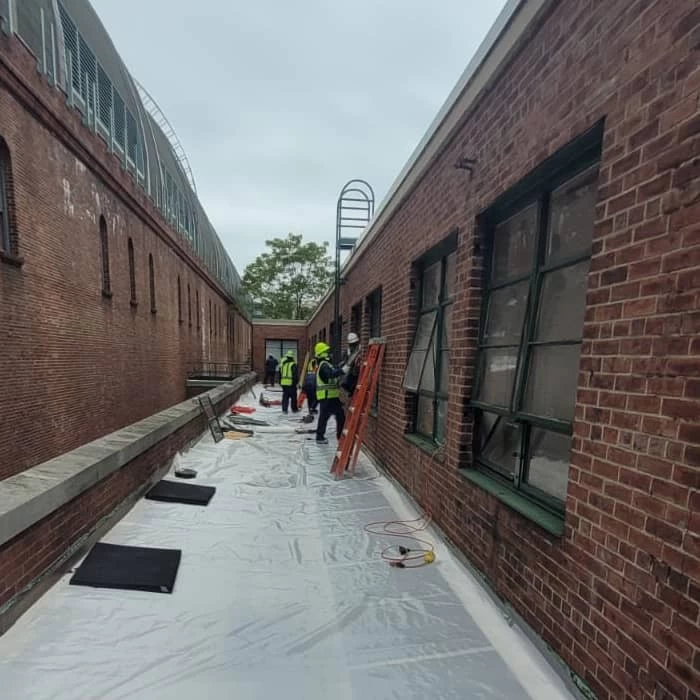
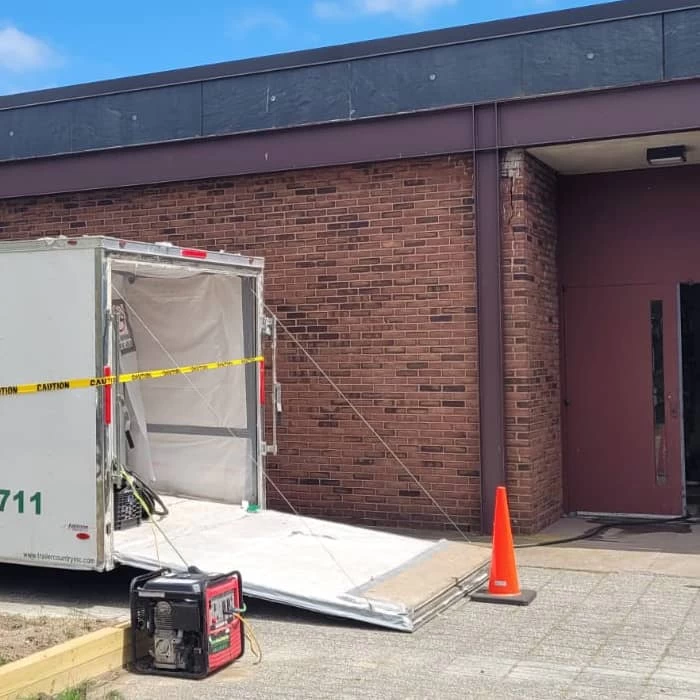
Flooded basement cleanup in Forest Hills isn’t a single-step job. Our service covers emergency water extraction, structural drying, moisture mapping with thermal imaging, mold testing and remediation, sewage decontamination when needed, hazardous materials handling for asbestos and lead, and full basement reconstruction. Every phase is handled in-house. Nothing is subcontracted out to an unlicensed crew.
The sewage backup scenario is worth calling out specifically, because it’s common in Forest Hills. The neighborhood sits on a combined sewer system one pipe handles both stormwater and sewage. When a storm overwhelms it, which happens regularly during summer convective storms and nor’easters, sewage comes up through basement floor drains. That water isn’t just dirty. It’s a biohazard. Cleaning it requires OSHA-compliant protocols, proper PPE, surface sanitization, and air quality restoration. A bleach-and-fan approach doesn’t meet the standard and in New York City, it doesn’t meet the legal standard either.
For residents of Forest Hills Gardens specifically, the restoration side of this work matters as much as the remediation. These are historic homes with original finishes, period-appropriate details, and architectural character that a generic drywall-and-paint crew won’t preserve. Our reconstruction capability includes the kind of finish work that a century-old Tudor home actually requires not a one-size-fits-all patch job.
Does homeowners insurance cover flooded basement cleanup in Forest Hills, NY?
It depends on what caused the flood, and this is where Forest Hills homeowners run into confusion more often than most. Standard homeowners insurance typically covers sudden, accidental water damage a burst pipe, for example. It generally does not cover flooding caused by external stormwater or sewer backup unless you’ve added a specific rider or carry a separate NFIP flood policy.
The Ida flooding in September 2021 made this painfully clear for a lot of Forest Hills residents. Many assumed they were covered and weren’t. If your basement flooded from a backed-up city sewer line, your standard policy may deny the claim without the right endorsement. We bill insurance directly and work with adjusters on your behalf but the first step is understanding what your policy actually covers before the next storm hits. If you’re unsure, call your insurer and ask specifically about sewer backup coverage and flood endorsements. It’s a five-minute conversation that can save you tens of thousands of dollars.
How fast does mold start growing after a basement flood in Forest Hills?
Mold can begin developing within 24 to 48 hours of a flood event under the right conditions and Forest Hills basements, particularly in older attached homes and pre-war co-op buildings, tend to create exactly those conditions. Limited ventilation, dense wall construction, and older building materials that absorb moisture quickly all accelerate the timeline.
The 72-hour mark is the critical threshold. After that, active mold growth is likely, and the scope and cost of remediation increases significantly often by $2,000 to $8,000 or more depending on how far it’s spread. The problem is that mold in a Forest Hills home doesn’t always show itself visibly right away. It grows inside walls, under flooring, and behind original plaster places you can’t see without thermal imaging or professional moisture testing. By the time you smell it or see it, it’s already been there for a while. That’s why extraction speed matters, and why thorough drying not surface drying is the only way to actually stop the clock.
My Forest Hills basement has old pipes and insulation is there an asbestos risk after a flood?
If your home was built before 1980 and in Forest Hills, a significant portion of the housing stock was built before 1950 there’s a real possibility that asbestos-containing materials are present somewhere in the basement. Pipe insulation, floor tiles, ceiling tiles, and joint compound from that era commonly contained asbestos. When a flood disturbs those materials, fibers can be released into the air.
This is a documented risk in older Queens housing stock, and it’s one of the reasons that hiring a company without the proper hazardous materials licensing is genuinely dangerous not just legally problematic. We hold the NYS DOL Asbestos License and USEPA Lead and RRP Certifications required to legally identify, contain, and remove these materials in New York. If there’s any suspicion of asbestos or lead during a basement cleanup, the correct move is to stop, test, and handle it under licensed protocols before proceeding with any demolition or reconstruction. Skipping that step doesn’t just put your family at risk it can create a liability that follows the property for years.
What's the difference between water damage cleanup and mold remediation do I need both?
Water damage cleanup covers extraction, drying, and structural stabilization getting the water out and preventing further damage to the building. Mold remediation is a separate, licensed process that addresses mold that has already begun to grow. In New York State, mold remediation involving more than 10 square feet legally requires a contractor holding an active NYS DOL Mold License. That’s not a guideline it’s state law.
Whether you need both depends on how quickly the water was addressed and how thoroughly the drying was done. In practice, many Forest Hills basement floods end up requiring both services, especially when the initial water event wasn’t caught immediately or when a previous flood wasn’t fully remediated. If you had water in your basement during Ida or any storm since, and you’re not certain the drying was complete, it’s worth having a professional moisture assessment done. Hidden mold in a pre-war Forest Hills home is not uncommon and catching it early is significantly less expensive than discovering it during a renovation or a home sale inspection.
How much does flooded basement cleanup typically cost in Forest Hills?
The range is wide, and it’s driven by a few key factors: how much water, what kind of water, how long it sat, and what it touched. A clean water event a burst pipe, a failed sump pump that’s caught quickly and involves no mold or hazardous materials might run $3,000 to $8,000 for extraction, drying, and basic restoration. A sewage backup that sat for more than a day, or a flood in a finished basement with drywall, flooring, and personal contents, can run $15,000 to $60,000 or more once you factor in full remediation and reconstruction.
For Forest Hills homeowners specifically, the pre-war housing stock adds a variable that most cost estimators don’t account for: hazardous materials. If asbestos pipe insulation or lead paint is disturbed during the flood or the cleanup, licensed abatement is required before reconstruction can begin, and that adds to the overall scope. You won’t know the full number until a licensed contractor does a proper assessment but acting quickly almost always reduces the final cost, because the longer water sits, the more it spreads, and the more it costs to fix.
Can a co-op shareholder in Forest Hills file a water damage claim, or does the building handle it?
This is one of the most common points of confusion for Forest Hills residents, and it’s worth understanding before you’re standing in three inches of water trying to figure out who to call. In a co-op, the building’s master policy typically covers the structure itself the walls, floors, and systems while your individual shareholder’s policy covers your personal property and sometimes interior improvements you’ve made. The line between the two isn’t always clear, and different co-op boards interpret their bylaws differently.
When a basement flood happens in a co-op building, the first call should be to your building manager or super to report the event and get the building’s insurance information. The second call should be to your own insurance carrier. The third call should be to a licensed remediation company that can document the damage thoroughly from the start because both insurance carriers will want that documentation, and gaps in the record create disputes that delay payment. We work directly with both building-level and individual insurance carriers, which matters in a neighborhood like Forest Hills where co-op ownership is common and the insurance picture is rarely simple.