Flooded Basement Cleanup in Franklin D Roosevelt, NY
South Shore Flooding Doesn't Stop at the Water Line
When your basement floods in Franklin D Roosevelt, the water you can see is only part of the problem. We handle flooded basement cleanup and everything hiding behind it.
I needed a professional consultation explanation of procedure for safe removal of Asbestos in my apartment complex. Without having an account yet, I was very impressed with the caring, knowledgeable and generous advice offered by Jessica, and will look forward to doing business in the future. Thank you so much! I feel much more informed about a sometimes scary endeavor. Peace. Nancy Silva Mineola, NY.
Mia Munoz
Used this company to clean up some water flood in my house. They were fast and easy to work with.very professional, Would recommend to anyone!
Nini Valle
Great company, had a flood and they responded quickly and efficiently. Billed my insurance company directly. I highly recommend this company!
joe colapietro, jr
I had pipe freeze in my basement right before a snow storm and they made to within an hour to help start the clean up process. They we by our side throughout the entire process and even helped with the insurance company. They did such a great job with the cleanup, repair, remidiation, I contracted them to perform the repairs and finishes in the basement. They came with enough manpower and material to get the job done. Leo and Jessica were nothing but a pleasure to deal with!!
Cristian Arredondo c
I had some water damage in my home and Green Island was able to take care of my issue quickly and effectively. I am very pleased with the work they did. They responded quickly and were very professional.
Michael M
Outstanding service! From the office to the field crew everyone was friendly, helpful and responsive. I highly recommend Green Island Group.
Franklin D Roosevelt sits on the South Shore of Nassau County, where the water table is shallow and the ground doesn’t drain the way people expect. When a hard rain hits or a nor’easter rolls through water doesn’t just fall from above. It pushes up through basement floors and foundation walls under hydrostatic pressure. That kind of flooding carries soil, sediment, and contaminants with it, which changes the entire scope of what cleanup actually requires.
The bigger issue is what happens in the hours after the water appears. Mold starts growing on wet building materials within 24 to 48 hours that’s EPA guidance. In a Cape Cod or ranch home built in the 1950s or 1960s, which describes most of Franklin D Roosevelt’s housing stock, the framing, insulation, and subfloor materials are exactly what mold needs to take hold fast. A job handled properly in the first few hours looks very different from one addressed three days later.
There’s also the hazardous materials reality that most water damage companies won’t bring up. Virtually every original home in Franklin D Roosevelt was built before 1978, which means lead paint and asbestos-containing materials floor tiles, pipe insulation, joint compound are likely present in the basement. When floodwater contacts those materials, it doesn’t stay a simple cleanup job. It becomes a regulated remediation event. We hold every New York State DOL license required to handle it legally and completely, under one roof.
Licensed Basement Flooding Remediation Roosevelt NY
Every License the Job Requires One Company
We serve Franklin D Roosevelt, Nassau County, and the broader Long Island and NYC metro area, with thousands of completed jobs across the region. That volume isn’t a marketing number it means the combination of factors present in Franklin D Roosevelt’s homes, the South Shore’s groundwater flooding patterns, and Nassau County’s insurance carriers are all familiar territory.
What separates us in this market is scope. Most water damage contractors are licensed only for extraction and drying. The moment they find mold, they refer out. The moment they encounter asbestos, they stop entirely. We hold active NYS DOL licenses for water damage restoration, mold remediation, mold assessment, asbestos abatement, and lead abatement plus demolition capabilities when structural removal is needed. One call. One crew. One point of contact from the first inch of standing water through final clearance.
Franklin D Roosevelt’s homeowners many of whom have lived in the community for years and have real equity in homes along Centennial Avenue, Washington Avenue, and throughout the hamlet deserve a company that can actually finish what it starts.
Basement Flood Cleanup Process Franklin D Roosevelt
From Standing Water to Clearance Here's the Sequence
The first thing that happens when we arrive is an honest assessment. Not a sales pitch an actual evaluation of the water source, the water category, and the extent of the damage. In Franklin D Roosevelt’s older homes, that means checking for signs of groundwater intrusion versus internal pipe failure, because those two scenarios require different protocols under IICRC standards. Groundwater and storm drain backup are classified as Category 2 or Category 3 water, which carries contaminants that clean water from a burst pipe does not.
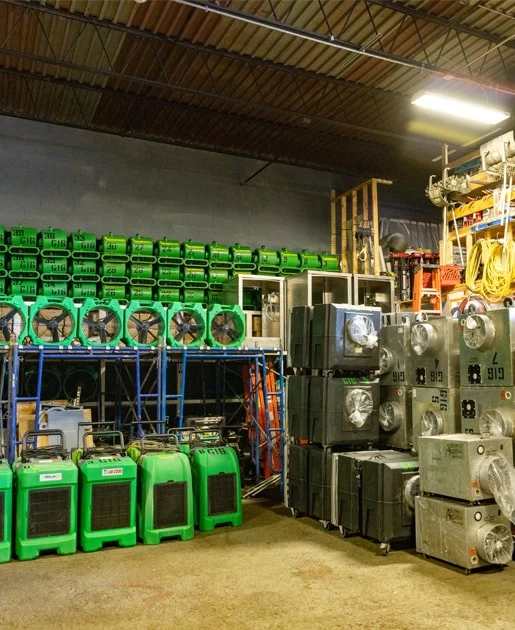
From there, extraction and structural drying begin. Industrial-grade equipment pulls standing water and then works on the moisture that’s already migrated into wall cavities, under flooring, and into the rim joist insulation common in 1950s and 1960s construction. This is where a lot of companies stop when the floor looks dry. We use calibrated moisture meters and thermal imaging to find hidden moisture that’s invisible to the eye, because that’s what causes the mold problem that shows up six months later.
If mold is present, or if hazardous materials have been disturbed asbestos floor tiles, lead paint on basement walls that work happens next, in sequence, without you having to coordinate a separate contractor. The job closes with post-remediation testing and written clearance documentation, so you have something concrete to show your insurance company, and something to rely on if you ever sell the home.
Built for Franklin D Roosevelt's Homes Not a Generic Checklist
Franklin D Roosevelt’s housing stock is specific, and the service has to match it. The post-war Cape Cods and ranch homes throughout the hamlet were built with materials that were standard at the time 9×9 vinyl floor tiles that almost always contain asbestos, pipe insulation wrapped around older heating systems, lead paint on concrete block walls and wood framing. A flooded basement in a home like this isn’t just a water problem. It requires a company that can legally handle every layer of it without stopping work and calling someone else.
Our scope covers emergency water extraction, structural drying, moisture mapping, mold assessment, mold remediation, asbestos abatement, lead abatement, and demolition where needed. All of it falls under Nassau County and New York State regulatory requirements including NYS Article 32 mold remediation licensing and NYS DOL asbestos contractor licensing and all of it is handled by one licensed team. Any structural repairs that follow remediation are coordinated with Town of Hempstead building permit requirements, so nothing falls through the cracks on the back end.
We also bill insurance carriers directly and manage the adjuster communication process. For Franklin D Roosevelt homeowners navigating a claim after a storm or a groundwater event, that means you’re not fronting a five-figure bill and waiting for reimbursement. You’re not handling the documentation alone. The process is handled so you can focus on your family and your home.
Does homeowner's insurance cover basement flooding in Franklin D Roosevelt?
It depends on the source of the water, and that distinction matters a lot in Franklin D Roosevelt. Standard homeowner’s insurance typically covers sudden and accidental water damage a burst pipe, a failed water heater, an appliance leak. What it usually does not cover is flooding from outside the home, including storm surge, groundwater intrusion, or overland flooding from storm drain overflow. Those events require a separate flood insurance policy, typically through FEMA’s National Flood Insurance Program.
Franklin D Roosevelt’s South Shore location and shallow water table mean that a significant portion of basement flooding events in the hamlet originate from groundwater pressure or storm drain backup exactly the scenarios that standard homeowner’s policies may exclude. The best thing you can do before you need it is review your policy and understand what your water damage coverage actually includes. If you’re already dealing with a flooded basement, we can help document the damage properly from the start, which protects your claim regardless of which policy applies.
How quickly does mold start growing after a basement floods?
The EPA puts the window at 24 to 48 hours on wet building materials. In practice, that means if your basement flooded last night and you’re reading this the next morning, mold colonization may already be underway especially in a Franklin D Roosevelt home with original 1950s or 1960s framing, which provides exactly the kind of organic material mold needs to establish itself quickly.
The part most homeowners miss is that mold doesn’t start on surfaces you can see. It starts inside wall cavities, behind drywall, under flooring, and in the insulation along the rim joists areas that look completely fine from the outside. By the time you smell it or see discoloration on a wall, the colony is already established. That’s why professional moisture mapping after a flood matters as much as the extraction itself. Finding and eliminating hidden moisture in the first 24 to 48 hours is the difference between a drying job and a mold remediation job.
My Franklin D Roosevelt home was built in the 1960s is asbestos a concern during basement cleanup?
Yes, and it’s worth understanding clearly. Homes built before approximately 1980 commonly contain asbestos-containing materials in residential applications that were standard at the time. In a Franklin D Roosevelt Cape Cod or ranch home from the 1950s or 1960s, the most common locations are the 9×9 inch vinyl floor tiles on the basement slab, pipe insulation on older heating and plumbing systems, and ceiling tiles. These materials are generally safe when they’re intact and undisturbed.
The problem is that flooding disturbs them. Water saturates floor tiles, contacts pipe insulation, and creates conditions where cleanup work pulling up wet flooring, removing damaged materials can release asbestos fibers without proper containment. A water damage company that is not licensed by the New York State Department of Labor for asbestos abatement cannot legally or safely handle that situation. We hold active NYS DOL asbestos abatement licensing, which means if your Franklin D Roosevelt basement has asbestos-containing materials that have been affected by flooding, the work gets done correctly and legally without stopping and calling a separate contractor.
How long does flooded basement cleanup actually take?
The honest answer is that it depends on what the assessment finds. A basement with clean water from an internal pipe failure, caught within a few hours, with no hazardous materials involvement and no mold, can often be dried and cleared in three to five days with industrial drying equipment. That’s the best-case scenario.
In Franklin D Roosevelt’s older homes, the timeline frequently extends because the job involves more than water. If groundwater intrusion has brought Category 3 contaminated water into the space, the cleanup protocol is more involved. If moisture mapping reveals hidden moisture in wall cavities or under flooring, those areas need to be opened and dried before the job is complete. If mold is present or asbestos-containing materials are involved, those remediation phases add time. A realistic range for a full-scope job in a pre-1978 Franklin D Roosevelt home from emergency extraction through final clearance is typically one to two weeks, depending on scope. Rushing that timeline to save a few days is how mold problems develop months later.
What's the difference between water extraction and actually drying out a basement?
Water extraction removes standing water the visible water on the floor. Structural drying is a separate, longer process that removes the moisture that has already migrated into building materials: wall framing, insulation, subfloor, concrete block. These are not the same thing, and finishing one doesn’t mean the other is done.
This distinction matters especially in Franklin D Roosevelt’s housing stock. The Cape Cod and ranch construction common throughout the hamlet has rim joist cavities, wood framing, and insulation that absorb moisture quickly and hold it long after the floor looks dry. Without calibrated moisture meters and thermal imaging to map where that hidden moisture is sitting, a basement can appear completely dry while moisture levels inside the walls are still high enough to support mold growth. We measure moisture at multiple points throughout the space and track it against drying goals before declaring the job complete because “looks dry” and “is dry” are two different things.
Why does Green Island Group handle mold, asbestos, and water damage together?
Because in Franklin D Roosevelt’s housing stock, those three things rarely happen in isolation. When a basement floods in a home built in the 1950s or 1960s which describes the majority of Franklin D Roosevelt’s residential fabric the water doesn’t just sit on the floor. It contacts asbestos floor tiles, saturates lead-painted walls, and creates the moisture conditions that trigger mold growth within 48 hours. A company licensed only for water damage extraction has to stop work the moment any of those other issues surface. That means delays, separate contractors, separate schedules, and gaps in the process where things get missed.
We built our licensing structure specifically to avoid that situation. Holding active NYS DOL licenses for water damage restoration, mold remediation, mold assessment, asbestos abatement, and lead abatement means the crew that starts your job in Franklin D Roosevelt can legally and safely finish it regardless of what the assessment uncovers. For a homeowner in a community where virtually every original home contains pre-1978 materials, that full-scope capability isn’t a bonus feature. It’s the only way to guarantee the job actually gets done.