Glen Cove basements flood — and when they do, the clock starts immediately. We respond 24/7 with the licenses, equipment, and local knowledge to stop the damage before it compounds.
I needed a professional consultation explanation of procedure for safe removal of Asbestos in my apartment complex. Without having an account yet, I was very impressed with the caring, knowledgeable and generous advice offered by Jessica, and will look forward to doing business in the future. Thank you so much! I feel much more informed about a sometimes scary endeavor. Peace. Nancy Silva Mineola, NY.
Mia Munoz
Used this company to clean up some water flood in my house. They were fast and easy to work with.very professional, Would recommend to anyone!
Nini Valle
Great company, had a flood and they responded quickly and efficiently. Billed my insurance company directly. I highly recommend this company!
joe colapietro, jr
I had pipe freeze in my basement right before a snow storm and they made to within an hour to help start the clean up process. They we by our side throughout the entire process and even helped with the insurance company. They did such a great job with the cleanup, repair, remidiation, I contracted them to perform the repairs and finishes in the basement. They came with enough manpower and material to get the job done. Leo and Jessica were nothing but a pleasure to deal with!!
Cristian Arredondo c
I had some water damage in my home and Green Island was able to take care of my issue quickly and effectively. I am very pleased with the work they did. They responded quickly and were very professional.
Michael M
Outstanding service! From the office to the field crew everyone was friendly, helpful and responsive. I highly recommend Green Island Group.
Your Glen Cove Basement Dry, Safe, and Cleared for Rebuilding
When the water is gone and the fans are off, what you actually want is confidence — confidence that the moisture is truly out of the walls, that mold hasn’t started behind the drywall, and that the space is safe to use again. That’s the outcome that matters, and it’s the one that requires more than a shop vac and a dehumidifier from a big-box store.
Glen Cove’s flooding isn’t a freak occurrence. The city sits on Hempstead Harbor, and its hilly North Shore terrain pushes stormwater runoff downhill into lower-lying streets every time a serious storm rolls through. During Hurricane Ida’s remnants, Glen Cove recorded nine inches of rain in four hours — the highest single-storm total on Long Island that night. Streets flooded. Retaining walls collapsed. Homes filled with sewage. That’s not a once-in-a-generation event here; it’s a pattern.
Older homes near the Morgan Park waterfront and pre-war colonials throughout Glen Cove face an added layer of complexity. Flooded basements in these properties can disturb asbestos floor tiles or lead paint — materials that require licensed handling, not just cleanup. When you work with us, every hazard gets addressed under one roof, from water extraction through final structural restoration, with no handoffs and no gaps in accountability.
We are a Long Island-based disaster restoration and environmental remediation company serving Nassau County, Suffolk County, and the surrounding metro area. We already have an established presence in Glen Cove, and our team is familiar with the specific conditions that make basement flooding here different from what you’d see in an inland Nassau County suburb — the coastal exposure, the aging housing stock, the stormwater drainage challenges on streets throughout Glen Cove.
Our credential stack is genuinely unusual for this industry. We hold a NYS DOL Mold Remediation Contractor License, NYS DOL Asbestos License, USEPA Lead and RRP certifications, IICRC Water and Fire Damage certification, NADCA HVAC certification, and a Nassau County General Contractor license — all active, all required for the full scope of flooded basement cleanup in a city like Glen Cove. Most restoration companies operating in this area hold one or two of these. Very few hold all of them.
That matters when your basement has been sitting in water for hours, your walls may be hiding mold, and your older Glen Cove home might have materials that require licensed abatement before any rebuild begins.
Basement Flooding Remediation Process Glen Cove, NY
From Standing Water to Structurally Sound — Here's How We Do It
The first call triggers an immediate response. We operate 24/7 because flooding in Glen Cove doesn’t wait for business hours — Ida hit between 10 p.m. and 2 a.m. When our crew arrives, the first priority is assessing the water source and contamination level. Clean water from a burst pipe is handled differently than stormwater or sewage backup, and Glen Cove’s documented history of sewage flooding during major storms means that Category 3 black water protocols are a real part of the job here, not a theoretical scenario.
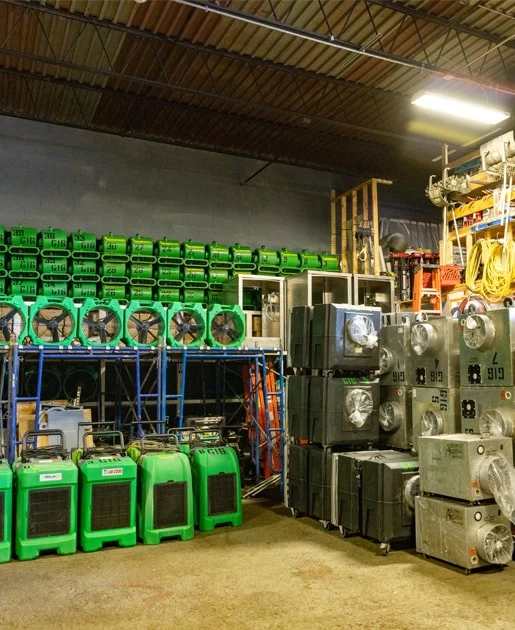
Once the source is identified and contained, extraction begins using industrial-grade equipment. After standing water is removed, the focus shifts to structural drying — moisture meters, thermal imaging, and commercial air movers identify and address hidden moisture inside walls, under flooring, and in framing cavities. This is where most DIY attempts fall short. Surface dryness doesn’t mean the structure is dry, and trapped moisture is what feeds mold growth in the weeks after a flood.
If the inspection reveals asbestos-containing materials or lead paint — common in Glen Cove’s pre-war and mid-century housing stock — licensed abatement is handled before any reconstruction begins. Because we hold a Nassau County General Contractor license, permitted structural restoration through Glen Cove’s city building department is handled in-house, without the homeowner needing to coordinate a separate contractor. The job isn’t done until the space is dry, documented, and cleared for rebuilding.
Flooded basement cleanup in Glen Cove isn’t a single task — it’s a sequence of connected steps that each affect the one that follows. We cover the full sequence: emergency water extraction, structural drying with industrial equipment, moisture mapping with thermal imaging, mold inspection and licensed remediation, contents assessment, sewage decontamination when applicable, and permitted structural restoration. Nothing gets handed off to a second company.
For Glen Cove homeowners specifically, our service includes hazmat evaluation as a standard part of the process. The city’s housing stock ranges from early-20th-century colonials near the Dosoris and Valentine Estates areas to post-war ranch homes and brand-new Garvies Point waterfront condominiums. Older properties may contain asbestos floor tiles, lead paint, or both — materials that require NYS DOL and USEPA-licensed handling before drywall or flooring work can begin. That licensing is already in place. You won’t be told mid-job that a separate abatement contractor needs to be scheduled.
Insurance documentation is also part of our process. Some Glen Cove properties in FEMA Zone AE flood hazard areas carry both homeowners insurance and NFIP flood insurance, and the question of which policy applies to which type of damage is genuinely confusing. We assist with damage documentation and work with insurance carriers to help ensure the claim reflects the full scope of what occurred — so you’re not leaving money on the table because the paperwork wasn’t complete.
How quickly does mold start growing after a basement floods in Glen Cove?
The EPA recommends starting cleanup within 24 to 48 hours of water exposure. If a basement is fully dried within 72 hours, mold growth is unlikely. Beyond that window, mold can begin establishing inside wall cavities, under flooring, and in framing — areas you can’t see and won’t smell until the problem is already significant.
In Glen Cove, that 72-hour window is especially relevant because the city’s most severe flooding events don’t happen gradually. Hurricane Ida dropped nine inches of rain in four hours. Stormwater flooding on streets throughout Glen Cove happens fast and hits hard. By the time the storm passes and you’re assessing the damage, you may already be 12 to 18 hours into that window. Calling immediately — not after the weekend, not after you’ve tried to dry it yourself — is what keeps a manageable water damage event from becoming a mold remediation project.
Does homeowners insurance cover flooded basement cleanup in Glen Cove, NY?
It depends entirely on what caused the flooding. Standard homeowners insurance typically covers sudden, accidental water damage — a burst pipe, a failed water heater, an appliance leak. It does not cover flooding from natural causes like stormwater overflow, storm surge, or rising groundwater. That type of damage falls under flood insurance, which is a separate policy issued through the National Flood Insurance Program (NFIP).
This distinction matters in Glen Cove because the city has both types of flooding risk. Burst pipes and sump pump failures are covered under most homeowners policies. But if your basement flooded because Hempstead Harbor water levels rose during a nor’easter, or because stormwater from a neighboring street overwhelmed your drainage — that’s flood insurance territory. Some Glen Cove properties in FEMA Zone AE are required to carry flood insurance, and many homeowners don’t fully understand what each policy covers until after a claim is filed. We help document damage in a way that supports whichever policy applies to your specific event.
What is Category 3 water damage, and does it apply to my Glen Cove basement?
Water damage is classified in three categories based on contamination level. Category 1 is clean water — a supply line break or clean appliance overflow. Category 2, sometimes called gray water, involves some contamination — a washing machine discharge or sump pump overflow with standing water. Category 3, black water, is the most serious: sewage backup, floodwater that has contacted the ground or traveled through drainage systems, or any water that has been standing long enough to become heavily contaminated.
Glen Cove has documented Category 3 flooding events. During Hurricane Ida’s remnants, residents reported sewage flooding in their homes — a direct result of the storm’s volume overwhelming the city’s drainage infrastructure. If your basement flooded during a major storm event, there is a real possibility that the water contained sewage or groundwater contamination, even if it didn’t look or smell like it initially. Category 3 cleanup requires biohazard protocols, not just drying equipment. Treating contaminated water like clean water puts your family’s health at risk and leaves pathogens behind in the structure.
My Glen Cove home was built before 1978 — does that affect flooded basement cleanup?
Yes, and it’s something most homeowners don’t think about until a contractor brings it up mid-job. Homes built before 1978 may contain asbestos in floor tiles, pipe insulation, joint compound, or ceiling materials. They may also contain lead paint on basement walls, trim, and structural elements. When these materials are disturbed by water — or by the cleanup process itself — they require licensed abatement under New York State and federal law. You can’t simply demo a flooded basement in a pre-war Glen Cove colonial the same way you’d handle a 1990s-build.
Glen Cove’s housing stock includes a significant number of pre-war and mid-century homes, particularly in neighborhoods near the historic estate areas and the Morgan Park waterfront. We hold both the NYS DOL Asbestos License and USEPA Lead and RRP certifications, meaning licensed hazmat handling is built into our process — not something you need to source separately. If asbestos or lead is identified during the initial inspection, it gets addressed before any demolition or reconstruction begins, keeping the job legal, safe, and on schedule.
Do I need a permit for basement restoration work after flooding in Glen Cove?
In most cases, yes. Glen Cove is one of only two incorporated cities in Nassau County — the other is Long Beach — and it has its own independent building department separate from the Town of Oyster Bay that surrounds it. Structural restoration work following water damage, including drywall replacement, framing repair, and flooring, typically requires a building permit issued through the Glen Cove Building Department specifically.
This is different from how permits work in unincorporated Nassau County communities, and it’s a step that homeowners working with out-of-area contractors often run into problems with. We hold a Nassau County General Contractor license that covers work within Glen Cove’s city limits, and our team is familiar with the city’s permitting process. That means the permit gets pulled correctly, the work gets done to code, and you’re not left holding a liability because a contractor skipped the paperwork.
How much does flooded basement cleanup typically cost in Glen Cove, NY?
Cost varies based on the size of the space, the contamination level of the water, and what’s discovered once the walls and flooring are opened up. As a general range, flooded basement cleanup runs between $4 and $12 per square foot, with total project costs typically falling between $1,600 for a minor clean-water event in a small space and $12,000 or more for a larger basement with contaminated water. If structural repairs, mold remediation, or hazmat abatement are required, costs increase from there.
For Glen Cove homeowners, the more useful frame is the cost of not acting fast enough. FEMA estimates that one inch of standing water can cause approximately $25,000 in property damage. A basement with contaminated water and delayed cleanup can average $60,000 in total repair costs once mold, structural damage, and hazmat remediation are factored in. The professional cleanup cost is almost always a fraction of what delayed or incomplete cleanup ends up costing — especially in older Glen Cove homes where water can travel through wall cavities and establish mold behind surfaces that won’t be visible for weeks.