Glen Head's Clay Soil Doesn't Forgive a Slow Response
When water gets into your basement on the North Shore, the clock starts immediately — and the soil your home sits on makes every hour count more. We handle flooded basement cleanup in Glen Head, NY with the licenses, equipment, and local knowledge to get it right the first time.
I needed a professional consultation explanation of procedure for safe removal of Asbestos in my apartment complex. Without having an account yet, I was very impressed with the caring, knowledgeable and generous advice offered by Jessica, and will look forward to doing business in the future. Thank you so much! I feel much more informed about a sometimes scary endeavor. Peace. Nancy Silva Mineola, NY.
Mia Munoz
Used this company to clean up some water flood in my house. They were fast and easy to work with.very professional, Would recommend to anyone!
Nini Valle
Great company, had a flood and they responded quickly and efficiently. Billed my insurance company directly. I highly recommend this company!
joe colapietro, jr
I had pipe freeze in my basement right before a snow storm and they made to within an hour to help start the clean up process. They we by our side throughout the entire process and even helped with the insurance company. They did such a great job with the cleanup, repair, remidiation, I contracted them to perform the repairs and finishes in the basement. They came with enough manpower and material to get the job done. Leo and Jessica were nothing but a pleasure to deal with!!
Cristian Arredondo c
I had some water damage in my home and Green Island was able to take care of my issue quickly and effectively. I am very pleased with the work they did. They responded quickly and were very professional.
Michael M
Outstanding service! From the office to the field crew everyone was friendly, helpful and responsive. I highly recommend Green Island Group.
A dry floor isn’t the finish line. It’s just the beginning of what a real cleanup looks like. When basement flooding is handled correctly, you get confirmed-dry walls, no hidden moisture behind drywall or under flooring, and documentation that proves the job was done — not just assumed done.
That matters a lot in Glen Head. The glacial till soil throughout the North Shore holds water against your foundation long after the rain stops. Clay layers in that soil don’t drain — they press. So even after standing water is removed, moisture continues to migrate through concrete block walls and into the structural materials of your home. Industrial drying equipment and professional moisture detection aren’t optional here — they’re the difference between a resolved problem and a mold issue six weeks later.
It matters for another reason too. Glen Head homes sell in a median of 26 days, often with multiple offers. If water damage or mold shows up in a buyer’s inspection, it doesn’t just slow the deal — it can kill it or trigger a major price reduction. A professionally remediated basement with documented moisture readings is a protected asset. A DIY cleanup with a rented shop vac is a liability waiting to surface.
Every License the Job Actually Requires — Under One Roof
We’re not a general contractor who added water damage to our service list. We hold the NYS DOL Mold Remediation License, NYS DOL Asbestos Abatement License, USEPA Lead and RRP certifications, IICRC Water Damage certification, and a Nassau County General Contractor license — all active, all verifiable by license number.
That combination matters specifically in Glen Head, where the average home is about 50 years old. Homes built before 1978 commonly contain asbestos floor tiles, lead paint, and older pipe insulation. When water hits those materials, the cleanup isn’t just a drying job — it’s a licensed hazmat operation. Most restoration companies serving Nassau County can’t legally complete that full scope. We can, without subcontracting or stopping mid-project.
We already serve Glen Head. We’ve worked throughout the 11545 ZIP code on water damage restoration and sewage cleanup projects. This isn’t a company learning your neighborhood — we know it.
Basement Flooding Remediation Process, Glen Head NY
From Standing Water to Structurally Dry — Here's the Sequence
The first call triggers an emergency response. We operate 24/7 because basement flooding doesn’t wait for business hours, and the 72-hour mold window is a hard deadline — not a guideline. The EPA recommends beginning cleanup within 24 to 48 hours of water intrusion. That’s the window our process is built around.
Once on-site, we assess the source and category of water before anything else. Clean water from a burst pipe is handled differently than groundwater that pushed through your foundation under hydrostatic pressure — and differently again from a sewage backup, which is a full Category 3 biohazard situation requiring decontamination protocols, not just extraction. In a 50-year-old Glen Head home, that initial assessment also includes checking for asbestos-containing materials and lead paint before any demolition or structural work begins. Skipping that step isn’t just sloppy — it’s illegal under New York State law.
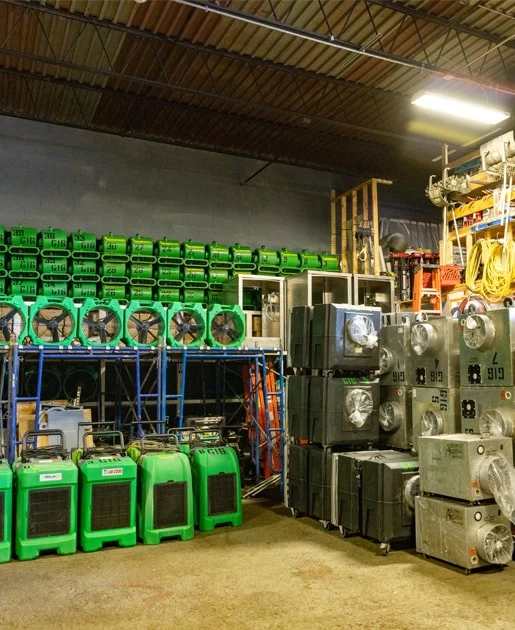
After extraction comes structural drying using industrial dehumidifiers and high-velocity air movers. Moisture readings are taken throughout the process to confirm that walls, flooring, and framing are genuinely dry — not just surface dry. If mold remediation is required, it’s handled under our NYS DOL Mold License. If structural restoration follows — drywall, framing, flooring — our Nassau County General Contractor license covers it, including any permits required through the Town of Oyster Bay Building Department. One company, full scope, start to finish.
Flooded basement cleanup in Glen Head covers more ground than most homeowners expect going in. Our full scope includes emergency water extraction, structural drying with industrial equipment, moisture mapping throughout the affected area, mold assessment and remediation if needed, and complete documentation of the process for insurance purposes. We handle insurance communication directly — including billing the carrier — so you’re not spending your evenings on hold trying to explain damage to an adjuster.
For older homes in Glen Head, the scope frequently extends into asbestos testing and abatement, lead assessment, and hazmat-compliant material handling before structural restoration begins. These aren’t add-ons — they’re legal requirements under New York State and federal regulations when pre-1978 materials are disturbed during a flood cleanup. Having a contractor who holds all of these licenses in-house means the job doesn’t stop, get delayed, or get handed off mid-project.
One important distinction worth understanding: standard homeowners insurance typically covers sudden, accidental water damage — a burst pipe, a failed water heater — but does not cover natural flooding from groundwater or storm runoff. In Glen Head, where the primary flooding mechanism is hydrostatic pressure from clay-heavy glacial soil during heavy rain events, knowing which coverage applies and documenting the damage correctly for the right type of claim can be the difference between a covered loss and a significant out-of-pocket expense. We help you navigate that from the start.
Why do Glen Head basements flood even when there's no nearby water source?
Glen Head sits on the North Shore Terminal Moraine — the ridge of glacial deposits left behind when the last continental glacier stopped roughly 20,000 years ago. The soil throughout this area is glacial till, a dense mix of clay, sand, and boulders that doesn’t drain evenly. Clay layers within that soil are nearly impermeable, which means that during a heavy rain event, water can’t move downward and instead migrates laterally, building up against your basement walls and foundation footings. This is called hydrostatic pressure, and it’s the primary reason North Shore basements flood — not burst pipes, not appliance failures, but water-saturated soil pressing against your foundation from every direction.
Once that pressure exceeds what the foundation can resist, water pushes through hairline cracks, mortar joints, or the cove joint at the base of the basement floor. The hilly terrain in Glen Head compounds this — rainwater from higher ground flows downhill and concentrates against homes situated in natural drainage depressions. Understanding this mechanism changes how a cleanup is approached, where moisture is looked for, and what actually needs to be addressed to prevent it from happening again.
How quickly does mold start growing after a basement floods in Glen Head?
Mold can begin growing within 24 to 48 hours of water exposure, according to the EPA. The practical target is 72 hours — if a flooded basement is fully dried out within that window, mold growth is unlikely. Miss it, and you’re not just dealing with water damage anymore.
What makes this timeline especially tight in Glen Head is the ambient moisture environment that follows a flooding event here. Because the glacial till soil retains water against your foundation long after the rain ends, the humidity level inside a flooded basement stays elevated even after standing water is removed. That means the mold clock doesn’t stop when the extraction is done — it stops when the walls, insulation, and structural materials are confirmed dry with professional moisture detection equipment. Running a fan and assuming the problem is resolved is how Glen Head homeowners end up with a mold remediation job on top of a water damage job. We handle both scopes under one roof, but catching it before mold establishes itself is significantly less disruptive and less expensive.
Does my homeowners insurance cover basement flooding from heavy rain in Nassau County?
This is one of the most common and costly misunderstandings in the entire category. Standard homeowners insurance typically covers sudden, accidental water damage — a pipe that bursts, a water heater that fails, an appliance that malfunctions. It does not cover flooding that originates from outside the home, including groundwater that enters through your foundation under hydrostatic pressure or storm runoff that overwhelms your drainage system. That type of flooding is generally only covered under a separate flood insurance policy, typically issued through FEMA’s National Flood Insurance Program.
In Glen Head, where the primary flooding mechanism is groundwater pressure from clay-heavy glacial soil during heavy rain events, many homeowners discover after the fact that their standard policy doesn’t apply. The average NFIP flood insurance claim payment is nearly $46,000 — which tells you something about what these events actually cost. Documenting the source and cause of the water intrusion correctly from the start is critical for filing the right type of claim. We assist with that documentation and communicate directly with your insurance carrier, which removes a significant amount of confusion and administrative burden from a situation that’s already stressful enough.
My Glen Head home is about 50 years old — does that change what's involved in a basement cleanup?
It does, and significantly. Homes built before 1978 — which covers most of Glen Head’s housing stock, given the average home age of approximately 50 years — commonly contain asbestos in floor tiles, pipe insulation, ceiling tiles, and joint compound. They may also contain lead-based paint on walls, trim, and other surfaces. When a basement floods in a home like this, water doesn’t just damage drywall and flooring. It potentially disturbs asbestos-containing materials and mobilizes lead dust in ways that require licensed hazmat handling before, during, and after the cleanup.
Under New York State and federal regulations, asbestos abatement must be performed by a NYS DOL-licensed asbestos contractor, and lead work must be handled by a USEPA Lead and RRP-certified firm. A standard restoration company that doesn’t hold these licenses cannot legally complete a full cleanup in an older Glen Head home — they’d need to stop work, bring in a subcontractor, and restart. We hold both licenses in-house, which means the job moves forward without delays, without handoffs, and without the liability of unlicensed work being performed in your home.
What's the difference between water extraction and actual basement flood remediation?
Water extraction removes standing water. Remediation addresses everything the water touched — and in most cases, that’s a much larger scope than what’s visible from the doorway. After extraction, moisture has typically wicked into concrete block walls, penetrated under flooring, saturated insulation, and migrated into wood framing. None of that is addressed by a wet-vac or a box fan. It requires industrial dehumidifiers, high-velocity air movers, and professional moisture detection equipment to confirm that structural materials are genuinely dry throughout — not just on the surface.
In Glen Head specifically, the remediation scope often includes mold assessment, asbestos and lead screening in older homes, and structural restoration once drying is confirmed. If mold is present, New York State law requires that remediation be performed by a separately licensed mold remediation contractor — a conflict-of-interest protection built into state statute. We hold the NYS DOL Mold Remediation License and can handle that scope legally and completely. Many companies advertising flooded basement cleanup in Nassau County cannot say the same. Before you hire anyone, ask for their NYS DOL Mold License number. If they can’t provide it, they’re not legally authorized to perform mold remediation in New York State.
How long does flooded basement cleanup typically take for a home in Glen Head?
The honest answer is that it depends on three things: the category of water involved, how much of the basement was affected, and how quickly the response started. A clean-water event caught early in a smaller space can be extracted and dried within three to five days. A larger basement with contaminated water — or one where the response was delayed past the 72-hour mold window — can take one to two weeks or longer once mold remediation and structural restoration are factored in.
For older Glen Head homes, add time for asbestos testing if materials need to be assessed before work begins. Testing results typically come back within 24 to 48 hours, but that window has to be built into the project timeline before any demolition or material removal can legally proceed. Structural restoration — replacing drywall, flooring, or framing — requires permits through the Town of Oyster Bay Building Department, and permit timelines vary. We manage all of that coordination, including permit pulling under our Nassau County General Contractor license, so the project doesn’t stall waiting on paperwork. The goal throughout is to move as fast as the process legitimately allows — because every day your basement is out of commission is a day your home isn’t fully yours.