Flooded Basement Cleanup in Great Neck Gardens, NY
Peninsula Homes Need More Than a Pump and a Fan
When water gets into a mid-century Great Neck Gardens home, what’s visible on the surface is rarely the whole problem. We handle flooded basement cleanup from extraction to full restoration — licensed for everything your home may require.
I needed a professional consultation explanation of procedure for safe removal of Asbestos in my apartment complex. Without having an account yet, I was very impressed with the caring, knowledgeable and generous advice offered by Jessica, and will look forward to doing business in the future. Thank you so much! I feel much more informed about a sometimes scary endeavor. Peace. Nancy Silva Mineola, NY.
Mia Munoz
Used this company to clean up some water flood in my house. They were fast and easy to work with.very professional, Would recommend to anyone!
Nini Valle
Great company, had a flood and they responded quickly and efficiently. Billed my insurance company directly. I highly recommend this company!
joe colapietro, jr
I had pipe freeze in my basement right before a snow storm and they made to within an hour to help start the clean up process. They we by our side throughout the entire process and even helped with the insurance company. They did such a great job with the cleanup, repair, remidiation, I contracted them to perform the repairs and finishes in the basement. They came with enough manpower and material to get the job done. Leo and Jessica were nothing but a pleasure to deal with!!
Cristian Arredondo c
I had some water damage in my home and Green Island was able to take care of my issue quickly and effectively. I am very pleased with the work they did. They responded quickly and were very professional.
Michael M
Outstanding service! From the office to the field crew everyone was friendly, helpful and responsive. I highly recommend Green Island Group.
The goal isn’t just a basement that looks dry — it’s a basement that tests dry. We use professional moisture meters and thermal imaging to find water inside concrete block walls, beneath original tile floors, and within insulation that a fan and a visual check will never catch. In a neighborhood where most homes were built in the 1940s through 1960s, that hidden moisture is the rule, not the exception.
Great Neck Gardens sits on a peninsula surrounded by Little Neck Bay and Manhasset Bay, with a groundwater table that sits naturally close to the surface. After a nor’easter or a heavy rain event overwhelms North Hempstead’s drainage infrastructure, water doesn’t just come in from above — it pushes up through foundation cracks and seeps through aging concrete block walls that were never built with modern waterproofing. If the basement isn’t genuinely dry within 72 hours, you’re not dealing with a water damage job anymore. You’re dealing with mold.
That’s the outcome that matters most here: stopping the clock before that threshold passes. A thorough job now — done right, documented properly — is the difference between a manageable cleanup and a remediation project that costs three to five times more and disrupts your household for weeks.
We hold the NYS DOL Mold Contractor License, NYS DOL Asbestos License, USEPA Lead and RRP certifications, IICRC Water and Fire Damage certification, and a General Contractor license for Nassau County — all under one roof. That’s not a list of marketing credentials. It’s the legal requirement for doing this work correctly in homes like the ones in Great Neck Gardens.
Most of the housing in this hamlet predates 1978. That means asbestos floor tiles, lead paint, and original plumbing are realistic possibilities the moment a contractor starts pulling up wet materials. A company without the asbestos and lead licenses has to stop work and bring someone else in — or worse, keep going and create a liability problem for you. We don’t subcontract the hard parts.
Serving Great Neck Gardens and the North Shore communities of Nassau County is part of our core territory — not a stretch of our service map. We know the peninsula, the housing stock, and what these basements actually look like.
Basement Flooding Remediation Process Nassau County
What Happens From Your First Call to the Final Walkthrough
When you call, you reach a live person — not a voicemail, not a callback queue. We dispatch immediately because the 72-hour mold window starts the moment water enters the space, and in a Great Neck Gardens home where the groundwater table is already elevated, that clock moves fast.
On arrival, the first priority is assessing the water category. Clean water from a burst pipe is handled differently than groundwater intrusion or a sewer backup through a floor drain — and older North Hempstead sewer infrastructure is known to back up into basement drains during heavy rain events, which means Category 3 contamination is a real possibility here, not a hypothetical. That assessment determines the full scope of what needs to happen before a single piece of equipment gets placed.
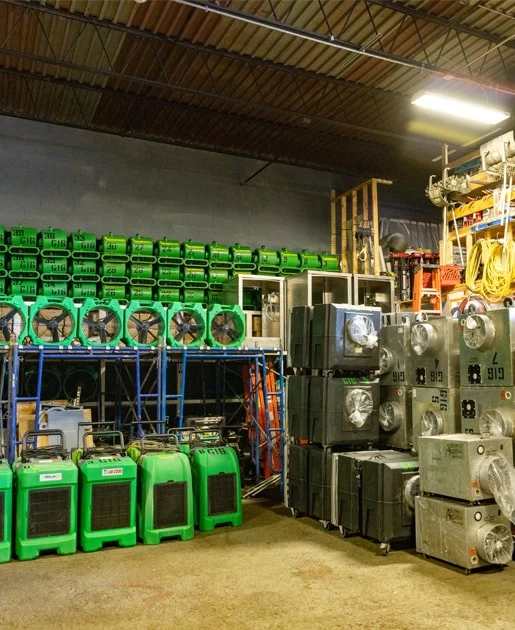
From there, extraction and structural drying begin using industrial-grade equipment — not consumer-grade dehumidifiers. We monitor moisture readings throughout the drying process, not just at the end. If structural materials need to come out, we handle that under our Nassau County General Contractor license and pull the required permits through the Town of North Hempstead Building Department. If asbestos or lead is present in the disturbed materials, we handle abatement in-house. When the final moisture readings confirm the space is genuinely dry, we walk you through the documentation — which you’ll need for your insurance claim.
Full Scope Restoration Built for Older North Shore Homes
Flooded basement cleanup in Great Neck Gardens isn’t a single service — it’s a sequence of licensed work that has to happen in the right order. It starts with emergency water extraction and moves through structural drying, moisture verification, mold prevention treatment, and — when the home’s age requires it — asbestos or lead abatement before any demolition or reconstruction begins. Skipping that sequence, or handing it off to a company that can only handle part of it, is how a manageable situation becomes a drawn-out, expensive one.
Because the majority of homes in Great Neck Gardens were built during the postwar suburban expansion, original vinyl asbestos floor tiles and lead-painted surfaces are common in the basement environments we work in. Our NYS DOL Asbestos and USEPA Lead certifications mean we can identify, contain, and legally remove those materials without stopping work or bringing in a separate abatement contractor. The job stays on one timeline, with one point of contact.
We also handle the insurance documentation side — damage reports, moisture readings, and remediation records formatted the way carriers need them. Whether your claim involves a standard homeowners policy covering a burst pipe or a more complex situation involving groundwater intrusion, having professional documentation from a licensed contractor makes a real difference in how quickly and completely a claim gets processed.
What actually causes basement flooding in Great Neck Gardens homes?
Great Neck Gardens sits on a peninsula with water on three sides — Little Neck Bay to the north and west, Manhasset Bay to the east. That geography means the groundwater table is naturally close to the surface here, and after a prolonged rain event or a nor’easter pushing water from Long Island Sound toward the peninsula, that table rises. When it does, water doesn’t need a dramatic entry point — it finds hairline cracks in aging concrete block foundations, seeps through floor joints, and pushes up through basement slabs.
The drainage infrastructure in North Hempstead communities was built for mid-20th century rainfall patterns. When a storm drops several inches in a short window — which happens more frequently now than it did when these systems were designed — storm drains overflow and surface water has nowhere to go except into low-lying areas and basement foundations. Add in the fact that most homes here were built without modern waterproofing membranes, and you have a combination of factors that makes basement water intrusion a recurring reality for Great Neck Gardens homeowners, not a freak event.
Does my homeowners insurance cover a flooded basement in Great Neck, NY?
It depends entirely on what caused the flooding — and this is one of the most common points of confusion homeowners face after a basement flood. Standard homeowners insurance typically covers sudden, accidental water damage from internal sources: a burst pipe, a failed water heater, an appliance leak. What it generally does not cover is water that enters from outside — groundwater intrusion, storm surge, or surface water backing up through a floor drain.
For those causes, you’d need a separate flood insurance policy through NFIP or a private carrier. Given Great Neck Gardens’ peninsula location and the groundwater dynamics described above, a significant portion of basement flooding events here fall into the category that standard homeowners policies exclude. The distinction matters because it affects not just your claim but how the remediation work gets documented and categorized. We provide detailed damage documentation from the initial assessment forward — the kind of professional record that gives you the clearest possible picture of what happened, what was done, and what your coverage options actually are.
How quickly does mold grow after a basement floods in a Long Island home?
The EPA recommends beginning mold remediation within 24 to 48 hours of water exposure. The industry benchmark is 72 hours — if a basement is fully dried within that window, mold growth is unlikely. After 72 hours, particularly in a space with limited airflow and organic materials like wood framing, drywall, and insulation, mold can begin colonizing surfaces that still appear visually clean.
In a Great Neck Gardens home — where basement walls are often original concrete block and insulation may be decades old — moisture doesn’t just sit on surfaces. It absorbs into porous materials and stays there long after the standing water is gone. That’s why consumer-grade fans and dehumidifiers often fail to prevent mold even when homeowners act quickly: they address surface moisture but miss what’s absorbed deeper. Professional structural drying with industrial equipment and ongoing moisture monitoring is what actually hits the 72-hour threshold with confidence. Mold remediation in New York State also requires a NYS DOL Mold Contractor License for projects above 10 square feet — something worth confirming before hiring any company for this work.
My Great Neck Gardens home was built in the 1950s — should I be worried about asbestos during cleanup?
Yes, and it’s worth understanding specifically why. Homes built between the 1940s and late 1970s commonly contain vinyl asbestos floor tiles — a standard flooring material during that era that was used extensively in basements, kitchens, and utility areas. Pipe insulation, ceiling tiles, and joint compound from the same period may also contain asbestos. When a basement floods and these materials are disturbed during extraction or demolition, asbestos fibers can become airborne.
New York State law requires a NYS DOL Asbestos Contractor License for any project involving the disturbance of asbestos-containing materials. A standard water damage restoration company — without that license — cannot legally perform that work and may not be equipped to identify the risk in the first place. We hold the NYS DOL Asbestos License and routinely work in the mid-century housing stock that makes up the majority of Great Neck Gardens. If asbestos-containing materials are present in your basement, we handle assessment, containment, and abatement in-house — without stopping work, subcontracting, or adding weeks to your timeline.
How long does flooded basement cleanup typically take in Nassau County?
For a straightforward water intrusion event — clean water, no structural damage, no hazmat materials — the drying process typically takes three to five days using professional equipment, with moisture monitoring throughout. The extraction itself can often be completed within hours of arrival. What extends timelines is complexity: Category 3 sewage contamination, the presence of asbestos or lead in materials that need to come out, or structural damage that requires permitted reconstruction through the Town of North Hempstead Building Department.
In Great Neck Gardens specifically, the age of the housing stock means complexity is more common than not. Older concrete block foundations absorb moisture differently than modern poured concrete, and original insulation materials dry more slowly and may need to be removed entirely rather than dried in place. The honest answer is that the timeline depends on what the moisture readings and material assessment reveal — which is why a thorough initial inspection matters as much as the speed of the first response. We give you a realistic scope on day one, not an estimate that changes every time we find something new.
Do I need a permit for basement restoration work in Great Neck Gardens after a flood?
For work that goes beyond drying and cleaning — replacing drywall, framing, flooring, or any structural element — yes, a building permit is required. Because Great Neck Gardens is an unincorporated hamlet with no village government of its own, all permits are issued by the Town of North Hempstead Building Department, not a local village hall. That’s a detail that matters practically: if you hire a contractor who isn’t familiar with North Hempstead’s permitting process, permit delays can add significant time and cost to your restoration.
We hold a General Contractor license for Nassau County and handle permit applications through the Town of North Hempstead as part of the restoration process. You don’t need to navigate that separately or coordinate between a restoration company and a GC — it’s included in the scope of work. Unpermitted structural work also creates real problems at resale, which matters in a community where home values are as significant as they are in the Great Neck area. Doing it right the first time, with proper permits and licensed contractors, protects both your home and your investment.