When the Peninsula's Water Table Wins, Here's What Stops the Clock
Great Neck sits on water on three sides — and your basement knows it. We respond 24/7 with licensed flooded basement cleanup built for exactly what North Shore homes face. When water enters your basement, the clock starts immediately. Mold begins growing within 24 to 48 hours, and if your basement isn’t fully dried within 72 hours, the scope of what needs to happen — and what it costs — grows exponentially. Most Great Neck residents are commuting into Manhattan when flooding starts. By the time you get home, assess the damage, and make the call, a significant chunk of that critical window is already gone.
I needed a professional consultation explanation of procedure for safe removal of Asbestos in my apartment complex. Without having an account yet, I was very impressed with the caring, knowledgeable and generous advice offered by Jessica, and will look forward to doing business in the future. Thank you so much! I feel much more informed about a sometimes scary endeavor. Peace. Nancy Silva Mineola, NY.
Mia Munoz
Used this company to clean up some water flood in my house. They were fast and easy to work with.very professional, Would recommend to anyone!
Nini Valle
Great company, had a flood and they responded quickly and efficiently. Billed my insurance company directly. I highly recommend this company!
joe colapietro, jr
I had pipe freeze in my basement right before a snow storm and they made to within an hour to help start the clean up process. They we by our side throughout the entire process and even helped with the insurance company. They did such a great job with the cleanup, repair, remidiation, I contracted them to perform the repairs and finishes in the basement. They came with enough manpower and material to get the job done. Leo and Jessica were nothing but a pleasure to deal with!!
Cristian Arredondo c
I had some water damage in my home and Green Island was able to take care of my issue quickly and effectively. I am very pleased with the work they did. They responded quickly and were very professional.
Michael M
Outstanding service! From the office to the field crew everyone was friendly, helpful and responsive. I highly recommend Green Island Group.
What you get when flooded basement cleanup is handled correctly is a basement that’s genuinely dry — not surface dry, but verified dry, down into the walls and subfloor where moisture hides. You get documentation your insurance carrier will actually accept. And if your Great Neck home was built before 1970, which describes the majority of the peninsula’s housing stock, you get a team that’s licensed to handle what might be behind those walls — not just the water on the floor.
Great Neck isn’t like inland Nassau County towns. You’ve got Long Island Sound to the north, Manhasset Bay to the east, and Little Neck Bay to the west. When a storm hits, it doesn’t come from one direction — and the water table here is already naturally high. Heavy rain doesn’t just fall on your roof. It saturates the ground and pushes up through foundation walls and floor cracks whether you’re near the water or not. This is the reality of living on this peninsula, and it’s why we’ve built our process specifically around what Great Neck basements actually face.
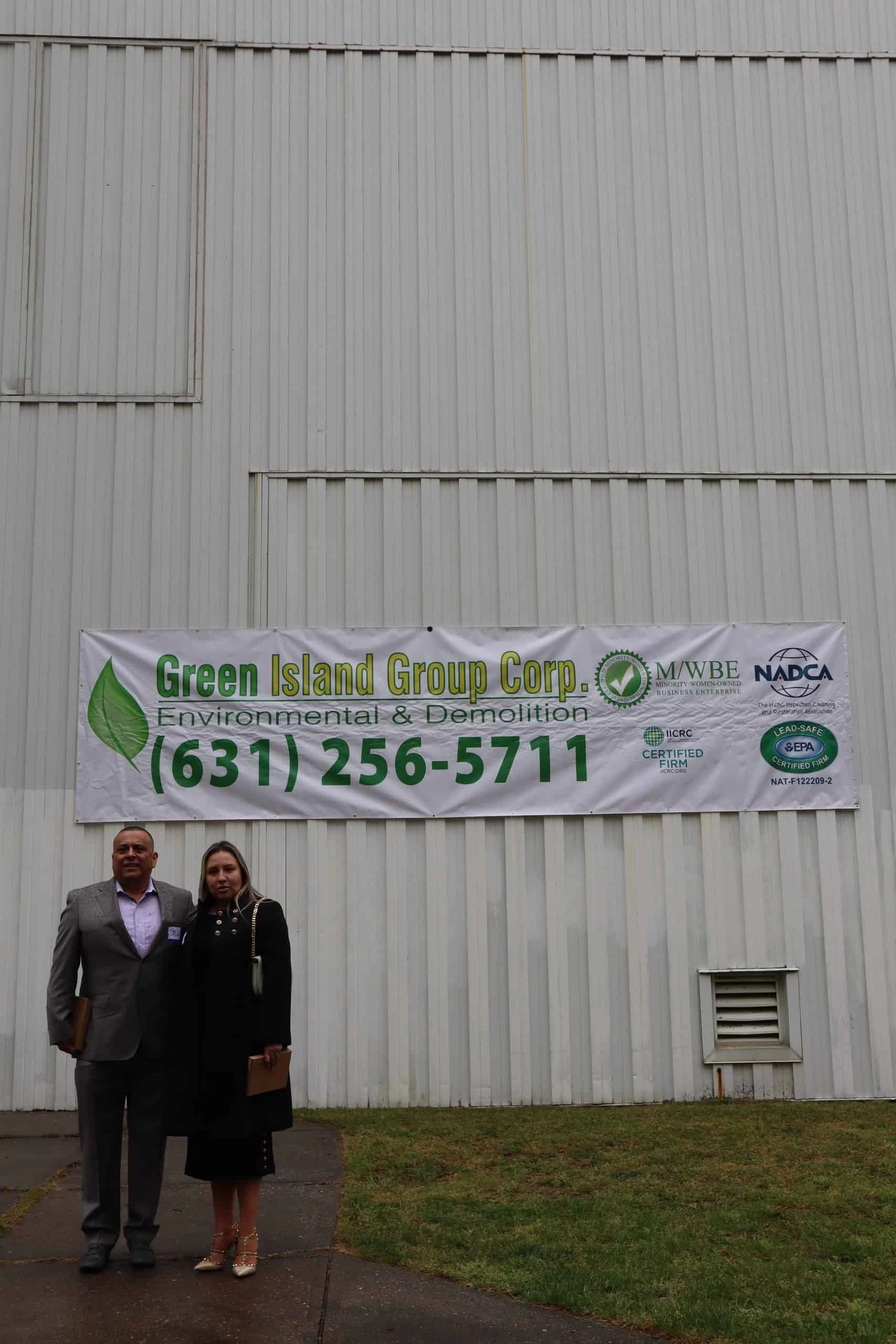
We’re a full-service disaster restoration and environmental remediation company serving Nassau County, Suffolk County, and the greater New York metro area. What sets us apart isn’t a slogan — it’s a license stack that most contractors in this region simply don’t have. NYS DOL Mold License. NYS DOL Asbestos License. USEPA Lead and RRP certifications. IICRC Water Damage Certification. Nassau County General Contractor license. All of it, in one company.
That matters specifically in Great Neck, where roughly 72% of the housing stock was built before 1970. When water floods a basement in a home from the 1940s or 1950s — the kind you’ll find throughout Great Neck Estates, Kings Point, and the older neighborhoods along Middle Neck Road — it can disturb asbestos floor tiles, pipe insulation, and lead-based materials that were standard construction at the time. Most water damage companies aren’t licensed to touch any of that. We are.
One call covers the full scope. From emergency extraction through structural restoration, the same licensed team handles it — no handoffs, no gaps in accountability, no second contractor to coordinate while your home sits wet.
What Actually Happens From the First Call to the Final Walkthrough
It starts with a call — any hour, any day. When you reach us, you’re talking to someone who can actually dispatch a crew, not an answering service that takes a message. Given how many Great Neck residents discover flooding after returning from a full day in the city, getting a crew moving immediately is the difference between staying inside the 72-hour mold window and blowing past it.
When our team arrives, the first step is assessing the full scope — not just the standing water, but the source, the contamination category, and what the water may have reached inside the walls, framing, and subfloor. In Great Neck’s older homes, that assessment also includes checking whether any regulated materials — asbestos tile, pipe insulation, lead paint — have been disturbed by the flooding. This isn’t a step most contractors take, because most contractors aren’t licensed to handle what they might find. We are.
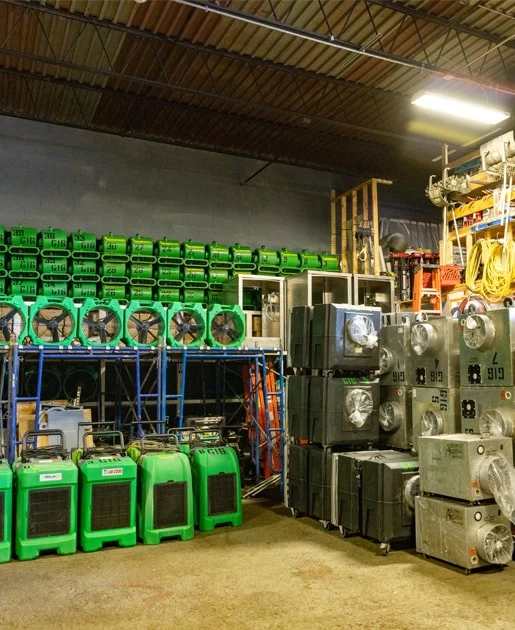
From there, water extraction begins using industrial-grade equipment, followed by structural drying with professional dehumidifiers and air movers calibrated to IICRC standards. Moisture meters verify that drying is complete inside the materials — not just on the surface. If mold remediation, asbestos handling, or structural repairs are needed, those happen next, all under the same roof. If your village requires permits for structural work — which Great Neck’s Building Department often does — we pull them. The job isn’t done until the space is restored and verified, not just dried.
Built for What Great Neck Basements Actually Deal With
Flooded basement cleanup in Great Neck isn’t a single service — it’s a sequence of decisions that depend entirely on what the water brought with it and what it touched. Clean water from a burst pipe is handled differently than groundwater that pushed up through a foundation floor, which is handled differently again than sewage backup. The contamination category determines the protective protocols, the disposal requirements, and what materials can be salvaged versus what needs to come out.
For homes throughout Kings Point, Great Neck Estates, and the older neighborhoods closer to Manhasset Bay, the scope frequently extends beyond water removal. Pre-war and post-war construction means regulated materials are often present, and water that disturbs them creates a liability that doesn’t go away just because the floor dried out. Our NYS DOL Asbestos License and USEPA Lead/RRP certification mean that if the cleanup uncovers something that requires licensed handling, the team already on-site can manage it — legally and completely.
The full service covers emergency water extraction, structural drying with verified moisture clearance, mold assessment and remediation where needed, hazardous material handling where applicable, and complete structural restoration including drywall, framing, and flooring. We handle insurance documentation throughout the process, which matters in a community where many homeowners carry both a standard homeowners policy and a separate NFIP flood insurance policy. We work with both — helping you build the documentation that supports a complete claim.
Does Great Neck's location on the peninsula make basement flooding more likely than other Nassau County towns?
Yes, and it’s not a close comparison. Great Neck is surrounded by water on three sides — Long Island Sound to the north, Manhasset Bay to the east, and Little Neck Bay to the west. That coastal exposure means storm surge from nor’easters and hurricanes can push water toward the peninsula from multiple directions at once. Inland towns like Mineola or Levittown don’t face that dynamic.
Beyond coastal exposure, Nassau County’s water table is naturally high, and the Great Neck peninsula amplifies that. During heavy rainfall, groundwater rises and enters basements through foundation cracks and floor joints even in homes that aren’t near the shoreline. The Village of Great Neck has formally acknowledged this in its own municipal code — designating large areas within the village as flood-prone based on elevation, water table depth, and soil characteristics, and prohibiting new basement construction in certain zones. If your home is in one of those areas, flooding isn’t a freak event. It’s a documented, recurring risk.
How quickly does mold grow after a basement floods, and what does that mean for me?
Mold can begin growing within 24 to 48 hours of water exposure. The critical window for preventing it is 72 hours — if a basement is fully dried within that timeframe, mold growth is unlikely. After 72 hours, the situation changes significantly. Mold remediation becomes a separate, licensed scope of work on top of the water damage cleanup, and the total cost of the project increases accordingly.
Here’s where the Great Neck commuter dynamic matters. If you leave for the city at 7 a.m. and your basement starts flooding at 8 a.m., you may not discover it until 7 p.m. or later. By the time you’ve assessed the damage and made the call, you could already be 12 or more hours into that 72-hour window. That’s why our 24/7 emergency response isn’t just a convenience — it’s a functional necessity for this community. The faster a crew is dispatched, the better the odds of staying inside the window that keeps mold out of the picture entirely.
My Great Neck home was built in the 1950s — does that change what's involved in basement cleanup?
It does, and it’s worth understanding before you hire anyone. Homes built before the mid-1970s commonly contain asbestos-containing materials — floor tiles, pipe insulation, ceiling tiles, and joint compound were all manufactured with asbestos during that era. Homes built before 1978 may also have lead-based paint. When a basement floods, water can disturb these materials, spread them, and create a hazard that outlasts the water itself.
Most water damage contractors hold an IICRC certification, which covers water extraction and drying. What it doesn’t cover — and what most contractors aren’t licensed to handle — is asbestos assessment and removal or lead-safe work practices. In New York State, those require separate licenses issued by the NYS Department of Labor. We hold both. If your 1950s home in Great Neck Estates or Kings Point has regulated materials in the basement and a contractor who isn’t licensed to handle them disturbs them during cleanup, you’re left with a liability problem that’s worse than the original flood. Knowing what your contractor is actually licensed to do before they start is not a minor detail.
Will my homeowners insurance cover a flooded basement in Great Neck, NY?
It depends on the source of the water, and the distinction matters more than most people realize. Standard homeowners insurance typically covers sudden, accidental water damage — a burst pipe, a failed water heater, an appliance malfunction. It generally does not cover flooding caused by groundwater rising through the foundation or storm surge entering the home. For that type of flooding, you need a separate flood insurance policy, typically through the National Flood Insurance Program.
Many Great Neck homeowners in FEMA-designated flood zones are required to carry NFIP flood insurance as a condition of their mortgage, and some carry both policies. The challenge is that the two policies cover different things, and documenting a claim correctly for each one requires different evidence. We handle insurance documentation throughout the cleanup process — photos, moisture readings, scope reports — and assist with carrier communication for both types of policies. Given that the average NFIP flood claim payment is approximately $46,000, having professional documentation in your corner from the start makes a real difference in how a claim resolves.
What's the difference between water extraction and full basement flooding remediation?
Water extraction is the first step — removing standing water from the space using industrial pumps and wet-vac equipment. It’s necessary, but it’s not the job. After extraction, the structure is still saturated. Concrete, wood framing, drywall, insulation, and subfloor materials all hold moisture that doesn’t evaporate on its own, and that hidden moisture is what feeds mold growth in the weeks after a flood.
Full basement flooding remediation means addressing the entire moisture problem, not just the visible water. That includes structural drying using industrial dehumidifiers and air movers, moisture verification using professional meters that read inside materials — not just on surfaces — and, where needed, removal of materials that can’t be dried and must be replaced. In Great Neck’s older homes, remediation may also include assessment and handling of any regulated materials disturbed by the water. The job isn’t complete until moisture readings confirm the structure is dry to IICRC standards — not until the floor looks dry, not until the dehumidifier stops running, but until the numbers say so.
How much does flooded basement cleanup typically cost in Great Neck, NY?
The honest answer is that it varies, and the range is wide. Industry pricing for professional flooded basement cleanup runs roughly $4 to $12 per square foot, depending primarily on the contamination category of the water and the scope of what’s affected. Clean water from a burst pipe sits at the lower end. Groundwater or sewage backup — both of which are realistic scenarios in Great Neck given the peninsula’s water table and aging infrastructure — sit at the higher end.
For Great Neck specifically, a few factors tend to push scope and cost upward compared to other Nassau County communities. The age of the housing stock means regulated materials are frequently present, and licensed handling of asbestos or lead adds to the scope when it’s required. Finished basements — common in the area’s larger homes — require more material removal and reconstruction than unfinished spaces. And homes in FEMA flood zones that sustain substantial damage may trigger permit requirements from the Village Building Department before structural repairs can begin. What’s consistent is this: the cost of thorough, licensed remediation on a home worth $1 million or more is a fraction of what it costs to redo the job six months later when hidden mold surfaces — or at the point of sale when an inspection catches what the first contractor missed.