When the Bay Comes In, Your Great River Basement Needs More Than a Mop
Great River sits between the Great South Bay and the Connetquot River and when either one rises, basements fill fast. We respond 24/7 with the licensing, equipment, and experience to handle what South Shore flooding actually brings to your home.
I needed a professional consultation explanation of procedure for safe removal of Asbestos in my apartment complex. Without having an account yet, I was very impressed with the caring, knowledgeable and generous advice offered by Jessica, and will look forward to doing business in the future. Thank you so much! I feel much more informed about a sometimes scary endeavor. Peace. Nancy Silva Mineola, NY.
Mia Munoz
Used this company to clean up some water flood in my house. They were fast and easy to work with.very professional, Would recommend to anyone!
Nini Valle
Great company, had a flood and they responded quickly and efficiently. Billed my insurance company directly. I highly recommend this company!
joe colapietro, jr
I had pipe freeze in my basement right before a snow storm and they made to within an hour to help start the clean up process. They we by our side throughout the entire process and even helped with the insurance company. They did such a great job with the cleanup, repair, remidiation, I contracted them to perform the repairs and finishes in the basement. They came with enough manpower and material to get the job done. Leo and Jessica were nothing but a pleasure to deal with!!
Cristian Arredondo c
I had some water damage in my home and Green Island was able to take care of my issue quickly and effectively. I am very pleased with the work they did. They responded quickly and were very professional.
Michael M
Outstanding service! From the office to the field crew everyone was friendly, helpful and responsive. I highly recommend Green Island Group.
The water is gone, but that doesn’t mean the problem is over. What’s left behind inside your walls, under your flooring, in the insulation is where the real damage compounds. Mold starts growing within 24 to 48 hours. In a Great River home built in or before 1970, which describes a large share of the neighborhood’s housing stock, that moisture can also disturb older materials that require more than a dehumidifier to handle safely.
Great River’s geography makes this more complicated than a typical basement flood. When a nor’easter pushes water off the Great South Bay, or when the Connetquot runs high after a heavy rain, the water entering your basement isn’t clean. It carries contaminants that require a different level of response proper categorization, containment, and licensed disposal not just extraction and drying.
When the job is done right, you get a basement that’s structurally dry, tested for moisture, treated against mold, and documented for your insurance carrier. The claim gets handled. The remediation is complete. You’re not left wondering what’s still growing inside the wall cavity closest to the bay.
State-Vetted, Fully Licensed, and Built for South Shore Conditions
We are a New York-based environmental restoration company with over 5,000 completed projects across the state. We hold a Suffolk County General Contractor license, a NYS DOL Mold license, a NYS DOL Asbestos license, USEPA Lead and RRP certifications, and we are an approved emergency response contractor for the NYS Office of General Services a credential that requires independent state-level vetting, not just an application fee.
That licensing stack matters specifically in Great River. Homes along the bay and near the Connetquot River corridor frequently have older construction, and a flooded basement in a pre-1980 home can involve more than water. When the scope goes beyond extraction and drying, we don’t hand you off to someone else we handle it under one contract.
Our CEO Jessica Dussan and VP Leo Torres lead every project. We bill your insurance directly, and our customers have noted that in their reviews not because we asked them to, but because it made a real difference when they needed it most.
Basement Flooding Remediation Process, Great River
What Happens From Your First Call to the Final Inspection
When you call, we’re available around the clock including during the nor’easters and coastal storms that hit the South Shore hardest. The first thing we do when we arrive is assess the water source and categorize it. That step matters more in Great River than in most places, because water that’s come in from the bay or a backed-up storm drain is classified differently than a burst pipe and it requires different protocols, different protective equipment, and different disposal procedures under state and county guidelines.
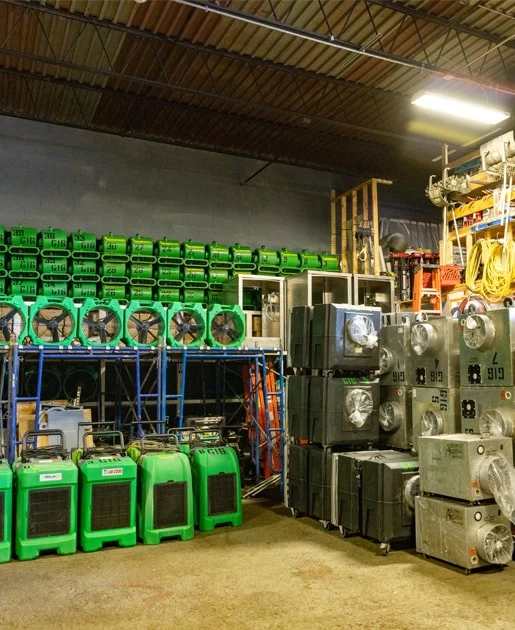
From there, we extract standing water, set up industrial drying equipment, and begin monitoring moisture levels inside the structural materials not just at the surface. In a home with older construction, we check for any materials that may require licensed abatement before standard restoration work can proceed. That’s not an upsell. It’s a legal requirement, and skipping it creates liability for you.
Once the structure is dry and cleared, we document everything photos, moisture readings, scope of work in the format insurance adjusters require. We communicate with your carrier directly and handle the billing. You don’t need to manage that process while managing a flooded home. When the job is complete, we do a final walkthrough so you know exactly what was done and why.
Flooded Basement Cleaning Services, Great River NY
Full-Scope Cleanup Built for South Shore Homes
Flooded basement cleanup in Great River means accounting for conditions that don’t apply everywhere. The combination of bay-adjacent flooding, a housing stock where the median build year is 1970, and the dual water exposure from both the Great South Bay and the Connetquot River creates a specific set of risks that a standard water damage company isn’t always equipped or licensed to handle.
What we bring to every job includes water extraction, structural drying, moisture mapping, mold assessment and remediation, Category 3 water handling for contaminated floodwater or sewage backup, and hazardous material evaluation for lead and asbestos in older homes. For any structural work that requires permits under Town of Islip jurisdiction, our Suffolk County General Contractor license covers that directly. You’re not coordinating between three different contractors and hoping the paperwork lines up.
We also handle the insurance side. Whether you’re filing under a standard homeowners policy, a sewer backup rider, or a separate NFIP flood policy, we document the loss correctly from the start which is what determines how your claim gets paid. Homeowners in Great River have invested significantly in their properties. The goal is to protect that investment with a complete, documented, properly executed restoration not a quick dry-out that leaves problems behind.
Does homeowners insurance cover basement flooding from the Great South Bay?
It depends on the source of the water, and that distinction is critical for Great River homeowners. Standard homeowners insurance typically covers sudden and accidental water damage from internal sources a burst pipe, a failed water heater, an overflowing appliance. It generally does not cover flooding that originates outside the home, including storm surge from the Great South Bay or overflow from the Connetquot River. That type of flooding is covered under a separate flood insurance policy, typically through FEMA’s National Flood Insurance Program.
The complication is that many Great River homeowners have both types of coverage and the source of the water determines which policy applies. If your basement flooded during a nor’easter and the water came in through a window well or foundation wall, that’s likely a flood claim. If a sewer line backed up under storm pressure, that may fall under a sewer backup rider on your homeowners policy. Getting the documentation right from the start before you file is what determines how the claim gets paid. We categorize the water source accurately on every job and document it in the format carriers require.
How quickly does mold start growing after a basement flood in Great River?
Mold can begin developing within 24 to 48 hours of a flooding event and in a Great River home with older construction and limited basement ventilation, that window can close even faster. The moisture doesn’t have to be visible to feed mold growth. It hides inside wall cavities, under flooring, and in insulation, which is why surface drying alone isn’t enough.
For Great River homeowners, the timing issue is compounded by the nature of coastal flooding. When a storm pushes water off the bay and into multiple properties at once, response times across the area get stretched. Waiting even an extra day while you sort out which company to call can mean the difference between a straightforward cleanup and a mold remediation project on top of it. The cost difference is significant mold remediation typically adds $1,500 to $6,000 or more on top of baseline cleanup costs. Calling early, even if the water is still receding, is almost always the right move.
My Great River home was built in the 1960s is that a problem during basement cleanup?
It can be, and it’s worth knowing before work starts. Homes built before 1978 may contain lead-based paint, and homes built before the mid-1980s frequently contain asbestos in materials like floor tiles, pipe insulation, ceiling tiles, and attic fill. When a basement floods and water saturates those materials, it can disturb them in ways that create a hazmat situation one that most water damage companies are not licensed to handle.
In North Great River and parts of Great River proper, the classic Hi-Ranches and colonials from the 1950s and 1960s are exactly the housing type where this comes up most often. It’s not a reason to panic, but it is a reason to hire a contractor who holds the right credentials. We carry USEPA Lead certification, USEPA RRP certification, and a NYS DOL Asbestos license. If we identify a concern during the initial assessment, we address it as part of the same scope of work you don’t need a separate abatement contractor before restoration can proceed.
How much does flooded basement cleanup typically cost in Great River, NY?
Most homeowners spend somewhere between $2,000 and $8,000 on professional basement flood cleanup, with the average landing around $5,000. The range is wide because cost depends heavily on the size of the space, the depth of water, how long it sat before cleanup began, and what the water contained. A clean water event caught within a few hours costs significantly less than a Category 3 contamination event bay water, river overflow, or sewage backup that sat overnight.
For Great River specifically, the variables that tend to push costs higher are the contamination category of coastal floodwater, the age of the housing stock (which can introduce asbestos or lead concerns), and the scope of mold remediation if response was delayed. If mold remediation is needed on top of the base cleanup, that adds $1,500 to $6,000 or more depending on the extent of growth. The most reliable way to get an accurate number is an on-site assessment we evaluate the full scope before quoting, and we document everything for your insurance carrier at the same time.
Can I dry out my flooded basement myself instead of hiring a professional?
For a small, clean water event a minor appliance leak, a small pipe drip caught quickly DIY drying with a shop vac and fans might be sufficient. But for most basement flooding situations in Great River, the answer is no, and the reasons are specific to this area.
First, coastal and river flooding in Great River typically involves Category 3 water contaminated floodwater that carries bacteria, sewage byproducts, and other hazards. That requires licensed handling and disposal, not a rental dehumidifier. Second, consumer-grade equipment doesn’t dry structural materials the way industrial equipment does. Moisture trapped inside wall framing, subfloor, or insulation won’t show up to the naked eye, but it will show up as mold three weeks later. Third, if your home was built before 1980, disturbing wet materials without proper testing and precautions can create a lead or asbestos exposure risk. The cost of professional cleanup is real, but it’s almost always less than the cost of the problems that follow an incomplete DIY attempt.
How do I know if my basement flooding is covered under my FEMA flood insurance policy?
FEMA’s National Flood Insurance Program covers direct physical loss caused by flooding defined as a general and temporary condition of partial or complete inundation from overflow of inland or tidal waters, or from unusual and rapid accumulation of surface water runoff. For Great River homeowners, storm surge from the Great South Bay and overflow from the Connetquot River would generally qualify under that definition. Groundwater seepage through foundation walls is typically not covered under standard NFIP policies.
The critical factor is documentation. FEMA adjusters and private flood carriers require specific evidence: photos taken before cleanup begins, moisture readings, a clear description of the water source, and a detailed scope of work. Claims that are poorly documented or where cleanup started before the adjuster could assess frequently result in reduced payouts or denials. We photograph and document every loss before extraction begins, produce a complete moisture report, and communicate directly with your carrier throughout the process. For homeowners in a coastal community like Great River, where flood events are a recurring reality rather than a once-in-a-generation surprise, getting the documentation process right matters every single time.