I needed a professional consultation explanation of procedure for safe removal of Asbestos in my apartment complex. Without having an account yet, I was very impressed with the caring, knowledgeable and generous advice offered by Jessica, and will look forward to doing business in the future. Thank you so much! I feel much more informed about a sometimes scary endeavor. Peace. Nancy Silva Mineola, NY.
Mia Munoz
Used this company to clean up some water flood in my house. They were fast and easy to work with.very professional, Would recommend to anyone!
Nini Valle
Great company, had a flood and they responded quickly and efficiently. Billed my insurance company directly. I highly recommend this company!
joe colapietro, jr
I had pipe freeze in my basement right before a snow storm and they made to within an hour to help start the clean up process. They we by our side throughout the entire process and even helped with the insurance company. They did such a great job with the cleanup, repair, remidiation, I contracted them to perform the repairs and finishes in the basement. They came with enough manpower and material to get the job done. Leo and Jessica were nothing but a pleasure to deal with!!
Cristian Arredondo c
I had some water damage in my home and Green Island was able to take care of my issue quickly and effectively. I am very pleased with the work they did. They responded quickly and were very professional.
Michael M
Outstanding service! From the office to the field crew everyone was friendly, helpful and responsive. I highly recommend Green Island Group.
When the combined sewer system beneath 34th Street surcharges during a heavy storm, the water that backs up through your basement drain isn’t clean. It’s Category 3 contaminated with pathogens and sewage and it requires a completely different level of response than a burst pipe. That’s the reality of basement flooding in Greeley Square, and it’s why the cleanup process here isn’t something you cut corners on.
Done right, you get a basement that’s genuinely dry not surface-dry, but verified dry with moisture readings taken inside wall cavities and under flooring where water hides long after it disappears from sight. You get air quality that’s been tested, not assumed. And you get documentation your building’s management company, co-op board, or insurance carrier will actually accept.
In a building that predates 1978 which describes most of the residential and mixed-use stock surrounding Greeley Square flooding also means disturbed lead paint and potentially compromised asbestos insulation around pipes. Getting the water out is step one. Making sure what the water touched is handled legally and safely is the rest of the job. That’s what a complete remediation looks like here.
We’re a full-scope environmental remediation contractor based in New York, actively serving Manhattan and the five boroughs. We operate in Greeley Square and the surrounding Midtown neighborhoods, and we know how Manhattan buildings work. We hold active New York State Department of Labor licenses for water damage restoration, mold remediation, asbestos abatement, and lead abatement simultaneously.
That matters in a neighborhood like Greeley Square, where a flooded basement in a pre-war building almost always involves more than water. When our crew arrives at your building near Herald Square or along the Koreatown corridor on West 32nd Street, we’re equipped and licensed to handle whatever we find no stopping work, no referring out to a second contractor, no delays while you wait for someone else to get scheduled.
We’ve completed over 5,000 jobs across the New York market and work directly with insurance carriers, handling adjuster communication and documentation so you don’t have to manage that process on top of everything else.
Basement Flooding Remediation Process Greeley Square
No Guesswork Here's Exactly How the Job Gets Done
The first thing that happens when we arrive is an assessment not just a visual walkthrough, but a full moisture mapping of the space using calibrated meters and thermal imaging. In Manhattan buildings, water moves into wall cavities, under flooring, and along structural members in ways you can’t see. The assessment tells you what you’re actually dealing with before any work begins.
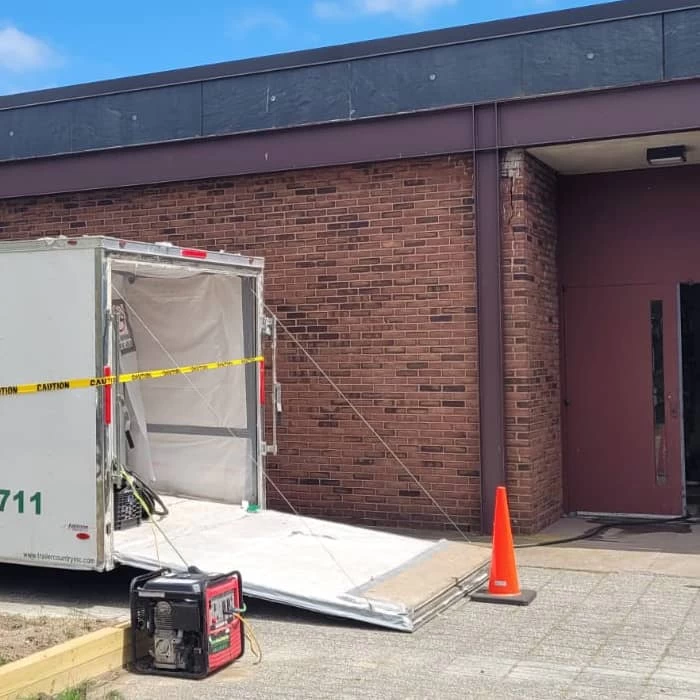
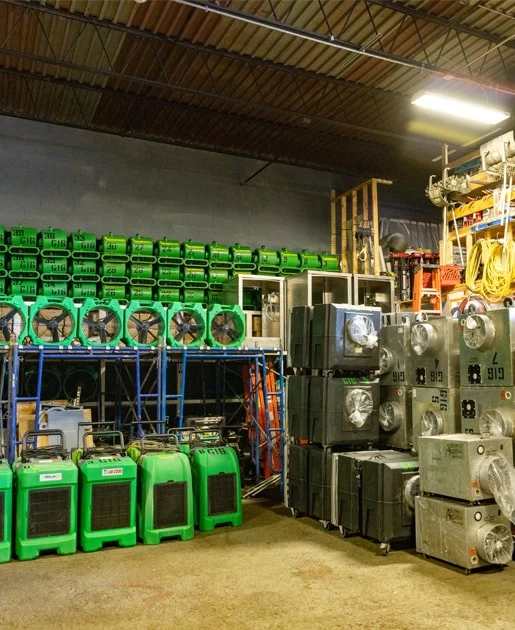
From there, the water comes out. Industrial extractors, not shop vacs. Then drying equipment commercial-grade dehumidifiers and air movers gets staged throughout the affected space. If the flooding came from a sewer surcharge event, which is common in Greeley Square given the combined sewer infrastructure beneath Midtown, antimicrobial treatment is applied as part of the Category 3 protocol. Containment is set up to protect the rest of the building, which matters in a multi-unit structure where other tenants share hallways, elevators, and HVAC systems.
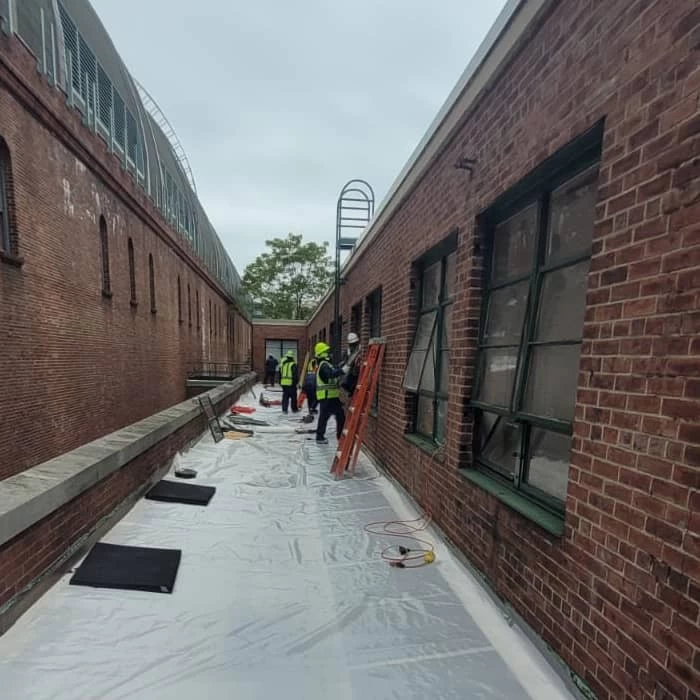
If hazardous materials are encountered asbestos pipe insulation, lead paint on disturbed surfaces the work continues under the appropriate NYS DOL license. No handoffs. Once drying goals are confirmed with final moisture readings, post-remediation air quality testing is completed and written clearance documentation is produced. That paperwork is what your building management company or insurance adjuster will ask for, and it’s included as a standard part of the process.
Flooded Basement Cleaning Service Greeley Square NY
Built for Manhattan Buildings, Not Suburban Checklists
Most water damage companies are set up for single-family homes. Our service is built around what flooded basements in Manhattan actually involve and in the Greeley Square area, that list is longer than most contractors are licensed to handle.
The full scope includes emergency water extraction, Category 3 contamination treatment, structural drying with moisture verification, mold assessment and remediation, asbestos abatement where required, lead paint compliance under EPA RRP rules, and post-remediation clearance testing with written documentation. For buildings that need it, demolition of unsalvageable materials is handled in-house as well no subcontracting, no coordination gaps.
We also work directly with insurance carriers, which is particularly useful in the Greeley Square area where ownership and policy structures are rarely simple. Co-op shareholders navigating the line between their HO-6 policy and the building’s master policy, commercial tenants with business interruption exposure, building managers handling claims on behalf of multiple units we’ve worked inside all of these situations. We know what documentation each type of claim requires and how to produce it. If you’re in a pre-war building between 28th and 35th Streets and your basement just flooded, this is the level of service the job actually calls for.
Is basement flooding in Greeley Square usually covered by insurance?
It depends on the source of the water, and that distinction matters more than most people realize. If the flooding came from a burst pipe or an internal plumbing failure, standard property insurance typically covers it. If it came from a sewer backup which is the more common scenario in Greeley Square, given the combined sewer system that runs beneath the streets around 34th Street coverage depends on whether your policy includes a sewer backup endorsement. Many standard policies don’t include it automatically.
The ownership structure adds another layer here. In a co-op building, there’s often a division between what the building’s master policy covers and what your individual HO-6 policy covers. Commercial tenants have their own policy considerations, and building owners managing multi-unit properties deal with a different set of endorsements entirely. We work directly with insurance carriers across all of these structures, handle adjuster communication, and produce the documentation each type of claim requires. The best first step is to call us and let the assessment drive the conversation we can help you understand what you’re working with before you file anything.
How fast does mold actually start growing after a basement floods?
According to the EPA, mold begins colonizing wet building materials within 24 to 48 hours. That’s not a worst-case scenario that’s the standard timeline under normal conditions. After 72 hours without proper drying, materials that could have been dried in place often need to be physically removed, which adds cost and time to the job.
In a Manhattan building, the stakes are higher because the HVAC system doesn’t stop at your unit. Airborne mold spores from a flooded basement can move through shared ventilation and reach other floors quickly. That’s why the response window matters so much not just for your space, but for the building around you. Our 24/7 emergency response means a crew mobilizes, not just a phone gets answered. If your basement flooded today, the clock is already running.
My building is pre-war does that change how the cleanup needs to be handled?
Yes, significantly. Pre-war buildings which make up a large portion of the residential and mixed-use stock in the blocks surrounding Greeley Square were constructed in an era when asbestos was routinely used in pipe insulation, floor tile adhesives, ceiling materials, and fireproofing. Lead paint was standard on walls, trim, and structural elements in virtually every building constructed before 1978.
When a basement floods, water moves through all of those materials. It can compromise asbestos insulation around pipes and cause lead paint to chip and deteriorate. Once those materials are disturbed, they become regulated hazardous materials under New York State law and disturbing them without the appropriate NYS DOL license is a legal violation, not just a safety concern. We hold active licenses for both asbestos abatement and lead abatement, in addition to mold remediation and water damage restoration. In a pre-war building, that’s not a bonus it’s a requirement for doing the job legally and completely.
What's the difference between Category 1, 2, and 3 water damage?
The IICRC classifies water damage by contamination level, and the category determines the entire cleanup protocol. Category 1 is clean water a supply line break, an overflowed sink. Category 2 is gray water it contains some contaminants and requires more careful handling. Category 3 is black water, and it’s the most serious: it includes groundwater intrusion, sewage backup, and stormwater overflow. It contains pathogens and bacteria and requires hazmat-level cleanup protocols, antimicrobial treatment, and post-remediation air quality verification.
In the Greeley Square area, Category 3 is the most common scenario during storm events. The streets beneath Midtown Manhattan run on a combined sewer system stormwater and sanitary sewage share the same pipes. When rainfall exceeds the system’s capacity, which happens regularly during intense summer storms and major events like the remnants of Hurricane Ida in 2021, sewage-contaminated water backs up into basement drains. If your basement flooded during or after a heavy rain event, there’s a real probability you’re dealing with Category 3 water and it needs to be treated accordingly, not handled like a simple water extraction job.
Can I just run fans and a dehumidifier to dry out the basement myself?
You can, but it’s one of the most common mistakes people make and it often makes things worse. Running household fans in a flooded space without industrial drying equipment pushes humid air into adjacent areas and can spread mold spores before colonization is even visible. A standard consumer dehumidifier doesn’t have the capacity to pull moisture out of wall cavities, subfloor assemblies, or concrete block walls the way commercial-grade equipment does.
The other issue is that surface-dry doesn’t mean structurally dry. Moisture inside wall cavities and under flooring is completely invisible without calibrated moisture meters. Spaces that look and feel dry after a few days of fans running can still have significant hidden moisture that becomes active mold within weeks. In a Manhattan building where you share walls, floors, and ceilings with other units, that hidden moisture doesn’t stay contained to your space. Professional structural drying with moisture verification isn’t about being thorough for its own sake it’s the only way to confirm the job is actually done.
Does Green Island Group handle the permits and building management coordination in Manhattan?
Yes, and in a Midtown Manhattan building near Greeley Square, that coordination is a real part of the job. Getting remediation equipment into a building near Herald Square means working with building management on elevator scheduling, protecting common hallways and lobbies, containing dust and debris so other tenants aren’t affected, and in some cases meeting the building’s contractor approval requirements before work can begin. We operate throughout Manhattan and understand how to navigate that process it’s not something we figure out on arrival.
On the permit side, certain demolition and structural work associated with flood remediation may require NYC Department of Buildings permits depending on the scope. Because we handle demolition in-house and are familiar with NYC DOB requirements, that process is managed as part of the job rather than handed off to the property owner to sort out independently. For co-op boards and building management companies that need a contractor who can operate professionally within a managed building environment not just show up with equipment that operational experience is a meaningful part of what we bring.