When Greenvale's Ground Pushes Back, We Stop the Damage
Greenvale sits on glacial terrain that holds water — and when the ground saturates, your basement pays for it. We respond fast, dry it right, and handle everything from water extraction to mold prevention under one licensed roof.
I needed a professional consultation explanation of procedure for safe removal of Asbestos in my apartment complex. Without having an account yet, I was very impressed with the caring, knowledgeable and generous advice offered by Jessica, and will look forward to doing business in the future. Thank you so much! I feel much more informed about a sometimes scary endeavor. Peace. Nancy Silva Mineola, NY.
Mia Munoz
Used this company to clean up some water flood in my house. They were fast and easy to work with.very professional, Would recommend to anyone!
Nini Valle
Great company, had a flood and they responded quickly and efficiently. Billed my insurance company directly. I highly recommend this company!
joe colapietro, jr
I had pipe freeze in my basement right before a snow storm and they made to within an hour to help start the clean up process. They we by our side throughout the entire process and even helped with the insurance company. They did such a great job with the cleanup, repair, remidiation, I contracted them to perform the repairs and finishes in the basement. They came with enough manpower and material to get the job done. Leo and Jessica were nothing but a pleasure to deal with!!
Cristian Arredondo c
I had some water damage in my home and Green Island was able to take care of my issue quickly and effectively. I am very pleased with the work they did. They responded quickly and were very professional.
Michael M
Outstanding service! From the office to the field crew everyone was friendly, helpful and responsive. I highly recommend Green Island Group.
Your Basement Dried, Documented, and Safe to Use Again
When water gets into your basement, the clock starts immediately. The EPA recommends beginning cleanup within 24 to 48 hours, and once you hit the 72-hour mark, mold becomes a real and expensive problem — not a maybe. The goal isn’t just getting the water out. It’s making sure nothing is left behind that causes a bigger issue three weeks from now.
Greenvale’s position on the Harbor Hill Moraine is part of why basement flooding here tends to be persistent rather than one-and-done. The glacial till beneath this hamlet doesn’t drain the way sandy soil does. Water builds up, pressure rises against your foundation walls, and the next storm starts before the ground from the last one has dried out. If your basement has flooded more than once, that’s not bad luck — that’s the geology.
Older homes in Greenvale add another layer to the conversation. A lot of the housing stock here was built in the 1940s through the 1970s, before modern waterproofing standards and before EPA regulations on lead and asbestos. When water saturates materials in a basement that old, you’re not just dealing with a wet floor — you may be dealing with regulated hazardous materials that require licensed handling. That’s not something most water damage companies are equipped for. It’s something we are.
Licensed Basement Flooding Remediation in Greenvale
Every License New York Requires — Under One Roof
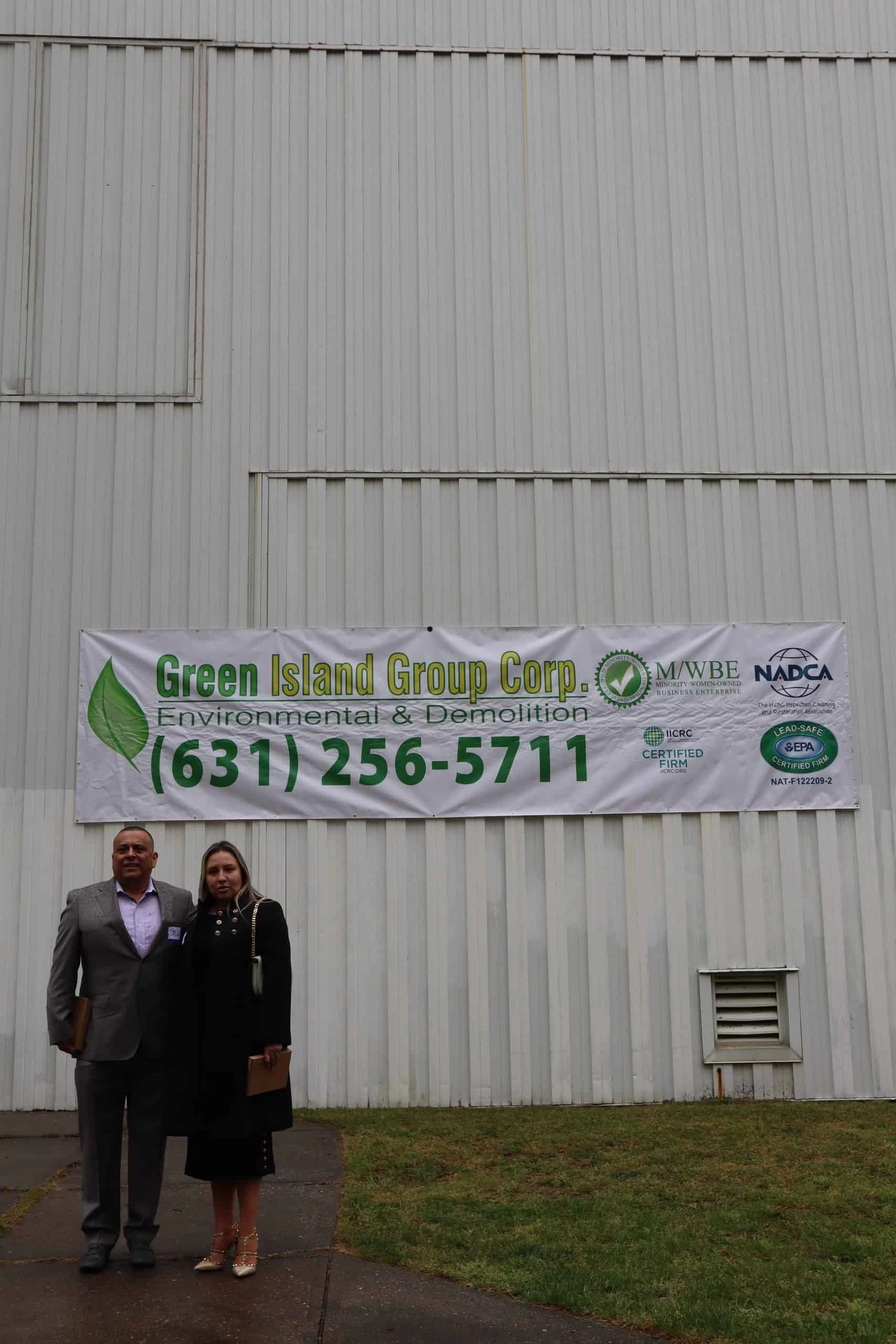
We are a full-service disaster restoration and environmental remediation company serving Nassau County, including Greenvale and the surrounding North Shore communities — Roslyn Harbor, East Hills, Brookville, and Old Brookville. We hold every license New York State requires for this type of work: NYS DOL Mold, NYS DOL Asbestos, USEPA Lead, USEPA RRP, IICRC Water and Fire Damage, NADCA HVAC, and General Contractor licenses for Nassau County, Suffolk County, and New York City.
New York is one of only a handful of states in the country that requires a dedicated state-issued mold license. Any company performing mold assessment or remediation in Greenvale without that license is operating outside the law. We hold it. We also hold the asbestos and lead certifications that matter specifically in a community where most homes predate 1978 — because in a pre-1978 colonial off Glen Cove Road, a flooded basement is rarely just a water problem.
We’re also a certified NYS MBE and WBE — a minority- and women-owned business recognized at the state level. That’s part of who we are and how we operate.
What Actually Happens From First Call to Final Walkthrough
When you call us, you reach a real person — not an answering service. We’re available 24 hours a day, seven days a week, because a basement that floods at 11 p.m. on a Sunday doesn’t wait for Monday morning. We’ll ask you a few quick questions to understand what you’re dealing with, and we’ll get a crew moving toward Greenvale.
When we arrive, the first thing we do is assess — not just the standing water you can see, but the moisture you can’t. Older homes in this area, especially those with plaster walls, concrete block foundations, and wood subfloors, hold water in places that a box fan will never reach. We use professional-grade moisture detection equipment to map the full scope of the damage before we start pulling equipment in. If there’s any indication of asbestos-containing materials or lead paint — realistic possibilities in a home built before 1980 — we follow proper protocols before disturbing anything.
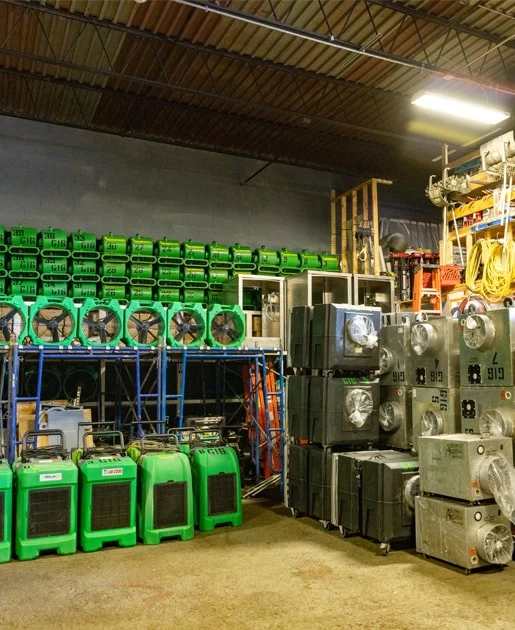
From there, we extract standing water, set industrial drying systems, and monitor moisture levels until everything is genuinely dry — not surface-dry. Because Greenvale straddles both the Town of North Hempstead and the Town of Oyster Bay, permit requirements for restoration work can differ depending on which side of the town line your property sits on. We hold a Nassau County General Contractor license that covers both jurisdictions, so that’s never your problem to sort out. We also document everything along the way to support your insurance claim, whether you’re dealing with a homeowners policy or a separate flood policy.
Water Damage Restoration Services in Greenvale, NY
Built for Greenvale's Older Homes, Not a Generic Checklist
Flooded basement cleanup in Greenvale isn’t a single-scope job. It starts with water extraction and structural drying, but what comes after depends entirely on what your home is made of and how long the water sat. For a 1950s North Shore colonial with a finished basement, that might mean mold assessment, asbestos testing, lead evaluation, HVAC inspection, and structural repair — all before the walls go back up. We handle all of it. You don’t need to coordinate three separate vendors or wonder whether the next company knows what the last one found.
We carry IICRC Water Damage Restoration certification, which is the industry’s highest standard for this type of work. That means our process follows documented methodology — not guesswork, not shortcuts. Every job includes moisture mapping, extraction, drying, and a final clearance check. If mold is present, we remediate it under our NYS DOL Mold License. If asbestos or lead is identified, we handle it under our NYS DOL Asbestos and USEPA Lead certifications. For Greenvale homeowners whose properties are worth $700,000 to well over $1 million, this level of completeness isn’t optional — it’s the only thing that actually protects the investment.
Sewage backup is also part of what we handle. In older homes with aging ejector pumps and original sewer lines — common throughout Greenvale’s housing stock — sewage backup is a Category 3 biohazard event, not a standard water damage job. It requires full decontamination protocols. We’re equipped for it. A lot of companies that show up in local search results are not.
Why does my Greenvale basement flood every time it rains heavily?
Greenvale sits directly on the Harbor Hill Moraine — a ridge of glacially deposited till that forms the highest elevation point in Nassau County. Unlike the sandy outwash soils on Long Island’s South Shore, glacial till has low permeability. When rain saturates the ground here, it doesn’t drain quickly. It accumulates near the surface, raises the local water table, and creates hydrostatic pressure against your basement walls and floor. This is a geology problem, not a construction defect.
What that means practically is that even a moderate rainfall event can push water into your basement if the ground is already saturated from a previous storm. Nor’easters — which are slow-moving and can drop several inches of rain over 24 to 48 hours — are particularly problematic on the North Shore because they saturate the morainal soil before the drainage system has time to recover. If your basement floods repeatedly, the pattern is almost certainly groundwater-driven, and the solution starts with understanding that root cause before anything else.
How quickly does mold grow after a basement floods in Greenvale?
Mold can begin growing within 24 to 48 hours of water exposure, according to the EPA. The 72-hour window is the critical threshold — if your basement is fully dried within that timeframe, mold growth is unlikely. If it’s not, you’re looking at a remediation situation that is significantly more complex and expensive than the original cleanup.
In Greenvale specifically, older homes with plaster walls, wood framing, and natural fiber insulation give mold more to grow on than a newer home with fiberglass and drywall. The organic materials in pre-1960s construction are particularly hospitable. That’s why surface drying isn’t enough — moisture trapped inside walls, under floors, or within concrete block foundation cavities will feed mold growth long after the floor looks dry. Professional moisture detection is the only way to confirm that drying is actually complete, not just visually apparent.
Does homeowners insurance cover basement flooding from a storm in Greenvale?
This is one of the most important distinctions to understand before you file a claim. Standard homeowners insurance typically covers sudden and accidental water damage — a burst pipe, a failed water heater, a washing machine overflow. It does not cover flooding from natural groundwater, storm surge, or surface water entering your home. That type of damage requires a separate flood insurance policy, typically through the National Flood Insurance Program.
Here’s where it gets complicated for Greenvale homeowners: because much of the hamlet sits at higher elevation on the Harbor Hill Moraine, many properties are not in designated FEMA high-risk flood zones — which means many homeowners never purchased flood insurance, assuming they didn’t need it. But groundwater flooding from saturated morainal soil can happen regardless of flood zone designation. If your basement flooded after a Nor’easter and you don’t have a separate flood policy, your standard homeowners coverage may not apply. Understanding your specific policy before you’re standing in two inches of water is worth the phone call to your agent.
My Greenvale home was built in the 1950s — does that affect the cleanup process?
Yes, significantly. Homes built before 1978 may contain lead-based paint, and homes built before approximately 1980 commonly contain asbestos in floor tiles, pipe insulation, ceiling tiles, and joint compound. When a basement floods, these materials can become saturated, disturbed, or damaged — which triggers federal and state regulatory requirements for how they’re handled.
A company without NYS DOL Asbestos certification and USEPA Lead and RRP certifications cannot legally or safely handle those materials. Most water damage restoration companies that show up in a Greenvale search do not hold all of these credentials. We do. For a 1950s home in this hamlet, the cleanup process has to account for what’s in the walls and floors before anything gets torn out — not after. Skipping that step doesn’t just create a health risk. It creates a liability that can affect your home’s value and your ability to sell it later.
What is the difference between water damage restoration and mold remediation?
Water damage restoration covers the extraction of standing water, structural drying, moisture mapping, and repair of damaged materials. Mold remediation is a separate, regulated process that involves identifying mold growth, containing the affected area, removing contaminated materials, and treating surfaces to prevent recurrence. They’re related but not the same scope of work.
In New York State, mold remediation requires a dedicated NYS DOL Mold License — a requirement that sets New York apart from most states in the country. A company can legally perform water damage restoration without that license, but they cannot legally perform mold assessment or remediation without it. For Greenvale homeowners, this matters because basement flooding in older homes frequently leads to mold if drying is incomplete or delayed. You want one company that holds both the water damage and the mold license, so there’s no gap between when the drying ends and when the mold assessment begins. We hold both.
How do I choose a reliable flooded basement cleanup company in Greenvale, NY?
Start with licensing. In New York, the minimum credentials for a company handling flooded basement cleanup in an older home are a NYS DOL Mold License, IICRC Water Damage Restoration certification, and a valid General Contractor license for Nassau County. If the home was built before 1980, you also want NYS DOL Asbestos and USEPA Lead certifications. Ask for license numbers before you sign anything. Any reputable company will provide them without hesitation.
Beyond credentials, pay attention to how the company communicates before anyone shows up. Are they reachable at the hour you’re calling? Do they explain what they’re going to do and why? Do they help you understand your insurance situation rather than leaving you to figure it out alone? Greenvale is a small, close-knit community where homes carry serious value and serious history. The company you bring in should treat the job accordingly — thorough assessment, complete drying, proper documentation, and a process that accounts for what your specific home is made of. That’s the standard worth holding to.