When the Channels Rise, Your Harbor Isle Basement Pays for It
Harbor Isle floods differently than anywhere else in Nassau County — water comes from the channels, from below, and from every direction at once. We respond 24/7 with the licenses, equipment, and local knowledge to stop the damage before it compounds.
I needed a professional consultation explanation of procedure for safe removal of Asbestos in my apartment complex. Without having an account yet, I was very impressed with the caring, knowledgeable and generous advice offered by Jessica, and will look forward to doing business in the future. Thank you so much! I feel much more informed about a sometimes scary endeavor. Peace. Nancy Silva Mineola, NY.
Mia Munoz
Used this company to clean up some water flood in my house. They were fast and easy to work with.very professional, Would recommend to anyone!
Nini Valle
Great company, had a flood and they responded quickly and efficiently. Billed my insurance company directly. I highly recommend this company!
joe colapietro, jr
I had pipe freeze in my basement right before a snow storm and they made to within an hour to help start the clean up process. They we by our side throughout the entire process and even helped with the insurance company. They did such a great job with the cleanup, repair, remidiation, I contracted them to perform the repairs and finishes in the basement. They came with enough manpower and material to get the job done. Leo and Jessica were nothing but a pleasure to deal with!!
Cristian Arredondo c
I had some water damage in my home and Green Island was able to take care of my issue quickly and effectively. I am very pleased with the work they did. They responded quickly and were very professional.
Michael M
Outstanding service! From the office to the field crew everyone was friendly, helpful and responsive. I highly recommend Green Island Group.
A Dry Basement Isn't Enough — It Has to Stay That Way
When your basement floods in Harbor Isle, the visible water is only part of the problem. The real damage is what you can’t see — moisture trapped inside concrete block walls, wicking up through your slab, hiding behind the insulation that’s been there since the house was built in the 1950s. If that moisture doesn’t get pulled out completely, you’re looking at mold within days in a coastal environment like this one.
Harbor Isle’s humidity doesn’t give you much margin. Hot summers, salt air off Hog Island Channel, and a water table that sits just below your foundation — it all adds up to conditions where mold moves fast. Getting the basement technically “dry” with fans and a shop vac isn’t the same as getting it professionally dried with calibrated equipment that tracks moisture inside the structure itself.
What you’re actually getting when this is done right is certainty. Certainty that the materials are dry to standard, that mold hasn’t taken hold in the wall cavities, and that your home — which in Harbor Isle likely carries well over half a million dollars in value — is protected. That’s what the process is built around.
We’re a Nassau County-based disaster restoration and remediation company serving Harbor Isle and the surrounding south shore communities. We’re not a national franchise with a local landing page — we’re licensed professionals who work in this specific coastal corridor regularly, from Long Beach up through Oceanside and into Harbor Isle, where the flooding is real, recurring, and complicated.
What sets us apart isn’t a single credential — it’s the combination. We hold the NYS DOL Mold License, NYS DOL Asbestos License, USEPA Lead and RRP Certifications, IICRC Water Damage Certification, and General Contractor licenses for Nassau County and NYC. In Harbor Isle, where nearly every home was built around 1957 and the basement floor tiles may well contain asbestos, that full license stack isn’t a marketing point. It’s what makes it legal and safe to do the job correctly.
We also handle insurance documentation directly — including working with both your homeowners policy and your NFIP flood insurance if you carry both, which many Harbor Isle homeowners in FEMA flood zones do.
What Actually Happens From First Call to Final Walkthrough
The first call triggers 24/7 dispatch. We know Harbor Isle’s access is through Island Park via the bridges, and we route accordingly — no time wasted figuring out where we’re going when you need us moving fast. When we arrive, the first thing we do is assess the water source and contamination category before anything gets extracted. That distinction matters: a burst pipe in January is clean water. Storm surge pushing up through Wreck Lead Channel is Category 3 contaminated water, and it requires a completely different protocol — full decontamination, biohazard handling, and licensed disposal. Treating them the same way is how cleanup goes wrong.
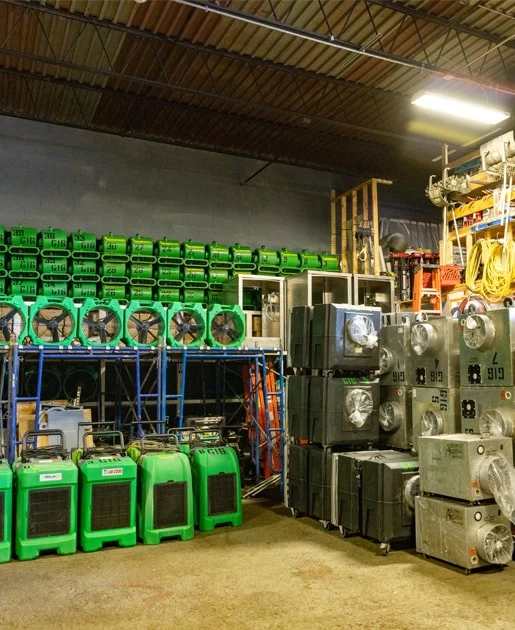
Once the source is identified, we extract standing water, then deploy industrial-grade drying equipment — dehumidifiers, air movers, and moisture detection tools that read inside walls and under flooring, not just at the surface. In Harbor Isle’s humid coastal climate, we don’t pull equipment until the readings confirm the structure is dry to IICRC standard, not just dry to the eye.
From there, if materials need to come out — drywall, flooring, insulation — we handle it with the appropriate licensing in place, including asbestos and lead protocols for the pre-1978 homes that make up virtually the entire Harbor Isle housing stock. And because we hold a Nassau County General Contractor license, we don’t hand you off to a second company for the rebuild. We take it through to finished restoration.
Built for the Specific Hazards Harbor Isle Basements Actually Face
A flooded basement in Harbor Isle isn’t a standard water call. The combination of tidal flooding risk, mid-century construction, and a coastal climate that accelerates mold growth means the scope of work here regularly goes beyond what a general restoration company is licensed to handle. We’re equipped for all of it.
Water extraction and structural drying are the foundation — industrial dehumidifiers, high-velocity air movers, and thermal imaging to locate moisture that isn’t visible. But in Harbor Isle, where homes built in 1957 are the norm and asbestos floor tiles, lead paint on basement walls, and aging pipe insulation are common, the remediation often involves licensed hazmat work alongside the water cleanup. We hold the NYS DOL Asbestos License and USEPA Lead/RRP Certification, which means we can legally address those materials without requiring a separate contractor and a second mobilization.
Mold assessment and remediation under the NYS DOL Mold License is included in our scope when conditions warrant it — and in a coastal environment with Harbor Isle’s humidity levels, it frequently does. We document everything for insurance purposes, assist with claim filing for both standard homeowners policies and NFIP flood coverage, and carry the job through full structural restoration under our Nassau County General Contractor license. From the first pump to the last coat of paint, it stays with one team.
Does flood insurance actually cover basement cleanup costs in Harbor Isle, NY?
It depends on what type of flooding caused the damage and which policy you’re filing under. Standard NFIP flood insurance — which many Harbor Isle homeowners carry because of the community’s FEMA flood zone designation — covers direct physical losses from flooding, but it has specific limitations on basement coverage. It typically covers cleanup, certain appliances, and structural elements, but may not cover finished walls, flooring, or personal property stored below grade.
Your standard homeowners insurance policy handles different scenarios — a burst pipe, an appliance failure, or an overflow situation that isn’t classified as a flood event. The two policies don’t overlap cleanly, and the gap between them is where a lot of Harbor Isle homeowners get caught off guard after a storm.
We assist with documentation and claim filing for both policies. We’ve worked with the adjusters who handle Nassau County coastal flood zone claims, and we can help you understand what’s covered, what needs to be documented, and how to present the damage in a way that supports your claim — not just hand you a bill and leave you to figure it out.
How fast does mold actually start growing after a basement floods?
The EPA’s guideline is 24 to 48 hours from the time of water intrusion. That’s the window before mold spores that are already present in the environment — and they’re always present — begin to colonize wet materials. In practice, the timeline depends on temperature, humidity, and the type of material that’s wet. Drywall and wood framing are particularly fast. Concrete is slower, but it still holds moisture long enough to support growth if it isn’t dried properly.
In Harbor Isle specifically, that window is tighter than it is inland. The combination of warm summer temperatures, high ambient humidity from the bay, and salt air creates near-ideal conditions for mold to move quickly. Homes that flooded during Sandy saw mold forming on possessions and wall materials within days.
The practical implication is that the 72-hour mark is a real threshold, not a loose guideline. If cleanup and drying don’t begin before that point, the scope of the job almost always expands to include mold remediation — which is a separate licensed process in New York State and adds both time and cost. Starting fast is the most cost-effective decision you can make.
My Harbor Isle home was built in the 1950s — does that affect the cleanup process?
Yes, significantly. Homes built in Harbor Isle during the 1950s — which is most of the housing stock, given the community’s median construction year of 1957 — were built during the era when asbestos-containing materials were standard. That includes floor tiles, pipe insulation, ceiling tiles, and joint compound. Lead-based paint on basement walls was also common. When a basement floods and those materials are disturbed — tiles cracked by water pressure, insulation soaked and falling, drywall removed during cleanup — the hazard changes.
Under New York State law, mold remediation in a home requires a NYS DOL Mold License. Asbestos abatement requires a separate NYS DOL Asbestos License. Work in any home built before 1978 that disturbs painted surfaces requires USEPA Lead/RRP Certification. These aren’t optional credentials — performing that work without them is illegal and creates liability for the homeowner as well.
We hold all three, plus the IICRC Water Damage Certification and Nassau County General Contractor license. In a Harbor Isle home from that era, that’s not an unusual combination of requirements — it’s the standard scope of what a proper cleanup actually involves.
What's the difference between the types of water damage, and does it matter for cleanup?
It matters a great deal, and it’s one of the most important things to get right before any work begins. The restoration industry categorizes water damage in three tiers. Category 1 is clean water — a supply line break, a burst pipe, an appliance overflow. Category 2 is gray water, which carries some contamination — a washing machine discharge, a sump pump failure. Category 3 is black water, which is heavily contaminated and requires full decontamination protocols. This includes sewage backups and, critically for Harbor Isle, storm surge flooding.
When water pushes up through Wreck Lead Channel or Hog Island Channel during a coastal storm, it’s carrying bay water, sediment, and biological material. That’s Category 3 by definition. It cannot be treated with the same extraction-and-dry process used for a clean pipe burst. The affected materials typically need to be removed, the space needs to be decontaminated, and disposal has to follow biohazard protocols.
Misclassifying the water source — or skipping the assessment entirely — is one of the most common mistakes in post-flood cleanup, and it’s how homes end up with persistent odor, structural contamination, and health risks months after the visible water is gone. We assess source and category before we touch anything.
Can I do the basement cleanup myself after a flood, or do I need a licensed contractor?
For a small, clean water event — a single appliance overflow, a minor pipe drip — a homeowner can often manage initial containment and surface drying. But for the flooding that Harbor Isle residents typically deal with, the honest answer is that DIY cleanup creates more problems than it solves in most cases.
The core issue is hidden moisture. Water doesn’t stay where you can see it. It moves into wall cavities, under subflooring, and into concrete block — and it stays there long after the surface looks dry. Without moisture meters and professional drying equipment, you can’t confirm the structure is actually dry. What looks like a successful cleanup can turn into a mold remediation job six weeks later when the wall cavities finally show visible growth.
Beyond the equipment gap, New York State has specific licensing requirements for mold remediation that apply regardless of who owns the home. If the cleanup involves disturbing mold colonies above a certain threshold, that work legally requires a licensed contractor. And in a pre-1978 Harbor Isle home where asbestos or lead may be present, disturbing those materials without proper licensing creates a legal and health liability. The cost of doing it right the first time is consistently lower than the cost of fixing a DIY cleanup that went wrong.
How long does flooded basement cleanup typically take in a Harbor Isle home?
The honest range is two to seven days for the drying phase alone, depending on how much water entered, how long it sat before cleanup began, what materials are involved, and the ambient conditions in the home. In Harbor Isle’s humid coastal climate, drying takes longer than it does in drier inland Nassau County communities — the air is already carrying significant moisture, which slows the evaporation process even with professional equipment running.
After drying is confirmed through moisture readings — not just by feel or appearance — the scope of remaining work depends on what needs to come out. If the flooding was clean water and caught quickly, you may be looking at drying only, with minimal material removal. If it was a Category 3 storm surge event, or if the water sat for more than 48 hours, drywall, insulation, and flooring often need to come out and be replaced. That extends the timeline into reconstruction, which for a Harbor Isle home with mid-century materials can involve asbestos testing and proper abatement before new materials go in.
The best way to get an accurate timeline is to have the assessment done early — the longer water sits, the more the scope expands. We give you a clear picture of what’s involved after the initial inspection, not a vague estimate that changes once work starts.