When Your Hewlett Neck Basement Floods, Every Hour Costs You More
Hewlett Neck’s waterfront peninsula geography makes basement flooding a real, recurring threat — not a freak accident. We respond 24/7 with licensed crews who know exactly what South Shore flooding looks like and what it takes to stop the damage before it compounds.
I needed a professional consultation explanation of procedure for safe removal of Asbestos in my apartment complex. Without having an account yet, I was very impressed with the caring, knowledgeable and generous advice offered by Jessica, and will look forward to doing business in the future. Thank you so much! I feel much more informed about a sometimes scary endeavor. Peace. Nancy Silva Mineola, NY.
Mia Munoz
Used this company to clean up some water flood in my house. They were fast and easy to work with.very professional, Would recommend to anyone!
Nini Valle
Great company, had a flood and they responded quickly and efficiently. Billed my insurance company directly. I highly recommend this company!
joe colapietro, jr
I had pipe freeze in my basement right before a snow storm and they made to within an hour to help start the clean up process. They we by our side throughout the entire process and even helped with the insurance company. They did such a great job with the cleanup, repair, remidiation, I contracted them to perform the repairs and finishes in the basement. They came with enough manpower and material to get the job done. Leo and Jessica were nothing but a pleasure to deal with!!
Cristian Arredondo c
I had some water damage in my home and Green Island was able to take care of my issue quickly and effectively. I am very pleased with the work they did. They responded quickly and were very professional.
Michael M
Outstanding service! From the office to the field crew everyone was friendly, helpful and responsive. I highly recommend Green Island Group.
When water gets into your basement, the visible mess is only part of the problem. Moisture moves fast — into wall cavities, under flooring, behind finished panels — and once mold takes hold, you’re looking at a much bigger remediation job than what the original flooding would have required. The goal isn’t just getting the water out. It’s confirming, with actual equipment, that everything hidden is dry too.
For Hewlett Neck homeowners, that distinction matters more than most people realize. Many of the homes here were built in the early-to-mid 20th century — some considerably older — and the materials inside them don’t respond to moisture the way modern construction does. Older hardwood, plaster walls, and historic structural elements hold water differently, and they require a more careful, calibrated drying process to avoid secondary damage on top of the flood itself.
There’s also the contamination question. When flooding in Hewlett Neck comes from storm surge, tidal backflow, or an overwhelmed municipal system — which it does, regularly, on the South Shore — the water entering your basement isn’t clean. It carries bacteria and contaminants that require real decontamination, not just drying. Knowing the difference between a clean-water event and a contaminated one changes everything about how the cleanup is handled, and getting that wrong has consequences that show up weeks later.
Licensed Basement Flooding Remediation, Nassau County
The Credentials Are Real. So Is Our Knowledge of Hewlett Neck's Flood Patterns.
We hold the NYS Department of Labor Mold License, NYS DOL Asbestos License, USEPA Lead and RRP certifications, IICRC Water Damage Restoration certification, and a Nassau County General Contractor license — all active, all verifiable. That’s not a marketing stack. That’s the combination of licenses that makes it legal to handle everything a flooded basement in an older Hewlett Neck estate might actually contain.
New York State requires a dedicated mold license to perform mold remediation — most contractors operating in this area don’t hold one. When you’re dealing with a property on a waterfront peninsula in one of Nassau County’s most established villages, that gap matters. We have direct experience with the South Shore’s flood zone vulnerabilities, including the drainage and storm surge dynamics that have affected Hewlett Neck and the Five Towns repeatedly since Hurricane Sandy.
From the first call to the final walkthrough, the same standard applies. Our office staff, project managers, and field crews maintain consistent professionalism throughout, and in a community as close-knit as Hewlett Neck, that consistency is what actually builds a reputation.
What Actually Happens From Your First Call to Final Dry
It starts the moment you call. Our 24/7 response is built around the 72-hour window that separates a straightforward cleanup from a full mold remediation job. Once our crew is on-site, the first step is assessing the water source and contamination level — because a burst pipe and a tidal backflow event are handled completely differently, and Hewlett Neck sees both.
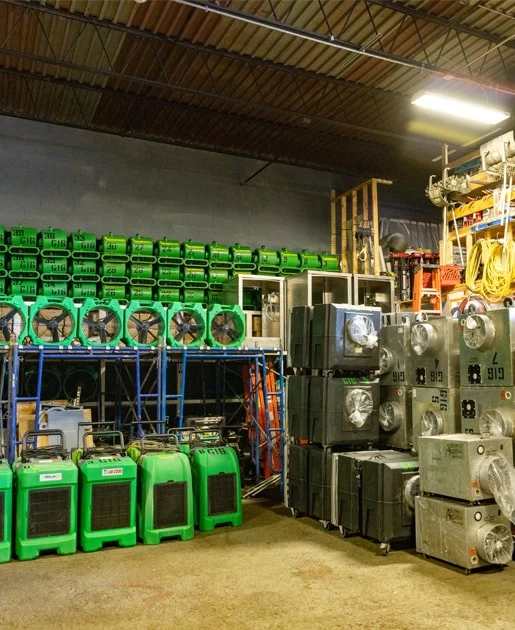
Water extraction comes next, using industrial-grade equipment that removes standing water faster and more completely than anything available at a hardware store. After extraction, the focus shifts to structural drying — air movers, industrial dehumidifiers, and moisture meters that measure what’s inside walls and under flooring, not just what’s visible on the surface. In older Hewlett Neck homes, this step takes longer and requires more precision, because historic materials hold moisture in ways that modern drywall simply doesn’t.
If the assessment identifies asbestos-containing materials or lead paint — a real possibility in pre-1978 construction, and Hewlett Neck has plenty of it — our licensed abatement team handles that as part of the same job. No second contractor. No coordination gap. Nassau County permit requirements for any reconstruction work are handled under our General Contractor license, so the rebuild phase moves without delays from compliance issues. When the job is done, you get documented confirmation that the space is dry, safe, and ready — not just a crew that packs up and leaves.
One Company Handles What Most Contractors Can't Touch
Most water damage companies can extract water and run dehumidifiers. That’s the baseline. What makes a flooded basement in Hewlett Neck more complex than a typical Nassau County cleanup is the combination of factors that come together here: waterfront exposure, aging housing stock, high property values, and the real possibility of hazardous materials in the walls.
We cover the full range. Water extraction and structural drying are the foundation. Mold prevention and, when needed, licensed mold remediation under the NYS DOL Mold License follow. For homes built before 1978 — and there are many in Hewlett Neck — asbestos and lead assessments are part of the process, handled in-house under our NYS DOL Asbestos License and USEPA Lead/RRP certification. No subcontracting. No hand-offs. No gaps in accountability.
When reconstruction is needed — replacing drywall, flooring, insulation, or structural framing — our Nassau County General Contractor license covers the full rebuild, including permit compliance for Hewlett Neck as an incorporated village. We handle insurance documentation thoroughly throughout, which matters when you’re filing a claim on a high-value South Shore property and need the paperwork to hold up under adjuster review. From water in to walls back, it’s one company, one point of contact, and one standard of work from start to finish.
How quickly does mold grow after a basement floods in Hewlett Neck?
Mold can begin developing within 24 to 48 hours of a flooding event, and the industry’s critical threshold is 72 hours — if a basement is professionally dried within that window, mold growth is unlikely. Beyond it, the scope of the job expands significantly. In Hewlett Neck, where flooding often comes from storm surge, tidal backflow, or overwhelmed drainage infrastructure rather than a clean-water source, the contamination level of the water also accelerates the risk. Contaminated water introduces organic material that feeds mold faster than a clean-water event would.
The practical takeaway is that waiting to see if things dry out on their own is one of the more expensive decisions a homeowner can make. In a home of this size and value, a mold outbreak that develops inside wall cavities or under historic flooring costs far more to remediate than the original cleanup would have. Calling within the first few hours — not the first few days — is what keeps a manageable water event from becoming a multi-week remediation project.
Does homeowners insurance cover basement flooding from a storm in Hewlett Neck?
This is one of the most common points of confusion for Hewlett Neck homeowners, and the answer depends entirely on the cause of the flooding. Standard homeowners insurance typically covers sudden and accidental water damage — a burst pipe, a failed water heater, an appliance overflow. It generally does not cover flooding caused by natural events like storm surge, tidal backflow, or groundwater intrusion. For that, you need a separate flood insurance policy, usually through the National Flood Insurance Program (NFIP).
Given Hewlett Neck’s waterfront peninsula geography and its documented history of South Shore coastal flooding, many homes here sit in FEMA-designated flood zones — which means flood insurance may already be required by your mortgage lender. If you’re not sure what your policy covers, the best time to find out is before you file a claim incorrectly. We assist with damage documentation throughout the cleanup process, which helps ensure your claim is supported by the kind of detailed, professional records that insurance adjusters expect on high-value property claims.
My Hewlett Neck basement flooded with what looks like sewage — is that different from regular water damage?
Yes, significantly. Water damage is categorized by contamination level, and sewage backup — or flooding driven by storm surge and tidal backflow — falls into Category 3, also called black water. This is biologically contaminated water that carries bacteria, pathogens, and other hazardous material. It is not a cleanup job. It is a decontamination job, and the protocols are completely different from what’s used on a clean-water event.
In Hewlett Neck, Category 3 events are not rare. When the South Shore experiences heavy rainfall combined with high tide, municipal sewer systems can backflow into residential drainage. The Five Towns area has been specifically cited in Nassau County flooding studies as a zone where this type of event occurs regularly. Any porous materials — drywall, insulation, carpet, wood framing — that come into contact with Category 3 water typically need to be removed entirely, not dried and saved. Our crews are trained and equipped for full biohazard decontamination, and the job is documented throughout to support any insurance or permit requirements that follow.
Can a water damage company legally handle mold in New York State?
Not without a specific license. New York State requires a dedicated NYS Department of Labor Mold License to legally perform mold remediation — it’s one of the stricter state-level requirements in the country, and it applies to every job in every county, including Nassau. A general contractor’s license or an IICRC certification does not satisfy this requirement. If a company is performing mold remediation in Hewlett Neck without a NYS DOL Mold License, they are operating outside of legal compliance.
This matters practically, not just technically. If unlicensed mold work is later discovered during a home sale, a refinance inspection, or an insurance claim review, it can create significant legal and financial complications for the homeowner — not just the contractor. We hold the NYS DOL Mold License and carry it alongside our full stack of environmental and construction credentials. When you ask for license numbers, you should get them immediately. If a company hesitates or redirects to vague “certified” language, that’s your answer.
What if my flooded basement also has asbestos or lead paint — what happens then?
It’s a real scenario in Hewlett Neck, not a hypothetical one. Many of the homes in this village were built in the early-to-mid 20th century, and some of the historic estates date back considerably further. Homes built before 1978 may contain asbestos floor tiles, pipe insulation, or ceiling materials. Homes built before 1980 may have lead-based paint on walls or trim. When a basement floods and those materials are disturbed by water, demolition, or the drying process, they require licensed abatement — not standard cleanup procedures.
Most water damage restoration companies are not licensed for asbestos or lead work. That means they either skip the assessment entirely, or they complete the water cleanup and leave you to hire a separate abatement contractor before reconstruction can begin. We hold the NYS DOL Asbestos License and USEPA Lead and RRP certifications alongside our water damage and mold credentials. The assessment happens as part of the initial scope review, and if abatement is needed, it’s handled in-house before the rebuild phase begins — no coordination gap, no separate contractor, no delay.
How much does flooded basement cleanup typically cost in Hewlett Neck, NY?
The range is wide because the variables are significant. A straightforward clean-water event in a smaller, unfinished basement can run $1,500 to $3,000. A contaminated-water event in a larger finished basement — which is far more common in the South Shore flooding scenarios that affect Hewlett Neck — typically runs $5,000 to $12,000 or more before any reconstruction is factored in. If the flooding has been present long enough for mold to develop, or if hazardous materials like asbestos are involved, the total scope expands further.
For Hewlett Neck specifically, the size and age of the housing stock push costs toward the higher end of those ranges more often than not. Large finished basement spaces, historic materials that require careful handling, and the likelihood of contaminated water from coastal flooding all add complexity. The more useful framing is this: the cost of a professional, licensed cleanup completed within 72 hours is almost always a fraction of what mold remediation, structural repair, or a failed insurance claim costs when the initial response is delayed or handled incorrectly. We provide a thorough assessment upfront so you know what you’re dealing with before any work begins.