Hollis Hills Homes Are Old. What's in That Water Matters.
Most cleanup crews handle the water. We handle what the water touched including the asbestos insulation and lead paint hiding in your 1950s basement. We respond 24/7 with the certifications to do this legally and completely.
I needed a professional consultation explanation of procedure for safe removal of Asbestos in my apartment complex. Without having an account yet, I was very impressed with the caring, knowledgeable and generous advice offered by Jessica, and will look forward to doing business in the future. Thank you so much! I feel much more informed about a sometimes scary endeavor. Peace. Nancy Silva Mineola, NY.
Mia Munoz
Used this company to clean up some water flood in my house. They were fast and easy to work with.very professional, Would recommend to anyone!
Nini Valle
Great company, had a flood and they responded quickly and efficiently. Billed my insurance company directly. I highly recommend this company!
joe colapietro, jr
I had pipe freeze in my basement right before a snow storm and they made to within an hour to help start the clean up process. They we by our side throughout the entire process and even helped with the insurance company. They did such a great job with the cleanup, repair, remidiation, I contracted them to perform the repairs and finishes in the basement. They came with enough manpower and material to get the job done. Leo and Jessica were nothing but a pleasure to deal with!!
Cristian Arredondo c
I had some water damage in my home and Green Island was able to take care of my issue quickly and effectively. I am very pleased with the work they did. They responded quickly and were very professional.
Michael M
Outstanding service! From the office to the field crew everyone was friendly, helpful and responsive. I highly recommend Green Island Group.
When the water clears, most homeowners exhale. But in a Hollis Hills home built in the 1950s, that’s actually when the real risk begins. Moisture hides in wall cavities, soaks into wood framing, and settles into concrete block foundations and mold can take hold within 24 to 48 hours. You don’t see it happening. You just see the bill later.
The housing stock in Hollis Hills is what makes basement flooding in this neighborhood different from flooding in a newer build. Homes in Hollis Hills the Colonials and Tudors on the streets between Union Turnpike and the Grand Central Parkway were built when asbestos pipe insulation was standard and lead paint was everywhere. When floodwater disturbs those materials, you’re not just dealing with a water problem anymore. You need a company that’s licensed to handle the full picture, not just the visible mess.
What you’re left with after a proper flooded basement cleanup isn’t just a dry floor. It’s documented moisture readings, confirmed mold prevention, hazardous materials handled by licensed professionals, and a basement that’s structurally sound and insurance-claim-ready. That’s what the job actually looks like when it’s done right.
We have been operating in the New York environmental and restoration market for over 30 years combined. We hold more than 17 active certifications including NYS DOL Mold, NYS DOL Asbestos, USEPA Lead, IICRC Water Damage, and a full NYC General Contractor license. That means we can legally handle everything a flooded basement in Hollis Hills actually involves, from the first pump to the final rebuild.
We’re not a national franchise learning the Queens market from a manual. We’re licensed in New York City, Nassau County, and Suffolk County, and we understand the specific conditions that define northeastern Queens the aging infrastructure, the pre-war housing stock, and the combined sewer system that backs up into residential basements when the storms hit. Hollis Hills homeowners have invested in some of the most valuable real estate in Queens. Homes in Surrey Estates and along the Springfield Boulevard corridor regularly sell close to or above $1 million. When something goes wrong in a basement, you deserve a company that treats that investment accordingly not one that dries the surface and disappears.
From Standing Water to Structurally Sound Here's the Full Picture
The first thing we do when we arrive is assess the source and the category of water. That matters more than most people realize. Clean water from a burst supply line is handled differently than gray water from a backed-up drain, and completely differently from black water which is what you get when Queens’ combined sewer system overflows into your basement floor drain during a heavy storm. Knowing what you’re dealing with changes the entire approach.
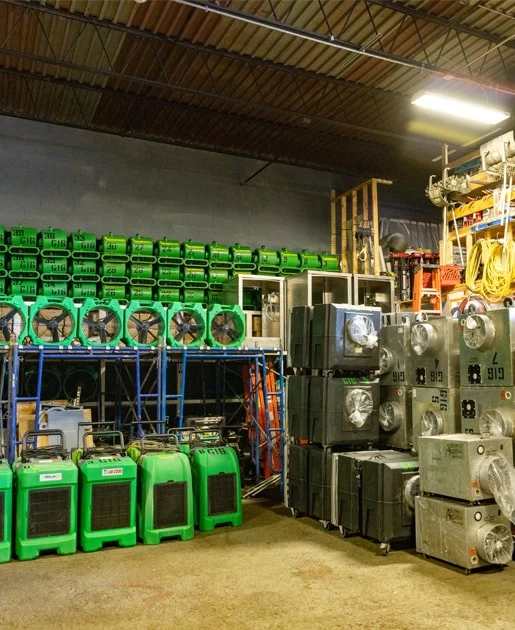
Once the source is identified and the water is extracted, we move into structural drying using professional-grade equipment not consumer fans. We use thermal imaging to find moisture pockets in wall cavities and subfloor assemblies that a visual inspection would miss entirely. In a Hollis Hills home with 70-year-old framing and plaster walls, this step is what separates a job that’s actually done from one that just looks done.
If we encounter asbestos-containing materials pipe insulation, floor tiles, ceiling tiles we don’t stop work and hand you a referral card. We’re licensed to handle it. After remediation is complete, we manage the reconstruction under our NYC General Contractor license, pulling whatever permits the Department of Buildings requires. You get one company, one point of contact, and a finished basement not a chain of subcontractors to coordinate.
Built for What Hollis Hills Basements Actually Contain
A lot of water damage companies are equipped for the easy version of this job clean water, newer construction, no hazardous materials. Hollis Hills is rarely the easy version. The neighborhood’s median construction year is 1954, and roughly 37% of homes were built before 1950. That means asbestos, lead, aging cast-iron plumbing, and concrete block foundations are the norm, not the exception. Our service is built around that reality.
What we bring to a Hollis Hills basement cleanup includes emergency water extraction, industrial structural drying, thermal imaging moisture detection, mold assessment and prevention under our NYS DOL Mold License, hazardous materials handling under our NYS DOL Asbestos and USEPA Lead certifications, content evaluation, and full reconstruction under our NYC General Contractor license. We also handle the insurance relationship directly documenting the damage, communicating with your adjuster, and billing the carrier on your behalf so you’re not managing that process on top of everything else.
We serve both ZIP codes that cover Hollis Hills 11427 on the south side of Union Turnpike and 11364 on the north and we’re available 24 hours a day, seven days a week. Whether it’s a sump pump failure at 2 a.m. or a sewer backup the morning after a tropical storm, the response time is the same.
Does homeowners insurance cover flooded basement cleanup in Hollis Hills, NY?
It depends on the cause, and that distinction matters a lot. Standard homeowners insurance typically covers sudden and accidental water damage a burst pipe, a failed water heater, a washing machine overflow. It generally does not cover flooding from outside the home, like storm surge or surface water entering through a window well, unless you have a separate flood insurance policy through the National Flood Insurance Program.
In Hollis Hills, one of the most common scenarios is sewer backup Queens’ combined sewer system gets overwhelmed during heavy rain, and sewage pushes back up through basement floor drains. That’s a separate coverage endorsement that many homeowners don’t realize they need until it happens. We document the damage thoroughly and work directly with adjusters, which makes a real difference in how a claim is evaluated and paid.
How quickly does mold start growing after a basement floods?
Mold can begin colonizing within 24 to 48 hours of a water event under the right conditions and basements provide exactly those conditions. Darkness, limited airflow, and organic materials like wood framing and drywall give mold everything it needs to establish quickly.
In Hollis Hills homes, where wall cavities often contain older plaster, wood lath, and materials that have absorbed decades of humidity, that timeline can compress. The 72-hour window is real waiting beyond it doesn’t just mean more mold, it typically means $2,000 to $8,000 more in remediation costs. Getting extraction and drying started fast is the single most effective thing you can do to control what this event ultimately costs you.
What makes flooded basement cleanup different in older Queens homes?
The age of the housing stock changes everything. In a home built after 1980, a flooded basement is mostly a water and drying problem. In a Hollis Hills home built in 1952, it’s potentially a water, mold, asbestos, and lead problem all at once.
Asbestos was commonly used in pipe insulation, floor tiles, ceiling tiles, and joint compound in homes built through the mid-1970s. Lead-based paint was standard on interior surfaces through 1978. When floodwater disturbs these materials soaking floor tiles, knocking loose pipe insulation, saturating painted surfaces they become an active hazard. A company that isn’t licensed to handle them legally cannot complete the job safely or legally. We hold both the NYS DOL Asbestos certification and the USEPA Lead certification, which means we can address the full scope of what a Hollis Hills basement flood actually involves without stopping work or subcontracting the hazardous materials portion to someone else.
Is mold remediation after a basement flood legally regulated in New York State?
Yes, and this is one of the most important things to understand before you hire anyone. New York State requires all professionals performing mold assessment or mold remediation to hold an active NYS Department of Labor Mold License. This is a legal mandate, not a voluntary credential. Hiring an unlicensed company to perform mold remediation in New York is illegal and it can also void your homeowners insurance claim if the carrier discovers the work was done without proper licensing.
This matters in Hollis Hills because a lot of companies respond to basement flooding calls, but far fewer are actually licensed to touch mold-affected materials legally. We hold the NYS DOL Mold License and follow all required minimum work standards for assessment and remediation. Every job we complete is fully documented, which protects your insurance claim and gives you a paper trail if questions come up later.
What causes most basement flooding in Hollis Hills specifically?
There are a few patterns that come up repeatedly in this neighborhood. The most common is sewer backup New York City’s combined sewer system handles both stormwater and sewage in the same pipes, and when a major storm hits, the system gets overwhelmed. That excess pressure pushes sewage back up through basement floor drains, which is the black water scenario and the most hazardous category of basement flooding.
The second major cause is pipe failure. The majority of Hollis Hills homes were built in the late 1940s and 1950s, which means the private plumbing systems supply lines, drain lines, and sewer laterals are 65 to 80-plus years old. Cast-iron and galvanized steel pipes of that era are well past their functional lifespan. A single failed lateral or corroded joint can put hundreds of gallons of water into a basement in minutes. The third factor is groundwater seepage, which is influenced by the proximity of Alley Pond Park’s wetlands to the east and the complex glacial drainage patterns beneath the neighborhood’s elevated terrain.
How long does a full flooded basement cleanup and restoration take in Hollis Hills?
The honest answer is that it varies based on the size of the basement, the category of water involved, and whether hazardous materials are present. For a straightforward clean-water event in an unfinished basement, extraction and structural drying typically takes three to five days. For a sewage backup or a situation involving mold growth and hazardous materials which is more common in Hollis Hills’ older housing stock the full remediation phase can run seven to ten days before reconstruction begins.
Reconstruction timelines depend on the scope of damage. A basement with compromised drywall, flooring, and insulation can take one to three weeks to fully restore under our NYC General Contractor license. What we can tell you is that we don’t hand you off between phases the same company that extracts the water manages the drying, the remediation, and the rebuild. That continuity matters when you’re dealing with a home worth close to or above $1 million, because there’s no gap between what one crew documented and what the next crew inherited.