When the LIE Corridor Drains Into Your Basement, You Need More Than a Shop Vac
We respond 24/7 to flooded basements along the Horace Harding Expressway corridor extracting water, stopping mold, and handling everything through reconstruction so you’re not managing three different contractors while your basement gets worse.
I needed a professional consultation explanation of procedure for safe removal of Asbestos in my apartment complex. Without having an account yet, I was very impressed with the caring, knowledgeable and generous advice offered by Jessica, and will look forward to doing business in the future. Thank you so much! I feel much more informed about a sometimes scary endeavor. Peace. Nancy Silva Mineola, NY.
Mia Munoz
Used this company to clean up some water flood in my house. They were fast and easy to work with.very professional, Would recommend to anyone!
Nini Valle
Great company, had a flood and they responded quickly and efficiently. Billed my insurance company directly. I highly recommend this company!
joe colapietro, jr
I had pipe freeze in my basement right before a snow storm and they made to within an hour to help start the clean up process. They we by our side throughout the entire process and even helped with the insurance company. They did such a great job with the cleanup, repair, remidiation, I contracted them to perform the repairs and finishes in the basement. They came with enough manpower and material to get the job done. Leo and Jessica were nothing but a pleasure to deal with!!
Cristian Arredondo c
I had some water damage in my home and Green Island was able to take care of my issue quickly and effectively. I am very pleased with the work they did. They responded quickly and were very professional.
Michael M
Outstanding service! From the office to the field crew everyone was friendly, helpful and responsive. I highly recommend Green Island Group.
A flooded basement doesn’t just mean wet floors. In a home built in the 1950s or 60s along the Horace Harding corridor, it means water sitting against original masonry walls, soaking into decades-old insulation, and potentially disturbing asbestos pipe wrap or floor tiles that nobody’s touched since the Eisenhower administration. Most of the homes between Queensboro Hill and Oakland Gardens were built in that same compressed post-war window, and they weren’t designed for the stormwater loads that Queens now sees every summer.
When the job is done right, you’re not just dry you’re clear. No hidden moisture pockets behind walls. No mold colonies starting in the dark behind your finished paneling. No hazardous materials left disturbed and unaddressed. Because we hold both NYS DOL Asbestos certification and NYS DOL Mold licensing, the entire scope gets handled under one roof legally, completely, and without you needing to pause the job to call someone else.
The other thing that changes is your timeline. Mold takes hold within 24 to 72 hours of a flood event. After that window, remediation costs jump by thousands. Getting the water out fast and getting it out completely is the difference between a manageable cleanup and a project that drags on for weeks and costs far more than it had to.
Every License the Job Actually Requires Not Just the Easy Ones
We’ve been serving Queens County homeowners through water damage, mold, and full environmental remediation for years. We hold more than 17 active certifications including NYS DOL Mold, NYS DOL Asbestos, USEPA Lead, IICRC Water Damage, and active General Contractor licenses for New York City, Suffolk County, and Nassau County. That’s not a credential wall for show. In New York State, performing mold remediation without a NYS DOL Mold license is illegal. A lot of companies advertising cleanup services in Queens don’t have it.
For homeowners along the Horace Harding Expressway corridor from the Fresh Meadows section near St. John’s University all the way east through Auburndale and into Oakland Gardens that distinction matters. These are older homes with older materials, and a flooded basement here isn’t always a straightforward water extraction job. We bill insurance directly, advocate with adjusters, and have documented response times under one hour even during Queens winter storms. You call once, and the whole job gets handled.
From Standing Water to Finished Space Here's the Actual Sequence
The first call triggers a 24/7 emergency response. We come to you no drop-off, no waiting for a morning window. The first thing we do on arrival isn’t start pulling water. It’s assess. What category of water are you dealing with? Clean water from a burst pipe is a different job than gray water from a backed-up appliance, and both are a different job than black water from a sewage backup. In a neighborhood with aging combined sewer infrastructure like the Horace Harding corridor, gray and black water events are more common than most homeowners expect and they require a higher level of containment and decontamination from the start.
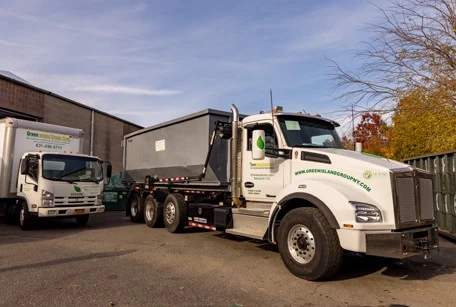
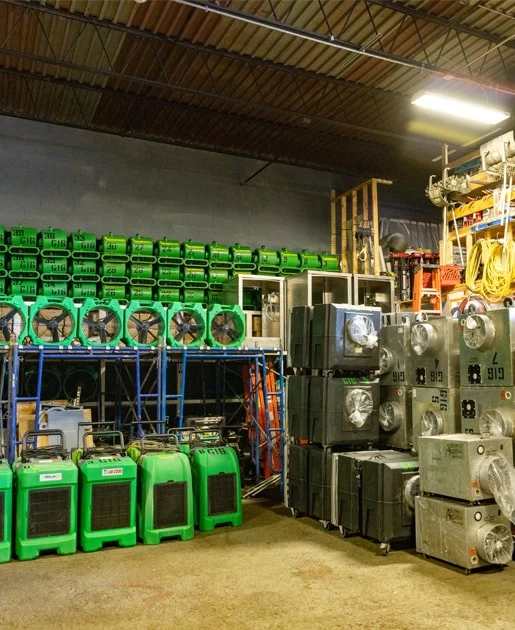
Once the category is confirmed, extraction begins using industrial-grade equipment. After the visible water is out, thermal imaging scans the walls and subfloor for hidden moisture the kind that looks dry on the surface but is actively feeding mold growth inside the cavity. This step matters especially in mid-century Queens construction, where plaster-over-masonry walls don’t show moisture migration the way drywall does.
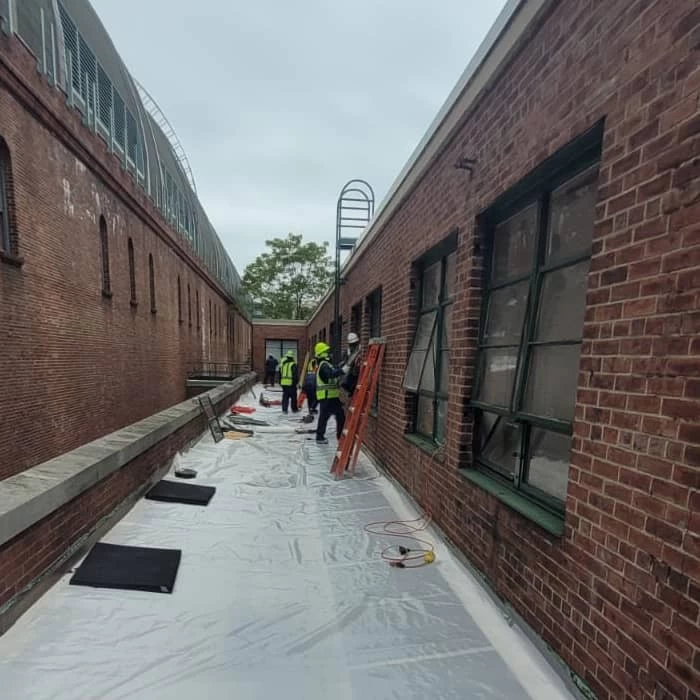
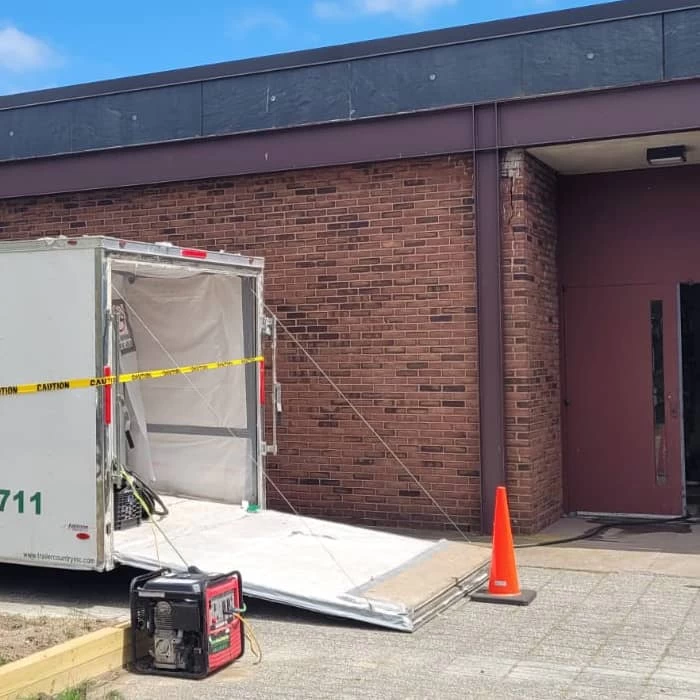
From there, the process moves into structural drying, air scrubbing, and where needed mold remediation performed under New York State’s legally required protocols. If asbestos or lead materials were disturbed during the flood, those are addressed by our team under our NYS DOL Asbestos and USEPA Lead certifications. No handoffs. No gaps. Reconstruction follows once the space is confirmed dry and clear, and the final walkthrough gives you a basement that’s actually finished not just technically dry.
Basement Flood Cleanup Services, Horace Harding NY
What's Included When Your Basement Has Decades of History Behind the Walls
Flooded basement cleanup in a newer home and flooded basement cleanup in a 1958 Queens colonial are not the same job. For homes along the Horace Harding corridor, the scope almost always includes more than water extraction. Our full-service response covers emergency water removal, industrial drying and dehumidification, thermal imaging for hidden moisture, mold testing and remediation under NYS DOL Mold licensing, sewage and contaminated water decontamination, asbestos and lead material management under NYS DOL and USEPA certifications, and complete basement reconstruction through our NYC General Contractor license. Every phase is handled in-house.
The contamination category of your flood determines how the job is scoped and what your insurance covers. Standard homeowners insurance typically covers sudden internal water damage a burst pipe, a failed water heater, an overflowing appliance. External flooding from storms or sewer backups usually requires separate NFIP flood insurance coverage. Our team works directly with your insurance company and adjuster to document the damage accurately and push for the coverage you’re entitled to. That’s part of how we work every job.
For homeowners in the denser sections of the corridor multi-family buildings near Queensboro Hill, two-family homes in the Kew Gardens Hills area, apartment buildings along the LIE service road the same full-scope capability applies. We also serve commercial and mixed-use properties. If the space flooded and it’s in Queens County, we’re equipped and licensed to handle it completely.
Is it safe to stay in my Horace Harding home after the basement flooded?
It depends on what flooded and how your home is set up. If the water came from a burst pipe or appliance and stayed contained to the basement, the upper floors are generally safe as long as the electrical panel wasn’t compromised. But if your basement has a fuse box or breaker panel that got wet, or if water reached any wiring, you should not be in the house until a licensed electrician clears it. In older homes along the Horace Harding corridor most of which were built between 1940 and 1969 the electrical systems are often original or partially updated, which increases that risk significantly.
The other factor is air quality. Once floodwater sits for more than a few hours, especially gray or black water from a sewer backup, airborne contaminants become a real concern. Mold spores can begin circulating through your HVAC system before visible growth appears on any surface. If you have children, elderly family members, or anyone with respiratory sensitivities in the household, err on the side of staying elsewhere until the space has been professionally assessed and cleared.
How quickly does mold start growing after a basement flood in Horace Harding?
Mold can begin colonizing within 24 to 48 hours of a flood event under the right conditions and Horace Harding basements in summer provide exactly those conditions. High humidity, warm temperatures, and organic materials like wood framing, drywall, and stored belongings give mold everything it needs. The 72-hour mark is the critical threshold: after that point, what might have been a straightforward drying job often becomes a full mold remediation project, which adds anywhere from $2,000 to $8,000 or more to the total cost.
In the mid-century homes that make up most of the Horace Harding corridor’s residential stock, mold doesn’t just grow on visible surfaces. It migrates into wall cavities behind plaster, under original hardwood subfloors, and inside original insulation none of which you can see without thermal imaging or physical investigation. By the time you spot it on a wall, it’s already well-established behind it. That’s why response time isn’t just about convenience. It’s a direct cost variable.
My basement flooded from what looks like a sewer backup what does that mean for cleanup?
A sewer backup puts your basement in what the restoration industry classifies as Category 3 water black water which contains bacteria, pathogens, and contaminants that require a significantly higher level of decontamination than a clean water flood. Everything the water touched needs to be treated as contaminated: flooring, wall surfaces, stored items, and any porous materials in contact with the water. This is not a job for a wet vac and some fans.
In Queens, sewer backups are particularly common in neighborhoods with aging combined sewer systems and the Horace Harding corridor is squarely in that category. When heavy rain overwhelms the municipal system, sewage can push back up through floor drains and basement plumbing. It’s not a sign that anything is wrong with your specific home it’s a known infrastructure limitation that Queens officials have acknowledged publicly. The cleanup protocol for a sewage backup includes full containment, antimicrobial treatment, proper disposal of contaminated materials, and air scrubbing. Our team is trained and equipped for all of it.
Does homeowners insurance cover flooded basement cleanup in New York?
Standard homeowners insurance in New York covers sudden and accidental internal water damage a pipe that bursts, a water heater that fails, a washing machine that overflows. What it typically does not cover is flooding from an external source: rising groundwater, storm surge, or surface water entering the home from outside. For that, you’d need a separate National Flood Insurance Program policy, which many Queens homeowners don’t carry because they’re not in a designated flood zone even though the borough’s drainage infrastructure failures make flooding a real and recurring risk.
Sewer backup coverage is its own separate question. Some homeowners policies include it as a rider; many don’t. The best thing you can do before the adjuster arrives is document everything thoroughly photos and video of all affected areas, all damaged contents, and the source of entry if visible. We bill insurance directly and work with adjusters on your behalf, which matters because adjusters are there to assess, not advocate. Having a licensed, documented remediation company in the room with them makes a real difference in what gets covered.
My home was built in the 1960s could my flooded basement contain asbestos or lead?
Yes, and it’s worth taking seriously. Homes built before 1980 which describes the overwhelming majority of the residential stock along the Horace Harding Expressway corridor frequently contain asbestos pipe insulation wrapped around basement heating pipes and plumbing, asbestos floor tiles in utility areas, and lead-based paint on basement walls and structural members. Under normal conditions, these materials are stable and don’t pose an immediate hazard. But when a basement floods, water soaks into those materials, and cleanup activity pulling up flooring, removing drywall, disturbing pipe insulation can release fibers and particles into the air.
Most water damage companies are not licensed to handle this. In New York State, asbestos work requires an active NYS DOL Asbestos license, and lead work requires USEPA Lead and RRP certification. We hold both. If your basement flood reveals materials that may contain asbestos or lead, the job doesn’t stop it continues under the appropriate protocols, with proper containment and disposal, without you needing to find a separate environmental contractor to finish what the cleanup crew started.
How long does a full flooded basement cleanup and restoration take in Horace Harding?
The honest answer is that it depends on what the job reveals once the water is out. A straightforward clean water flood in a finished basement burst pipe, contained to one area, caught quickly can be dried and cleared in three to five days with the right equipment. A more complex job involving sewage contamination, hidden moisture behind walls, mold remediation, or hazardous materials in a mid-century home can run two to three weeks from initial extraction through full reconstruction.
For homes along the Horace Harding corridor, the timeline is often extended by what’s found during the inspection phase rather than what was visible at first. Thermal imaging frequently identifies moisture pockets that weren’t apparent on the surface, and in homes with original plaster walls and older construction, those pockets can be extensive. The goal isn’t to rush a number at you upfront it’s to assess the actual scope accurately so the timeline you’re given reflects the real job, not an optimistic estimate that shifts once the walls come open. We’ll walk you through what we find at each stage so you’re never in the dark about where the project stands.