When Jamaica Bay Comes Inside, Here's What Happens Next
Your basement is underwater, the clock is already running on mold, and you need someone who actually knows what flooding in Howard Beach looks like not a call center reading from a script.
I needed a professional consultation explanation of procedure for safe removal of Asbestos in my apartment complex. Without having an account yet, I was very impressed with the caring, knowledgeable and generous advice offered by Jessica, and will look forward to doing business in the future. Thank you so much! I feel much more informed about a sometimes scary endeavor. Peace. Nancy Silva Mineola, NY.
Mia Munoz
Used this company to clean up some water flood in my house. They were fast and easy to work with.very professional, Would recommend to anyone!
Nini Valle
Great company, had a flood and they responded quickly and efficiently. Billed my insurance company directly. I highly recommend this company!
joe colapietro, jr
I had pipe freeze in my basement right before a snow storm and they made to within an hour to help start the clean up process. They we by our side throughout the entire process and even helped with the insurance company. They did such a great job with the cleanup, repair, remidiation, I contracted them to perform the repairs and finishes in the basement. They came with enough manpower and material to get the job done. Leo and Jessica were nothing but a pleasure to deal with!!
Cristian Arredondo c
I had some water damage in my home and Green Island was able to take care of my issue quickly and effectively. I am very pleased with the work they did. They responded quickly and were very professional.
Michael M
Outstanding service! From the office to the field crew everyone was friendly, helpful and responsive. I highly recommend Green Island Group.
When the water is gone, what you’re really left with is a question: did someone actually do this right? In Howard Beach, that question matters more than almost anywhere else in Queens. You’re not dealing with a freak pipe burst once every ten years. You’re in a FEMA flood zone, sitting on the northern shore of Jamaica Bay, and if you’ve lived here long enough through Sandy, through the tidal surges, through the winter nor’easters that send the NYPD out on Level 3 mobilizations you already know what a rushed cleanup job looks like months later. It looks like mold.
The difference between a basement that gets properly dried and one that just looks dry is invisible at first. Moisture hides inside wall cavities, under subfloor assemblies, behind drywall. It doesn’t announce itself until you’re dealing with a mold problem that costs two or three times what the original cleanup would have. We use thermal imaging equipment to find what you can’t see and we don’t sign off until the readings confirm the space is genuinely dry, not just surface-dry.
For Howard Beach homeowners, there’s also the insurance side of this. Many properties here carry both a standard homeowners policy and a separate NFIP flood policy, and navigating two claims simultaneously while your basement is still wet is a lot to manage. We handle the documentation from the moment we arrive photos, moisture logs, scope reports and we bill insurance directly. You focus on your family. We handle the paperwork.
Basement Flooding Remediation Serving Howard Beach
Thirty Years In, We've Seen What This Bay Does
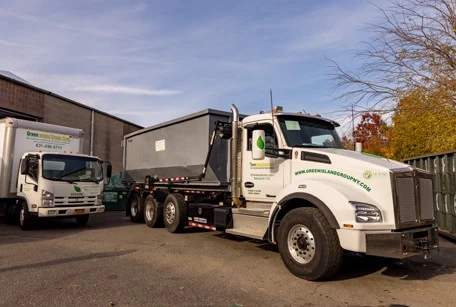
Green Island Group has been handling environmental remediation and restoration work across the New York metro area for over 30 combined years. We’re not a national franchise with a local phone number. We’re a regional company based on Long Island connected to Howard Beach by the same Belt Parkway that runs along the neighborhood’s northern edge and we’ve been serving Queens homeowners through real flood events, not just minor water calls.
We hold the NYS DOL Mold License, which is a legal requirement in New York State not a bonus credential. We’re IICRC-certified for water and fire damage, licensed as a General Contractor in New York City, and certified to handle the hazardous materials that can come with sewage backups and contaminated floodwater. In a neighborhood like Howard Beach, where aging cast-iron sewer lines near Cross Bay Boulevard can back up during tidal surges, that matters.
We operate 24 hours a day, every day. When a storm rolls through Jamaica Bay at midnight, you’re not leaving a voicemail.
Flooded Basement Cleaning Process Howard Beach, NY
From Standing Water to Finished Space One Company, Start to Finish
The first thing that happens when you call is simple: we show up. Our documented response times run under an hour, and that’s not a marketing number it’s in our reviews, including calls during active snowstorms in this area. When we arrive, we assess the water source and contamination category before anything else. That step matters more in Howard Beach than most people realize. A tidal surge from Jamaica Bay, a sewage backup from an overwhelmed sewer line, and a burst pipe are three completely different situations that require three different response protocols. Using the wrong one can make the problem worse and create insurance complications.
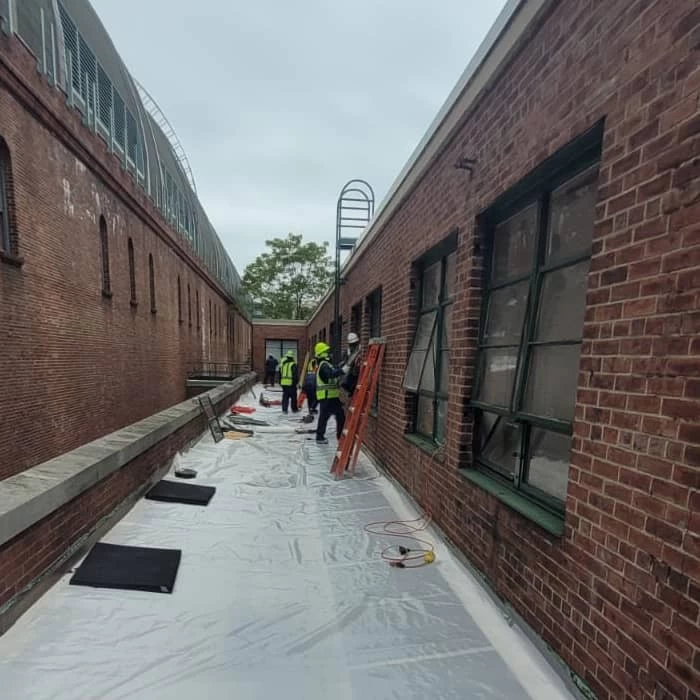
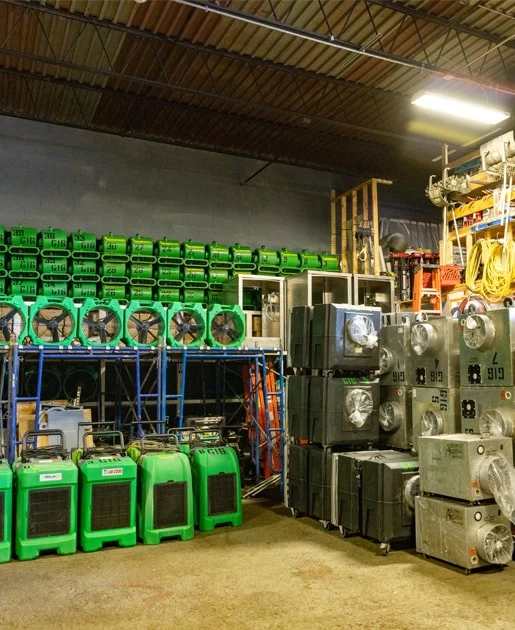
Once we’ve categorized the water, we extract it using industrial equipment and begin the structural drying process dehumidifiers, air movers, and thermal imaging to track moisture inside wall cavities and beneath flooring that you can’t access visually. We document everything as we go: readings, photos, drying logs. This documentation is what your insurance adjuster needs to process a full claim, and we build it from the start so nothing gets missed.
If the basement needs reconstruction after the cleanup new drywall, flooring, insulation, or structural repairs we handle that too. Our NYC General Contractor license means we can legally complete the full scope of work in Howard Beach under New York City building regulations, from emergency extraction through a finished, livable space.
Basement Water Cleanup and Mold Remediation Howard Beach
Every Flood Type This Neighborhood Sees, Covered
Howard Beach basements flood in more than one way, and not every company is equipped to handle all of them legally. Storm surge from Jamaica Bay can carry contaminated bay water. The aging cast-iron and clay sewer lines running through the neighborhood particularly in low-lying areas near Cross Bay Boulevard can back up when tidal pressure overwhelms the municipal system, sending black water into finished basements. Groundwater intrusion from the high water table pushes up from below during heavy rain or extended tidal flooding. Each of these is a different contamination category, and each requires a different handling protocol under New York State regulations.
We provide the full range of services: emergency water extraction, structural drying with industrial dehumidifiers and air movers, thermal imaging for hidden moisture, mold assessment and remediation under our active NYS DOL Mold License, sewage and black-water cleanup with proper containment and disposal, debris removal, and full reconstruction. If your basement was finished flooring, drywall, trim, insulation we restore it. You don’t need to find a separate contractor to put it back together.
For homeowners in Hamilton Beach, Old Howard Beach, and the waterfront sections of Lindenwood who deal with recurring flood events, we also provide proper documentation after every job. If your basement floods again next season and you need to file another claim, having a documented record from the previous cleanup makes the process significantly smoother with your insurer.
How quickly does mold start growing after a basement floods in Howard Beach?
Mold can begin developing within 24 to 72 hours of a flooding event and in Howard Beach, that window is tighter than in drier inland neighborhoods. The neighborhood sits directly on Jamaica Bay, which means ambient humidity levels are already elevated compared to areas further from the water. When you add standing water, wet drywall, and soaked insulation to an already humid environment, the conditions for mold growth are essentially ideal from the moment the flood starts.
This is why response time isn’t just about convenience it’s a financial decision. If structural drying doesn’t begin within that 72-hour window, mold remediation costs can increase by thousands of dollars on top of the original cleanup. We respond in under an hour and begin the drying process immediately, specifically to beat that clock. We also use thermal imaging to find moisture hiding inside wall cavities and beneath flooring, because surface-dry and genuinely dry are not the same thing and in a neighborhood that floods repeatedly, hidden moisture left behind becomes next season’s mold problem.
Does my flood insurance actually cover basement cleanup costs in Howard Beach, NY?
It depends on which policy you have and what caused the flooding. Howard Beach sits in a FEMA-designated flood zone, so many homeowners here carry both a standard homeowners insurance policy and a separate National Flood Insurance Program policy. These two policies cover different things, and the overlap or gap between them is where a lot of claims get complicated.
Standard homeowners insurance typically covers sudden water damage from internal sources like burst pipes or appliance failures, but often excludes flooding caused by external water sources like storm surge or tidal overflow from Jamaica Bay. That’s where the NFIP policy comes in. However, NFIP policies have their own coverage limits and exclusions, particularly around finished basement contents and certain structural elements. The average NFIP claim payout is around $52,000, but getting to that number requires proper documentation from the start photos, moisture readings, a detailed scope of damage. We handle the documentation from the moment we arrive and bill insurance directly, which means your adjuster gets what they need without you having to manage the paperwork during an already stressful situation.
What's the difference between water damage cleanup and mold remediation do I need both?
Water damage cleanup and mold remediation are two separate processes, and whether you need both depends on how quickly the flooding was addressed and what conditions existed before the event. Water damage cleanup covers extraction, structural drying, and restoring the space to a dry, stable condition. Mold remediation is a separate scope of work that involves identifying mold growth, containing the affected area, removing contaminated materials, treating surfaces, and verifying clearance and in New York State, it legally requires a NYS DOL Mold License to perform.
In Howard Beach, the honest answer is that many flood jobs end up requiring both. The neighborhood’s proximity to Jamaica Bay means humidity is a constant factor, and basements in mid-century homes the kind built in the 1950s and 1960s that make up a large portion of Howard Beach’s housing stock often have limited airflow and older insulation that holds moisture. If a basement has flooded before, there’s a reasonable chance mold is already present before the current event. We assess for mold as part of our initial evaluation so you know exactly what you’re dealing with before any work begins, and we’re licensed to handle both scopes under one roof.
How do I know if my basement has sewage contamination after flooding in Howard Beach?
Sewage contamination what restoration professionals call black water isn’t always obvious from the smell alone, especially in the immediate aftermath of a flood when everything is wet and chaotic. In Howard Beach, sewage backup is a real and recurring risk during tidal flooding events. The neighborhood’s sewer infrastructure includes aging cast-iron and clay lines, particularly in low-lying areas near Cross Bay Boulevard, that are prone to backups when Jamaica Bay surge overwhelms the municipal drainage system. When that happens, the pressure can push sewage directly into residential basements through floor drains, toilets, or cleanout access points.
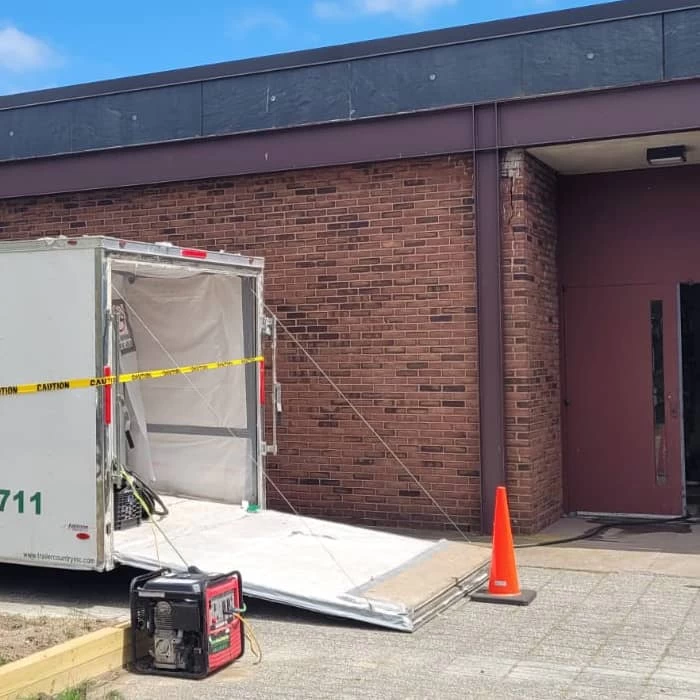
Visually, black water contamination may appear as discolored or murky water with visible solids, or it may look similar to regular floodwater. The safest approach is to treat any basement flood that occurred during a tidal surge or major storm event as potentially contaminated until a professional assessment confirms otherwise. Black-water cleanup requires proper containment, personal protective equipment, licensed disposal, and surface treatment that goes well beyond standard water extraction. We are fully equipped and licensed to handle sewage contamination this is not a job for a general handyman or an unlicensed restoration crew.
My Howard Beach basement floods every year is there anything I can do to reduce the damage?
Recurring flooding is a structural reality for many Howard Beach homeowners, particularly in Old Howard Beach and Hamilton Beach where tidal activity from Jamaica Bay has made flooding a near-monthly occurrence for some streets. There’s no single fix that eliminates the risk entirely the Army Corps of Engineers is actively working on the Spring Creek South coastal risk project and the city has invested in a Raised Shorelines program, but those are long-term infrastructure solutions that don’t help you tonight.
What you can do on the property level includes installing a properly sized sump pump with a battery backup (so it keeps running during power outages, which often coincide with flooding events), sealing basement walls and floor penetrations, and elevating mechanical systems like water heaters and electrical panels above the base flood elevation. Following Hurricane Sandy, NYC updated its zoning rules to allow flood insurance funds to be used toward flood-resistant infrastructure improvements so depending on your policy, some of these upgrades may be partially covered. On the cleanup side, having a documented record from each flood event is valuable: it speeds up future insurance claims and gives contractors a baseline to work from. If you’ve had repeated flooding, we can walk through the space with you after cleanup and identify where the vulnerabilities are.
Why should I hire a licensed company instead of a general contractor for basement flood cleanup in Howard Beach?
In New York State, performing mold remediation without an active NYS DOL Mold License is illegal full stop. It’s not a gray area or a technicality. If a contractor performs mold remediation work on your Howard Beach home without that license, they are operating outside the law, and that can have real consequences for you: voided insurance claims, liability issues if the work is later found to be inadequate, and no recourse if something goes wrong.
Beyond the legal issue, Howard Beach flooding often involves more than one type of contamination. A general contractor with a shop vac and a dehumidifier is not equipped to handle sewage backups, contaminated bay water, or the asbestos-containing materials that are present in many of the neighborhood’s mid-century homes. We hold the NYS DOL Mold License, NYS DOL Asbestos License, USEPA Lead certification, IICRC Water Damage certification, and a New York City General Contractor license. That combination means we can legally and safely handle every scenario a Howard Beach basement flood is likely to present and document it in a way that holds up with your insurance company. Licensing in this industry exists because the consequences of getting it wrong are serious. It’s worth checking before you hire anyone.