Jamaica Bay Doesn't Warn You. We're Already Ready.
When tidal surge or a nor’easter pushes water into your basement, the clock starts immediately. We respond 24/7 with licensed crews who know exactly what flooded basement cleanup in Inwood demands.
I needed a professional consultation explanation of procedure for safe removal of Asbestos in my apartment complex. Without having an account yet, I was very impressed with the caring, knowledgeable and generous advice offered by Jessica, and will look forward to doing business in the future. Thank you so much! I feel much more informed about a sometimes scary endeavor. Peace. Nancy Silva Mineola, NY.
Mia Munoz
Used this company to clean up some water flood in my house. They were fast and easy to work with.very professional, Would recommend to anyone!
Nini Valle
Great company, had a flood and they responded quickly and efficiently. Billed my insurance company directly. I highly recommend this company!
joe colapietro, jr
I had pipe freeze in my basement right before a snow storm and they made to within an hour to help start the clean up process. They we by our side throughout the entire process and even helped with the insurance company. They did such a great job with the cleanup, repair, remidiation, I contracted them to perform the repairs and finishes in the basement. They came with enough manpower and material to get the job done. Leo and Jessica were nothing but a pleasure to deal with!!
Cristian Arredondo c
I had some water damage in my home and Green Island was able to take care of my issue quickly and effectively. I am very pleased with the work they did. They responded quickly and were very professional.
Michael M
Outstanding service! From the office to the field crew everyone was friendly, helpful and responsive. I highly recommend Green Island Group.
Most of the homes in Inwood were built before 1939. That means when water gets in, it doesn’t just sit on the floor — it moves into plaster walls, under old wood subfloors, and into insulation that was never designed to handle saturation. The visible water is only part of the problem. What you can’t see is what causes the real damage.
Mold can start developing within 24 to 48 hours of a flooding event. If the space is fully dried within 72 hours, you can usually avoid it entirely. Miss that window and you’re no longer dealing with a cleanup — you’re dealing with a remediation project that costs significantly more and takes significantly longer.
Inwood’s position along Jamaica Bay makes this timeline especially real. A single storm can flood dozens of homes in the Five Towns simultaneously. Restoration companies fill up fast after those events. Getting a licensed crew to your door before that 72-hour mark isn’t just helpful — it’s the difference between a manageable job and a much bigger one. That’s the outcome we’re built to deliver.
We’re a full-service disaster restoration and environmental remediation company serving Nassau County, including Inwood and the broader Five Towns area. We hold a Nassau County General Contractor license — which means structural restoration work like drywall, subfloor replacement, and framing can be completed in-house, under Town of Hempstead building codes, without subcontracting.
Beyond that, we carry a NYS DOL Mold Remediation License, NYS DOL Asbestos License, USEPA Lead and RRP certifications, and IICRC Water Damage certification. In Inwood, where most homes predate 1940 and basements routinely contain old floor tiles, pipe insulation, and lead paint, those credentials aren’t a formality — they’re what separates a legal, safe cleanup from a liability.
We’re also a NYS MBE and WBE certified company. In a community as diverse as Inwood, that’s not a footnote — it reflects a business that’s accountable to the same certification standards the State of New York uses to verify legitimacy.
What Actually Happens From First Call to Final Walkthrough
When you call, you reach someone who can dispatch — not a form, not a callback queue. A crew gets to your home and starts with a full assessment: where the water came from, what category of contamination you’re dealing with, and what materials have been affected. In Inwood, that assessment almost always includes checking for disturbed asbestos-containing materials or lead paint, because the age of the housing stock here makes those a real possibility, not a remote one.
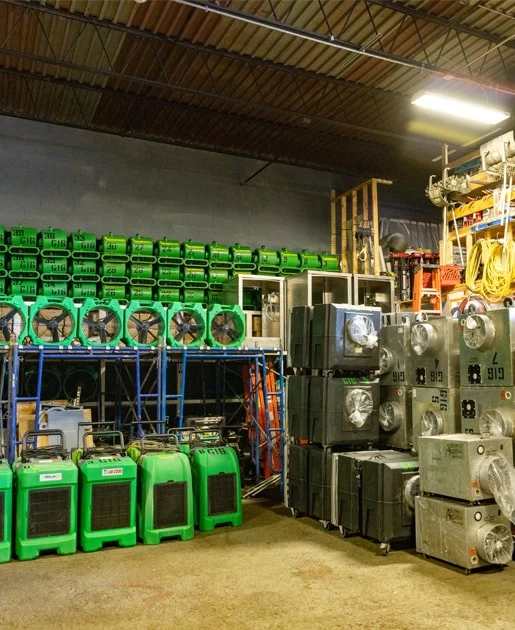
From there, extraction and structural drying begin. We use industrial-grade equipment to pull standing water and then continue working on the moisture embedded in walls, floors, and framing. Moisture readings are taken throughout — not just at the surface — because hidden moisture in an older Inwood home is what leads to mold six weeks later when you think the problem is already solved.
Once the space is confirmed dry, any damaged materials are removed and documented. If reconstruction is needed — new drywall, flooring, framing — we handle that under the same Nassau County General Contractor license, so you’re not coordinating a second company. Insurance documentation is compiled throughout the process, which matters significantly for Inwood homeowners navigating the difference between standard homeowners coverage and NFIP flood insurance.
Built for Older Homes, Coastal Conditions, and Real Hazards
Flooded basement cleanup in Inwood isn’t a one-size situation. A burst pipe in January is a different job than Jamaica Bay storm surge coming up through a floor drain in October. Our scope is built to handle both — and everything in between, including sewage backup, which is a legitimate risk in Inwood given the age of the sewer infrastructure and what happens to municipal drainage systems when a major storm hits.
For homes along the bay-side streets — the Bayview Avenue corridor and the western sections closer to the water — storm surge and groundwater intrusion are the primary threats. For homes in the denser eastern sections near Rockaway Turnpike, it’s more often a combination of heavy rain overwhelm, aging sump pump failure, and drain backups. The work adapts to the source, not the other way around.
What’s consistent across every job is the full-scope approach: water extraction, structural drying, moisture verification, mold assessment, hazardous material handling where required, and reconstruction if needed. Because the majority of Inwood homes were built before 1970, asbestos and lead testing are part of our standard process here — not an add-on. You get one licensed team, one point of contact, and one invoice covering the complete scope from water out to walls back in.
Does homeowners insurance cover basement flooding from a storm in Inwood?
This is one of the most common points of confusion for Inwood homeowners, and the answer depends entirely on what caused the flooding. Standard homeowners insurance typically covers sudden, accidental water damage — a burst pipe, a failed appliance, an overflowing washing machine. It does not cover flooding from natural sources like storm surge, groundwater intrusion, or tidal overflow from Jamaica Bay. That type of flooding requires a separate NFIP flood insurance policy.
Inwood’s coastal position means many homes here are at risk for both types of water events — and a lot of homeowners don’t realize which type of event they just experienced, or which policy applies. Some carry NFIP coverage; many don’t. We document damage thoroughly throughout the cleanup process specifically to support whatever insurance claim applies to your situation — whether that’s a standard homeowners claim, a flood claim, or a combination of both. Getting that documentation right from the start protects you during the claims process.
How quickly can mold grow after a basement flood, and why does it matter?
Mold can begin developing within 24 to 48 hours of water exposure. The critical window is 72 hours — if the affected area is fully dried within that timeframe, mold growth is unlikely. Beyond it, you’re looking at a more complex and significantly more expensive remediation project on top of the original cleanup.
For Inwood residents, this timeline has real stakes. When a nor’easter or a high-tide surge event hits the Five Towns, it can affect dozens of homes at the same time. Restoration companies in Nassau County book up quickly after those events, and every hour you spend waiting is an hour off that 72-hour clock. That’s exactly why we operate 24/7 with real emergency dispatch — not a form you fill out and wait on. Getting a crew to your home fast isn’t just about convenience. In an older Inwood home with plaster walls and wood-frame construction, it’s about keeping a manageable cleanup from becoming a mold remediation job.
My Inwood home was built before 1940 — should I worry about asbestos in my flooded basement?
Yes, and it’s worth taking seriously. Homes built before 1939 — which describes the majority of Inwood’s housing stock — commonly contain asbestos in floor tiles, pipe insulation, joint compound, and ceiling materials. When a basement floods and those materials get disturbed or saturated, they can become a hazard that goes well beyond water damage.
The problem is that most water damage restoration companies are not licensed to handle asbestos. They’ll clean up the water and leave the hazardous material issue for someone else — or worse, disturb it without realizing it. We hold a NYS DOL Asbestos License, which means our team can identify, test, and properly handle asbestos-containing materials as part of the cleanup process. You don’t need to hire a separate abatement contractor and coordinate two timelines. The same crew that handles the water handles the hazmat, which keeps the project moving and keeps your home safe throughout.
What is Category 3 water damage, and is it common in Inwood basements?
Water damage is classified in three categories based on contamination level. Category 1 is clean water — a burst supply line, for example. Category 2 involves some contamination, like a washing machine overflow or sump pump failure with standing groundwater. Category 3, often called black water, involves sewage, floodwater from rivers or tidal sources, or any water that has been standing long enough to become biologically hazardous.
In Inwood, Category 3 events are not rare. Storm surge from Jamaica Bay carries contaminants. Aging municipal sewer lines — many of which in this area date back decades — can back up into basements during heavy rain events when the system gets overwhelmed. Category 3 flooding is not a standard cleanup job. It requires full decontamination, protective protocols, and licensed disposal of contaminated materials. Treating it like a Category 1 event is how homeowners end up with ongoing health hazards in their homes. We’re equipped and licensed for Category 3 response, and the assessment at the start of every job determines exactly what you’re dealing with.
How much does flooded basement cleanup typically cost in Nassau County?
Costs vary based on the size of the space, the category of water contamination, and how much structural damage has occurred. Generally, flooded basement cleanup runs between $4 and $12 per square foot. A minor clean water event in a smaller basement might come in around $1,600 to $3,000. A larger space with Category 2 or Category 3 contamination — which is common in Inwood given the coastal flood exposure and aging sewer infrastructure — can run $6,000 to $12,000 or more before any structural reconstruction.
FEMA data puts the average NFIP flood claim payment at nearly $46,000, which reflects how quickly water damage compounds when it’s not addressed quickly and completely. The cost of professional cleanup, framed against what unresolved moisture and mold can do to a home’s structure and value, is almost always the more financially sound choice. We provide clear documentation throughout the job, which also supports insurance claims and helps offset out-of-pocket costs where applicable coverage exists.
Can I just dry out my flooded basement myself instead of calling a professional?
For a very minor, contained event — a small appliance leak on a sealed concrete floor with no wall contact — some homeowners manage it themselves. But for anything beyond that, the risk of DIY drying in an Inwood home is genuinely high, and it comes down to what you can’t see.
Consumer fans and dehumidifiers don’t generate the airflow or extraction capacity needed to dry wall cavities, subfloor assemblies, or the kind of dense plaster and wood-frame construction common in pre-war Inwood homes. Moisture gets trapped, the surface feels dry, and three to six weeks later you have mold growing behind the baseboard or inside the wall. In a home that may also contain asbestos floor tiles or lead paint, disturbing wet materials without knowing what’s in them creates a separate hazard entirely. We use professional equipment including moisture meters and thermal imaging that confirm dryness in materials you can’t physically access. That verification step is what actually closes the job — not just removing the standing water.