Island Park basements don’t just flood — they flood fast, from multiple directions, with water that’s anything but clean. We offer certified flooded basement cleanup before the 72-hour mold window closes.
I needed a professional consultation explanation of procedure for safe removal of Asbestos in my apartment complex. Without having an account yet, I was very impressed with the caring, knowledgeable and generous advice offered by Jessica, and will look forward to doing business in the future. Thank you so much! I feel much more informed about a sometimes scary endeavor. Peace. Nancy Silva Mineola, NY.
Mia Munoz
Used this company to clean up some water flood in my house. They were fast and easy to work with.very professional, Would recommend to anyone!
Nini Valle
Great company, had a flood and they responded quickly and efficiently. Billed my insurance company directly. I highly recommend this company!
joe colapietro, jr
I had pipe freeze in my basement right before a snow storm and they made to within an hour to help start the clean up process. They we by our side throughout the entire process and even helped with the insurance company. They did such a great job with the cleanup, repair, remidiation, I contracted them to perform the repairs and finishes in the basement. They came with enough manpower and material to get the job done. Leo and Jessica were nothing but a pleasure to deal with!!
Cristian Arredondo c
I had some water damage in my home and Green Island was able to take care of my issue quickly and effectively. I am very pleased with the work they did. They responded quickly and were very professional.
Michael M
Outstanding service! From the office to the field crew everyone was friendly, helpful and responsive. I highly recommend Green Island Group.
A Dry Basement — And Nothing Hidden Behind the Walls
When the water recedes, the real damage is just starting to show itself. Moisture hides inside wall cavities, under flooring, and behind insulation — and in Island Park’s older homes, built mostly around 1960 or earlier, that means water is sitting against materials that were never meant to get wet. Drywall absorbs. Wood frames swell. And if the conditions are right, mold can take hold within 72 hours.
What you want after a flooded basement isn’t just a dry floor. You want confirmation that the structure is dry, that the air quality is safe, and that nothing was missed. For a home on a barrier island where storm surge, groundwater pressure, and sump pump failure can all happen in the same event, that kind of complete cleanup matters more than it does almost anywhere else in Nassau County.
Island Park properties in FEMA flood zones AE and VE face a specific challenge: surge water from Reynolds Channel isn’t clean. It carries sewage, marine debris, and biological contaminants. That’s not a standard water damage situation — it’s a contamination event. The outcome you need isn’t just dry. It’s decontaminated, documented, and done right the first time.
We hold the full stack of credentials required for flooded basement cleanup in Nassau County: NYS DOL Mold, NYS DOL Asbestos, USEPA Lead, USEPA RRP, IICRC Water Damage certification, and a General Contractor license for Nassau County. That combination is rare. Most restoration companies carry one or two of those. We carry all of them — which matters in Island Park, where a single flood job can involve contaminated surge water, pre-1960 building materials, and post-flood reconstruction that has to meet the Village’s Chapter 264 Flood Damage Prevention code.
This isn’t a company that learned about Island Park from a zip code database. We know the barrier island geography, the flood zone designations, the three-section layout of the village, and what it actually means when Reynolds Channel pushes water into a Barnum Island basement at 2 AM during a nor’easter. We’re available 24/7 because that’s when Island Park floods — not during business hours.
What Actually Happens From the First Call to the Final Check
The first call matters. When you reach us, we’re asking the right questions immediately — when did the water enter, what’s the likely source, is there any visible sewage or debris, and how old is the home. In Island Park, that last question shapes everything. A home built before 1978 has a real probability of containing asbestos floor tiles or lead-based paint. We assess for those hazards before anyone starts pulling up flooring or tearing out drywall, because disturbing those materials without a licensed contractor creates a separate problem on top of the flood.
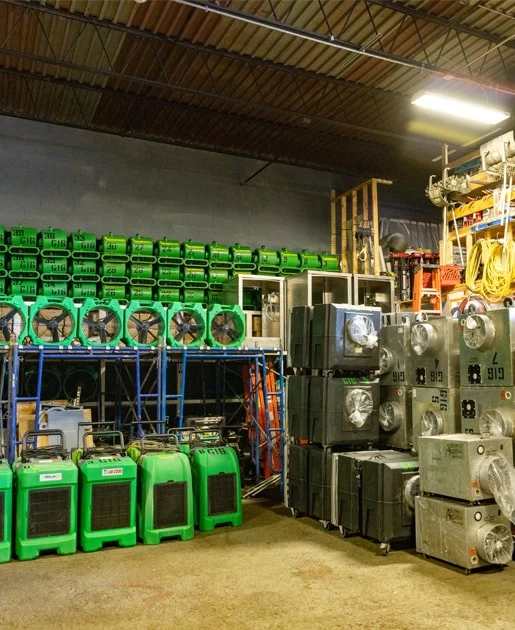
Once on-site, we extract standing water using industrial-grade equipment, then move into structural drying — setting dehumidifiers and air movers calibrated to the specific square footage and material composition of your basement. We don’t pull equipment after 24 hours and call it done. Moisture readings guide the timeline, not a fixed schedule.
From there, we document everything. In Island Park, where flood insurance and homeowners insurance claims often run parallel — and where the distinction between the two determines how much you recover — proper documentation isn’t an afterthought. It’s part of the job. If mold is found, or if hazmat materials need to be addressed, those steps happen in sequence under the same licensed team. No second contractor, no gap in accountability, no starting over.
Surge Water, Sewage, Mold, Hazmat — We Handle All of It
Flooded basement cleanup in Island Park isn’t one service — it’s several, and they have to happen in the right order. Water extraction comes first. Then structural drying and moisture mapping. Then a mold assessment, because the coastal humidity and the age of Island Park’s housing stock make mold a realistic outcome in any basement flood that isn’t addressed quickly. If mold is present, we handle remediation under our NYS DOL Mold license — the state-required credential that a lot of companies advertising “mold cleanup” on Long Island don’t actually hold.
For homes in Harbor Isle, Barnum Island, or the incorporated village where the housing stock skews older, we also assess for asbestos and lead before any demolition work begins. That’s not an upsell — it’s the legally required sequence when working in pre-1978 construction. Skipping it creates liability for you and for us, and we’re not willing to do either.
If the flooding involved surge water or sewage backup — which is common during heavy rain events when Island Park’s drainage infrastructure gets overwhelmed — we treat the cleanup as a Category 3 biohazard event. That means full decontamination protocols, not just extraction and fans. We also assist with insurance documentation throughout the process, helping you build the paper trail that separates a paid claim from a disputed one. The Village’s flood history is long. We want your claim to be the one that goes smoothly.
How quickly does mold grow after a basement floods in Island Park?
Mold can begin developing within 24 to 48 hours of water intrusion — and in Island Park’s climate, with the coastal humidity that comes with living on a barrier island surrounded by Reynolds Channel and the back bays, that timeline can be even tighter. The combination of warm air, organic building materials, and standing or residual moisture creates exactly the conditions mold needs to establish itself quickly.
The 72-hour mark is the critical threshold. If your basement is fully extracted and dried within that window, mold growth is unlikely. If it isn’t — or if moisture is left behind in wall cavities or under flooring — you’re looking at a secondary remediation project on top of the original flood cleanup. That’s why response time matters so much here. A callback the next morning in a community where storms flood dozens of homes at once is a real problem. We’re available around the clock specifically because Island Park flooding doesn’t wait for business hours.
Does flood insurance or homeowners insurance cover basement flooding in Island Park?
It depends entirely on what caused the flooding — and in Island Park, that question is more complicated than it sounds. If your basement flooded because of storm surge from Reynolds Channel or groundwater rising through your foundation during a coastal storm, that’s flood damage. It falls under your NFIP flood insurance policy, not your homeowners insurance. Homeowners insurance typically covers sudden, accidental events like a burst pipe — not rising water from outside the structure.
The reason this matters so much in Island Park is that many flooding events here involve both. A nor’easter can knock out your sump pump (potentially a homeowners claim) while simultaneously pushing groundwater up through your foundation (a flood insurance claim). Getting the damage categorized correctly — and documented in a way that supports the right claim — directly affects how much you recover. Nassau County has recorded over $2.3 billion in NFIP flood insurance payouts since 1978, and a significant portion of those claims came from communities exactly like Island Park. We help with the documentation process so your adjuster has what they need to process your claim accurately.
My Island Park home was built in the 1950s — does that change how cleanup works?
Yes, significantly. Homes built before 1978 — which describes a large portion of Island Park’s housing stock, given the median construction year of 1960 — frequently contain asbestos floor tiles, asbestos-wrapped pipe insulation, and lead-based paint on walls and trim. When floodwater contacts those materials, it can disturb and mobilize hazardous particles. That changes the legal and safety requirements for anyone doing cleanup work in that space.
Under New York State law, disturbing asbestos-containing materials requires a licensed contractor holding a NYS DOL Asbestos certification. Lead work in pre-1978 homes requires USEPA Lead and RRP certification. These aren’t optional — they’re the law. A restoration company that starts pulling up flooring or tearing out drywall in your 1955 Island Park home without assessing for these materials first is creating a hazmat problem on top of your flood problem. We hold both certifications, which means we assess before we touch anything, and we handle whatever we find without bringing in a second contractor.
What does Category 3 water damage mean, and does it apply to my basement?
Water damage is classified in three categories based on contamination level. Category 1 is clean water — a burst supply line, for example. Category 2 is gray water, which carries some contaminants. Category 3 is black water — the most serious classification — and it applies to floodwater that has contacted sewage, seawater, or significant biological or chemical contaminants.
In Island Park, storm surge flooding from Reynolds Channel is almost always Category 3. The water that pushes into basements during a coastal storm has mixed with sewage, marine debris, and whatever else is in the back bay. Sewage backup from an overwhelmed drain is also Category 3. This matters because Category 3 cleanup isn’t just extraction and drying — it requires full decontamination protocols, including antimicrobial treatment of all affected surfaces, proper disposal of porous materials that can’t be decontaminated, and air quality verification before the space is considered safe. Treating Category 3 flooding like a standard wet basement is one of the most common mistakes made after Island Park storms, and it’s one of the main reasons mold and odor problems resurface weeks later.
How much does flooded basement cleanup typically cost in Island Park, NY?
The honest answer is that it varies — and the range is wide enough that any single number without context would be misleading. A straightforward water extraction and drying job in a small unfinished basement might run a few thousand dollars. A Category 3 surge flooding event in a finished basement of a pre-1960 Island Park home — one that requires decontamination, mold remediation, asbestos assessment, and structural repairs — can reach $30,000 to $60,000 or more depending on the extent of damage and what’s found behind the walls.
What drives cost in Island Park specifically is the combination of factors that often show up on the same job: contaminated surge water requiring biohazard protocols, older building materials that need hazmat evaluation before demolition, and post-flood reconstruction that has to meet the Village’s Chapter 264 elevation and construction standards if the work qualifies as a substantial improvement. The best way to get an accurate number is an on-site assessment — not a phone estimate. We can give you a clear scope and cost breakdown once we’ve seen the actual conditions, and we’ll document everything in a format that supports your insurance claim from the start.
Can I clean up a flooded basement myself instead of calling a professional?
For a small, clean-water event — a minor pipe leak in a newer home with no finished walls — some homeowners can manage the initial cleanup if they act fast and have the right equipment. But in Island Park, most basement flooding doesn’t fit that description. Surge water and sewage backup are biohazards. Floodwater in a pre-1978 home may have disturbed asbestos or lead. And the barrier island’s shallow water table means that even after visible water is removed, moisture can continue wicking up through the slab and into wall framing for days.
The specific risk with DIY cleanup here is incomplete drying. Consumer-grade fans and dehumidifiers don’t move enough air volume to dry out structural materials — they dry the surface while moisture stays trapped inside. That’s the setup for a mold problem that doesn’t show up until weeks later, often behind finished walls or under flooring. By then, the cleanup is significantly more expensive than it would have been if the original job had been done with professional-grade drying equipment and moisture meters. In a community where flood events can affect your home repeatedly over the years, getting the first cleanup done correctly is the decision that protects you the next time around.