Your 1960s Ranch Deserves More Than a Pump and a Fan
Most of Islip Terrace’s homes were built before 1975 and when those basements flood, what’s hiding behind the walls matters just as much as the water on the floor. We handle flooded basement cleanup from extraction through full restoration, with the environmental licensing to back it up.
I needed a professional consultation explanation of procedure for safe removal of Asbestos in my apartment complex. Without having an account yet, I was very impressed with the caring, knowledgeable and generous advice offered by Jessica, and will look forward to doing business in the future. Thank you so much! I feel much more informed about a sometimes scary endeavor. Peace. Nancy Silva Mineola, NY.
Mia Munoz
Used this company to clean up some water flood in my house. They were fast and easy to work with.very professional, Would recommend to anyone!
Nini Valle
Great company, had a flood and they responded quickly and efficiently. Billed my insurance company directly. I highly recommend this company!
joe colapietro, jr
I had pipe freeze in my basement right before a snow storm and they made to within an hour to help start the clean up process. They we by our side throughout the entire process and even helped with the insurance company. They did such a great job with the cleanup, repair, remidiation, I contracted them to perform the repairs and finishes in the basement. They came with enough manpower and material to get the job done. Leo and Jessica were nothing but a pleasure to deal with!!
Cristian Arredondo c
I had some water damage in my home and Green Island was able to take care of my issue quickly and effectively. I am very pleased with the work they did. They responded quickly and were very professional.
Michael M
Outstanding service! From the office to the field crew everyone was friendly, helpful and responsive. I highly recommend Green Island Group.
When water gets into a basement in Islip Terrace, the clock starts immediately. Mold can begin growing within 24 to 48 hours, and in the mid-century construction that dominates this hamlet ranches, hi-ranches, colonials built mostly between 1950 and 1975 water doesn’t just sit on the floor. It wicks into concrete, moves behind insulation, and settles under subfloor material before you’ve even called anyone.
What you actually want is simple: a dry basement, a clear picture of what the damage is, and a contractor who can handle all of it without handing you off to three different companies. That’s what a real cleanup looks like not just extraction, but moisture mapping, drying, mold assessment, and if needed, full reconstruction under one roof.
There’s also something specific to homes of this era that most water damage companies won’t bring up: the materials inside your walls may contain asbestos or lead. Pipe insulation, floor tiles, ceiling materials these were standard in Long Island construction from the 1950s through the mid-1970s. Disturbing them during a flood cleanup without the right licensing isn’t just a bad idea. In New York State, it’s a legal issue. We hold the NYS DOL Asbestos and USEPA Lead certifications required to assess and handle those hazards properly, which is something the average restoration crew simply cannot offer.
Licensed Basement Flooding Remediation, Suffolk County
We Show Up in Person, and We're Easy to Reach
Green Island Group is led by CEO Jessica Dussan and VP Leo Torres and we’re not hard to find. We show up in customer reviews by name, we’re reachable, and every job that goes out under our name is our responsibility. That’s not a tagline. It’s just how we run.
Over 12 years and more than 5,000 completed restoration projects across New York State, we’ve built a track record that national franchises can’t replicate with a local phone number. We hold a Suffolk County General Contractor license, a NYS DOL Mold Contractor license, NYS DOL Asbestos certification, USEPA Lead and RRP certifications, and are an approved emergency response contractor for the NYS Office of General Services meaning New York State has independently vetted us to respond to public emergencies.
For Islip Terrace homeowners navigating the Town of Islip’s permitting requirements under Article XH of the Town Code, that licensing matters. We can pull the permits, do the work, and close it out all legally, all properly.
From Standing Water to Dry and Documented Here's What We Do
The first call triggers an immediate response. We operate 24/7/365, and in a community like Islip Terrace where a nor’easter or a sump pump failure during a spring storm can affect dozens of homes in a single night getting there fast is not a selling point, it’s the job. Our goal on arrival is to stop the damage from getting worse before anything else happens.
Once on-site, we use thermal imaging cameras and professional moisture meters to find water that isn’t visible to the eye. This step matters more than most homeowners realize. In a 1958 ranch or a 1965 hi-ranch, water moves into wall cavities and under flooring quickly, and if it isn’t documented and dried properly, it becomes a mold problem within days and a denied insurance claim later. Every moisture reading is logged, because that documentation is what your adjuster needs to approve the full scope of the loss.
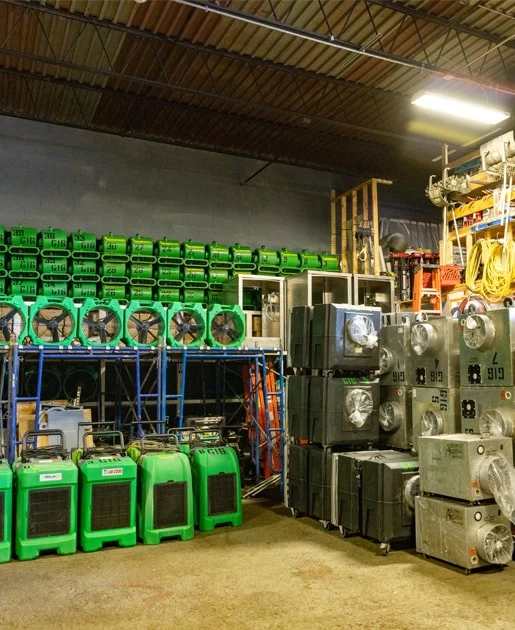
From there, industrial extraction equipment and commercial dehumidifiers begin the drying process. If mold is present or if the flooding involved sewage backup which requires Category 3 hazmat protocols under IICRC S500 standards those phases are handled in sequence by the same licensed team. If reconstruction is needed after remediation, our Suffolk County General Contractor license covers that too. You don’t need to find another contractor to finish the job.
Basement Flooding Remediation Services, Islip Terrace NY
What's Included When Your Basement Floods in Islip Terrace
Flooded basement cleanup isn’t one thing it’s a sequence, and every step matters. Our scope covers emergency water extraction, structural drying, thermal moisture mapping, mold assessment and remediation (licensed under NYS DOL), asbestos and lead evaluation for pre-1980 homes, sewage backup cleanup with proper containment and antimicrobial treatment, and full basement reconstruction when the remediation work is done.
For Islip Terrace homeowners specifically, the asbestos and lead evaluation piece is not optional fine print. The hamlet’s housing stock is almost entirely pre-1980 construction, and the materials used in that era floor tiles, pipe wrap, ceiling tiles, certain drywall compounds are commonly tested positive for asbestos in Suffolk County homes of this vintage. A water damage company that isn’t licensed to handle those materials legally cannot complete a full cleanup in your home. We can.
Insurance coordination is built into every job. We document the damage, communicate directly with your adjuster, and bill your carrier not you, upfront. Multiple independent customer reviews confirm this is standard practice, not a promotional offer. In a community where median home values sit above $560,000 and annual property taxes average over $10,000, the last thing you need is to fight your insurance company while your basement is still wet. That part of the process is handled.
Does homeowners insurance cover flooded basement cleanup in Islip Terrace, NY?
It depends on the cause of the flooding, and this is where most homeowners get tripped up. Standard homeowners insurance typically covers sudden and accidental water damage a burst pipe, a washing machine overflow, or a sump pump failure if you have the right rider but it generally does not cover flooding from outside sources like storm surge or overland water. In Islip Terrace, which sits north of Sunrise Highway and away from the Great South Bay, the most common flooding causes are groundwater intrusion, sump pump failure during nor’easters or heavy spring rains, and internal plumbing failures most of which do fall under standard homeowners coverage.
The key is documentation. If your contractor doesn’t photograph the damage, log moisture readings, and document the cause of loss properly before extraction begins, your adjuster may deny or reduce the claim. We document every job with the detail an insurance claim requires, and handle direct communication with your carrier so you’re not navigating that process alone while your basement is still wet.
How quickly does mold start growing after a basement floods?
Mold can begin colonizing within 24 to 48 hours of a flooding event and in a basement environment with limited airflow, it moves faster than most people expect. By 72 hours, depending on the material and moisture level, you can have active mold growth behind drywall, under flooring, and inside wall cavities that isn’t visible from the surface.
In Islip Terrace’s mid-century housing stock, this is a particular concern because the construction methods of that era used materials wood framing, paper-faced insulation, older drywall that absorb moisture readily and provide exactly the organic material mold needs to spread. Waiting even a day or two to call a contractor can add $2,000 to $8,000 or more in mold remediation costs on top of the original water damage bill. The faster extraction and drying begins, the better the chance of keeping the scope and the cost contained.
Why does it matter if my Islip Terrace home was built before 1980 for a flood cleanup?
Homes built before 1980 which describes the overwhelming majority of Islip Terrace’s housing stock were commonly constructed using materials that contain asbestos or lead. Floor tiles, pipe insulation, ceiling tiles, certain joint compounds, and window glazing from that era frequently test positive for asbestos in Suffolk County homes. Lead-based paint was standard on interior and exterior surfaces until it was banned for residential use in 1978.
When a basement floods and a cleanup crew begins removing damaged materials, they can disturb those hazardous substances without even knowing it unless they’re licensed to test for them first. Under New York State law, asbestos abatement above a certain threshold requires a NYS DOL Asbestos Contractor license. An unlicensed crew that removes asbestos-containing materials without proper containment and disposal creates a health hazard and a legal liability for you as the homeowner. We hold both the NYS DOL Asbestos license and USEPA Lead certification, so this gets assessed and handled correctly before any demolition begins.
What causes most basement flooding in Islip Terrace during storms?
Islip Terrace sits north of Sunrise Highway, which means it doesn’t face the coastal storm surge risk that affects South Shore communities closer to the Great South Bay like Bay Shore or Brightwaters. The flooding risk here is driven by a different set of factors: a shallow and fluctuating water table common throughout South Shore Suffolk County, sandy soil that saturates quickly during sustained rainfall, and aging sump pump systems in homes that are 50 to 70 years old.
During nor’easters which produce 12 to 36 hours of sustained heavy rainfall the water table in this area can rise to near-basement-floor level, pushing groundwater through foundation cracks, floor seams, and overwhelmed sump pits. Spring snowmelt combined with April rains is another consistent trigger. And in winter, frozen pipes in older, less-insulated basement plumbing are a common cause of sudden interior flooding. Knowing which type of flooding you’re dealing with matters for both the cleanup approach and the insurance claim.
Can I clean up a flooded basement myself instead of hiring a contractor?
For a very minor, contained water event a small appliance leak on a concrete floor with no wall contact you might manage with a wet vac and fans. But for anything beyond that, the risks of a DIY cleanup in an older Long Island home outweigh the savings significantly.
The core problem is what you can’t see. Water in a mid-century basement travels behind walls, under subfloor material, and into insulation within hours. Without thermal imaging and professional moisture meters, you can dry the surface and still have wet material inside your walls that turns into mold within days. Add the asbestos and lead risk in pre-1980 construction, and a DIY cleanup can turn a manageable water damage claim into a hazmat situation. In New York State, mold remediation projects above 10 square feet legally require a licensed contractor so even if you handle the water, you may need to bring in a licensed remediator for what comes next. It’s usually faster and less expensive in the long run to get a professional assessment first.
Does sewage backup in a basement require a different type of cleanup than regular flooding?
Yes significantly different. A sewage backup is classified as Category 3 water under IICRC S500 standards, which means it contains bacteria, pathogens, and contaminants that make it a genuine health hazard. This is not a situation where extraction and drying are sufficient. Category 3 cleanup requires proper personal protective equipment, containment protocols, antimicrobial treatment of all affected surfaces, and licensed disposal of contaminated materials.
In Islip Terrace and throughout the Town of Islip, aging sewer infrastructure in neighborhoods built in the 1950s and 1960s means sewage backup is a real risk particularly during heavy rainfall events when municipal systems get overwhelmed. If your basement has backed-up sewage in it, the cleanup needs to be treated as an environmental remediation job, not a standard water damage call. We hold the environmental licensing to cover Category 3 sewage cleanup with the protocols the health risk actually requires, and all affected materials are handled and disposed of in compliance with applicable regulations.