When Your Jamaica Estates Tudor Floods, You Need More Than a Wet Vac
Jamaica Estates homes are built to last but they weren’t built for this. When water gets in, we handle flooded basement cleanup fast, completely, and with the licenses your older home actually requires.
I needed a professional consultation explanation of procedure for safe removal of Asbestos in my apartment complex. Without having an account yet, I was very impressed with the caring, knowledgeable and generous advice offered by Jessica, and will look forward to doing business in the future. Thank you so much! I feel much more informed about a sometimes scary endeavor. Peace. Nancy Silva Mineola, NY.
Mia Munoz
Used this company to clean up some water flood in my house. They were fast and easy to work with.very professional, Would recommend to anyone!
Nini Valle
Great company, had a flood and they responded quickly and efficiently. Billed my insurance company directly. I highly recommend this company!
joe colapietro, jr
I had pipe freeze in my basement right before a snow storm and they made to within an hour to help start the clean up process. They we by our side throughout the entire process and even helped with the insurance company. They did such a great job with the cleanup, repair, remidiation, I contracted them to perform the repairs and finishes in the basement. They came with enough manpower and material to get the job done. Leo and Jessica were nothing but a pleasure to deal with!!
Cristian Arredondo c
I had some water damage in my home and Green Island was able to take care of my issue quickly and effectively. I am very pleased with the work they did. They responded quickly and were very professional.
Michael M
Outstanding service! From the office to the field crew everyone was friendly, helpful and responsive. I highly recommend Green Island Group.
What a Finished Basement Looks Like When It's Restored Right
Water in your basement isn’t just an inconvenience in Jamaica Estates, it’s a threat to one of the most valuable homes in Queens. The median single-family home here runs around $1.5 million. A flooded finished basement that doesn’t get properly dried, cleaned, and restored doesn’t just cost you the carpet and drywall. It costs you in hidden mold, structural damage that shows up months later, and a home inspection that derails a future sale.
The homes along Midland Parkway and throughout Jamaica Estates were built predominantly between the 1920s and 1950s. That means thick masonry walls, original foundations, and basement configurations that weren’t designed for the level of stormwater Queens now deals with especially after heavy rain overwhelms the sewer system or a sump pump gives out at midnight. Water doesn’t stay where you can see it. It moves into wall cavities, under subfloors, and behind plaster in ways that look fine on the surface but aren’t.
What you get after a proper flooded basement cleanup isn’t just a dry floor. It’s a space that’s been fully extracted, dried with commercial equipment, tested for moisture in the places you can’t see, and cleared of any mold risk before the walls go back up. In Jamaica Estates, where homes contain original pipe insulation, old floor tiles, and materials that predate modern safety standards, that process also means making sure nothing hazardous got disturbed in the process and handling it correctly if it did.
Licensed Basement Flood Remediation in Jamaica Estates
17 Certifications and Real Experience in Jamaica Estates Homes
We’re a Queens-area restoration company that operates 24 hours a day, seven days a week. We’re not a national franchise with a call center routing your emergency to whoever’s available. We’re a regional operator with direct experience working in the specific housing stock found in Jamaica Estates finished basements, pre-1950 construction, and homes where what’s behind the walls matters as much as what’s on the surface.
We hold over 17 active certifications and licenses, including the NYS Department of Labor Mold License that New York State legally requires for any professional performing mold remediation. We also hold NYS DOL Asbestos certification, USEPA Lead certification, and a New York City General Contractor license credentials that matter enormously in Jamaica Estates, where more than 42% of homes were built before 1950. Most water damage companies working in Queens don’t carry all of these. We do.
When a homeowner near Cunningham Park or off Union Turnpike calls with a flooded basement, they’re not getting a technician who’s never worked in Jamaica Estates. They’re getting our team people who already understand what these homes contain, how they flood, and what it actually takes to restore them completely.
Basement Flooding Remediation Process in Jamaica Estates
From Standing Water to Restored Space Here's Our Process
The first call triggers an emergency response. We’re available around the clock, and our documented response times run under an hour which matters because every hour of standing water in a finished basement increases the damage and the cost. When our team arrives, the first priority is assessing the source and scope: where the water came from, how far it’s traveled, and what materials it’s touched.
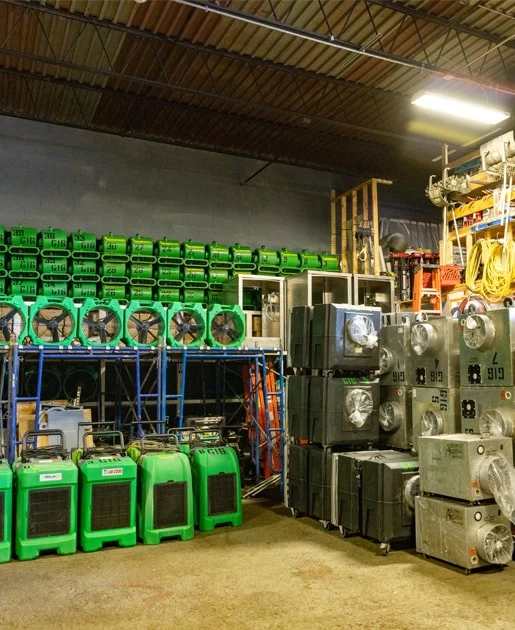
From there, commercial-grade extractors remove the standing water, and the drying process begins with industrial air movers and dehumidifiers placed strategically throughout the space. But the step most companies skip and the one that matters most in Jamaica Estates is thermal imaging. Because these are older homes with thick walls and complex construction, moisture hides in places a visual inspection won’t catch. Thermal imaging finds it. If it’s there, we address it before anything gets closed back up.
In homes built before 1980, which describes most of Jamaica Estates, there’s also a materials assessment. If pipe insulation, floor tiles, or wall materials show any indication of asbestos or lead, those materials are handled under the proper NYS DOL and USEPA protocols not ignored or worked around. Once the space is fully dry and cleared, reconstruction begins: new drywall, flooring, insulation, whatever the basement needs to be fully usable again. The whole process is documented for your insurance company from day one, and we bill the insurer directly.
Flooded Basement Cleaning Services in Jamaica Estates, NY
Everything the Job Requires Under One Roof, One Contract
A flooded basement in Jamaica Estates isn’t a single-service problem. It’s a sequence of interconnected needs water extraction, structural drying, mold prevention, hazardous materials assessment, and full reconstruction and most companies only handle part of it. We handle all of it, which means you’re not calling a mitigation company, then a mold company, then a general contractor. One call, one team, start to finish.
The scope of what’s included is driven by what your home actually needs, not a fixed menu. Emergency water extraction comes first, followed by commercial drying equipment staged throughout the affected area. Mold testing and prevention is built into our process, not offered as an upsell. In pre-1980 homes which is the majority of Jamaica Estates a materials assessment is standard, because disturbing asbestos-containing materials or lead paint without proper licensing creates a liability problem for you, not just the contractor. Our NYS DOL Asbestos and USEPA Lead certifications mean we can legally and safely manage whatever is found.
The Jamaica area has also dealt with a documented rise in the groundwater table since the late 1990s, which creates chronic pressure on older foundations throughout this part of Queens. If your basement floods repeatedly or shows signs of ongoing seepage, we flag that during the assessment so you have a clear picture of what’s a one-time event and what’s a structural pattern that needs a longer-term solution.
Does my Jamaica Estates home need a licensed contractor for basement flood cleanup?
In New York State, any professional performing mold assessment or remediation is legally required to hold an active NYS Department of Labor Mold License. This isn’t optional, and it’s not a technicality it directly affects whether your insurance claim is valid and whether the work done in your home is legally defensible. If a company remediates mold in your basement without that license, you could be left holding the liability.
Beyond mold, Jamaica Estates homes present a specific complication: over 42% were built before 1950, and a large portion before 1980. That means asbestos pipe insulation, asbestos floor tiles, and lead paint are genuinely common in these basements. Any contractor who disturbs those materials during demo or water removal without the proper NYS DOL Asbestos or USEPA Lead certifications is operating outside the law. Before you hire anyone for basement flood cleanup in Jamaica Estates, ask for their license numbers. A legitimate, fully licensed company will hand them over without hesitation.
How quickly can someone respond to a flooded basement emergency in Jamaica Estates?
Response time is one of the most important factors in a basement flood situation, and not just for comfort it’s financial. Water damage that sits for more than 24 to 48 hours begins affecting structural materials. After 72 hours, mold remediation costs typically jump by thousands of dollars because the mold has had time to establish in wall cavities and subfloor assemblies. In a finished basement in Jamaica Estates, where you’re dealing with carpet, drywall, and potentially original construction materials, that timeline matters enormously.
We operate 24 hours a day, seven days a week, and our documented response times run under an hour. That applies to overnight calls, weekend emergencies, and the kind of summer thunderstorm that drops two inches of rain in an hour and overwhelms the Queens sewer system before anyone’s had a chance to react. When you call, you’re not leaving a voicemail or waiting for a callback window you’re getting a real response, fast, from our team that’s already familiar with Jamaica Estates and the housing conditions throughout central Queens.
Why does my Jamaica Estates basement keep flooding even after it's been cleaned out?
If your basement floods repeatedly not just after a major storm, but during ordinary heavy rain or even without obvious cause there’s a good chance it’s connected to something deeper than a one-time drainage failure. The Jamaica area experienced a significant rise in the groundwater table after the Jamaica Water Supply Company stopped pumping in the mid-1990s. The water table in this part of Queens rose substantially when the city closed dozens of wells, and the cost of reversing that through city infrastructure has been estimated at hundreds of millions of dollars. That’s not happening anytime soon, which means the groundwater pressure affecting older foundations in Jamaica Estates is a chronic condition, not a fluke.
For homeowners in Jamaica Estates, this often shows up as slow seepage, recurring dampness, or a sump pump that runs constantly and still can’t keep up. A proper flooded basement cleanup includes assessing whether what you’re dealing with is a weather event, a failed sump system, or an ongoing groundwater issue because the right response is different for each one. We flag these patterns during the initial assessment so you’re not just cleaning up the same problem every six months.
Will my homeowner's insurance cover flooded basement cleanup in Jamaica Estates?
Coverage depends on the cause of the flood, and this is where the details really matter. Standard homeowner’s insurance policies in New York typically cover sudden, accidental water damage a burst pipe, a failed sump pump, an appliance malfunction. They generally do not cover flooding from outside sources like storm surge or surface water, which would fall under a separate flood insurance policy through FEMA’s National Flood Insurance Program. Jamaica Estates is not a coastal neighborhood, so the flooding most homeowners here deal with is stormwater backup and internal failures which are more likely to be covered under a standard policy.
That said, how the damage is documented makes a significant difference in what the insurer actually pays. We handle insurance documentation and adjuster communication directly as part of our service. In a neighborhood where homes are worth well over a million dollars and finished basements represent substantial invested value, the difference between a well-documented claim and a poorly handled one can be tens of thousands of dollars. We bill the insurance company directly, which means you’re not fronting the cost and waiting for reimbursement while your basement sits in disrepair.
How do I know if there's mold in my basement after a flood if I can't see any?
Visible mold is actually the later stage of the problem. By the time you can see it on a wall or ceiling, it’s already been growing in the material behind it for days or weeks. The conditions that produce mold moisture, organic material, warmth are exactly what a flooded basement provides, and in the older homes throughout Jamaica Estates, the wall assemblies and subfloor construction give mold plenty of places to establish before it becomes visible.
The most reliable way to identify hidden mold is a combination of thermal imaging and moisture measurement. Thermal imaging detects temperature differentials in walls and floors that indicate trapped moisture the kind that dries on the surface but stays active inside. Moisture meters confirm whether materials are still holding water above safe thresholds. We use both as part of our standard process, not as an add-on. If mold is present, remediation is handled under our active NYS DOL Mold License, which is the legal requirement in New York State and the credential your insurance company will want to see documented in the claim file.
What happens to the finished parts of my basement carpet, drywall, built-ins after a flood?
This is the question that separates a mitigation-only company from a full-service restoration company, and it’s especially relevant in Jamaica Estates where finished basements are common and often represent significant investment. Wet carpet and drywall cannot simply be dried in place and left. Carpet padding absorbs water and holds it against the subfloor, creating ideal mold conditions even if the surface feels dry. Drywall wicks moisture upward and begins deteriorating within 24 to 48 hours. In most cases, affected carpet, padding, and drywall need to come out and that’s not a worst-case scenario, it’s the standard responsible approach.
What happens after demo is where our general contractor license becomes relevant. Once the space is fully extracted, dried, and cleared, we rebuild new drywall, new flooring, insulation, trim, whatever the basement needs to be fully functional again. You’re not left with a gutted concrete box after the mitigation team leaves. The goal is a finished basement that’s back to where it was, or better, with documentation of every step for your insurance file. For homeowners in Jamaica Estates who’ve invested in their homes and expect complete restoration, that full-scope capability is the difference between a company that solves the problem and one that only addresses part of it.