When Jamaica's Rising Water Table Works Against You, Speed Is Everything
Jamaica basements don’t just flood from storms they flood from the ground up. We respond fast, clean it right, and handle everything from water removal to full restoration.
I needed a professional consultation explanation of procedure for safe removal of Asbestos in my apartment complex. Without having an account yet, I was very impressed with the caring, knowledgeable and generous advice offered by Jessica, and will look forward to doing business in the future. Thank you so much! I feel much more informed about a sometimes scary endeavor. Peace. Nancy Silva Mineola, NY.
Mia Munoz
Used this company to clean up some water flood in my house. They were fast and easy to work with.very professional, Would recommend to anyone!
Nini Valle
Great company, had a flood and they responded quickly and efficiently. Billed my insurance company directly. I highly recommend this company!
joe colapietro, jr
I had pipe freeze in my basement right before a snow storm and they made to within an hour to help start the clean up process. They we by our side throughout the entire process and even helped with the insurance company. They did such a great job with the cleanup, repair, remidiation, I contracted them to perform the repairs and finishes in the basement. They came with enough manpower and material to get the job done. Leo and Jessica were nothing but a pleasure to deal with!!
Cristian Arredondo c
I had some water damage in my home and Green Island was able to take care of my issue quickly and effectively. I am very pleased with the work they did. They responded quickly and were very professional.
Michael M
Outstanding service! From the office to the field crew everyone was friendly, helpful and responsive. I highly recommend Green Island Group.
There’s a difference between a basement that looks dry and one that actually is. In Jamaica’s older housing stock the pre-war homes in Jamaica Hills, the mid-century ranches near Jamaica Estates water doesn’t just sit on the floor. It soaks into plaster walls, hides under original hardwood subfloors, and settles behind masonry that’s been absorbing moisture for decades. If the moisture isn’t fully extracted and verified, mold follows within 24 to 72 hours.
What you get after a proper cleanup isn’t just a dry floor. It’s confirmation, backed by thermal imaging, that every hidden pocket of moisture has been found and addressed. It’s knowing your walls aren’t quietly growing mold behind the surface. It’s a basement you can actually use again whether that’s storage, a laundry room, or finished living space.
Jamaica’s groundwater situation adds a layer most restoration companies aren’t built to handle. The water table beneath southeastern Queens has been rising for nearly three decades a direct result of the city closing the Jamaica Water Supply Company’s wells in 1996. That means many basements in Jamaica aren’t just flood-damaged. They’re under constant pressure from below. Addressing the immediate damage without understanding that context leaves you right back where you started.
17 Certifications. One Company That Can Actually Finish the Job in Jamaica.
We’re a licensed general contractor in New York City which means we can take a flooded Jamaica basement from emergency response all the way through reconstruction, under one contract and one insurance claim.
That matters here specifically. Work done in Jamaica falls under NYC jurisdiction, not Nassau or Suffolk County rules. Permits, mold remediation, asbestos handling in pre-war homes all of it has to meet NYC and New York State standards. We hold the NYS DOL Mold license, NYS DOL Asbestos certification, USEPA Lead credentials, and NYC General Contractor licensing to do it all legally and completely. Most companies operating in Jamaica hold two or three credentials. We hold more than 17.
We serve Jamaica and the surrounding communities of South Jamaica, Jamaica Estates, Rochdale Village, and the broader southeastern Queens corridor and we’re available 24 hours a day, every day of the year.
From the First Call to a Finished Basement Here's What Actually Happens
When you call, the clock matters. We dispatch within the hour, around the clock because in a Jamaica basement, every hour of standing water increases the cost of what comes next. When our team arrives, the first step isn’t grabbing equipment. It’s a full assessment using thermal imaging to map where moisture has traveled, not just where the water is visible. In homes built before 1940, that distinction is critical water moves differently through plaster, masonry, and original hardwood than it does through modern drywall.
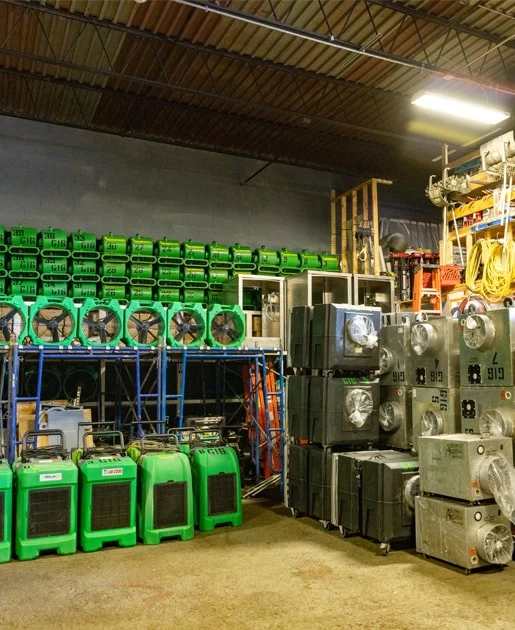
Once the scope is clear, water extraction begins with industrial-grade equipment. After extraction, the drying phase uses commercial dehumidifiers and air movers placed based on the moisture map not just set up in the middle of the room and left running. If asbestos-containing materials or lead paint are disturbed during the flooding event, our certified team handles that as part of the process, not as a separate referral. That’s not something most restoration companies in the Jamaica market can say.
From there, if mold is present or structural repairs are needed, the same team handles it. No handoffs, no coordinating between three different contractors, no gaps in accountability. Because we hold NYC General Contractor licensing, we can pull permits and complete reconstruction work within city jurisdiction finishing the job the way it should be finished, not the way it’s convenient to finish it.
What's Included When Jamaica's Flooding History Demands More Than a Basic Cleanup
Flooded basement cleanup in Jamaica isn’t one-size-fits-all the type of water matters, the age of the home matters, and the cause of the flooding matters. Our process covers all three categories: clean water events like burst pipes or appliance failures, gray water situations involving washing machines or sump pump failures, and black water contamination from sewer backups which require the most intensive cleanup protocols and are a documented recurring issue in Jamaica’s aging sewer infrastructure.
Every job includes thermal imaging moisture detection, industrial extraction and structural drying, mold prevention treatment, content assessment, and a full documentation package for your insurance claim. We bill insurance companies directly and communicate with adjusters throughout the process which is especially valuable in a community where many homeowners are navigating a major insurance claim for the first time.
For Jamaica’s pre-war homes particularly those in Jamaica Hills and Jamaica Estates where construction dates to 1939 or earlier the service also includes hazardous materials evaluation. Asbestos pipe insulation, asbestos floor tiles, and lead paint are common in homes of that era, and flooding disturbs them. Our NYS DOL Asbestos and USEPA Lead certifications mean that hazard is identified, contained, and properly disposed of as part of your cleanup not discovered later by someone else. For larger properties like those in Rochdale Village or multi-family buildings throughout Jamaica, our team is equipped and credentialed to handle commercial-scale restoration as well.
Why does my Jamaica basement keep flooding even when it hasn't rained?
This is one of the most common questions from Jamaica homeowners, and the answer goes back to a decision the city made in 1996. When the Jamaica Water Supply Company closed its wells after contamination was discovered, the groundwater that had been actively pumped out of the ground stopped being managed. Over the following decades, the water table beneath southeastern Queens rose approximately 30 to 40 feet. That water is now pressing against basement foundations throughout Jamaica not from above, but from below.
What you’re seeing is called hydrostatic pressure. Groundwater pushes up through cracks in the foundation slab, around pipe penetrations, and through aging waterproofing membranes that were never designed to hold back that level of pressure. A sump pump helps manage it, but when the pump fails or when the water volume exceeds the pump’s capacity during a heavy rain event the basement floods. Addressing this properly means understanding the source, not just extracting the water and drying the floor.
How quickly does mold start growing after a basement flood?
Mold can begin colonizing within 24 to 48 hours of a flooding event under the right conditions and basements in Jamaica’s older housing stock create nearly ideal conditions. Plaster walls, original wood framing, and masonry construction all retain moisture longer than modern building materials, and they provide organic material that mold feeds on. Humidity levels in a flooded basement can stay elevated for days even after the visible water is gone, which is why surface drying isn’t enough.
The practical cost implication: waiting more than 72 hours before beginning professional cleanup typically adds $2,000 to $8,000 in mold remediation costs to the total project. Getting a team on-site fast, with the equipment to find hidden moisture before it becomes a mold problem, is genuinely the most cost-effective decision you can make after a basement flood in Jamaica.
Does homeowners insurance cover flooded basement cleanup in Jamaica, NY?
It depends on the cause, and this distinction trips up a lot of homeowners. Standard homeowners insurance in New York typically covers sudden and accidental water damage from internal sources a burst pipe, a failed water heater, a washing machine that overflows. What it generally does not cover is external flooding from groundwater, storm surge, or rising water from outside the home. For that, you’d need a separate flood insurance policy through the National Flood Insurance Program (NFIP) or a private flood insurer.
Jamaica’s specific flooding situation makes this especially important to understand. If your basement flooded because your sump pump failed during a storm, that may be covered under a sump pump failure rider on your homeowners policy but only if you have that rider. If it flooded because of the rising water table pushing through your foundation, that’s typically considered groundwater intrusion and falls under flood coverage. We document damage thoroughly, communicate directly with adjusters, and help you understand what’s likely covered before the claim process begins so you’re not caught off guard mid-project.
My Jamaica home was built before 1940 does that change how the cleanup works?
Yes, significantly. Homes built before 1940 and there are many throughout Jamaica Hills, Jamaica Estates, and the blocks surrounding Jamaica Avenue were constructed with materials that are now classified as hazardous. Asbestos was commonly used in pipe insulation, floor tiles, ceiling tiles, and joint compounds. Lead paint was standard on walls, trim, and window frames. When a basement floods in a home like this, the water disturbs those materials. Wet asbestos floor tiles can release fibers. Wet lead paint becomes a contact and inhalation hazard during cleanup.
Under New York State and New York City regulations, any professional handling these materials must hold active NYS DOL Asbestos certification and USEPA Lead credentials. We carry both which means we can legally identify, contain, and properly dispose of hazardous materials as part of your cleanup, rather than leaving them for a separate contractor or, worse, leaving them unaddressed. If you hire a restoration company without these credentials to work in a pre-war Jamaica home, you’re taking on both a health risk and a legal one.
How much does flooded basement cleanup typically cost in Jamaica, NY?
The range is wide because the variables are wide. A straightforward clean water event a burst pipe in a finished basement might run $1,600 to $4,000 depending on square footage and how quickly it’s addressed. A gray water or black water event, or one that’s been sitting for more than 24 hours, can run $4,000 to $12,000 or more. If mold remediation is required, or if hazardous materials are involved which is common in Jamaica’s pre-war housing stock the total can climb further.
The most important cost factor you can control is time. Every hour of delay allows water to migrate further into building materials, increases the likelihood of mold, and raises the total project cost. The second most important factor is having insurance coverage that actually applies to your situation. We provide a detailed damage assessment before any work begins, document everything for your insurer, and bill insurance directly where coverage applies so you have a clear picture of what you’re responsible for out of pocket before the project starts.
Can we handle basement flooding in Rochdale Village or other large buildings in Jamaica?
Yes, and it’s worth explaining why that’s not a given for most restoration companies. Rochdale Village one of the largest housing cooperatives in the country, with nearly 6,000 apartments across 20 buildings in Jamaica presents a water damage scenario that’s fundamentally different from a single-family home. Liability can be shared between the cooperative corporation and individual shareholders. Insurance policies are layered. Permitting and regulatory requirements for work inside a large residential complex in New York City are more involved than a standard homeowner job.
We hold NYC General Contractor licensing, NYS MBE and WBE certifications, and have experience working across residential, commercial, and institutional environments. We’re equipped to navigate the insurance and permitting complexity of large buildings, coordinate with building management, and complete restoration work that meets NYC code requirements at scale. For property managers, building owners, or shareholders in Rochdale Village or any of Jamaica’s other multi-family properties dealing with water damage, that combination of credentials and experience is genuinely hard to find in one company.