When Peconic Bay Weather Hits Home, You Need More Than a Wet Vac
Jamesport sits between two bodies of water and your basement knows it. We respond 24/7 with licensed flooded basement cleanup built for older North Fork homes and the conditions that come with them.
I needed a professional consultation explanation of procedure for safe removal of Asbestos in my apartment complex. Without having an account yet, I was very impressed with the caring, knowledgeable and generous advice offered by Jessica, and will look forward to doing business in the future. Thank you so much! I feel much more informed about a sometimes scary endeavor. Peace. Nancy Silva Mineola, NY.
Mia Munoz
Used this company to clean up some water flood in my house. They were fast and easy to work with.very professional, Would recommend to anyone!
Nini Valle
Great company, had a flood and they responded quickly and efficiently. Billed my insurance company directly. I highly recommend this company!
joe colapietro, jr
I had pipe freeze in my basement right before a snow storm and they made to within an hour to help start the clean up process. They we by our side throughout the entire process and even helped with the insurance company. They did such a great job with the cleanup, repair, remidiation, I contracted them to perform the repairs and finishes in the basement. They came with enough manpower and material to get the job done. Leo and Jessica were nothing but a pleasure to deal with!!
Cristian Arredondo c
I had some water damage in my home and Green Island was able to take care of my issue quickly and effectively. I am very pleased with the work they did. They responded quickly and were very professional.
Michael M
Outstanding service! From the office to the field crew everyone was friendly, helpful and responsive. I highly recommend Green Island Group.
Dry Basement, No Hidden Damage, No Surprises Later
When the water is gone, the real work is just starting. Moisture hides in wall cavities, under flooring, and behind insulation and in a Jamesport home built in the 1960s, that insulation may contain materials that need more than a shop vac and a fan to address safely. The difference between a clean result and a costly one usually comes down to what got missed in the first 48 hours.
Jamesport homes face a flooding risk that most Long Island communities don’t. You’re on a narrow peninsula with Peconic Bay to the south and Long Island Sound to the north. That means groundwater rises fast, storm surge can hit from two directions, and the water table stays high long after the rain stops. A basement cleanup here isn’t the same job it is in a suburban neighborhood five miles inland.
What you get on the other side of a proper cleanup is simple: a dry, documented, structurally sound basement with no mold clock ticking in the walls. No second round of remediation in six months. No insurance headaches because the damage wasn’t documented right. Just a home that’s been handled correctly from water extraction through final drying by people who are licensed to do every part of it.
12 Years, 5,000 Jobs, Every License That Actually Matters in Jamesport
We’ve been doing environmental restoration work across Suffolk County for over 12 years more than 5,000 completed projects, including coastal properties on the North Fork where the flooding conditions are genuinely different from the rest of Long Island. Our CEO Jessica Dussan and VP Leo Torres lead the company directly, and our names show up in customer reviews because we’re personally involved in how jobs get handled not just in the branding.
What sets us apart in Jamesport specifically is the licensing stack. Most water damage companies can extract water and run dehumidifiers. What they can’t do legally is touch the asbestos-containing pipe insulation or lead-based materials common in Jamesport homes built before 1980 and with a median home age of 1966, that’s not a rare edge case. We hold NYS DOL Mold, NYS DOL Asbestos, and USEPA Lead certifications alongside a Suffolk County General Contractor license. We’re also an NYS OGS-approved emergency response contractor independently vetted by the State of New York, not self-declared.
That means one company handles the full scope. No coordinating three separate vendors across a rural hamlet. No gaps in accountability.
From the First Call to a Fully Dry Basement Here's Our Real Process
When you call, someone picks up any hour, any day. Our 24/7 response means a crew is moving toward Jamesport within the hour, not calling you back in the morning. That timeline matters because mold begins developing within 24 to 48 hours of a flooding event, and on the North Fork, where the humidity is already elevated and older homes absorb moisture readily, that clock moves fast.
On arrival, the first step is assessment not just how much water is visible, but where moisture has migrated. We use thermal imaging and moisture meters to identify what’s hidden behind walls and under floors before anything gets torn out. In a pre-1980 Jamesport home, that assessment also includes checking for regulated materials that require licensed handling before standard demo begins. This isn’t extra caution for its own sake it’s what New York State law requires, and skipping it creates liability for the homeowner.
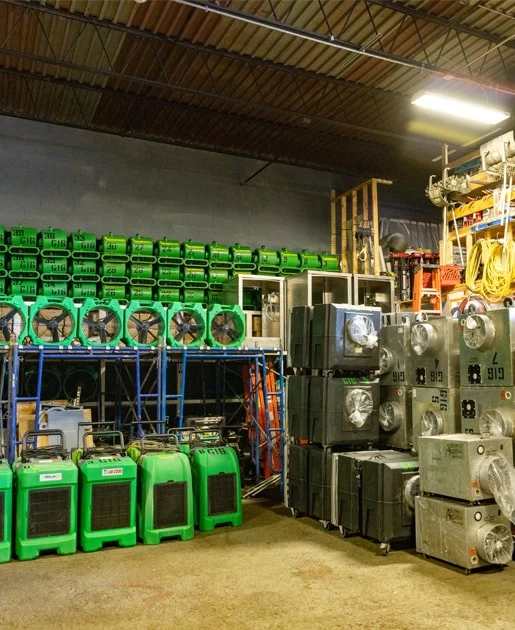
Once the scope is clear, water extraction starts. Industrial-grade equipment pulls standing water fast. Then the drying phase begins: commercial dehumidifiers, air movers, and targeted airflow calculated to the size and layout of your specific basement. We track moisture readings daily until the structure hits safe levels. From there, any necessary repairs drywall, framing, flooring are handled under our General Contractor license, and all damage documentation goes directly to your insurance carrier. You don’t have to manage that piece.
Basement Flooding Remediation Services Jamesport, NY
Built for Older Homes, Coastal Conditions, and the Full Scope of the Job
Flooded basement cleanup in Jamesport covers more ground than it does in most communities and our service reflects that. Water extraction and structural drying are the baseline. But for a hamlet where nearly every home predates 1980, where coastal storm surge and high water table events are genuinely common, and where seasonal properties sometimes sit vacant for months before a flooding event gets discovered, the full scope of what’s needed goes further.
Our flooded basement cleanup in Jamesport includes water extraction, moisture mapping, structural drying, mold assessment and remediation, regulated materials handling (asbestos and lead where applicable under NYS DOL and USEPA licensing), and full reconstruction under a Suffolk County General Contractor license. All of that happens under one contract, one point of contact, and one insurance claim. For South Jamesport properties directly on Peconic Bay where Category 3 contamination from coastal water intrusion is a real possibility our protocols include proper containment and licensed disposal that most general contractors aren’t authorized to perform.
If you’re managing a seasonal or vacation property on the North Fork and discovered the flooding after the fact, the process adapts to that too. Delayed-discovery flooding means the mold assessment becomes the priority before anything else, and documentation for insurance needs to account for the timeline gap. We handle that. The Town of Riverhead’s permitting requirements for structural repairs are also covered we pull the permits, not you.
Does homeowners insurance cover a flooded basement in Jamesport, NY?
It depends entirely on the source of the water and in Jamesport, that question is more complicated than it is in most places. Standard homeowners insurance typically covers sudden and accidental water damage, like a burst pipe or a failed water heater. It does not cover flooding from an external source storm surge from Peconic Bay, groundwater rising through the foundation, or surface water entering the basement during a nor’easter. That type of flooding falls under a separate flood insurance policy, usually through the National Flood Insurance Program.
The tricky part is that some flooding events involve both sources. A major storm might cause a pipe to fail while simultaneously pushing groundwater through the foundation. How that gets documented and separated matters enormously for what gets covered and what doesn’t. We handle the documentation and communicate directly with your insurance carrier, which means the claim gets filed correctly the first time not reworked after an adjuster flags a gap.
How fast does mold start growing after a basement floods on Long Island?
Mold can begin developing within 24 to 48 hours of a flooding event and in Jamesport, conditions tend to accelerate that timeline. The coastal humidity combined with the way older Jamesport homes absorb and hold moisture in wood framing, plaster walls, and original flooring means the window for clean extraction before mold takes hold is short.
The 48-hour mark is when surface mold becomes visible in some areas. But the more serious problem is what’s happening behind walls and under flooring during that same window places you can’t see but our moisture meters and thermal imaging can find. Waiting for visible mold to appear before calling means the remediation scope has already expanded significantly. The cost difference between a cleanup started within 24 hours versus one started after 72 hours can run into thousands of dollars in additional remediation work.
My Jamesport home was built in the 1960s does that affect the cleanup process?
Yes, and it’s one of the most important questions to ask before hiring anyone. Homes built before 1980 commonly contain asbestos in pipe insulation, floor tiles, ceiling tiles, and certain wall materials. They also frequently have lead-based paint on surfaces throughout the structure. When a basement floods, the water can disturb these materials and once disturbed, they become a regulated hazard that requires licensed handling under New York State and federal law.
Most water damage companies are not licensed to touch these materials. They can extract the water and dry the space, but if they’re cutting into walls or removing flooring that contains regulated materials without the proper NYS DOL Asbestos or USEPA Lead certifications, they’re creating a liability problem for you and potentially exposing your household to hazards that are worse than the flooding itself. In Jamesport, where the median home was built in 1966, this applies to the majority of the housing stock. We hold every required license to assess, contain, and abate these materials as part of the same job.
What should I do first when I discover my basement has flooded?
The first thing is safety. Don’t enter a flooded basement if there’s any possibility of electrical contact standing water near electrical panels, outlets, or appliances is a serious hazard. If you’re unsure, don’t go in until the power to that area has been confirmed off. In Jamesport, where a lot of homes have older electrical systems, that’s worth taking seriously.
Once it’s safe to enter, the priority is stopping the source if it’s still active shut off the main water supply if it’s a burst pipe, or note the entry points if it’s groundwater or storm-related. Then call for emergency response before you start moving things around. Disturbing waterlogged materials before moisture mapping has been done can spread contamination and complicate the insurance documentation. Take photos of everything as-is before anything is touched. After that, let the professionals assess the scope what looks like a manageable cleanup sometimes has significant hidden moisture that changes the picture entirely.
How much does flooded basement cleanup typically cost in the Jamesport area?
For a straightforward water extraction and structural drying job no mold, no regulated materials, no reconstruction costs in the Jamesport area typically run between $2,000 and $5,000 depending on the size of the basement and how long the water has been sitting. Once mold remediation enters the picture, that range shifts to $4,000 to $10,000 or more. If structural repairs are needed drywall, framing, flooring add to that based on scope.
For Jamesport homes specifically, two factors can affect cost beyond what you’d see in a typical Long Island estimate. First, if the home predates 1980 and regulated materials are present, asbestos or lead abatement adds to the project cost but it’s a required step, not an optional one. Second, if the flooding is from a coastal or groundwater source rather than a plumbing failure, the Category 3 contamination protocols are more involved than standard cleanup. The good news is that properly documented insurance claims cover a significant portion of these costs in most cases, and we handle that documentation and billing directly.
Can I clean up a flooded basement myself instead of hiring a company?
For a very minor event a small amount of clean water from a known plumbing source, caught immediately, with no spread into walls or flooring DIY cleanup is possible. Rent a wet vac, run fans and a dehumidifier, and monitor moisture levels for several days. That scenario exists, and it doesn’t always require a professional.
The problem is that most basement flooding events in Jamesport don’t fit that description. Coastal groundwater events, storm surge from Peconic Bay, or a pipe failure that went unnoticed in a seasonal home for days or weeks those are not DIY situations. The moisture has migrated further than it looks, the mold clock is already running, and in a pre-1980 home, there’s a real possibility that the materials you’re disturbing require licensed handling. Beyond the safety and health concerns, a DIY cleanup that doesn’t fully dry the structure or document the damage properly can also complicate or invalidate an insurance claim. If there’s any doubt about the source, the scope, or the age of the materials in your home, calling a licensed company is the right call and in a community like Jamesport where home values average over $500,000, the cost of getting it wrong is significant.