When Kew Gardens Hills' Aging Pipes and Overwhelmed Sewers Hit Your Basement
Your basement didn’t flood by accident it flooded because the infrastructure around it is decades old and built for a different era of storms. We respond within the hour, handle everything from water extraction to full restoration, and bill your insurance directly.
I needed a professional consultation explanation of procedure for safe removal of Asbestos in my apartment complex. Without having an account yet, I was very impressed with the caring, knowledgeable and generous advice offered by Jessica, and will look forward to doing business in the future. Thank you so much! I feel much more informed about a sometimes scary endeavor. Peace. Nancy Silva Mineola, NY.
Mia Munoz
Used this company to clean up some water flood in my house. They were fast and easy to work with.very professional, Would recommend to anyone!
Nini Valle
Great company, had a flood and they responded quickly and efficiently. Billed my insurance company directly. I highly recommend this company!
joe colapietro, jr
I had pipe freeze in my basement right before a snow storm and they made to within an hour to help start the clean up process. They we by our side throughout the entire process and even helped with the insurance company. They did such a great job with the cleanup, repair, remidiation, I contracted them to perform the repairs and finishes in the basement. They came with enough manpower and material to get the job done. Leo and Jessica were nothing but a pleasure to deal with!!
Cristian Arredondo c
I had some water damage in my home and Green Island was able to take care of my issue quickly and effectively. I am very pleased with the work they did. They responded quickly and were very professional.
Michael M
Outstanding service! From the office to the field crew everyone was friendly, helpful and responsive. I highly recommend Green Island Group.
A Dry, Safe Basement Not Just a Damp One With Fans Running
Most homes in Kew Gardens Hills were built in the decade after World War II. The median construction year is 1956, and that means your basement likely has pipe insulation, floor tiles, or other materials that were standard back then and that become a serious problem the moment floodwater disturbs them. A cleanup company that isn’t licensed for asbestos and lead isn’t equipped to handle what your basement might actually contain. This is just the reality of mid-century construction in central Queens.
Beyond the materials issue, there’s the mold clock. Once water enters your basement, mold can begin establishing itself within 24 to 48 hours. After 72 hours, you’re typically looking at $2,000 to $8,000 in additional remediation costs minimum. The faster the response, the smaller the total damage. That’s why calling immediately matters more than shopping around.
When the job is done right, you get your basement back not a stripped-out shell with a dehumidifier in the corner. Finished space restored. Hidden moisture found and addressed. Air quality treated. And a clear record of everything documented for your insurance claim.
Basement Flooding Remediation Kew Gardens Hills NY
17 Certifications, One Call, No Second Contractor Needed
We’ve been working across Queens County for years, and Kew Gardens Hills is a neighborhood we know well from the post-war garden apartments near Jewel Avenue to the larger housing developments at Pomonok and Electchester. The flooding challenges here aren’t generic. They’re shaped by aging combined sewers, highway stormwater runoff from the Kew Gardens Interchange, and housing stock that requires licensed hazardous materials handling before any real cleanup can begin.
That’s why the credential list matters. We hold the NYS DOL Mold License which is legally required in New York State for any mold remediation work along with the NYS DOL Asbestos license, USEPA Lead certification, NYC General Contractor license, and NYC BIC certification, among 17 total. You won’t need to find a separate contractor to finish what we start. Water removal, structural drying, mold remediation, and full reconstruction all happen under one roof, with one point of contact, and direct billing to your insurance company.
When you call, you reach a real person not a voicemail, not an answering service. We confirm your address, ask a few quick questions about what you’re seeing, and dispatch a team. In Kew Gardens Hills, our documented response time is under one hour. That holds even during storms, when Main Street is backed up and the LIE service road is gridlocked.
Once on-site, the first thing we do is assess the water category. Clean water from a burst pipe is a very different situation than sewage backup from an overwhelmed sewer line and central Queens gets both. If the water came up through a floor drain during heavy rain, it’s almost certainly contaminated. That changes the protective protocols, the disposal requirements, and the scope of what needs to be treated. We don’t skip this step, because getting it wrong creates health risks that outlast the visible water.
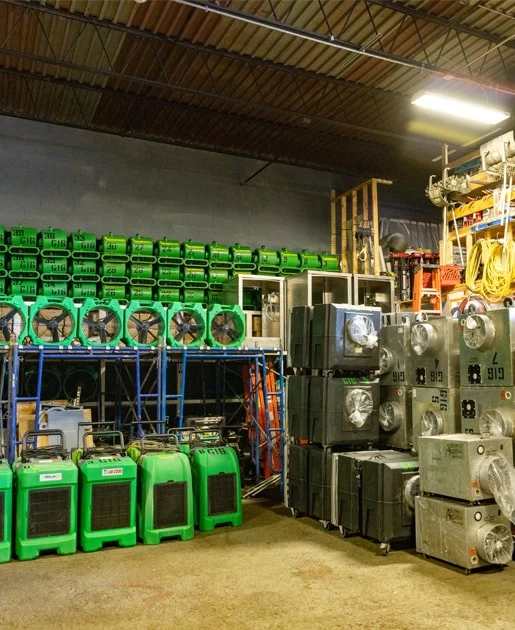
From there: extraction, structural drying with industrial equipment, and thermal imaging to locate moisture hiding inside walls and under flooring. In Kew Gardens Hills’ finished basements many of which are used as living space, home offices, or storage this step is what separates a job that’s actually done from one that just looks done. After drying is confirmed, we move into mold treatment, reconstruction, and final documentation for your insurance claim.
Licensed for Everything Your Post-War Basement Might Throw at Us
Flooded basement cleanup in Kew Gardens Hills isn’t a single service it’s a sequence of decisions that require the right licensing at every step. New York State law mandates that any contractor performing mold assessment or remediation holds an active NYS DOL Mold License. If a company you’re considering can’t show you that license number, they cannot legally do that part of the work. We hold it, along with the asbestos and lead certifications that matter specifically in this neighborhood’s housing stock.
What you get when you call us covers the full arc: emergency water extraction, industrial-grade structural drying, thermal imaging for hidden moisture, licensed mold remediation, hazardous materials handling where required, content restoration, and complete reconstruction back to pre-loss condition. For homeowners in the Pomonok and Electchester areas, where co-operative building structures and NYCHA properties add regulatory layers, our NYC BIC certification ensures we can work within those environments legally and without delays.
We also handle the insurance process directly documenting damage, communicating with adjusters, and billing your insurer wherever coverage applies. Whether your flood came from a frozen pipe in January, a sewer backup during a summer storm, or stormwater infiltration after a heavy rain event, the process is the same: fast response, full scope, documented results.
Does homeowners insurance cover a flooded basement in Kew Gardens Hills, NY?
It depends on what caused the flood, and this is genuinely one of the most confusing parts of the whole situation. Standard homeowners insurance typically covers sudden internal water damage a pipe that burst, a washing machine that failed, a water heater that gave out. What it usually does not cover is external stormwater flooding, which requires a separate flood insurance policy through the National Flood Insurance Program (NFIP).
The tricky area is sewer backup. In Kew Gardens Hills, where the aging combined sewer system regularly gets overwhelmed during heavy rain, sewer backups are one of the most common causes of basement flooding. Some homeowners policies include sewer backup coverage as an add-on rider; others don’t. The only way to know is to pull out your policy and read it or let us review the damage documentation and work with your adjuster directly. We bill insurance companies directly and handle the adjuster communication, so you’re not navigating that process alone while also dealing with a flooded basement.
How quickly does mold start growing after a basement flood in Queens?
Mold spores can begin colonizing wet materials within 24 to 48 hours of water exposure. After 72 hours without professional treatment, you’re typically looking at established mold growth and the remediation cost jumps significantly. In a finished basement in Kew Gardens Hills, where walls are drywalled, flooring is installed, and the space is used as living area, mold doesn’t just sit on the surface. It moves into wall cavities, under flooring, and behind finished surfaces where consumer fans and dehumidifiers never reach.
This is why thermal imaging matters. Visual inspection alone won’t catch moisture that’s migrated into structural materials. Our IICRC-certified technicians use thermal imaging as a standard part of the drying process not an upgrade because finding hidden moisture pockets is the difference between a completed job and a mold problem that shows up three months later. If your basement flooded recently, the time to call is now, not after you’ve tried to handle it yourself.
Is it safe to go into my basement after it floods with sewage backup water?
No not without proper protective equipment, and honestly, not at all if you’re not trained for it. Sewage backup water is classified as Category 3 black water, which means it contains raw sewage, bacteria, and pathogens that pose genuine health risks. This is not water you can wade through with rubber boots and a mop.
In Kew Gardens Hills, sewer backups during heavy rain events are well-documented. The neighborhood’s combined sewer system was designed for rainfall intensities that no longer match what central Queens actually receives during major storms. When that system backs up into basement floor drains and utility connections, the contamination level requires licensed contractors, regulated disposal of all affected materials, and antimicrobial treatment of every surface the water touched. Staying out of the space until a professional has assessed it is the right call both for your health and for your insurance claim, since documentation of the contamination level affects coverage decisions.
My Kew Gardens Hills home was built in the 1950s could my basement have asbestos or lead?
Very possibly, yes. The median construction year for homes in Kew Gardens Hills is 1956, and post-war construction from that era routinely included asbestos pipe insulation, asbestos floor tiles, asbestos ceiling tiles, and lead paint particularly in basement spaces. Under normal conditions, these materials are stable and not an immediate hazard. A flood changes that. Floodwater disturbs materials, and disturbed asbestos or lead-containing surfaces can release particles into the air and onto other surfaces throughout the space.
Most water damage companies are not licensed to handle this. We hold the NYS DOL Asbestos license, USEPA Lead certification, and USEPA RRP certification which means we can legally assess, contain, and remediate these materials as part of the same cleanup engagement. You shouldn’t have to hire a hazmat company separately and then wait for a water damage company to come back. If your home was built before 1960 and your basement flooded, ask any contractor you’re considering to show you their asbestos and lead credentials before they touch anything.
How long does flooded basement cleanup and restoration take in Queens?
The honest answer is that it depends on the scope, but here’s a realistic breakdown. Emergency water extraction typically takes a few hours. Structural drying getting the moisture content of walls, flooring, and framing down to safe levels usually takes three to five days with industrial drying equipment running continuously. Mold remediation, if needed, adds time depending on the extent of growth. Full reconstruction of a finished basement can take anywhere from a few days to a few weeks.
In Kew Gardens Hills, where many basements are finished living spaces rather than bare utility rooms, the reconstruction phase is often where the timeline extends. Replacing drywall, flooring, trim, and fixtures takes longer than drying concrete. The good news is that we handle the entire sequence you’re not waiting on three different contractors to coordinate schedules. One team, one timeline, and a clear picture of where things stand at every stage. We’ll give you a realistic estimate after the initial assessment.
Why does Green Island Group handle insurance claims directly what does that actually mean for me?
It means you don’t have to be the middleman between a restoration company and an insurance adjuster while your basement is still wet. In practical terms, we document the damage with photos, moisture readings, and written assessments from the moment we arrive. That documentation is formatted the way insurance adjusters need it not just a verbal description of what we saw.
We communicate directly with your insurer, submit the claim paperwork, and bill them wherever coverage applies. For Kew Gardens Hills homeowners navigating a first-time flood claim especially one that involves the question of whether it’s covered as internal water damage versus external flooding having someone who knows how to frame the documentation correctly can make a meaningful difference in the outcome. It also removes a significant burden from your plate at a moment when you’re already dealing with a stressful situation. You focus on your family and your home. We handle the paperwork and the adjuster calls.