Kew Gardens' Pre-War Basements Need More Than a Wet Vac
When your basement floods in a neighborhood built mostly before 1950, the damage goes deeper than standing water and so does the liability. We handle flooded basement cleanup in Kew Gardens the right way, from water extraction to full restoration, under one licensed roof.
I needed a professional consultation explanation of procedure for safe removal of Asbestos in my apartment complex. Without having an account yet, I was very impressed with the caring, knowledgeable and generous advice offered by Jessica, and will look forward to doing business in the future. Thank you so much! I feel much more informed about a sometimes scary endeavor. Peace. Nancy Silva Mineola, NY.
Mia Munoz
Used this company to clean up some water flood in my house. They were fast and easy to work with.very professional, Would recommend to anyone!
Nini Valle
Great company, had a flood and they responded quickly and efficiently. Billed my insurance company directly. I highly recommend this company!
joe colapietro, jr
I had pipe freeze in my basement right before a snow storm and they made to within an hour to help start the clean up process. They we by our side throughout the entire process and even helped with the insurance company. They did such a great job with the cleanup, repair, remidiation, I contracted them to perform the repairs and finishes in the basement. They came with enough manpower and material to get the job done. Leo and Jessica were nothing but a pleasure to deal with!!
Cristian Arredondo c
I had some water damage in my home and Green Island was able to take care of my issue quickly and effectively. I am very pleased with the work they did. They responded quickly and were very professional.
Michael M
Outstanding service! From the office to the field crew everyone was friendly, helpful and responsive. I highly recommend Green Island Group.
Most of the homes and co-ops in Kew Gardens were built between the 1910s and 1960s. That’s not just character it’s cast-iron drain lines, original plaster walls, wood floor joists, and basement mechanical rooms that were never designed to handle what today’s storms throw at them. When water gets into those spaces, it doesn’t just sit there. It wicks. It travels. And in a pre-war building, it finds every crack and cavity before you’ve even called anyone.
What you want on the other side of this is simple: a dry basement, no mold taking hold in the wall cavities, no HPD violation showing up because a landlord didn’t remediate properly, and no insurance claim getting denied because the contractor wasn’t certified. That’s exactly what a proper flooded basement cleanup delivers and it’s what separates a real restoration from someone just running a shop vac and leaving.
Kew Gardens co-op boards have an added layer to think about. A flooded basement in a six-story pre-war building isn’t just one unit’s problem it affects the boiler, the laundry room, shared storage, and every shareholder’s monthly assessment if the damage isn’t handled fast and documented correctly. Speed matters here. So does paperwork.
Every License the Job Actually Requires Not Just the Easy Ones
We hold more than 17 active certifications, including a NYS DOL Mold License, NYS DOL Asbestos License, USEPA Lead and RRP credentials, IICRC Water Damage certification, and a New York City General Contractor license. In Kew Gardens where virtually every building predates 1978 those last three aren’t optional. They’re legally required the moment water disturbs pipe insulation or wall materials that may contain asbestos or lead.
A lot of companies advertise basement cleanup in Queens. Far fewer can legally complete the job in a pre-war building without cutting corners or calling in a subcontractor they don’t actually control. We do it all in-house, under one license, with one accountable team.
We’ve been serving Queens County for years, including the Tudor homes along Grosvenor Road and Curzon Road, the co-ops lining Queens Boulevard, and the multi-unit buildings throughout central Kew Gardens. When the board or the building manager needs documentation that holds up to an insurance adjuster or an HPD inspector, it’s there.
What Actually Happens From the First Call to a Finished Basement
The call comes in and our crew gets dispatched 24 hours a day, any day of the year. Given that Kew Gardens sits at one of the busiest highway junctions in Queens, with direct access via the Grand Central Parkway, Van Wyck Expressway, and Jackie Robinson Parkway, response time is real. Our crew arrives, assesses the water source, and determines contamination level immediately. A sewer backup through a basement floor drain which is exactly what happens when NYC’s combined sewer system gets overwhelmed during a heavy storm is a black water event. It gets treated differently than a burst supply line, and it has to be.
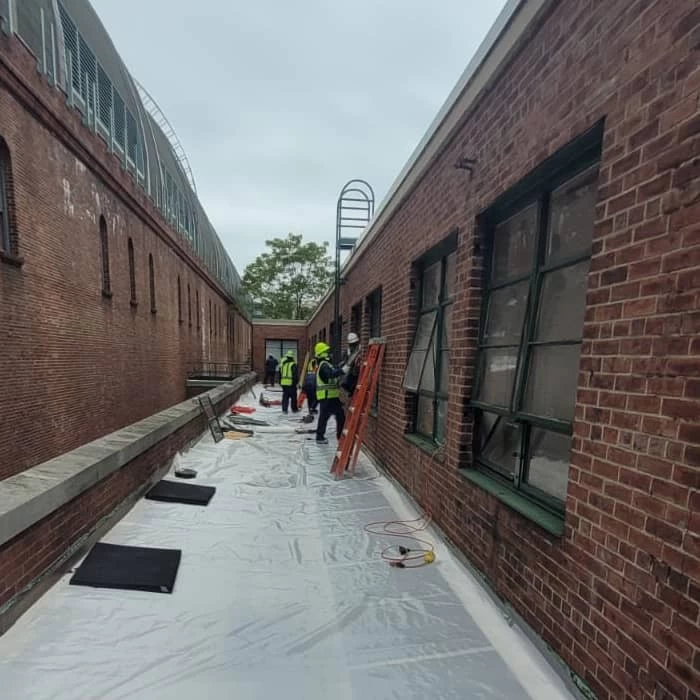
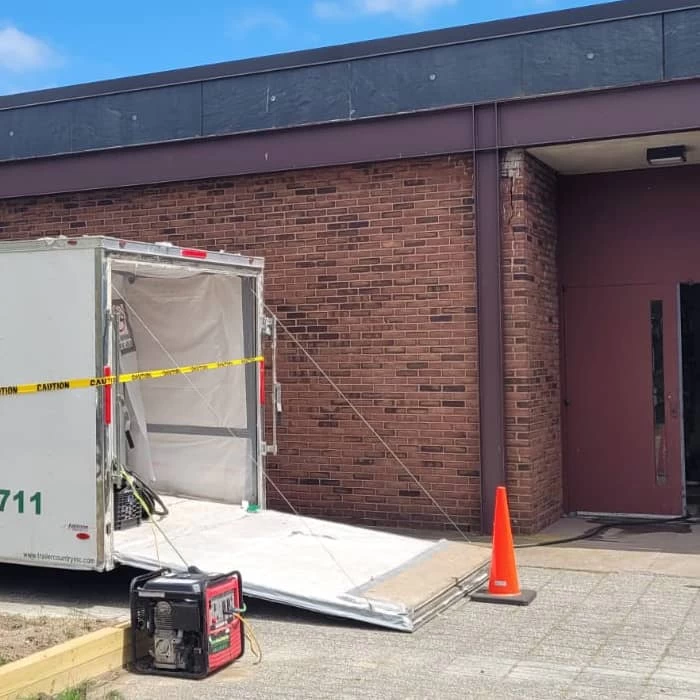
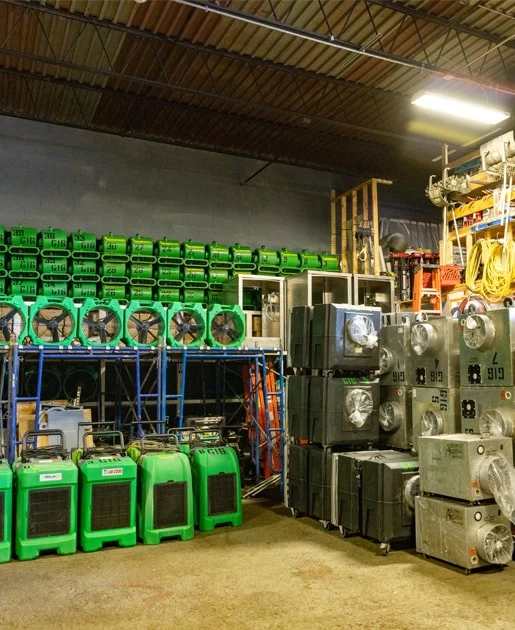
Once the water is extracted, the real work begins. Thermal imaging equipment goes into the walls and floor assembly to find moisture that isn’t visible. In a pre-war building with plaster walls and wood joists, that step isn’t optional water travels farther and faster in older construction than in modern builds. Industrial drying equipment gets staged based on what the readings show, not just what looks wet. If the assessment finds materials that may contain asbestos or lead which is common in Kew Gardens’ basement mechanical rooms those get handled under the appropriate state and federal licenses before any demolition or reconstruction begins.
From there, mold prevention treatment is applied, structural repairs are made under our NYC General Contractor license, and the space is brought back to pre-loss condition. If permits are required by NYC DOB, we file them. If the insurance carrier needs documentation, we produce it. One contractor, start to finish.
Built for Kew Gardens Buildings Not Generic Suburban Slabs
Our flooded basement cleanup service in Kew Gardens covers the full scope: emergency water extraction, structural drying with thermal verification, mold prevention and remediation under NYS DOL licensure, asbestos and lead handling where required, content protection, and complete reconstruction under a NYC General Contractor license. Insurance is billed directly, and documentation is provided in the format carriers and co-op boards actually need.
This matters more in Kew Gardens than in most places. The neighborhood’s pre-war building stock the six-story co-ops along Queens Boulevard, the Tudor single-family homes on Mayfair Road and Curzon Road, the Mitchell-Lama buildings with dozens of units sharing one basement requires a contractor who understands how older construction behaves when it gets wet. Plaster walls don’t dry the same way drywall does. Wood joists absorb and hold moisture in ways that standard drying timelines don’t account for. And basement mechanical rooms in buildings this age almost always have pipe insulation that needs to be tested before anyone starts cutting.
If you’re a co-op board member, a building manager, or a homeowner in Kew Gardens dealing with a flooded basement, the question isn’t whether to call a professional. It’s whether the professional you call can legally and competently handle everything they’re going to find. We can.
Does flooded basement cleanup in Kew Gardens require a licensed contractor by law?
In New York State, yes at least for part of the job. If mold is present or likely to develop, the remediation must be performed by a contractor holding an active NYS DOL Mold Remediation License. That’s state law, not a suggestion. In Kew Gardens specifically, where the majority of buildings were constructed before 1978, there’s an additional layer: any work that may disturb lead-based paint requires an EPA RRP-certified contractor, and any work near pipe insulation that may contain asbestos requires NYS DOL Asbestos licensure.
What this means practically is that a lot of companies advertising basement cleanup in Queens are not legally equipped to complete the full job in a pre-war Kew Gardens building. They can extract water. They cannot legally handle what the water disturbed. We hold all three licenses mold, asbestos, and lead/RRP along with a NYC General Contractor license, so the entire job stays under one roof, legally and practically.
How quickly can mold grow after a basement floods, and why does it matter?
Mold can begin colonizing within 24 to 48 hours of a water event, depending on temperature and humidity. In Kew Gardens during the summer months when basements are already warm and the humidity is high that window can be even shorter. The longer water sits in wall cavities, under flooring, or in insulation, the more likely mold is to establish itself in places that aren’t immediately visible.
This is why the drying process matters as much as the extraction. Pulling standing water out of a basement and calling it done leaves moisture in the structural materials the plaster, the wood joists, the subfloor where mold actually grows. Thermal imaging during the drying phase is what catches that hidden moisture before it becomes a remediation project on top of a cleanup project. In older Kew Gardens buildings where wall assemblies have no vapor barriers, this step is especially important.
My Kew Gardens co-op basement flooded who is responsible for cleanup costs?
This is one of the most common and genuinely complicated questions that comes up after a basement flood in a Kew Gardens co-op. Generally speaking, the co-op corporation is responsible for the common areas basement utility rooms, boiler rooms, laundry facilities, shared storage and the co-op’s master insurance policy is what covers damage to those spaces. Individual shareholders are responsible for their own unit interiors and typically carry an HO-6 policy to cover that.
Where it gets complicated is when water from a common area basement event damages a shareholder’s belongings in storage, or when a plumbing failure in one unit causes water to flow down into the basement and affect common infrastructure. The answer depends on your co-op’s proprietary lease and house rules, and the specifics of both the master policy and the individual HO-6. What we do is bill insurance directly, provide the documentation both carriers need, and communicate with the board and the individual shareholder separately. That coordination is part of the job.
What causes basement flooding in Kew Gardens, NY specifically?
There are a few causes that come up repeatedly in Kew Gardens, and they’re tied directly to the neighborhood’s age and location. The most common is sewer backup. New York City’s sewer system in this part of Queens is a combined system it handles both sanitary waste and stormwater in the same pipes. During heavy rain events, the system gets overwhelmed, and sewage backs up through basement floor drains. This is not a freak occurrence. The $739 million reconstruction of the Kew Gardens Interchange specifically addressed chronic stormwater flooding along the roads that border the neighborhood, which tells you something about the history of drainage issues here.
Beyond sewer backup, the age of the building stock is a major factor. Cast-iron and clay sewer laterals in pre-war buildings are often at or past their service life. Original waterproofing membranes if they existed at all have long since failed. And the position of Kew Gardens at the base of the Forest Park hills means that stormwater from a large drainage area flows toward the neighborhood during heavy events. Pipe failures, failed sump systems, and roof drainage problems are also common contributors.
Will my homeowners insurance cover flooded basement cleanup in Queens, NY?
It depends on the cause of the flooding, and the distinction matters more than most people realize before they file a claim. Standard homeowners insurance typically covers sudden and accidental water damage a burst pipe, a failed water heater, an appliance leak. It generally does not cover flooding from external sources like rising groundwater or storm surge, which requires separate flood insurance through FEMA’s National Flood Insurance Program.
Sewer backup coverage is its own category. Some policies include it, some don’t, and some offer it as a rider. In Kew Gardens, where sewer backup through basement floor drains is one of the most common flood causes, it’s worth checking your policy before an event happens rather than after. What we do is document the cause of loss thoroughly from the start photos, moisture readings, source identification so that when the adjuster reviews the claim, there’s no ambiguity about what happened and why. That documentation is what gets claims paid.
Why should Kew Gardens residents hire us over a general cleanup company?
The honest answer is that most general cleanup companies can handle a straightforward water extraction in a modern home. Kew Gardens is not that scenario. The neighborhood’s pre-war building stock plaster walls, wood joists, original cast-iron plumbing, basement mechanical rooms with pipe insulation that may contain asbestos requires a contractor who holds the specific licenses that New York State and New York City legally require for this type of work. A company without a NYS DOL Mold License cannot legally remediate mold. A company without NYS DOL Asbestos licensure cannot legally handle disturbed pipe insulation. A company without a NYC General Contractor license is not authorized to perform structural repairs in the five boroughs.
We hold all of it. And for Kew Gardens specifically a neighborhood with a high concentration of attorneys, co-op boards that need defensible documentation, and buildings where the secondary hazard risk is the rule rather than the exception that credential stack is what separates a completed job from a liability. The goal isn’t just a dry basement. It’s a basement that was cleaned, documented, and restored in a way that holds up to scrutiny from an insurance adjuster, an HPD inspector, or a co-op board.