When Lake Grove's Water Table Wins, We Clean Up the Aftermath
Lake Grove basements flood and not always because of a storm overhead. When it happens, we at Green Island Group are on-site fast, licensed for everything your 1960s home may be hiding, and ready to handle your insurance company so you don’t have to.
I needed a professional consultation explanation of procedure for safe removal of Asbestos in my apartment complex. Without having an account yet, I was very impressed with the caring, knowledgeable and generous advice offered by Jessica, and will look forward to doing business in the future. Thank you so much! I feel much more informed about a sometimes scary endeavor. Peace. Nancy Silva Mineola, NY.
Mia Munoz
Used this company to clean up some water flood in my house. They were fast and easy to work with.very professional, Would recommend to anyone!
Nini Valle
Great company, had a flood and they responded quickly and efficiently. Billed my insurance company directly. I highly recommend this company!
joe colapietro, jr
I had pipe freeze in my basement right before a snow storm and they made to within an hour to help start the clean up process. They we by our side throughout the entire process and even helped with the insurance company. They did such a great job with the cleanup, repair, remidiation, I contracted them to perform the repairs and finishes in the basement. They came with enough manpower and material to get the job done. Leo and Jessica were nothing but a pleasure to deal with!!
Cristian Arredondo c
I had some water damage in my home and Green Island was able to take care of my issue quickly and effectively. I am very pleased with the work they did. They responded quickly and were very professional.
Michael M
Outstanding service! From the office to the field crew everyone was friendly, helpful and responsive. I highly recommend Green Island Group.
Most homeowners in Lake Grove discover their basement flooding isn’t just a weather problem it’s a groundwater problem. The aquifer system feeding Lake Ronkonkoma sits right beneath this part of central Suffolk County, and when water tables rise after a wet season or a heavy nor’easter, it pushes up through foundation cracks and floor joints whether it’s raining outside or not. That’s the kind of flooding that catches people off guard on a clear morning, and it’s exactly the scenario our crews deal with regularly in this area.
Once the water is out, the real risk begins. Mold starts growing within 24 to 48 hours not on surfaces you can see, but inside wall cavities, under subfloor material, and behind insulation. A shop vac and a few fans won’t find it. We use moisture meters and thermal imaging to locate hidden saturation, then run industrial drying equipment until every reading confirms the space is genuinely dry not just visually dry.
For homes built in the 1950s and 1960s, which describes most of the housing stock in Lake Grove’s 11755 ZIP code, there’s another layer to consider. Disturbing walls, flooring, or pipe insulation during cleanup can release asbestos or lead particles if those materials are present and in homes of that era, they often are. We hold the licenses to handle that legally and safely, which means the job doesn’t stop halfway through because something unexpected turned up.
Green Island Group is an approved emergency response contractor for the NYS Office of General Services. That’s not a marketing badge it means New York State evaluated our licensing, our capabilities, and our track record and placed us on the approved roster for public facility emergencies. The same standard applies to your home in Lake Grove.
Jessica Dussan and Leo Torres lead our company directly. We’re not behind a franchise wall we’re reachable, we’re accountable, and our names appear in real customer reviews from homeowners across Suffolk County. Over 12 years and more than 5,000 completed restoration projects across New York State, we’ve built the kind of track record that holds up when you search for it.
We carry a Suffolk County General Contractor license, NYS DOL Mold and Asbestos licenses, USEPA Lead and RRP certifications, and NYC BIC Trade Waste licensing. For a Lake Grove homeowner near the Sachem or Middle Country school districts dealing with a flooded basement in a mid-century home, that full licensing stack isn’t a bonus it’s the baseline for doing the job right.
What Actually Happens From Your Call to a Dry Basement
When you call, you reach a person. Not a voicemail, not a scheduling portal a person who takes your information and dispatches a crew. Our response teams are staged for Suffolk County operations year-round, and customer reviews confirm sub-one-hour arrival times, including during storm events when Lake Grove’s drainage systems are most overwhelmed.
When we arrive, the first thing we do is assess the source and category of the water. That matters more than most people realize. Water from a burst pipe is handled differently than water from a sewage backup, and both are handled differently than groundwater intrusion through a foundation. In Lake Grove’s older homes, we also check for disturbed materials floor tiles, pipe insulation, drywall that may require licensed hazmat handling before extraction begins. If asbestos or lead is a factor, we contain it, document it, and manage it under our environmental licenses. The job doesn’t pause while you try to find a different contractor.
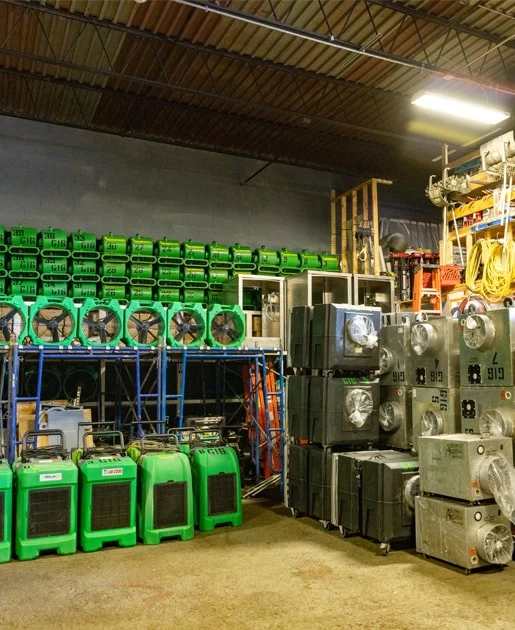
From there, we extract standing water, set industrial dehumidifiers and air movers, and take baseline moisture readings throughout the affected space. We return to monitor drying progress and document every reading. When the numbers confirm the space is dry, we provide a full written report which your insurance company will want. If repairs are needed after drying, our Suffolk County General Contractor license covers permitted structural work so the entire scope stays with one company from start to finish.
Flooded Basement Cleaning Services in Lake Grove, NY
One Company Handles Everything Your Basement Throws at Us
Flooded basement cleanup in Lake Grove isn’t a single-step job, and the scope depends heavily on what your home is made of and where the water came from. For homes along the older residential corridors near Stony Brook Road or anywhere in the 11755 ZIP code built before 1975, that means we come in prepared for the full picture not just the water on the floor.
Water extraction and structural drying are the foundation of every job. We use truck-mounted extraction equipment, commercial-grade air movers, and high-capacity dehumidifiers calibrated to the square footage and material profile of your specific basement. Moisture readings are taken at the start, tracked throughout the drying process, and documented at completion. That documentation is what supports a clean insurance claim and we handle the billing and adjuster communication directly so you’re not navigating that process alone.
When the scope goes beyond drying mold remediation, asbestos abatement, lead containment, sewage decontamination, or structural repair all of it stays under one roof. There’s no point in the process where we hand you off to someone else. For Lake Grove homeowners dealing with Category 3 sewage backup, which is a licensed hazmat event under IICRC standards, our environmental licensing covers proper containment, OSHA-compliant handling, and certified disposal. The Village of Lake Grove has its own code enforcement separate from the Town of Brookhaven, and any structural repairs we complete are permitted correctly under our Suffolk County General Contractor license.
Why does my Lake Grove basement flood even when it hasn't rained recently?
This is one of the most common questions we hear from homeowners in central Suffolk County, and the answer comes down to groundwater. Lake Grove sits adjacent to the Lake Ronkonkoma aquifer system one of the largest freshwater systems on Long Island and that water table fluctuates based on seasonal accumulation, not just individual storm events. After a wet winter or a prolonged stretch of heavy rain, the aquifer can take weeks to drain. During that time, groundwater pressure builds against your foundation and can push water through floor joints, cracks, and sump pit walls even on a completely dry day.
Homes in Lake Grove with aging drainage infrastructure which describes most of the housing stock built in the 1950s and 1960s are especially vulnerable. Drain tile systems and waterproofing from that era weren’t designed to handle the sustained groundwater pressure that a modern wet season can generate. If your sump pump is also running continuously or failing under load, that’s a sign the system is already overwhelmed. Getting a professional assessment after any groundwater intrusion event helps you understand whether it’s a one-time occurrence or a recurring structural issue.
How quickly does mold start growing after a basement flood in Lake Grove?
Mold can begin colonizing within 24 to 48 hours of a flooding event and it doesn’t wait for visible moisture to do it. The more important factor is relative humidity and the presence of organic material, which in most basements means drywall paper, wood framing, and insulation. Once those materials absorb water, the conditions for mold growth exist even if the floor looks dry to the naked eye.
In Lake Grove’s climate, spring and fall flooding events are particularly high-risk because ambient temperatures during those seasons fall in the range where mold grows fastest. Delaying professional drying by even a day or two after a flooding event can add significant mold remediation costs on top of the original water damage estimates typically run $2,000 to $8,000 or more depending on the extent of colonization. The safest approach is to start extraction and drying as quickly as possible, and to use moisture meters rather than visual inspection to confirm when the space is genuinely dry.
My Lake Grove home was built in the 1960s does that change how cleanup is handled?
It does, and it’s worth understanding before any work begins. Homes built in the 1950s and 1960s which covers the majority of the housing stock in Lake Grove’s 11755 ZIP code were commonly constructed with asbestos pipe insulation, asbestos floor tiles, and lead paint in wall systems. These materials are stable when left undisturbed, but when a flooded basement cleanup requires cutting into drywall, removing flooring, or pulling out insulation, there’s a real risk of releasing asbestos fibers or lead dust if those materials are present.
Handling these materials legally and safely requires specific licenses that most water damage companies don’t hold. We at Green Island Group carry NYS DOL Asbestos, USEPA Lead, and USEPA RRP certifications specifically for this reason. If we encounter regulated materials during your cleanup, we contain them, document them, and manage them under our environmental licenses without stopping the job or asking you to find a separate hazmat contractor. For a Lake Grove homeowner in an older home, that full-scope capability isn’t a specialty add-on. It’s what a complete and legally compliant cleanup actually requires.
Will my homeowners insurance cover flooded basement cleanup in New York?
It depends on the source of the water, and the distinction matters a lot. Standard homeowners insurance in New York typically covers sudden and accidental water damage a burst pipe, a failed water heater, or an appliance leak. What it generally does not cover is flooding from external sources: groundwater intrusion, storm surge, or overland flooding. That type of damage requires a separate flood insurance policy, typically through the National Flood Insurance Program.
For Lake Grove homeowners, this distinction is especially relevant because groundwater intrusion driven by the Lake Ronkonkoma aquifer system is a documented local flooding cause that may not be covered under a standard policy. The documentation your insurance company requires to process a claim is detailed: moisture readings, photo evidence, a line-item estimate, and adjuster communication. We provide all of that as a standard part of every job, and we handle direct billing and adjuster communication on your behalf. Understanding your coverage before an event happens is the best position to be in but if the water is already there, we help you navigate the claim process from the first call.
What is Category 3 water damage and should I be worried about it in my basement?
Category 3 is the classification used under IICRC S500 standards for water that contains sewage, pathogens, or other biological contaminants commonly called blackwater. A sewage backup into your basement is the most common Category 3 scenario, and it’s treated as a licensed hazmat event, not a standard cleanup job. Contact with Category 3 water carries documented health risks, and improper handling including using household cleaning products and calling it done can leave behind contamination that isn’t visible but is still biologically active.
In older Lake Grove homes with aging municipal sewer connections, sewage backup is a real and recurring risk, particularly during heavy rain events when storm and sanitary systems become overwhelmed. Proper remediation requires full PPE, containment protocols, licensed disposal of contaminated materials, and decontamination of the affected space. Our environmental licensing stack including NYC BIC Trade Waste licensing and OSHA-compliant hazmat protocols covers every step of that process. If there’s any question about the source of the water in your basement, treat it as Category 3 until it’s confirmed otherwise.
How do I choose a reliable flooded basement cleanup company in Lake Grove, NY?
The most important thing to verify is licensing not just a general contractor license, but the environmental licenses that cover the full scope of what a flooded basement in an older Lake Grove home might require. That means NYS DOL Mold, NYS DOL Asbestos, and USEPA Lead certifications at a minimum. Most companies operating in this area hold water extraction equipment and a contractor license. Far fewer hold the environmental licenses that become necessary the moment asbestos tile, lead paint, or sewage contamination enters the picture.
Beyond licensing, look for a company with a documented local track record real reviews from Suffolk County homeowners, not just a location-specific landing page with no verifiable history behind it. Response time matters too, but a claimed 60-minute arrival from a distant dispatch center is not the same as a company with crews staged for central Suffolk County operations. Ask directly: where are your technicians coming from, and what happens if my cleanup involves materials that require environmental licensing? The answers to those two questions will tell you more than any marketing copy will.