When a North Shore Estate Floods, the Clock Starts Immediately
Mold can take hold in as little as 24 hours. We respond 24/7 to flooded basements in Laurel Hollow — extracting water, drying what you can’t see, and protecting your property before the damage compounds.
I needed a professional consultation explanation of procedure for safe removal of Asbestos in my apartment complex. Without having an account yet, I was very impressed with the caring, knowledgeable and generous advice offered by Jessica, and will look forward to doing business in the future. Thank you so much! I feel much more informed about a sometimes scary endeavor. Peace. Nancy Silva Mineola, NY.
Mia Munoz
Used this company to clean up some water flood in my house. They were fast and easy to work with.very professional, Would recommend to anyone!
Nini Valle
Great company, had a flood and they responded quickly and efficiently. Billed my insurance company directly. I highly recommend this company!
joe colapietro, jr
I had pipe freeze in my basement right before a snow storm and they made to within an hour to help start the clean up process. They we by our side throughout the entire process and even helped with the insurance company. They did such a great job with the cleanup, repair, remidiation, I contracted them to perform the repairs and finishes in the basement. They came with enough manpower and material to get the job done. Leo and Jessica were nothing but a pleasure to deal with!!
Cristian Arredondo c
I had some water damage in my home and Green Island was able to take care of my issue quickly and effectively. I am very pleased with the work they did. They responded quickly and were very professional.
Michael M
Outstanding service! From the office to the field crew everyone was friendly, helpful and responsive. I highly recommend Green Island Group.
What a Properly Dried Laurel Hollow Basement Actually Means
Laurel Hollow sits on hilly, heavily forested North Shore terrain. When a nor’easter rolls through or a hard spring rain saturates the ground, water doesn’t just pool — it runs downhill, builds pressure against foundation walls, and finds every crack and joint it can. What looks like a minor seep on a Tuesday can be a mold problem inside your walls by Friday.
Getting this right means more than running a wet-vac and a fan. It means confirming that the moisture inside your wall cavities, under your subfloor, and behind your insulation is actually gone — not just the moisture you can see. When that’s done correctly, you get a basement that’s structurally sound, genuinely dry, and safe to use again without the slow creep of musty odors returning weeks later.
For a Laurel Hollow home valued anywhere from $1.25 million to well above that, the cost of doing this wrong isn’t just the remediation bill — it’s what happens to a historic estate when mold gets into the structure and sits there. A thorough job the first time is the only outcome worth talking about.
Licensed Basement Flood Restoration, Nassau County
Every License This Job Could Possibly Require — We Hold Them
We serve Nassau County’s North Shore corridor — including Laurel Hollow, Oyster Bay, Cold Spring Harbor, and Syosset — as part of our established Long Island service area. This isn’t a franchise operating off a national template. We’re a local team that knows the groundwater conditions, the terrain, and the older housing stock that defines this part of the Island.
What separates us from most restoration companies in this area is the depth of the credential stack. NYS DOL Mold License. NYS DOL Asbestos License. USEPA Lead and RRP certifications. IICRC Water and Fire Damage certification. Nassau County General Contractor license. Most companies hold one or two of these. Holding all of them under one roof means that when your Laurel Hollow home floods — and the cleanup reveals asbestos floor tiles from a 1940s renovation or lead paint behind the drywall — the work doesn’t stop while you find a second contractor. It continues, legally and safely, with our team already on-site.
Emergency Basement Flooding Remediation, Laurel Hollow NY
From Standing Water to a Dry, Documented Basement — Here's Our Process
The first step is getting there fast. When you call, we dispatch 24/7 — not an answering service, not a next-business-day callback. The 72-hour window before mold becomes a serious risk is real, and every hour of delay narrows the margin. Once on-site, we identify the water source first. In Laurel Hollow, that matters more than it might elsewhere — the cause could be hydrostatic pressure from a sloped, saturated lot, a failed irrigation line running near the foundation, a sump pump that lost power mid-storm, or a pipe that froze and burst in an unheated utility area. The source determines the protocol.
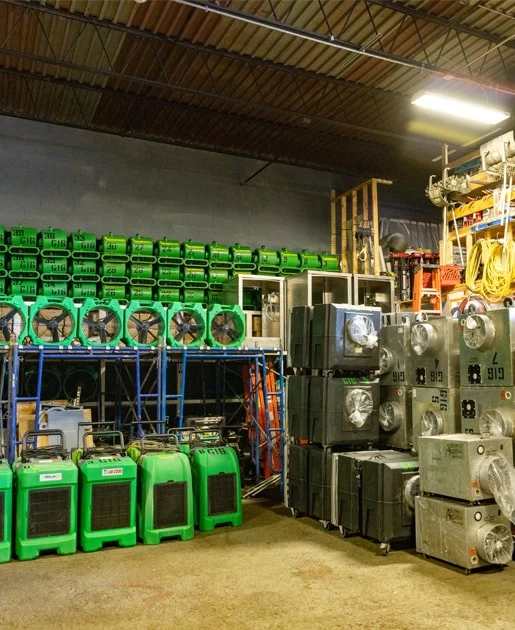
After extraction, the focus shifts to what you can’t see. Industrial drying equipment goes to work, and moisture detection tools — not visual inspection — confirm that hidden moisture inside walls, under flooring, and within concrete block voids is actually eliminated. If your home was built before 1978, that assessment includes checking for asbestos or lead materials before any demolition or structural work begins. This is a step most restoration companies skip, either because they’re not licensed to handle it or because they’re not thinking about it.
If structural repairs are needed, our Nassau County General Contractor license means the rebuild can be permitted and completed by our team — no handoff to a separate contractor, no gap in accountability. The job isn’t finished until the basement is fully restored and documented, including everything your insurance carrier needs to process the claim.
Flooded Basement Cleaning and Mold Prevention, Laurel Hollow
What's Actually Included When We Handle Your Basement
Flooded basement cleanup in Laurel Hollow isn’t a single-step job. Our service covers water extraction, structural drying, moisture mapping, mold prevention treatment, and a full damage assessment — all under one licensed team. Because Laurel Hollow properties frequently involve older construction, many with original materials dating back decades, the assessment also includes hazardous material screening before any demolition or structural work proceeds. Our NYS DOL Asbestos License and USEPA Lead and RRP certifications aren’t background credentials — they’re what make it legal and safe to open walls in a pre-1978 estate home.
Water damage is classified into three categories, and the category matters for both health and cost. Category 1 is clean water from a burst pipe or appliance. Category 2 is gray water from a washing machine or dishwasher overflow. Category 3 — black water — is sewage backup or storm-driven contamination, and it requires full biohazard decontamination protocols. We handle all three. If your flooding event involved a sewer backup during a storm, that’s not a standard cleanup — and we treat it accordingly.
The Village of Laurel Hollow has its own building department and a dedicated Flood Damage Prevention chapter in its village code. Any restoration work involving structural repairs may require a permit from the village. Our Nassau County General Contractor license covers that process — so you’re not left managing permit applications on top of everything else. Insurance documentation and carrier communication are handled as part of the job, not as an afterthought.
What causes basement flooding in Laurel Hollow homes specifically?
Laurel Hollow’s terrain is a significant factor that most homeowners don’t think about until they’re standing in water. The village sits on hilly, forested North Shore land with real elevation variation — and when heavy rain saturates that ground, water runs downhill and accumulates against foundation walls. That hydrostatic pressure builds until it finds a crack, a joint, or a penetration point, and then it enters. It’s a different flooding profile than what you’d see in a flat South Shore community like Oceanside or Baldwin.
Beyond the terrain, the large estate properties in Laurel Hollow often have extensive underground irrigation systems that can fail near the foundation and introduce water slowly over time — sometimes without any obvious sign until the damage is well along. High groundwater levels across Long Island’s North Shore, combined with the coastal proximity to Cold Spring Harbor and the Sound, mean that a major storm event can raise the water table across the entire village at once, overwhelming sump pumps that work fine under normal conditions. Identifying the actual source of the flooding — not just extracting the water — is the first and most important step in any proper cleanup.
How quickly does mold grow after a basement flood on Long Island?
Mold can begin developing within 24 to 48 hours of a water event. The EPA’s guidance is to begin cleanup within that same window. The threshold most professionals work against is 72 hours — if a basement is fully and properly dried within 72 hours, the conditions for mold growth are largely eliminated. Beyond that point, what started as a water damage job becomes a mold remediation job, which is a more involved, more expensive, and more disruptive process.
The part that catches most Laurel Hollow homeowners off guard is that surface dryness isn’t actual dryness. A basement floor that feels dry to the touch can still have significant moisture trapped inside wall cavities, behind insulation, under subfloor materials, and within concrete block voids. That hidden moisture is where mold establishes itself — and it does so without any visible sign until the odor shows up weeks later. Professional moisture detection equipment, not visual inspection, is the only way to confirm that a basement is genuinely dry throughout. That’s the standard every job is held to.
Does homeowners insurance cover basement flooding in Laurel Hollow, NY?
This is one of the most common points of confusion after a flooding event, and the answer depends entirely on the cause. Standard homeowners insurance typically covers sudden, accidental water damage — a burst pipe, a failed water heater, an appliance overflow. It does not cover flooding from natural causes like groundwater intrusion, storm surge, or a rising water table. For that, you’d need a separate flood insurance policy, typically through the National Flood Insurance Program.
For Laurel Hollow homeowners, this distinction is especially important. The village’s North Shore terrain and coastal proximity to Cold Spring Harbor mean that some flooding events — particularly after nor’easters or extended heavy rain — are groundwater-driven rather than plumbing-driven. If you file a claim under the wrong policy, or without proper documentation of the cause and scope, you risk a delayed or reduced payout. We document the damage the way insurance carriers need it documented, identify the water source as part of the initial assessment, and handle the carrier communication so you’re not navigating that process alone while also managing a flooded home.
Does my older Laurel Hollow home need asbestos or lead testing before cleanup?
If your home was built before 1978 — and many of Laurel Hollow’s estate properties were, some dating back to the early twentieth century — then yes, this is a real consideration before any demolition or structural work begins. The federal government banned consumer uses of lead-containing paint in 1978, and asbestos was commonly used in floor tiles, pipe insulation, and other building materials well into the late 1970s. Disturbing these materials during a cleanup without proper licensing isn’t just a health risk — it’s a legal one.
Most water damage companies aren’t licensed to handle asbestos or lead. They’ll extract the water and dry what they can reach, but if opening a wall or removing flooring is required, they either stop the job or proceed without the proper credentials — neither of which is acceptable in a historic estate home. We hold both the NYS DOL Asbestos License and the USEPA Lead and RRP certifications, which means the assessment and any necessary handling are done legally, safely, and without interrupting the restoration timeline. You don’t need to bring in a separate environmental contractor — it’s part of the same job.
What is Category 3 water damage and why does it need special treatment?
Water damage is classified into three categories based on contamination level, and the category determines the cleanup protocol. Category 1 is clean water — a burst supply pipe, a clean appliance overflow. Category 2 is gray water, which carries some contamination — a washing machine drain backup, for example. Category 3 is black water, and it’s the most serious: sewage backup, storm-driven flooding that carries contaminants, or any water source that has been sitting long enough to become biologically hazardous.
In Laurel Hollow, Category 3 events happen most often during significant storm events when the sewer system is overwhelmed and backs up into homes, or when floodwater carrying surface contaminants enters through foundation penetrations. This isn’t a situation where extraction and drying are sufficient. It requires full biohazard decontamination protocols, proper containment of affected materials, and licensed disposal. Treating a Category 3 event like a Category 1 cleanup — which unlicensed or undertrained operators sometimes do — leaves biological hazards behind in the structure. The health consequences can be serious, particularly in a home where the basement is used as living space, a gym, or a utility area with HVAC equipment that circulates air throughout the house.
Do I need a building permit for basement water damage repairs in Laurel Hollow?
Laurel Hollow is an incorporated village with its own building department and code enforcement — it’s not governed solely at the town level like many unincorporated Nassau County hamlets. The village maintains its own building permit requirements under Chapter 22 of the village code, which applies the New York State Uniform Fire Prevention and Building Code to all structures within Laurel Hollow. The village code also includes a dedicated Flood Damage Prevention chapter, Chapter 57, which specifically addresses flood-related building issues at the village level.
Whether a permit is required for your specific repair depends on the scope of work. Water extraction and drying typically don’t require a permit. But if the restoration involves structural repairs — replacing framing, opening and rebuilding walls, addressing foundation issues — a permit from the Village of Laurel Hollow’s building department is likely required before that work can legally proceed. This is an area where having a licensed General Contractor matters. We hold a Nassau County General Contractor license and can manage the permitting process directly, so you’re not left trying to navigate village building department requirements on your own while also coordinating a restoration. The permit process doesn’t have to add delay — it just has to be handled correctly from the start.