When the Reynolds Channel Wins, We Help You Take Your Basement Back
Lawrence sits low, close to the water, and right in the path of whatever the South Shore throws at it. When your basement floods — storm surge, burst pipe, or a sump pump that gave up at 2 a.m. — we’re the flooded basement cleanup team that actually knows this area and can be there fast.
I needed a professional consultation explanation of procedure for safe removal of Asbestos in my apartment complex. Without having an account yet, I was very impressed with the caring, knowledgeable and generous advice offered by Jessica, and will look forward to doing business in the future. Thank you so much! I feel much more informed about a sometimes scary endeavor. Peace. Nancy Silva Mineola, NY.
Mia Munoz
Used this company to clean up some water flood in my house. They were fast and easy to work with.very professional, Would recommend to anyone!
Nini Valle
Great company, had a flood and they responded quickly and efficiently. Billed my insurance company directly. I highly recommend this company!
joe colapietro, jr
I had pipe freeze in my basement right before a snow storm and they made to within an hour to help start the clean up process. They we by our side throughout the entire process and even helped with the insurance company. They did such a great job with the cleanup, repair, remidiation, I contracted them to perform the repairs and finishes in the basement. They came with enough manpower and material to get the job done. Leo and Jessica were nothing but a pleasure to deal with!!
Cristian Arredondo c
I had some water damage in my home and Green Island was able to take care of my issue quickly and effectively. I am very pleased with the work they did. They responded quickly and were very professional.
Michael M
Outstanding service! From the office to the field crew everyone was friendly, helpful and responsive. I highly recommend Green Island Group.
A Dry Basement Isn't the Finish Line — It's the Starting Point
Most homeowners think the job is done once the standing water is gone. It isn’t. Water moves sideways through wall cavities, wicks up into subfloor framing, and hides inside insulation long after the floor looks dry. Lawrence’s flat coastal terrain — sitting just above sea level on glacial outwash soils — means water that enters your basement doesn’t just pool in place. It travels, and it stays until something forces it out.
That hidden moisture is what causes mold to show up three weeks after a flood that seemed fine at first. The EPA’s guidance is clear: cleanup needs to start within 24 to 48 hours. After 72 hours in a coastal environment like Lawrence, where humidity is already elevated and air circulation in basements is limited, mold growth becomes likely — not possible. That timeline isn’t something to take lightly.
For homeowners in Back Lawrence or the Isle of Wight area, there’s another layer to this. Older homes — and Lawrence has plenty of them, some dating back over a century — often have asbestos floor tiles and lead paint in their basements. Water damage in a pre-1978 home isn’t just a drying job. It’s a multi-hazard situation that requires licensed handling, not just a shop vac and a dehumidifier from a general handyman.
Licensed Basement Flooding Remediation in Lawrence, NY
Every License the Job Requires — Under One Roof
We hold the full credential stack for this kind of work in Nassau County: NYS DOL Mold License, NYS DOL Asbestos certification, USEPA Lead and RRP certifications, IICRC Water and Fire Damage certification, and a General Contractor license specific to Nassau County. That last one matters because when your basement restoration requires new drywall, subfloor repair, or framing work, a GC license is what makes it legal to pull permits and complete the job — not just clean it up and leave.
Most companies that show up in a Lawrence search hold one or two of those credentials. We hold all of them, which means you’re not coordinating three different contractors after a flood. One call, one company, one invoice — from water extraction to finished restoration. We’ve worked in the Five Towns area through nor’easters, tropical storms, and the kind of flooding that Sandy left behind in 2012. This isn’t unfamiliar territory.
Emergency Basement Water Cleanup Process Lawrence, NY
From the First Call to a Fully Restored Lawrence Basement — Here's What to Expect
When you call, the first thing that happens is a real conversation — not a form submission or a callback queue. We ask the right questions to understand what you’re dealing with: how much water, what type, how long it’s been there, and whether the source is controlled. That information shapes what equipment we bring and how we prioritize the job. During major storm events in the Five Towns area, response time matters, and we dispatch from Nassau County — not from somewhere two hours away.
On arrival, we assess the full scope before we start extracting. That means thermal imaging and moisture meters, not just a visual walkthrough. In Lawrence’s older housing stock — especially in homes along Central Avenue’s surrounding neighborhoods or in the estate areas of Back Lawrence — we’re also looking for any indicators of asbestos-containing materials or lead paint that could be disturbed during cleanup. If those are present, we handle them under our NYS DOL Asbestos and USEPA Lead certifications before the restoration work begins.
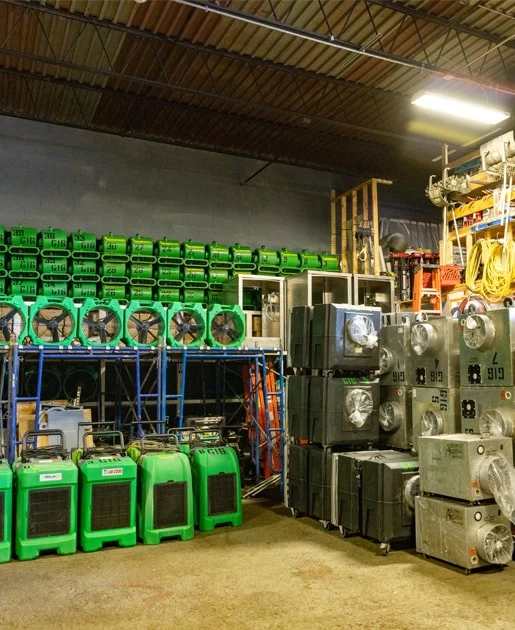
After extraction, we deploy commercial-grade drying equipment: air movers, dehumidifiers, and where needed, desiccant systems for harder-to-reach structural cavities. We monitor moisture levels daily until the structure meets the drying standard. If the damage requires structural repair — drywall, flooring, framing — our Nassau County GC license means we can complete that work and pull the required Village of Lawrence permits without handing the job off to someone else. We also document everything along the way for your insurance claim.
Flooded Basement Cleaning and Restoration Lawrence, NY
What's Actually Included When Lawrence Homeowners Call Green Island Group
The scope of a flooded basement cleanup in Lawrence depends on the water source, how long it sat, and what’s in the path of that moisture. Clean water from a burst pipe is a different job than a sewage backup or storm surge that carried contaminants into your finished basement. We handle all three categories — and we classify the damage correctly from the start, which matters when you’re filing an insurance claim and need accurate documentation.
For Lawrence homeowners specifically, our service often goes beyond what a standard water damage company delivers. Homes in the village — particularly in older sections near the Isle of Wight and the larger estate properties in Back Lawrence — frequently require hazmat assessment before any demolition or material removal begins. Our team is licensed to handle asbestos and lead in-house, which keeps your project moving instead of stalling while you wait for a separate environmental contractor.
On the restoration side, we handle structural drying, mold prevention treatment, and full rebuild when needed — drywall, flooring, insulation, and framing — all under our Nassau County General Contractor license. We also coordinate directly with your insurance carrier, help document the damage properly, and can work with both homeowners insurance (for sudden events like pipe bursts) and separate flood insurance policies. Lawrence homeowners with high-value properties deserve a restoration process that actually protects what they’ve built — and that’s what we deliver.
Does homeowners insurance cover flooded basement cleanup in Lawrence, NY?
This is one of the most important questions to get right before you file a claim, because the answer depends entirely on what caused the flooding. Standard homeowners insurance typically covers sudden and accidental water damage — a burst pipe, a failed water heater, an appliance that leaked without warning. What it does not cover is natural flooding from storms, storm surge, or rising groundwater. For that, you need a separate flood insurance policy, usually through the National Flood Insurance Program (NFIP).
In Lawrence, this distinction is especially relevant. The village sits adjacent to the Reynolds Channel, in a coastal flood zone where storm surge and heavy rain events are real recurring risks — not rare outliers. If your basement flooded during a nor’easter or a tropical storm, your homeowners policy likely won’t cover it unless you also carry flood insurance. The average NFIP flood claim payout in recent years has approached $46,000, which gives you a sense of what’s at stake. We document damage thoroughly and can help you understand what your policies cover before you submit, so you’re not caught off guard mid-claim.
How quickly does mold actually grow after a basement floods on Long Island?
Mold can begin developing within 24 to 48 hours of water exposure, and by 72 hours it’s often already establishing in wall cavities, insulation, and behind baseboards — areas you can’t see from a visual inspection. The EPA recommends starting cleanup within that first 24 to 48 hour window. In a coastal community like Lawrence, where ambient humidity is already elevated compared to inland Nassau County towns, that timeline can compress even further.
The other factor people underestimate is hidden moisture. Even after standing water is removed, structural materials — framing, subfloor, drywall — can hold significant moisture for days without showing visible signs. That retained moisture is what feeds mold growth after the fact. A basement that looks dry three days after a flood can still have moisture readings well above the acceptable threshold inside the walls. That’s why professional moisture monitoring throughout the drying process isn’t optional — it’s the only way to know the job is actually done.
My Lawrence home was built before 1978 — does that change the cleanup process?
Yes, it changes it significantly. Homes built before 1978 commonly contain asbestos in floor tiles, pipe insulation, and ceiling materials, as well as lead-based paint on walls and trim. When water floods a basement in an older home, the cleanup process can disturb those materials — and disturbing them without proper licensing and containment is both a health risk and a legal issue under New York State law.
Lawrence has a meaningful inventory of older housing stock, particularly in the Isle of Wight area and the larger estate properties in Back Lawrence, some of which date back to the late 19th and early 20th centuries. Before any demolition, material removal, or structural drying begins in a pre-1978 home, a licensed assessment should be performed. We hold both the NYS DOL Asbestos Contractor certification and the USEPA Lead and RRP certifications, which means we can assess and handle those materials in-house — without bringing in a separate environmental company and without putting your project on hold while you wait for one.
What's the difference between water extraction and structural drying — and do I need both?
Water extraction removes the standing water — the visible pool on your basement floor. Structural drying is what happens after that, and it’s the step that most people either skip or underestimate. Once the standing water is gone, the moisture that has absorbed into your walls, subfloor, framing, and insulation still needs to be driven out using commercial-grade air movers and dehumidifiers. Without structural drying, that absorbed moisture will eventually cause warping, rot, and mold — even if the floor looked fine after extraction.
In Lawrence, the need for thorough structural drying is amplified by the coastal environment. Humidity levels near the Reynolds Channel and the South Shore are consistently higher than in inland communities, which means ambient air does less of the drying work on its own. Professional drying equipment creates the controlled environment needed to pull moisture out of structural materials at a rate that actually prevents secondary damage. We monitor moisture levels daily with calibrated meters until every affected material reaches the accepted drying standard — not just until it feels dry.
How much does flooded basement cleanup typically cost in Nassau County?
Cost varies based on three main factors: the size of the space, the category of water involved, and how long the water sat before cleanup began. As a general range, flooded basement cleanup runs between $4 and $12 per square foot, with total project costs commonly falling between $1,600 on the low end for a minor clean-water event and $12,000 or more for contaminated water in a larger finished space. Severe cases involving structural damage can go significantly higher.
For Lawrence homeowners, a few factors tend to push costs toward the higher end of the range. Older homes with potential hazmat materials require additional assessment and licensed handling before standard cleanup can begin. Finished basements — which are common in Lawrence given the size and value of homes in the village — involve more materials and more restoration work than unfinished spaces. And delay is expensive: every additional day of moisture exposure increases the probability of mold, which adds a remediation cost on top of the original cleanup. The cost of acting quickly is almost always lower than the cost of waiting. We provide a clear, documented estimate before any work begins.
Is a flooded basement in Lawrence more likely after certain types of storms?
Lawrence’s position on the South Shore of Nassau County — directly adjacent to the Reynolds Channel, with Atlantic Beach as its only buffer from the open ocean — makes it genuinely more flood-prone than most Nassau County communities. The types of storms that hit hardest here are nor’easters, which tend to peak between late fall and early spring, and tropical systems during hurricane season. Both can produce sustained rainfall that saturates the flat coastal plain Lawrence sits on, overwhelms sump pumps, and pushes water through foundation walls and basement floors.
What makes Lawrence’s flooding pattern different from inland towns is the multi-directional threat. During a major storm, water can come from above as rainfall, from the ground as saturated soil loses its drainage capacity, and in severe events, from storm surge moving through the Reynolds Channel. Sandy in 2012 demonstrated exactly that — flooding hit the Five Towns from multiple directions simultaneously. Beyond major storm events, even heavy seasonal rain in March or April, when the ground is already saturated from winter, can be enough to overwhelm a basement that held up fine all winter. If your home has a sump pump, having it inspected and backed up with a battery-powered secondary unit before storm season is one of the most practical things you can do.