When Water Hits Lefrak City's Towers, You Need Someone There Fast
Lefrak City’s 1960s high-rises don’t forgive slow responses. Water moves fast through these buildings and we’re available 24/7 to stop it, dry it out, and restore what was damaged. We’ve handled hundreds of flood events in central Queens, and we know exactly how water behaves in a 20-tower complex built on this footprint, sitting directly above the Long Island Expressway’s stormwater corridor.
I needed a professional consultation explanation of procedure for safe removal of Asbestos in my apartment complex. Without having an account yet, I was very impressed with the caring, knowledgeable and generous advice offered by Jessica, and will look forward to doing business in the future. Thank you so much! I feel much more informed about a sometimes scary endeavor. Peace. Nancy Silva Mineola, NY.
Mia Munoz
Used this company to clean up some water flood in my house. They were fast and easy to work with.very professional, Would recommend to anyone!
Nini Valle
Great company, had a flood and they responded quickly and efficiently. Billed my insurance company directly. I highly recommend this company!
joe colapietro, jr
I had pipe freeze in my basement right before a snow storm and they made to within an hour to help start the clean up process. They we by our side throughout the entire process and even helped with the insurance company. They did such a great job with the cleanup, repair, remidiation, I contracted them to perform the repairs and finishes in the basement. They came with enough manpower and material to get the job done. Leo and Jessica were nothing but a pleasure to deal with!!
Cristian Arredondo c
I had some water damage in my home and Green Island was able to take care of my issue quickly and effectively. I am very pleased with the work they did. They responded quickly and were very professional.
Michael M
Outstanding service! From the office to the field crew everyone was friendly, helpful and responsive. I highly recommend Green Island Group.
A flooded basement in Lefrak City isn’t just an inconvenience it’s a clock running against you. The moment water enters a mechanical room, a ground-floor utility space, or an apartment unit in one of these towers, mold has already started its 24-to-48-hour countdown. After 72 hours, what could have been a contained cleanup becomes a mold remediation job that costs thousands more. That window matters.
What you get on the other side of a proper cleanup isn’t just a dry floor. It’s the confidence that the moisture hiding inside concrete block walls the kind you can’t see has been found and addressed. Lefrak City’s towers were built between 1962 and 1971, and their construction means water doesn’t stay where it lands. It travels through pipe chases, floor assemblies, and wall cavities before anyone realizes the scope of the problem. Thermal imaging catches what a visual inspection misses.
There’s also the compliance piece, which matters more here than in most places. Buildings this age contain asbestos-containing materials and lead-based paint both of which become a legal and health issue the moment they’re disturbed by water damage. A cleanup that doesn’t account for that isn’t a complete cleanup. It’s a liability.
We’ve been handling water damage, mold remediation, asbestos abatement, and full reconstruction across the New York metro area for over 30 years. We hold more than 17 active credentials including the NYS DOL Mold License that New York State legally requires for any mold remediation work, an NYC General Contractor License, NYS DOL Asbestos certification, and USEPA Lead and RRP certifications. In a building stock like Lefrak City’s towers built in the 1960s, sitting directly above the Long Island Expressway’s stormwater corridor, within central Queens’ combined sewer zone that credential stack isn’t a marketing point. It’s what separates legal work from illegal work.
We bill insurance companies directly and stay involved through the adjuster process, so you’re not navigating a claim alone while also dealing with a damaged living or working space. Our customers have described us arriving within the hour during snowstorms. That’s not a coincidence it’s how we operate.
Basement Flooding Remediation Process, Lefrak City
From Standing Water to Restored Space Here's Our Sequence
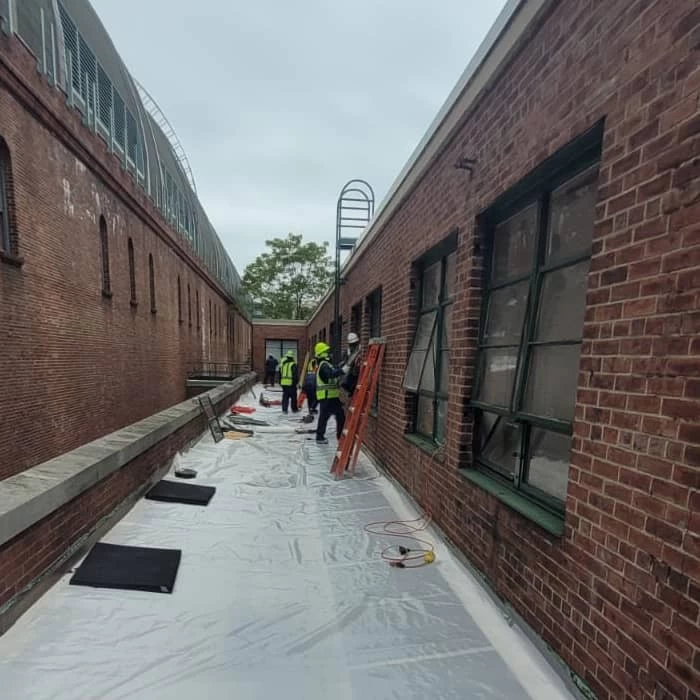
The first thing that happens when we arrive is an assessment not just of what’s visible, but of what isn’t. In Lefrak City’s high-rise towers, water from a single failure point can travel across multiple floors before it pools somewhere obvious. We use thermal imaging to identify hidden moisture pockets inside walls and beneath floors before they become active mold colonies. That step alone changes the outcome of the entire job.
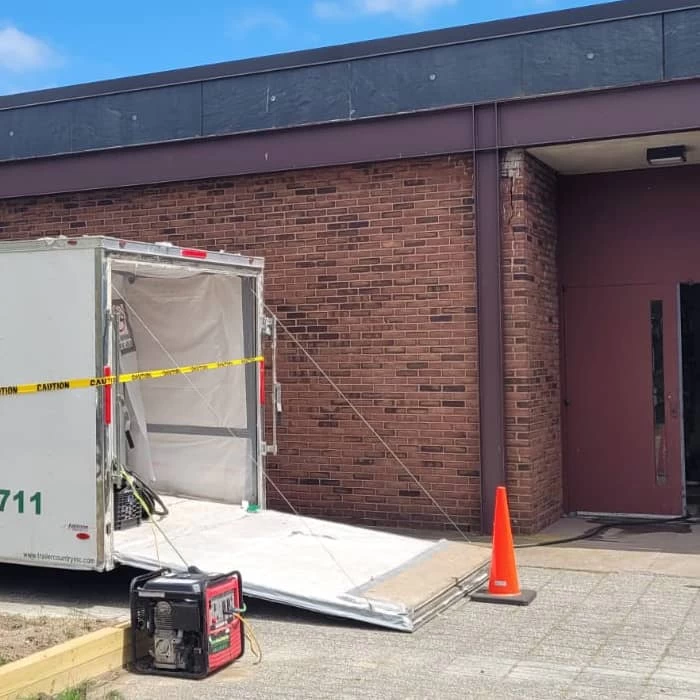
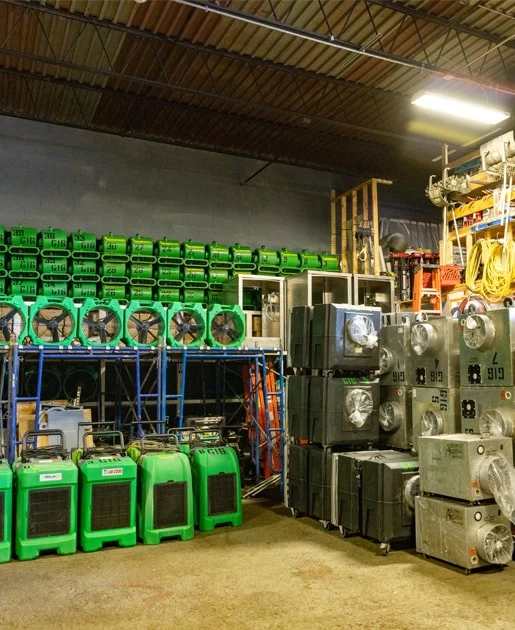
Once the scope is clear, we extract standing water and deploy industrial-grade drying equipment. In a building with concrete construction and limited airflow common in towers from this era drying takes longer than it does in a wood-frame home, and the equipment has to be calibrated accordingly. If asbestos-containing materials or lead paint are present, which is a real possibility in any Lefrak City building constructed before 1978, we handle those under the proper NYS DOL and USEPA certifications before any demolition or structural work begins.
After drying is confirmed and any hazardous materials are addressed, we begin reconstruction. We handle that in-house no handoff to a separate contractor, no gap between mitigation and rebuild. Everything needed to bring the space back to a livable or operational condition is done by our licensed team, under the same contract, with the permits pulled correctly through the NYC Department of Buildings.
What's Actually Included When We Handle Your Flood
Flooded basement cleanup in Lefrak City covers more ground than most people expect and that’s especially true in a managed high-rise complex where the damage rarely stays contained to one unit or one space. Our process includes emergency water extraction, structural drying with moisture verification, mold prevention treatment, content assessment, hazardous materials handling (asbestos and lead where applicable), and full reconstruction. That last part matters: most restoration companies stop at mitigation and hand you off. We carry the job through to a finished, inspectable space.
For individual residents dealing with a pipe burst, sewer backup, or water intrusion from an adjacent unit, the process is the same thorough assessment, proper drying, and a clear documentation trail that supports your renters insurance claim. For property management operations handling damage to common areas, mechanical rooms, or parking structures, our institutional credentials including NYC General Contractor licensing, NYC BIC registration, and NYS MBE and WBE certifications mean we’re qualified to work at the scale and compliance level that a managed complex like this requires.
Central Queens sits within a combined sewer system zone that the NYC DEP has officially designated as one of four Cloudburst Hub priority areas for stormwater infrastructure investment. That designation reflects a real, recurring flooding risk in this exact area. When the next storm event hits and the sewer backs up, you want a company that already knows this building stock, this neighborhood, and what it takes to do the job right under New York City’s regulatory framework.
How quickly does mold start growing after a basement floods in Lefrak City?
Mold can begin developing within 24 to 48 hours of a water intrusion event and in the older concrete construction of Lefrak City’s towers, moisture doesn’t dry on its own the way it might in a newer wood-frame building. The dense wall assemblies and limited natural airflow in high-rise buildings from the 1960s create conditions where moisture lingers inside structural cavities long after the surface appears dry. That hidden moisture is where mold colonizes first.
The 72-hour mark is the critical threshold. Getting a licensed remediation team on-site before that window closes is the difference between a water damage job and a water damage job plus a full mold remediation which can add $2,000 to $8,000 or more to the total cost. If you’re in Lefrak City and you’ve had standing water in your unit or building space, the time to call isn’t tomorrow morning. It’s now.
Does renters insurance cover flooded basement cleanup in a Queens apartment?
It depends on the source of the water and the specific terms of your policy but in many cases, yes, renters insurance does cover water damage to your personal property and the cost of temporary relocation if your unit is uninhabitable. What it typically does not cover is the structural repair of the building itself that falls under the building owner’s policy, which in Lefrak City means the LeFrak Organization’s property insurance.
The most important thing you can do immediately after a flood event is document everything: photographs, timestamps, written descriptions of what happened and when. We bill insurance companies directly and help clients communicate with adjusters throughout the process. That means you’re not figuring out the claims process alone while also trying to deal with a damaged apartment. We’ve done this hundreds of times and know what documentation insurers need to process a claim without unnecessary delays.
Is asbestos a real concern during basement flood cleanup in Lefrak City buildings?
Yes, and it’s not a minor one. Lefrak City’s 20 towers were built between 1962 and 1971 well within the construction window when asbestos-containing materials were standard. Floor tiles, pipe insulation, joint compound, and ceiling materials from that era commonly contain asbestos. When a flood event disturbs these materials through water saturation, demolition, or drying work that involves cutting into walls asbestos fibers can become airborne.
In New York City, any contractor performing work in a pre-1980 building is required to conduct an asbestos survey before demolition or significant renovation. Working without the proper NYS DOL Asbestos License in a building like this isn’t just dangerous it’s a regulatory violation that can result in building shutdowns and significant fines. We hold the NYS DOL Asbestos License and USEPA Lead certifications, which means we can legally and safely assess, contain, and remediate any hazardous materials encountered during the cleanup process. If you’re hiring anyone else for this job, ask for their asbestos license number before they touch anything.
What causes basement flooding in Lefrak City and how often does it happen?
The two most common causes in this area are aging building infrastructure and the central Queens combined sewer system. Lefrak City’s towers are 50 to 60 years old, and even after the $70 million renovation completed in 2017, the underlying plumbing systems in buildings of this age carry real risk cast iron drain stacks degrade, pipe joints fail, and supply lines under pressure eventually give out. In a high-rise with hundreds of stacked apartments sharing vertical plumbing chases, one failure point can affect multiple floors simultaneously.
The sewer system is the other major factor. Central Queens uses a combined sewer system that carries both stormwater and sanitary wastewater through the same pipes. During heavy rainfall events, that system reaches capacity and backs up into basements and ground-floor spaces introducing sewage-contaminated water, which is the highest-risk water category for mold and pathogen exposure. The NYC DEP has officially designated Corona, the neighborhood Lefrak City sits within, as one of four Cloudburst Hub priority sites specifically because of how severe and recurring this flooding problem is. Hurricane Ida in September 2021 and Tropical Storm Ophelia in September 2023 both caused significant flooding damage in this exact area.
How long does flooded basement cleanup take in a Lefrak City high-rise?
The timeline depends on the source of the water, how long it was present before remediation began, and whether hazardous materials like asbestos or lead are involved. For a contained pipe burst with no mold development and no hazardous materials, a thorough water extraction and structural drying process typically takes three to five days to complete including moisture verification before any reconstruction begins.
In Lefrak City’s concrete high-rise construction, drying takes longer than it does in wood-frame buildings. Concrete retains moisture, and the wall assemblies in buildings from the 1960s don’t release it quickly. Industrial drying equipment has to run longer, and moisture readings need to confirm that structural materials have reached acceptable levels before the space is closed back up. If mold remediation is required which becomes more likely the longer the water sat before cleanup began that adds time. If asbestos-containing materials are disturbed and need to be addressed, that process follows a specific regulatory protocol that cannot be rushed. The honest answer is that a proper job takes as long as it takes cutting corners on drying time is what leads to mold problems six months later.
Can Green Island Group handle flood cleanup in Lefrak City's building mechanical rooms and common areas?
Yes and that’s actually one of the areas where our credentials matter most. Mechanical rooms, parking garages, laundry rooms, and building corridors in a managed complex like Lefrak City fall under commercial and institutional restoration work, not just residential cleanup. That distinction matters because the licensing requirements, permit processes, and compliance standards are different and stricter.
We hold an NYC General Contractor License, NYC BIC registration, and NYS MBE and WBE certifications, which qualify us to work on institutional and commercial projects at the scale a managed high-rise complex requires. We can legally pull permits through the NYC Department of Buildings, handle any asbestos or lead materials encountered in the building’s mechanical infrastructure, and complete full reconstruction of damaged spaces not just dry them out and leave. For property management teams coordinating repairs across multiple affected areas after a major flooding event, having one licensed contractor handle the entire scope from emergency extraction through finished reconstruction is a significant operational advantage over coordinating multiple vendors with overlapping scopes and competing timelines.