When Reynolds Channel Rises, Your Basement Needs More Than a Wet Vac
Saltwater flooding on a barrier island isn’t a standard water damage call. We know the difference — and respond 24/7 with the licenses and equipment to prove it. When the Atlantic backs up over Lido Beach’s dune line or Reynolds Channel overtops during a nor’easter, the water entering your basement is Category 3 contamination. It corrodes structural steel, attacks electrical systems, and creates the kind of moisture conditions where mold takes hold within 48 hours. A standard wet vac and shop towels don’t cut it here.
I needed a professional consultation explanation of procedure for safe removal of Asbestos in my apartment complex. Without having an account yet, I was very impressed with the caring, knowledgeable and generous advice offered by Jessica, and will look forward to doing business in the future. Thank you so much! I feel much more informed about a sometimes scary endeavor. Peace. Nancy Silva Mineola, NY.
Mia Munoz
Used this company to clean up some water flood in my house. They were fast and easy to work with.very professional, Would recommend to anyone!
Nini Valle
Great company, had a flood and they responded quickly and efficiently. Billed my insurance company directly. I highly recommend this company!
joe colapietro, jr
I had pipe freeze in my basement right before a snow storm and they made to within an hour to help start the clean up process. They we by our side throughout the entire process and even helped with the insurance company. They did such a great job with the cleanup, repair, remidiation, I contracted them to perform the repairs and finishes in the basement. They came with enough manpower and material to get the job done. Leo and Jessica were nothing but a pleasure to deal with!!
Cristian Arredondo c
I had some water damage in my home and Green Island was able to take care of my issue quickly and effectively. I am very pleased with the work they did. They responded quickly and were very professional.
Michael M
Outstanding service! From the office to the field crew everyone was friendly, helpful and responsive. I highly recommend Green Island Group.
What Staying Dry Actually Means on a Barrier Island
When Reynolds Channel backs up or a nor’easter pushes the Atlantic over the dune line, the water that enters your basement isn’t clean. It’s saltwater — classified as Category 3 contamination — and it behaves completely differently than a burst pipe or a sump pump failure. It corrodes structural steel, attacks electrical systems, and creates the kind of moisture conditions where mold can take hold within 48 hours. Standard drying equipment and a shop vac don’t cut it here.
Lido Beach homes present a specific challenge that most restoration companies aren’t set up to handle. A large portion of the housing stock dates from the 1940s through the 1970s — built before modern waterproofing standards, and before anyone thought twice about asbestos floor tiles or lead-based paint. When flooding disturbs those materials, you’re no longer dealing with just water damage. You’re dealing with a hazmat situation layered on top of it. Getting that wrong doesn’t just cost money — it creates liability that follows the home.
What you get on the other side of a proper cleanup is a basement that’s genuinely dry, documented, and cleared. Not surface-dry. Not visually clean. Structurally sound, moisture-verified, and restored to a condition that holds up under an insurance inspection, a home sale, or just the next storm season — because on this island, there’s always a next storm season.
Every License Needed for What Barrier Island Flooding Actually Brings
We hold the full credential stack for this type of work — NYS DOL Mold License, NYS DOL Asbestos License, USEPA Lead and RRP certifications, IICRC Water and Fire Damage certification, and a Nassau County General Contractor license. That last one matters because permit-required structural restoration in the Town of Hempstead — which governs Lido Beach — requires a licensed GC. Most restoration companies don’t hold it. We do.
That combination isn’t something we assembled for marketing purposes. It reflects the reality of what flooded basements in Nassau County’s South Shore communities actually involve. A home near Nickerson Beach or along the bay-facing streets off Lido Boulevard may have water damage, mold risk, and disturbed pre-1980 materials all at once. You need one company that can legally and properly handle all of it — not three vendors passing the job back and forth.
We’ve been serving Nassau County’s barrier island communities through flooding events large and small. We understand the access constraints when the Loop Parkway is compromised after a storm, and we know how to coordinate arrival quickly when it matters most.
When you call, you’re not reaching a scheduler who will call you back tomorrow. The line is live 24/7 at 631-256-5711. We ask the right questions upfront — when did it flood, what’s the water source, how much standing water, does the home predate 1980 — so we arrive with the right equipment, not a generic kit. On a barrier island where a single storm can flood dozens of homes simultaneously, showing up prepared is the difference between stopping mold growth and chasing it.
On-site, our first step is assessment. We identify the water category — clean, gray, or Category 3 saltwater — and test for moisture levels inside walls, under subflooring, and in concrete using professional meters, not visual guesses. If there’s any indication of asbestos or lead materials that may have been disturbed, we address that before any demolition or drying work begins. That’s not optional in New York State — it’s the law, and it protects you.
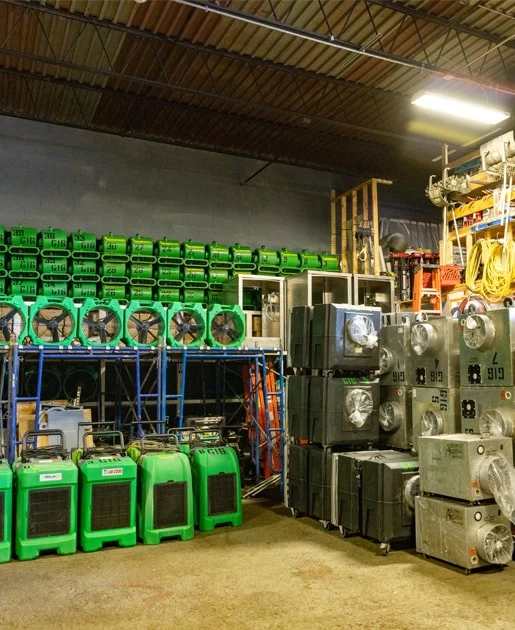
From there, we extract standing water, deploy industrial dehumidifiers and air movers calibrated for the high-humidity coastal environment at sea level, and monitor drying progress until moisture readings confirm the space is genuinely dry. If structural restoration is needed — drywall, framing, flooring — our Nassau County GC license covers it. We also document everything for your insurance claim, whether that’s a standard homeowners policy, an NFIP flood policy, or both.
Flooded basement cleanup in Lido Beach covers more ground than it does in most Nassau County towns. Our service starts with emergency water extraction and Category 3 decontamination for saltwater intrusion — the protocol required when Reynolds Channel or Atlantic storm surge is the source. That means biocidal treatment, corrosion assessment for any structural metals or HVAC components exposed to saltwater, and thorough documentation before anything is closed up.
Where older construction materials are present — and in Lido Beach’s mid-century housing stock, they often are — we handle licensed asbestos abatement and lead remediation in-house before structural work begins. There’s no handoff to a separate hazmat subcontractor. Everything stays under one contract, one point of accountability, and one timeline. After remediation is complete, our Nassau County General Contractor license covers full structural restoration: drywall, framing, flooring, and anything else that needs to be rebuilt to bring the space back to livable condition.
We also help with insurance documentation for both homeowners policies and NFIP flood insurance — two separate policies that many Lido Beach homeowners carry and that cover different events with different claim requirements. Knowing how to document damage for both, and what each policy actually covers, can make a significant difference in what you recover. We’ve been through enough South Shore flood claims to know where the gaps are and how to avoid them.
Does flood insurance cover basement cleanup and restoration in Lido Beach, NY?
It depends on the source of the flooding and which policy you’re filing under. NFIP flood insurance — the federal program most Lido Beach homeowners carry because of the community’s FEMA coastal flood zone designation — covers direct physical damage from flooding caused by natural rising water, including storm surge and overflow from Reynolds Channel. However, NFIP policies have specific exclusions: they typically don’t cover finished basement improvements, personal property stored in a basement, or certain types of mechanical equipment below the lowest elevated floor.
Your standard homeowners insurance policy covers a different set of events — sudden and accidental water damage from things like burst pipes or appliance failures — but generally excludes natural flooding entirely. The overlap between these two policies is where most homeowners get confused, and where claims can fall short if the damage isn’t documented correctly from the start. We help with documentation for both policy types so you’re not leaving money on the table or filing the wrong claim for the wrong event.
How quickly does mold start growing after a basement floods on Long Island?
The EPA’s guidance puts mold growth at 24 to 48 hours after a flooding event under the right conditions — and the conditions in a Lido Beach basement after saltwater intrusion are close to ideal for it. You’re at sea level, ambient humidity on the barrier island is already elevated, and saltwater flooding introduces organic material that accelerates microbial growth. The 72-hour window is real: if a basement is properly dried within that timeframe, mold growth is unlikely. After that, the situation changes significantly.
The practical problem is that after a major storm — a nor’easter or a hurricane that affects the entire Long Beach Barrier Island — demand for restoration services spikes sharply all at once. Every home in Lido Beach that flooded needs help at the same time. That’s exactly why calling immediately matters, and why working with a company that has genuine 24/7 emergency capacity — not a form submission or a next-day callback — makes a direct financial difference. Waiting even a few hours can be the difference between a cleanup job and a full mold remediation project.
My Lido Beach home was built in the 1960s — does flooding create an asbestos risk?
It can, and it’s worth taking seriously. Homes built before 1980 — which includes a large portion of Lido Beach’s housing stock, given the community’s development history from the 1930s through the 1970s — commonly contain asbestos in floor tiles, pipe insulation, ceiling materials, and joint compounds. When flooding saturates and disturbs these materials, it can release asbestos fibers that are otherwise stable when left undisturbed.
In New York State, asbestos abatement must be performed by a company holding a NYS DOL Asbestos License. This is not optional, and it’s not something a general handyman or unlicensed restoration crew can legally handle. We hold this license and perform asbestos testing and abatement in-house before any demolition or structural drying work begins in affected areas. If your home was built before 1980 and has flooded, the right move is to have a licensed professional assess the situation before anyone starts pulling up flooring or tearing out drywall.
Can I clean up a saltwater-flooded basement myself instead of hiring a professional?
For a minor freshwater event — a small pipe leak, a manageable sump pump overflow — DIY cleanup is sometimes reasonable if you act fast and have the right equipment. Saltwater flooding from storm surge or Reynolds Channel back-bay flooding is a different situation entirely. Category 3 water — which is what saltwater intrusion is classified as — is considered a biohazard. It carries bacteria, marine organisms, and contaminants that require proper decontamination, not just drying.
Beyond the contamination issue, saltwater is corrosive. It attacks structural steel, electrical wiring, and HVAC components in ways that aren’t always visible on the surface. A basement that looks clean after a DIY effort may have hidden corrosion, residual moisture inside wall cavities, or microbial growth developing behind drywall. In a home where the value is in the $800,000 to $1.5 million range — which is typical for Lido Beach — the cost of a failed DIY cleanup discovered during a home inspection or a subsequent storm can far exceed what professional remediation would have cost. The math usually doesn’t favor doing it yourself here.
What's the difference between storm surge flooding and regular basement flooding in Lido Beach?
Regular basement flooding — from a burst pipe, a failed sump pump, or heavy rainfall overwhelming a drain — involves freshwater or mildly contaminated water. It’s classified as Category 1 or Category 2 depending on the source, and while it still requires prompt professional attention, the cleanup protocol is straightforward: extract, dry, monitor, restore.
Storm surge flooding in Lido Beach is a different category of event. When the Atlantic pushes water inland from the south, or when Reynolds Channel rises and overtops from the north, the water entering your basement is saltwater — Category 3 contamination by definition. It requires full decontamination, not just drying. It also tends to arrive with far more volume and velocity than a pipe failure, which means greater structural exposure and a higher likelihood that materials like insulation, framing, and flooring have absorbed contaminated water deeply. The cleanup timeline is longer, the equipment requirements are different, and the documentation needed for an NFIP flood insurance claim is more involved than a standard homeowners claim. Treating a storm surge event like a routine basement flood is one of the most common and costly mistakes we see.
Do I need a permit for basement restoration work after flooding in the Town of Hempstead?
For structural restoration work — replacing drywall, reframing walls, or rebuilding flooring systems — yes, permit requirements from the Town of Hempstead’s Building Department apply. Lido Beach is an unincorporated hamlet governed by the Town of Hempstead, not a city or village with its own building department, so all permit-required work flows through the town. Any contractor performing that structural work needs to hold a valid Nassau County General Contractor license.
This matters more than it might seem. After a major flooding event, unlicensed contractors often move through affected communities offering quick, cheap repairs. Work done without permits and without a licensed GC can create serious problems: it may not pass inspection, it may not be covered by your insurance claim, and it can create disclosure obligations if you sell the home. We hold the Nassau County General Contractor license and handle permit coordination as part of the restoration process — so the work is done correctly, documented properly, and doesn’t create problems down the road.