When Little Neck's Sewers Back Up, Your Basement Pays the Price
Little Neck sits at the edge of a combined sewer watershed that’s been overwhelming basements for decades. When the water comes in whether it’s through the floor drain, the foundation, or a burst pipe we handle flooded basement cleanup fast, fully licensed, and start to finish.
I needed a professional consultation explanation of procedure for safe removal of Asbestos in my apartment complex. Without having an account yet, I was very impressed with the caring, knowledgeable and generous advice offered by Jessica, and will look forward to doing business in the future. Thank you so much! I feel much more informed about a sometimes scary endeavor. Peace. Nancy Silva Mineola, NY.
Mia Munoz
Used this company to clean up some water flood in my house. They were fast and easy to work with.very professional, Would recommend to anyone!
Nini Valle
Great company, had a flood and they responded quickly and efficiently. Billed my insurance company directly. I highly recommend this company!
joe colapietro, jr
I had pipe freeze in my basement right before a snow storm and they made to within an hour to help start the clean up process. They we by our side throughout the entire process and even helped with the insurance company. They did such a great job with the cleanup, repair, remidiation, I contracted them to perform the repairs and finishes in the basement. They came with enough manpower and material to get the job done. Leo and Jessica were nothing but a pleasure to deal with!!
Cristian Arredondo c
I had some water damage in my home and Green Island was able to take care of my issue quickly and effectively. I am very pleased with the work they did. They responded quickly and were very professional.
Michael M
Outstanding service! From the office to the field crew everyone was friendly, helpful and responsive. I highly recommend Green Island Group.
Your Little Neck Basement Restored Before the Mold Clock Runs Out
Most people don’t realize how quickly a flooded basement turns into a mold problem. Within 24 to 48 hours of water sitting in a closed space especially in a Little Neck home where basements tend to run warm and humid mold can start establishing itself inside wall cavities, under flooring, and behind baseboards. By the time you see it, you’re already dealing with a second problem on top of the first.
What you actually want after a basement flood is straightforward: dry walls, clean air, no hidden moisture, and a basement that’s back to how it was. That means industrial drying equipment, thermal imaging to catch what your eyes miss, and a team that doesn’t hand you a bill and disappear before the job is actually done.
Little Neck’s housing stock adds a layer that most restoration companies don’t talk about honestly. A large portion of the homes here the Colonials and Tudors north of Northern Boulevard, the post-war builds throughout the south side were constructed before 1970. That means asbestos floor tiles, asbestos pipe insulation, and lead-based paint are common. When water gets into those materials, what looked like a contained flood becomes a hazardous materials situation. You need a company licensed to handle that, not one that pretends it isn’t there.
We’ve been doing environmental remediation and restoration work across New York City, Long Island, and New Jersey for over 30 years combined. That’s not a marketing number it means our team has worked through the regulatory changes, the insurance shifts, and the evolving licensing requirements that define what legitimate restoration work looks like in this state.
For Little Neck specifically, that depth matters. This neighborhood sits at the Queens-Nassau border, which means any restoration work here has to comply with New York City Department of Buildings rules, NYS DOL licensing requirements for mold and asbestos, and USEPA regulations for lead all at once. We hold every one of those credentials: NYS DOL Mold license, NYS DOL Asbestos license, USEPA Lead certification, NYC General Contractor license, and Nassau County General Contractor license. That’s not a stack of optional credentials. In New York, several of them are legally required.
Deepdale Gardens residents and co-op board members in the area can reach out too we handle multi-unit properties and work directly with property management on documentation and claims.
What Actually Happens From Your First Call to a Dry Little Neck Basement
When you call, the first thing that happens is an honest assessment not a sales pitch. We establish what type of water you’re dealing with, because that changes everything about how the job gets done. A burst pipe is a different situation than a sewer backup through a floor drain, and in Little Neck, sewer backups are a real and recurring problem. The Alley Creek combined sewer system that serves this watershed gets overwhelmed during heavy rain events, and when it does, what comes through your basement floor drain is not clean water. It’s Category 3 contamination sewage-mixed stormwater and it requires licensed handling, proper containment, and documented disposal.
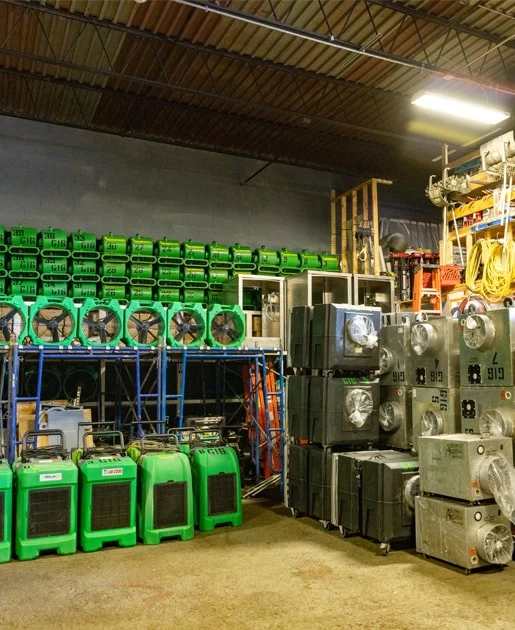
Once the water type is confirmed, extraction starts immediately using commercial-grade equipment. After extraction, the drying phase begins with industrial air movers and dehumidifiers placed strategically based on the layout of your space. Thermal imaging is used throughout to identify moisture hiding inside walls and under floors that standard equipment won’t catch. This step is what separates a job that holds up from one that leads to a mold call three weeks later.
If the assessment turns up asbestos-containing materials or lead paint which is common in pre-1970 Little Neck homes those materials are handled under the appropriate NYS DOL and USEPA protocols before any demolition or reconstruction begins. From there, reconstruction brings the space back to finished condition. One company, one process, no handoff.
Basement Flood Cleanup Services in Little Neck, NY
Licensed for Everything a Little Neck Basement Flood Can Throw At You
The full scope of what we handle here goes well beyond water extraction. Emergency water removal and structural drying are the starting point. From there, our work includes mold assessment and remediation under NYS DOL licensing, sewage decontamination for Category 3 backups, asbestos abatement under NYS DOL certification, lead-safe work practices under USEPA RRP rules, content pack-out and restoration, and complete basement reconstruction.
That last part is worth emphasizing. A lot of companies in this market do the mitigation the drying and the cleanup and then leave you to find a separate contractor for the rebuild. In a neighborhood where finished basements function as home offices, in-law suites, and recreation rooms that add real value to properties already well above $1 million, that gap is a problem. We handle the entire job under one roof, which means one point of contact, one insurance claim, and no delays waiting on a second contractor to show up.
Insurance billing is handled directly. We work with your adjuster and document the damage in the format insurers require which matters a lot when you’re filing a claim that involves sewage contamination, mold, or hazardous materials. Queens County homeowners have dealt with underpaid and disputed claims in this area before. Having a licensed, IICRC-certified company in your corner with the paperwork to back it up changes that conversation.
Does homeowners insurance cover a flooded basement from a sewer backup in Little Neck?
Standard homeowners insurance policies typically do not cover sewer backup damage unless you’ve added a specific sewer backup rider to your policy. This is a distinction that catches a lot of Little Neck homeowners off guard especially after a storm event that overwhelms the Alley Creek combined sewer system and sends sewage-contaminated water through basement floor drains. If you have the rider, the claim process still requires thorough documentation: photos, moisture readings, a licensed contractor’s assessment, and in cases involving sewage, proof that the cleanup met Category 3 contamination standards.
Flood insurance through FEMA’s National Flood Insurance Program covers direct flooding from outside water sources but also has specific exclusions around basement contents and finished spaces. The honest answer is that your coverage depends entirely on what’s in your policy, and the best time to find out is before an event happens, not during one. We bill insurance directly and help you navigate what’s covered but reviewing your policy now for sewer backup coverage is genuinely worth doing.
How quickly does mold grow after a basement flood, and why does it matter?
Mold can begin growing within 24 to 48 hours of water sitting in a space with the right temperature and humidity conditions. In a Little Neck basement where humidity levels are already influenced by proximity to Little Neck Bay and the general moisture conditions of the Alley Creek watershed that window can be even shorter during the warmer months. Once mold establishes in wall cavities, subfloor assemblies, or behind drywall, remediation costs climb significantly. Waiting more than 72 hours before beginning professional cleanup can add thousands of dollars to the total job.
The reason speed matters so much isn’t just the mold itself it’s what happens to the materials around it. In older Little Neck homes with plaster walls and original wood-frame construction, moisture absorbs deeply and dries slowly. Mold that starts in a wall cavity doesn’t stay there. It spreads, and by the time you see it on the surface, it’s already well established behind it. Getting a professional on-site quickly with the right drying equipment and thermal imaging to find hidden moisture is the most effective way to keep a manageable cleanup from becoming a major remediation project.
My Little Neck home was built in the 1950s does that affect the cleanup process?
Yes, significantly. Homes built before 1980 and a large portion of Little Neck’s housing stock falls in that range, including the post-war builds throughout the south side and the older Colonials and Tudors north of Northern Boulevard commonly contain asbestos floor tiles, asbestos pipe insulation, and lead-based paint. Under normal conditions, these materials are safely encapsulated and not a health concern. But when a basement floods, water can compromise that encapsulation. Wet floor tiles, saturated walls, and damaged pipe insulation can release fibers and particles that weren’t a problem before the flood.
Any contractor performing demolition or reconstruction in a pre-1980 home in New York is legally required to follow NYS DOL asbestos protocols and USEPA lead-safe work practices. That’s not optional, and it’s not something every water damage company is licensed to do. We hold both the NYS DOL Asbestos certification and USEPA Lead and RRP certifications, which means the full scope of your cleanup including any hazardous materials encountered is handled correctly and legally under one company.
What's the difference between a water damage company and a licensed remediation contractor?
A water damage company typically handles extraction, drying, and basic cleanup. A licensed remediation contractor can do all of that and also legally perform mold remediation, asbestos abatement, lead-safe renovation work, and sewage decontamination. In New York State, mold remediation without a NYS DOL Mold License is illegal not just inadvisable, but a legal violation. The same applies to asbestos work without NYS DOL Asbestos certification. Insurance companies are also increasingly requiring licensed vendors for mold-related claims, and an unlicensed company’s work can create complications when you file.
For most basement floods in Little Neck, the distinction matters because the flooding conditions here combined sewer overflows, older housing stock, high groundwater influence near Little Neck Bay frequently produce scenarios that go beyond simple water extraction. Sewage contamination, mold growth, and hazardous material disturbance are common follow-on issues in this neighborhood. A company that’s only licensed for water extraction has to stop where the job actually gets complicated. We’re licensed for the full scope.
How long does flooded basement cleanup typically take in Little Neck?
The timeline depends on the severity of the flood, the size of the space, and what’s found during the initial assessment. For a straightforward water intrusion event a burst pipe, a sump pump failure during a spring storm the extraction and structural drying phase typically takes three to five days using industrial drying equipment. Thermal imaging is used throughout to confirm that moisture levels inside walls and floors have reached acceptable standards before the equipment comes out.
If mold is present, or if asbestos-containing materials are discovered which is a realistic possibility in Little Neck’s older housing stock those phases add time to the process. Mold remediation under NYS DOL protocols requires containment, removal, air clearance testing, and documentation. Asbestos abatement has its own regulated procedures. After remediation is complete, reconstruction of a finished basement space can take anywhere from a few days to a few weeks depending on the scope. The full timeline for a complex job sewage contamination, hazardous materials, and a finished basement rebuild can run two to four weeks. You’ll have a clear scope and timeline before any work begins.
Why does Little Neck seem to flood more than other parts of Queens?
It comes down to infrastructure and geography. Little Neck sits within the Alley Creek–Little Neck Bay combined sewer watershed, a system that carries both stormwater runoff and sewage through the same pipes. During heavy rain events and Northeast Queens has seen several significant ones in recent years, including the August 2024 storm that dropped over ten inches of rain in parts of Queens and Long Island those pipes exceed their capacity. When that happens, the overflow has to go somewhere, and for homes with basement floor drains connected to the system, it often comes back up through the drain.
The geographic piece compounds the problem. The northern sections of Little Neck slope toward Little Neck Bay and Udalls Cove, a tidal inlet, which means the water table in that area is influenced by tidal cycles. Homes on streets that descend toward the bay are particularly susceptible to hydrostatic pressure on foundation walls during wet seasons water pushing in from the outside rather than backing up from below. The combination of an overtaxed sewer system, a high water table in certain areas, and a housing stock that was never designed for modern stormwater volumes is why basement flooding is a recurring reality here, not a freak occurrence.