When Lloyd Harbor's Water Table Wins, We Clean Up Fast
Lloyd Harbor’s peninsula location means moisture doesn’t just visit it lingers. We provide flooded basement cleanup and full water damage restoration for North Shore homes, 24 hours a day.
I needed a professional consultation explanation of procedure for safe removal of Asbestos in my apartment complex. Without having an account yet, I was very impressed with the caring, knowledgeable and generous advice offered by Jessica, and will look forward to doing business in the future. Thank you so much! I feel much more informed about a sometimes scary endeavor. Peace. Nancy Silva Mineola, NY.
Mia Munoz
Used this company to clean up some water flood in my house. They were fast and easy to work with.very professional, Would recommend to anyone!
Nini Valle
Great company, had a flood and they responded quickly and efficiently. Billed my insurance company directly. I highly recommend this company!
joe colapietro, jr
I had pipe freeze in my basement right before a snow storm and they made to within an hour to help start the clean up process. They we by our side throughout the entire process and even helped with the insurance company. They did such a great job with the cleanup, repair, remidiation, I contracted them to perform the repairs and finishes in the basement. They came with enough manpower and material to get the job done. Leo and Jessica were nothing but a pleasure to deal with!!
Cristian Arredondo c
I had some water damage in my home and Green Island was able to take care of my issue quickly and effectively. I am very pleased with the work they did. They responded quickly and were very professional.
Michael M
Outstanding service! From the office to the field crew everyone was friendly, helpful and responsive. I highly recommend Green Island Group.
A Dry Basement and No Surprises Hidden in the Walls
When the water’s gone and the fans stop running, what you can’t see is what matters most. Moisture hides inside wall cavities, under flooring, and behind the insulation of older foundations and in a Lloyd Harbor home built before 1978, that hidden moisture can disturb more than just drywall. Lloyd Harbor’s housing stock skews older, with a median build year of 1967 and a significant number of pre-war estate properties throughout the village. That means asbestos and lead are a genuine possibility, not a remote one. A cleanup company that isn’t licensed to handle those materials isn’t just incomplete it’s a liability.
The peninsula geography of Lloyd Neck compounds the problem. You’re surrounded on three sides by water, which means the ambient humidity from Long Island Sound never fully lets up. Basements here stay damp longer than they do in mainland communities, and the wooded terrain that makes this village beautiful also clogs gutters, redirects roof runoff toward foundations, and creates the kind of chronic moisture conditions that standard drying equipment alone can’t fix. Getting your basement truly dry structurally dry, not just visually dry requires the right equipment, the right process, and someone who understands what North Shore conditions actually do to a home over time.
When the job is done right, you get your basement back. You get documentation your insurance adjuster can actually use. And you don’t get a call six weeks later about mold growing behind the wall that nobody caught.
We’ve been handling water damage restoration and environmental remediation across Long Island and New York City for over 12 years. In that time, we’ve completed more than 5,000 restoration projects including estate-class homes on the North Shore of Suffolk County with exactly the kind of aging infrastructure, hazardous materials, and high-value finishes that make a flooded basement in Lloyd Harbor more complicated than it looks.
The credentials aren’t just impressive on paper they’re directly relevant to the homes in this village. We hold a Suffolk County General Contractor license, a NYS DOL Asbestos license, a NYS DOL Mold license, USEPA Lead and RRP certifications, and are an approved emergency response contractor for the NYS Office of General Services. That last one matters: New York State independently vetted our company before putting us on that list. That’s not a self-declared credential.
Our CEO Jessica Dussan and VP Leo Torres are personally involved in projects. When you call, you reach people who own the outcome not a call center routing you to whoever’s available that day.
What Actually Happens From Your First Call to a Finished Basement
It starts with the phone call which you can make at any hour. We run 24/7 emergency response, and we dispatch fast. Lloyd Harbor’s peninsula location means there’s no commercial corridor to pull resources from on-site, so arriving prepared with the right equipment for extraction, drying, and hazmat assessment matters more here than almost anywhere else on Long Island.
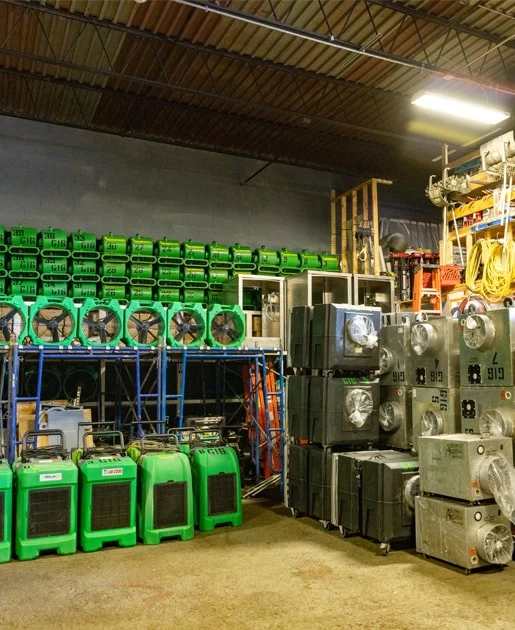
Once on-site, our first step is a full assessment. That means water extraction, yes, but also thermal imaging and professional moisture readings throughout the affected area. Walls, flooring, insulation, and structural materials all get checked not just the visible wet surfaces. In a Lloyd Harbor home of this age and character, that assessment also includes a preliminary evaluation for asbestos-containing materials and lead paint before any demolition or material removal begins. This isn’t optional. It’s required by New York State law, and it protects you, your family, and the integrity of your home.
From there, we move through structural drying, antimicrobial treatment, and if needed licensed mold remediation, asbestos abatement, or lead remediation. Reconstruction follows under the same Suffolk County General Contractor license, so you’re not coordinating three separate crews. Lloyd Harbor’s Building Department requires permits for significant restoration work, and we handle that process as part of the job. When it’s done, you get a fully documented file photos, moisture readings, remediation records ready for your insurance carrier.
Built for the Homes and Conditions Specific to Lloyd Harbor
Flooded basement cleanup in Lloyd Harbor isn’t a single service it’s a sequence. We provide the full scope: emergency water extraction, industrial structural drying, sewage backup decontamination when applicable, antimicrobial treatment, mold testing and licensed mold remediation, asbestos abatement, lead remediation, and full reconstruction. Every phase is handled in-house. No subcontractors. No hand-offs between companies. One team, one contract, one point of accountability from start to finish.
The hazmat component is worth understanding clearly. Homes in Lloyd Harbor many built in the 1950s and 1960s, with a meaningful number of Gold Coast-era estate properties predating World War II frequently contain asbestos in pipe insulation, floor tiles, and ceiling materials, as well as lead paint in disturbed wall surfaces. A flooding event that damages those materials creates a hazmat situation that requires NYS DOL and USEPA-licensed handling. Most water damage companies operating in this area are not equipped or authorized to manage that. We are and that distinction is the difference between a cleanup that’s complete and one that leaves your family exposed.
Insurance coordination is part of our process too. We document everything in the format insurance adjusters need, communicate directly with your carrier, and bill them directly where possible. For a homeowner managing a property of this scale, not having to quarterback that process yourself is worth something real.
What causes basement flooding in Lloyd Harbor, and is it preventable?
Lloyd Harbor sits on a peninsula surrounded by Long Island Sound, Cold Spring Harbor, and Lloyd Harbor itself which means the water table responds quickly to rainfall, tidal shifts, and seasonal groundwater rise. During spring snowmelt or a sustained nor’easter, groundwater can push up through basement slabs and foundation walls even without a visible surface flooding event. The wooded terrain throughout Lloyd Harbor compounds this: leaf debris clogs gutters and downspouts, redirecting roof runoff toward foundations instead of away from them.
Sump pump failure is one of the most common triggers. Lloyd Harbor’s tree canopy makes it particularly vulnerable to power outages during storms and when the power goes out, the sump pump stops. Basements that depend on active water management can flood within hours. Prevention comes down to battery backup sump systems, regular gutter maintenance, and ensuring your foundation drainage is functioning properly. But when prevention fails, fast response is what limits the damage.
How quickly does mold start growing after a basement floods?
Mold can begin developing within 24 to 48 hours of a flooding event under the right conditions and in Lloyd Harbor, those conditions are almost always present. The coastal humidity from Long Island Sound keeps ambient moisture levels elevated year-round, which means a wet basement here dries out more slowly than it would in an inland community. That slower drying window is exactly the environment mold needs to establish itself behind walls, under flooring, and inside insulation before you’d ever see or smell it.
The 72-hour mark is the critical threshold. If water isn’t fully extracted and structural drying isn’t underway within that window, the probability of mold growth increases significantly and the cost of remediation rises with it. Industry estimates put mold remediation costs at an additional $2,000 to $8,000 or more on top of the base cleanup cost when it’s caught late. Acting fast isn’t just about the inconvenience of a wet basement it’s about protecting the structural integrity and air quality of your home.
Does homeowners insurance cover flooded basement cleanup in Lloyd Harbor, NY?
It depends on the cause, and the distinction matters. Standard homeowners insurance typically covers sudden, internal water damage a burst pipe, a failed water heater, an appliance leak. What it generally does not cover is flooding from external sources: groundwater pushing up through your foundation, storm surge from Long Island Sound, or surface water entering from outside. That type of flooding requires a separate flood insurance policy, typically through the NFIP (National Flood Insurance Program) or a private flood carrier.
Lloyd Harbor’s waterfront and near-waterfront properties have real exposure to coastal flooding during nor’easters and major storm events, so understanding which policy applies to your situation before something happens is worth the conversation with your insurance agent. What we can do on our end is document the damage thoroughly photos, moisture readings, remediation records in the format adjusters need to process your claim efficiently. We communicate directly with carriers and handle billing where possible, which removes a significant amount of the administrative burden from you during an already stressful situation.
My Lloyd Harbor home was built in the 1960s should I be worried about asbestos during cleanup?
Yes, and any contractor you hire should be asking that question before they touch anything. Homes built before 1980 which describes the majority of Lloyd Harbor’s housing stock, given the village’s median build year of 1967 commonly contain asbestos in pipe insulation, vinyl floor tiles, ceiling tiles, and certain adhesives and joint compounds. A flooding event that damages those materials can disturb them, and disturbed asbestos is a regulated hazardous material under New York State law.
New York State requires that asbestos-containing materials be handled by a contractor holding a NYS DOL Asbestos license. This is not a general contractor credential it’s a specific environmental license that most water damage companies do not hold. We hold this license, along with USEPA Lead and RRP certifications for homes where lead paint is also a factor. For a pre-1980 estate home in Lloyd Harbor, having a single contractor who can legally and safely manage both the water damage and the hazmat component isn’t a luxury it’s the only way to make sure the job is actually done correctly and in compliance with state regulations.
How long does flooded basement cleanup and drying typically take?
The honest answer is that it varies based on the extent of the flooding, the materials affected, and the conditions in your specific home. A straightforward water extraction and structural drying job no mold, no hazmat, no significant material damage typically takes three to five days for the drying phase alone. Industrial drying equipment needs time to pull moisture out of structural materials like framing, subfloor, and concrete block, and rushing that process leads to the hidden moisture problems that cause mold weeks later.
In Lloyd Harbor, the coastal humidity from Long Island Sound can extend drying times compared to inland properties. The air itself holds more moisture, which means dehumidification equipment works harder and longer. If the assessment identifies mold, asbestos, or lead that requires licensed remediation before reconstruction can begin, the timeline extends accordingly but skipping or shortcutting those steps creates far bigger problems down the road. We use moisture meters and thermal imaging throughout the process to confirm when materials are genuinely dry, not just visually dry, before any reconstruction begins.
Do I need a permit from Lloyd Harbor Village for basement restoration work after a flood?
In most cases involving significant restoration drywall replacement, structural repairs, or any work that goes beyond surface cleaning and drying yes, you’ll need a permit from the Lloyd Harbor Building Department. The village has active permit enforcement and has explicitly warned residents that unpermitted work can result in stop-work orders, fines, and added costs down the line. For a home of the scale and value typical in this village, that’s not a risk worth taking.
We handle the permit coordination as part of the restoration process. We’re familiar with Lloyd Harbor’s building requirements and work within the village’s process rather than around it. It’s also worth noting that the village’s zoning ordinances cover more than just the interior work if post-flood remediation involves any exterior drainage improvements, grading, or vegetation removal, those may require separate village approvals as well. Having a contractor who knows this upfront saves you from discovering it mid-project, which is exactly when it becomes most disruptive and expensive.