Lynbrook's Pre-War Basements Need More Than a Wet-Vac
When water gets into a Lynbrook basement, the clock starts immediately — and in a home built before World War II, what looks like a straightforward cleanup can involve a lot more than extraction and drying. We handle flooded basement cleanup in Lynbrook with the licensing, equipment, and local knowledge to manage the full scope.
I needed a professional consultation explanation of procedure for safe removal of Asbestos in my apartment complex. Without having an account yet, I was very impressed with the caring, knowledgeable and generous advice offered by Jessica, and will look forward to doing business in the future. Thank you so much! I feel much more informed about a sometimes scary endeavor. Peace. Nancy Silva Mineola, NY.
Mia Munoz
Used this company to clean up some water flood in my house. They were fast and easy to work with.very professional, Would recommend to anyone!
Nini Valle
Great company, had a flood and they responded quickly and efficiently. Billed my insurance company directly. I highly recommend this company!
joe colapietro, jr
I had pipe freeze in my basement right before a snow storm and they made to within an hour to help start the clean up process. They we by our side throughout the entire process and even helped with the insurance company. They did such a great job with the cleanup, repair, remidiation, I contracted them to perform the repairs and finishes in the basement. They came with enough manpower and material to get the job done. Leo and Jessica were nothing but a pleasure to deal with!!
Cristian Arredondo c
I had some water damage in my home and Green Island was able to take care of my issue quickly and effectively. I am very pleased with the work they did. They responded quickly and were very professional.
Michael M
Outstanding service! From the office to the field crew everyone was friendly, helpful and responsive. I highly recommend Green Island Group.
The moment you find water in your basement, the most important thing you can do is move fast. Mold can begin growing within 24 to 48 hours of water exposure — and once it takes hold in the wood framing, drywall, or insulation of a Lynbrook home, you’re no longer dealing with a water damage job. You’re dealing with a remediation project that can cost ten times as much.
Most homes in Lynbrook were built before modern waterproofing standards existed. That means foundation walls with no membrane, concrete floors with no vapor barrier, and aging infrastructure that lets water find its way in through cracks you didn’t know were there. When a nor’easter saturates the ground or a summer storm overwhelms the village’s drainage system, the hydrostatic pressure against those old foundation walls doesn’t need much of an opening. Getting that water out completely — and verifying dryness inside the walls, not just on the surface — is what prevents a bad week from turning into a months-long restoration.
When the job is done right, you get your basement back. Dry, documented, and cleared by moisture meters — not just a visual check. If your basement was finished or partially finished, the same team that extracted the water can restore the walls, flooring, and structure without you needing to coordinate a second contractor in the middle of an already stressful situation.
Licensed for Every Hazard Lynbrook's Pre-War Homes Present
We’re a full-service disaster restoration and environmental remediation company serving Nassau County, Suffolk County, and the New York metro area. We hold the NYS DOL Mold License, NYS DOL Asbestos License, USEPA Lead and RRP certifications, IICRC Water Damage certification, and a Nassau County General Contractor license — all active, all verifiable.
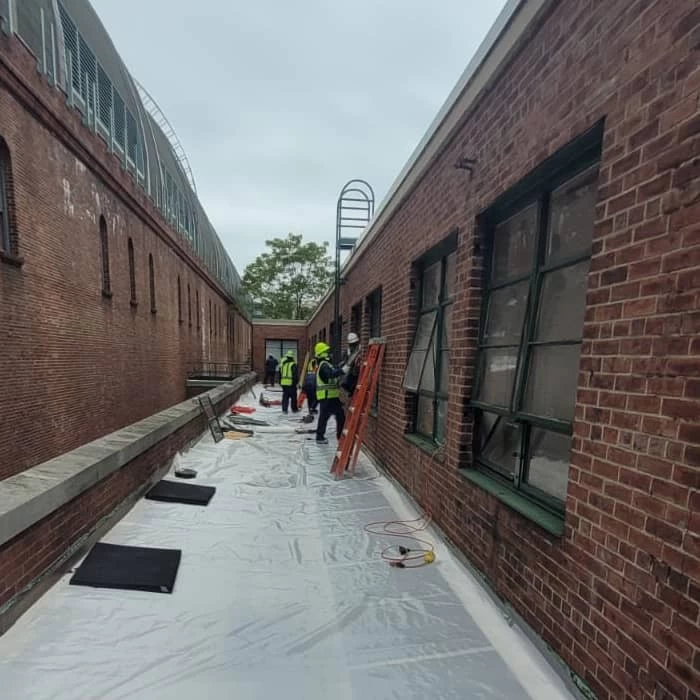
That credential stack matters specifically in Lynbrook. When floodwater moves through a basement that was built in the 1920s or 1930s, it doesn’t just soak the floor. It can disturb asbestos floor tiles, contact lead-painted walls, and saturate pipe insulation that was never meant to get wet. Most water damage companies aren’t licensed to handle any of that. We are — which means we can assess the full picture on the first visit and complete the entire scope without handing you off to someone else.
From the Westwood side of the village to the blocks near Sunrise Highway, we’ve worked in Lynbrook’s housing stock and understand what these homes actually look like on the inside.
What Happens From Your First Call to Final Walkthrough in Lynbrook
When you call, we’re available around the clock — because basement flooding in Lynbrook doesn’t wait for business hours. Nor’easters hit overnight. Sump pumps fail during weekend storms. Pipes freeze and burst in January when temperatures drop and the drafty foundation walls of a 90-year-old home can’t hold the cold out. We dispatch quickly, and because we’re serving Lynbrook and Nassau County directly, response time is real — not a call center routing you to whoever’s available three towns away.
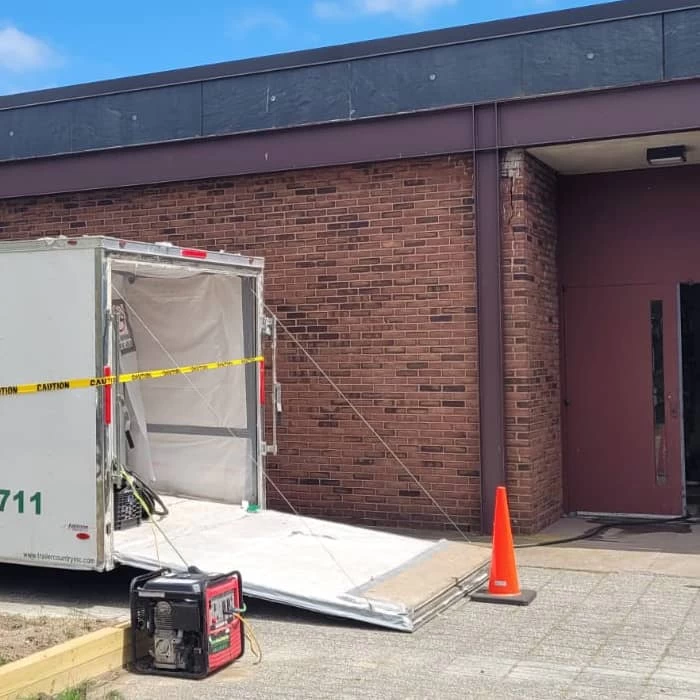
Once on-site, the first step is assessment. We identify the water source, classify the contamination level, and check for any hazardous materials that need to be addressed before extraction begins. In Lynbrook’s older homes, that assessment step is not optional — it’s the difference between a safe cleanup and a liability. Category 3 water from a sewage backup, for example, requires full decontamination protocols, not just drying.
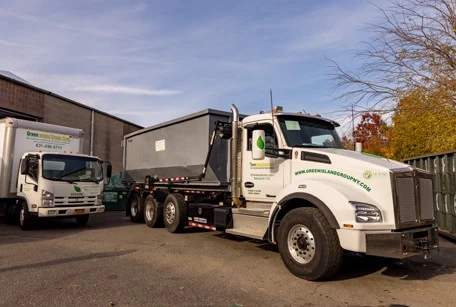
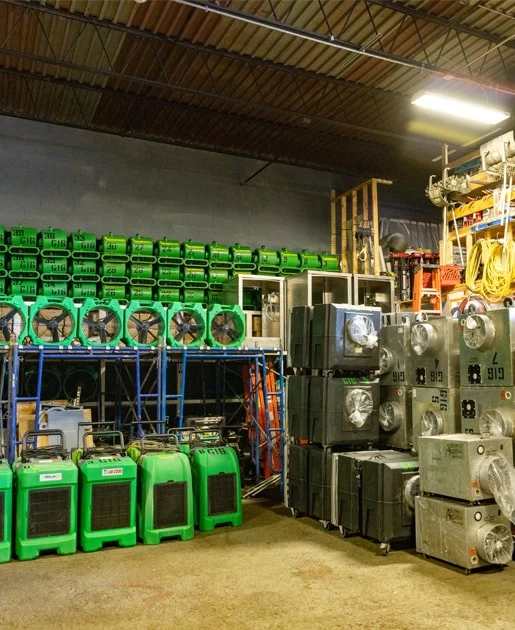
From there, we extract the water using truck-mounted equipment, deploy industrial dehumidifiers and air movers, and monitor moisture levels with meters — not guesswork. We document everything throughout the process, which matters when you’re working with your insurance carrier. New York State requires licensed assessors and remediators for mold work under DOL Part 56, and our documentation holds up to that standard. When the basement is genuinely dry and cleared, we walk you through the results before we close the job.
One Company, Every License, Complete Scope of Work
Flooded basement cleanup in Lynbrook covers more ground than most homeowners expect when they first make the call. Water extraction is the starting point — but what follows depends entirely on what the water touched, how long it sat, and what’s inside the walls of your specific home.
For clean-water events like a burst pipe or failed appliance, the process moves from extraction to structural drying to moisture verification. For contaminated water — a backed-up sewer line, groundwater infiltration carrying soil and debris — the process includes decontamination of every affected surface before any drying equipment goes in. Lynbrook sits on Nassau County’s South Shore, where the water table is naturally high and aging storm drainage infrastructure gets overwhelmed during heavy rain events. That means a significant portion of the basement flooding we see here involves groundwater or mixed contamination — not just clean pipe water.
If your basement contains asbestos floor tiles, lead paint, or deteriorated pipe insulation — common in Lynbrook homes built before 1960 — we handle licensed assessment and abatement as part of the same project. No separate contractors, no gaps in accountability. And if structural restoration is needed after the remediation is complete, our Nassau County General Contractor license covers the rebuild: drywall, flooring, framing — whatever the basement needs to get back to where it was.
Does my homeowners insurance cover a flooded basement in Lynbrook, NY?
It depends entirely on what caused the flooding — and this is where a lot of Lynbrook homeowners get caught off guard. Standard homeowners insurance typically covers sudden, accidental water damage: a burst pipe, a failed washing machine, an overflowing water heater. If the water came from inside the house due to a mechanical failure, you’re likely covered.
What standard homeowners insurance does not cover is natural flooding — groundwater rising through your foundation after a heavy rain, storm surge, or surface water entering from outside. For that, you’d need a separate flood insurance policy through FEMA’s National Flood Insurance Program or a private carrier. On Nassau County’s South Shore, where the water table is high and nor’easters are a recurring reality, this distinction matters. Many Lynbrook homeowners find out they don’t have flood coverage only after the water is already in the basement. We document the damage thoroughly from the moment we arrive, which helps you work with your carrier more effectively regardless of which type of claim applies.
How quickly does mold start growing after a basement floods?
Mold can begin developing within 24 to 48 hours of water exposure under the right conditions — and basements create those conditions almost automatically. They’re dark, often poorly ventilated, and in Lynbrook’s older homes, full of organic materials like wood framing, drywall, and cellulose insulation that mold feeds on. The 72-hour window is the threshold most restoration professionals work against: get the space properly dried within that window, and mold growth is unlikely. Miss it, and you’re looking at a remediation project on top of a water damage job.
The tricky part is that visible dryness doesn’t mean actual dryness. Water migrates into wall cavities, under flooring, and into concrete — areas you can’t assess by looking at them. Professional moisture meters are the only way to confirm that a basement is genuinely dry, not just surface-dry. That’s why the equipment matters as much as the speed. If a company shows up with a shop vac and a box fan, they’re not going to beat the mold clock in a Lynbrook basement.
Why does my Lynbrook basement keep flooding even after it's been cleaned up?
Recurring basement flooding in Lynbrook almost always comes back to one of a few root causes: hydrostatic pressure from a high water table pushing through foundation cracks, overwhelmed storm drainage during heavy rain events, a sump pump that’s undersized or aging out, or foundation walls that were never waterproofed to begin with. In a village where most homes were built in the 1920s through 1940s, all of these are common — and sometimes all present in the same home.
Cleanup alone doesn’t fix the underlying problem. It addresses the immediate damage, but if the entry point isn’t identified and addressed, the next heavy rain or nor’easter will send water in the same way. During our assessment, we look at where the water is entering, not just where it ended up. That information is useful whether you’re deciding on a sump pump upgrade, interior drainage, or exterior waterproofing — and it’s something we can speak to honestly based on what we find, not what’s easiest to sell.
My Lynbrook home was built in the 1940s — does that affect the cleanup process?
Yes, significantly. Homes built before 1978 may contain lead-based paint, and homes built before the mid-1980s — which covers nearly all of Lynbrook’s pre-war housing stock — may contain asbestos in floor tiles, pipe insulation, ceiling tiles, and joint compound. When floodwater contacts these materials, it can loosen tiles, saturate insulation, and disturb surfaces that were otherwise stable. At that point, the cleanup isn’t just a water damage job — it’s a licensed hazmat event.
New York State requires specific DOL licensing for asbestos abatement and mold remediation. The USEPA has its own certification requirements for lead work. A company that isn’t licensed for these scopes can’t legally or safely complete the full job in a 1940s Lynbrook basement. We hold all of these licenses simultaneously, which means we can assess the hazmat component on the same visit as the water damage assessment and handle everything under one project — no gaps, no handoffs, no situations where you’re left managing two contractors at once.
How much does flooded basement cleanup typically cost in Nassau County?
Cost varies based on three main factors: the size of the basement, the category of water contamination, and whether any hazardous materials are involved. For a clean-water event in a smaller unfinished basement, you might be looking at $1,500 to $4,000. A larger finished basement with contaminated water — or one that requires asbestos or mold remediation alongside the water damage work — can run significantly higher, sometimes into the $10,000 to $30,000 range depending on scope.
The number that matters most, though, is what it costs if you don’t act quickly. A basement that isn’t properly dried within 72 hours can develop a mold problem that turns a manageable cleanup into a full remediation project costing $30,000 to $60,000 or more. In Lynbrook, where the median home value is pushing $740,000, protecting that asset with a timely professional response is straightforwardly the better financial decision. We can give you a clear scope and honest estimate once we’ve assessed the damage — no vague ranges, no surprise line items after the fact.
Does Green Island Group handle sewage backup cleanup in Lynbrook basements?
Yes — and sewage backup is one of the more serious scenarios we handle, because it’s not just a water problem. When Lynbrook’s aging sewer infrastructure backs up into a basement, the water is classified as Category 3, which means it contains bacteria, pathogens, and contaminants that require full decontamination — not just extraction and drying. Every surface the water contacted needs to be treated accordingly, and materials that can’t be fully decontaminated need to be removed and disposed of under NYS and USEPA protocols.
Lynbrook’s sewer system, like much of Nassau County’s South Shore infrastructure, was built decades ago and wasn’t designed for the rainfall intensity the area sees today. During heavy storm events, the system can surcharge and push water back through floor drains and toilets into basement spaces. If that’s happened in your home, the cleanup needs to be treated as a biohazard event from the start — not a standard water damage job with a little extra cleaning. We’re trained and equipped for this specific scenario, and we handle it the same way every time: safely, thoroughly, and documented for your records.