When Manhattan's Sewers Back Up, Your Basement Pays the Price
One heavy storm and ZIP 10001’s combined sewer system does exactly what it’s designed not to do and what comes back up through your basement drain isn’t clean water. We respond 24/7 with the licenses and equipment to handle whatever came in.
I needed a professional consultation explanation of procedure for safe removal of Asbestos in my apartment complex. Without having an account yet, I was very impressed with the caring, knowledgeable and generous advice offered by Jessica, and will look forward to doing business in the future. Thank you so much! I feel much more informed about a sometimes scary endeavor. Peace. Nancy Silva Mineola, NY.
Mia Munoz
Used this company to clean up some water flood in my house. They were fast and easy to work with.very professional, Would recommend to anyone!
Nini Valle
Great company, had a flood and they responded quickly and efficiently. Billed my insurance company directly. I highly recommend this company!
joe colapietro, jr
I had pipe freeze in my basement right before a snow storm and they made to within an hour to help start the clean up process. They we by our side throughout the entire process and even helped with the insurance company. They did such a great job with the cleanup, repair, remidiation, I contracted them to perform the repairs and finishes in the basement. They came with enough manpower and material to get the job done. Leo and Jessica were nothing but a pleasure to deal with!!
Cristian Arredondo c
I had some water damage in my home and Green Island was able to take care of my issue quickly and effectively. I am very pleased with the work they did. They responded quickly and were very professional.
Michael M
Outstanding service! From the office to the field crew everyone was friendly, helpful and responsive. I highly recommend Green Island Group.
Dry Walls, Clean Air, and a Paper Trail That Holds Up
When a basement floods in a pre-war Chelsea tenement or a converted Garment District loft, the damage doesn’t stay where you can see it. Water moves through shared wall cavities, soaks into pipe insulation, and migrates under slabs and in buildings that predate 1980, what it touches may include asbestos-wrapped pipes or lead-painted surfaces. Getting the water out is just the beginning.
What you actually need is a contractor who can assess all of it, handle all of it, and document all of it without stopping work to refer you to a separate asbestos firm or a separate mold company. We hold active New York State Department of Labor licenses for mold remediation, mold assessment, asbestos abatement, and lead abatement, alongside our water damage restoration work. That means one crew, one call, and no gaps in the scope of work.
For building managers dealing with a flooded mechanical room near Penn Station or a waterlogged basement storage area in Hudson Yards, that documentation matters just as much as the drying. Co-op boards, insurance carriers, and NYC Local Law 55 compliance all require written clearance and we deliver it as a standard part of every job, not an add-on.
Licensed Basement Flooding Remediation near Macys Finance, NY
5,000+ Jobs Across Manhattan. Every License NYC Actually Requires.
We’ve been handling water damage, mold, asbestos, and lead work across New York City and Long Island for years and we’ve built that track record one completed job at a time. More than 5,000 of them. That’s not a marketing number. It’s the kind of volume that means we’ve worked in buildings exactly like yours: pre-war walkups in Chelsea near Macys Finance, converted loft buildings in the Garment District, luxury towers in Hudson Yards, and everything in between.
We know what it means to work in a Manhattan building freight elevator schedules, building management approval processes, doorman access, co-op board documentation requirements. We’ve navigated all of it. And because we carry the specific NYS DOL licenses that NYC Local Law 55 requires for mold remediation, we’re not just showing up to extract water. We’re showing up prepared to complete the job legally and completely, from first assessment through final clearance.
Flooded Basement Cleaning Process near Macys Finance, NY
What Actually Happens From First Call to Final Clearance
It starts the moment you call. Our emergency line runs 24 hours a day, seven days a week because basement flooding in this part of Manhattan doesn’t wait for business hours, and neither does mold. From the time water enters a basement, you have roughly 24 to 48 hours before mold begins growing on wet building materials. After 72 hours, materials that could have been saved often need to come out entirely.
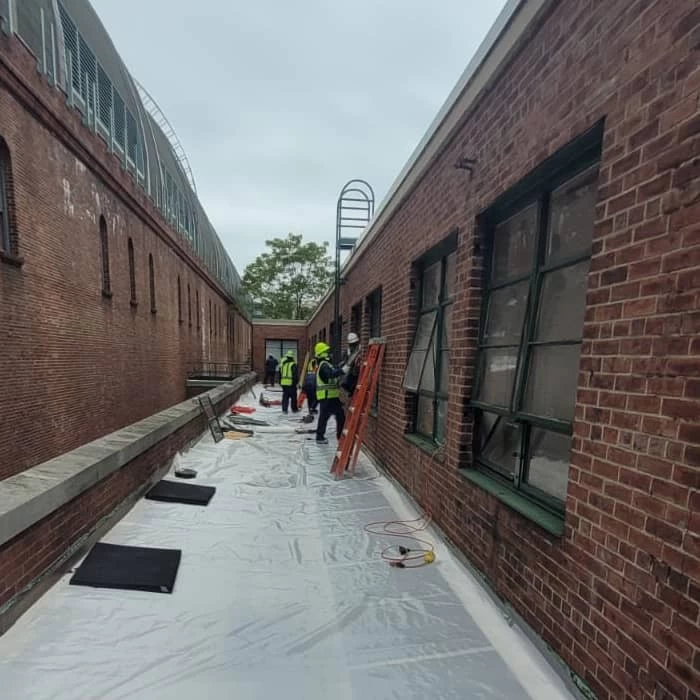
When our crew arrives, the first priority is assessment not just of what’s visible, but of what isn’t. Using moisture meters and thermal imaging, we map where the water has traveled: into wall cavities, under concrete, behind finished surfaces. In older buildings throughout Chelsea and the Garment District, this step also includes identifying whether any disturbed materials are regulated under New York State’s asbestos or lead requirements. If they are, we handle that in-house no referrals, no delays.
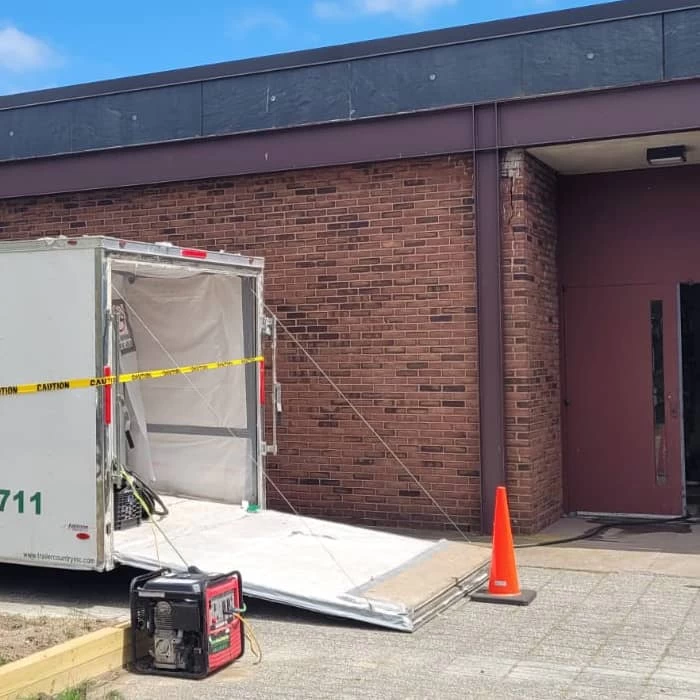
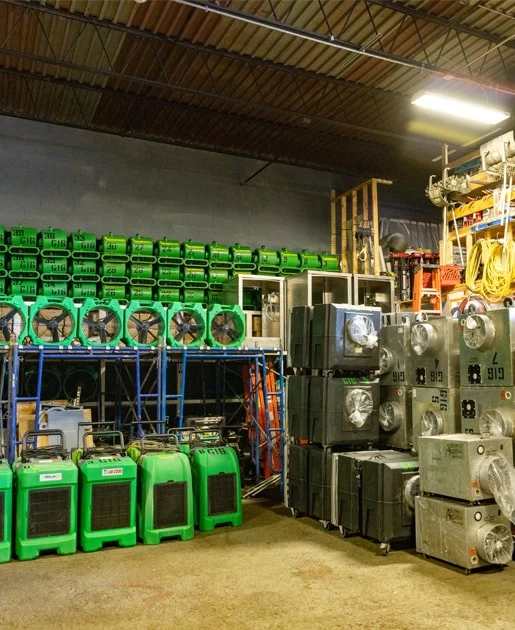
From there, extraction and structural drying begin using commercial-grade equipment calibrated to the specific moisture readings in your space. The process doesn’t end when the equipment comes out. Post-remediation testing confirms that drying goals have been met, air quality is clear, and the written clearance documentation your insurance carrier, co-op board, or building management company requires is ready to go.
Basement Water Damage Restoration near Macys Finance, NY
Built for Manhattan Buildings, Not Suburban Checklists
Flooded basement cleanup in ZIP 10001 isn’t the same job it is in a suburban split-level. The buildings are older, the sewer infrastructure is shared, and the regulatory environment is specific. When we respond to a basement flooding call in this area, the scope of work reflects that reality.
Water category assessment happens immediately on arrival. A significant portion of basement flooding events in this part of Manhattan involve sewer backup through the city’s combined sewer system meaning what entered your basement may be Category 3 water, contaminated with raw sewage and biological material. That changes the cleanup protocol entirely. We identify the water category on-site and apply the appropriate IICRC S500 standards from the start, not after the fact.
For buildings with pre-1980 construction which describes the majority of Chelsea’s residential and commercial stock near Macys Finance the scope includes hazardous material screening as a standard part of the assessment. If asbestos-containing materials or lead paint are disturbed by flooding or required remediation work, our NYS DOL-licensed crews handle abatement in-house. Every job also includes direct insurance billing, where we communicate with your adjuster directly and provide the documentation package moisture logs, clearance test results, remediation records that satisfies both your carrier and NYC Local Law 55 compliance requirements.
Is the water in my flooded Chelsea basement safe to be around?
That depends entirely on where the water came from and in this part of Manhattan, the answer is often no. ZIP 10001, where Macys Finance is located, sits on a combined sewer system, meaning a single underground pipe carries both stormwater runoff and sewage from buildings. When heavy rainfall overwhelms that system which happens regularly during the kind of storms that have intensified since Hurricane Ida hit the city in September 2021 the system backs up and pushes its contents through the lowest drainage points in nearby buildings. That means basement floor drains and sewer connections.
What enters your basement in that scenario is classified as Category 3 water under IICRC S500 standards. It contains raw sewage, bacteria, and biological contaminants. It is not safe to wade through without protective equipment, and it cannot be treated with standard water extraction and drying alone. We assess water category on arrival and apply the appropriate hazmat-level cleanup protocol when Category 3 contamination is present which protects you, your tenants, and anyone else who uses that space.
How quickly does mold start growing after a basement flood in NYC?
Mold begins growing on wet building materials within 24 to 48 hours of a flooding event, according to EPA guidance. After 72 hours without proper professional drying, materials that could have been saved drywall, insulation, wood framing often need to be removed and replaced entirely. In a dense urban building like those throughout Chelsea and the Garment District near Macys Finance, that timeline is even more consequential because water doesn’t stay contained to one unit. It travels through shared wall cavities and can affect neighboring spaces before it’s even visible.
This is why we operate a 24/7 emergency line. The goal is always to get on-site before that 48-hour window closes. If mold has already begun when we arrive, our NYS DOL mold remediation license means we can address it in the same visit without stopping work and referring you to a separate contractor, which would cost you more time than you have.
Does NYC Local Law 55 apply to my building's basement flooding situation?
If flooding has led to mold growth exceeding 10 square feet anywhere in your building including basement common areas, mechanical rooms, or storage spaces then yes, NYC Local Law 55 of 2018 applies. The law requires building owners to address indoor mold using contractors who hold active NYS Department of Labor mold assessment and mold remediation licenses. Using an unlicensed contractor, or skipping the assessment and remediation process, creates legal liability for the building owner and opens the door to tenant action.
This is not a technicality that gets overlooked in Manhattan. Building management companies, co-op boards, and insurance carriers in this market are familiar with Local Law 55 and will ask for documentation confirming that licensed remediation was performed. Our work is compliant with Local Law 55 from the first assessment through final clearance, and we provide the written documentation package that satisfies those requirements so you’re not left scrambling to prove the job was done correctly.
My Chelsea building was built before 1940 does that affect the cleanup process?
It does, and it’s something you should know before any contractor starts pulling apart wet walls in your basement. Buildings constructed before 1980 may contain asbestos in pipe insulation, floor tiles, joint compound, and other materials. Buildings constructed before 1978 may contain lead paint on walls, structural elements, and trim. Both of these materials are regulated under New York State law, and disturbing them without proper containment and licensed abatement creates a health hazard and legal liability for the building owner.
Chelsea’s building stock is heavily pre-war many buildings in this neighborhood date to the early 1900s. The Chelsea Mercantile at 252 7th Ave, for example, was built in 1908. In buildings like these, a flooded basement cleanup that doesn’t account for regulated materials is an incomplete job, regardless of how dry the walls end up. We hold active NYS DOL licenses for both asbestos abatement and lead abatement, and our assessment process includes screening for regulated materials before any demolition or remediation work begins.
Will my insurance cover flooded basement cleanup near Macys Finance, NY?
It depends on the source of the water and the specific terms of your policy and in Manhattan’s building environment, the insurance picture is often more complicated than a straightforward homeowner’s claim. Co-op and condo buildings operate under master policies that interact with individual unit owner policies. Building management companies carry their own liability coverage. When a basement floods and multiple parties are involved, the coordination process can drag on and delay the work you need done now.
We bill insurance carriers directly and manage adjuster communication as a standard part of our service. We provide the full documentation package moisture logs, water category assessment, remediation records, clearance test results that insurance carriers require to process a claim. One important note: standard homeowner’s and building policies typically do not cover flooding from an external source like a storm or sewer backup unless you have a separate flood or sewer backup rider. If you’re unsure what your policy covers, we can walk you through what documentation you’ll need and help you understand what to ask your carrier.
How is flooded basement cleanup in Hudson Yards different from other parts of Manhattan?
Hudson Yards sits within Manhattan’s documented 100-year floodplain and while the development’s newer buildings were designed with waterproofing and elevated mechanical systems, flood risk from storm surge off the Hudson River, extreme rainfall events, and sewer backup through overwhelmed city infrastructure is real and mapped. The rail lines beneath the development have previously flooded despite preventive measures. Newer construction doesn’t automatically mean lower flood risk in this part of ZIP 10001.
What’s different about working in Hudson Yards compared to older Chelsea or Garment District buildings is the building management environment rather than the flood risk itself. Luxury towers in Hudson Yards have sophisticated property management operations with specific contractor requirements insurance minimums, proof of licensing, advance approval processes, and documentation standards that go beyond what a typical residential job requires. We carry the credentials and produce the documentation that luxury building management expects, and we’ve worked within those kinds of operational frameworks before. The job gets done without becoming a coordination problem for your building management team.