Madison Square’s century-old building stock doesn’t forgive a halfway job. We handle flooded basement cleanup from water extraction to mold clearance all under one license, one call.
I needed a professional consultation explanation of procedure for safe removal of Asbestos in my apartment complex. Without having an account yet, I was very impressed with the caring, knowledgeable and generous advice offered by Jessica, and will look forward to doing business in the future. Thank you so much! I feel much more informed about a sometimes scary endeavor. Peace. Nancy Silva Mineola, NY.
Mia Munoz
Used this company to clean up some water flood in my house. They were fast and easy to work with.very professional, Would recommend to anyone!
Nini Valle
Great company, had a flood and they responded quickly and efficiently. Billed my insurance company directly. I highly recommend this company!
joe colapietro, jr
I had pipe freeze in my basement right before a snow storm and they made to within an hour to help start the clean up process. They we by our side throughout the entire process and even helped with the insurance company. They did such a great job with the cleanup, repair, remidiation, I contracted them to perform the repairs and finishes in the basement. They came with enough manpower and material to get the job done. Leo and Jessica were nothing but a pleasure to deal with!!
Cristian Arredondo c
I had some water damage in my home and Green Island was able to take care of my issue quickly and effectively. I am very pleased with the work they did. They responded quickly and were very professional.
Michael M
Outstanding service! From the office to the field crew everyone was friendly, helpful and responsive. I highly recommend Green Island Group.
In a pre-war Manhattan building, water doesn’t stay where you can see it. It moves through plaster walls, travels along pipe chases, and settles inside masonry cavities that look completely fine from the outside. By the time you notice the smell or the discoloration, mold has already had a head start and in a co-op or condo building, that’s not just your problem anymore.
The buildings surrounding Madison Square Park the Flatiron-era lofts along Broadway, the converted cast-iron buildings of the Ladies’ Mile Historic District, the pre-war residential co-ops on Park Avenue South were built to last. But their original drainage systems, century-old pipe connections, and basement spaces that predate modern waterproofing weren’t designed for the extreme rainfall events that NYC now sees regularly. When Ida hit in 2021, or when the September 2023 flash floods pushed the combined sewer system past capacity, below-grade spaces in this neighborhood flooded fast and dried slow.
What you get after a proper cleanup is verifiable. Moisture readings that confirm drying goals were met. Air quality results that confirm mold spore counts are within range. Written clearance documentation your insurance carrier and co-op board will actually accept. That’s not a bonus that’s the baseline of doing this right.
One Company Handles the Whole Job No Referrals, No Gaps
We are a licensed environmental contractor serving New York City and the surrounding metro area. When a basement floods in a Madison Square co-op or a Gramercy Park residential building, the job rarely stops at water extraction. Older buildings reveal older problems pipe insulation that contains asbestos, floor tiles from the 1940s that test positive, layers of lead paint behind the baseboards. Most restoration companies hit that point and stop. We hold active New York State DOL licenses for asbestos abatement, lead abatement, mold remediation, and water damage restoration simultaneously, which means the job doesn’t stall when something unexpected turns up.
We’ve completed thousands of jobs across the NYC market not suburban homes with simple layouts, but occupied residential buildings with management companies, co-op boards, shared walls, and insurance situations that involve multiple policies. That operational experience in the Madison Square area and throughout this specific environment is what separates a company that can do the job from one that actually has.
What Actually Happens From the First Call to Final Clearance
When you call, the first priority is stopping additional damage. We dispatch to your building, assess the water source and category because sewer backup from Manhattan’s combined sewer system is Category 3 black water, which requires a completely different protocol than a clean pipe burst and begin extraction immediately. That distinction matters. A company that treats all basement flooding the same is cutting corners from the first hour.
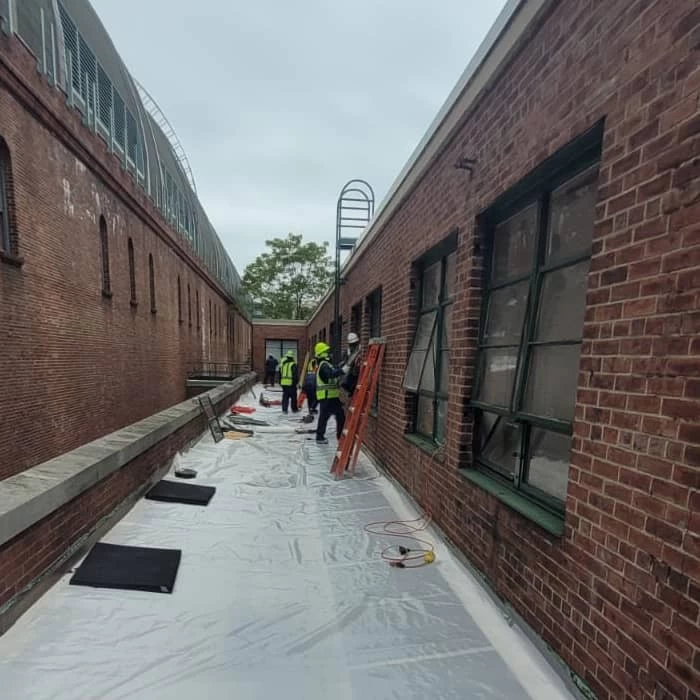
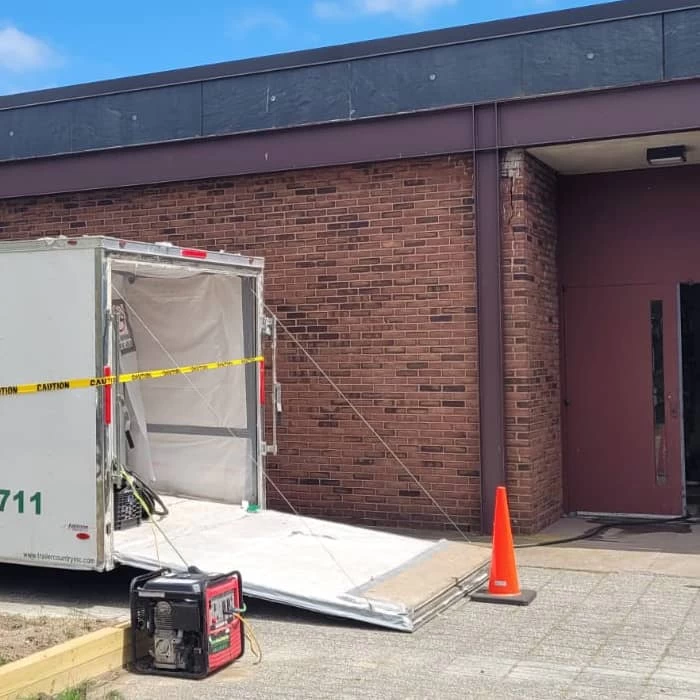
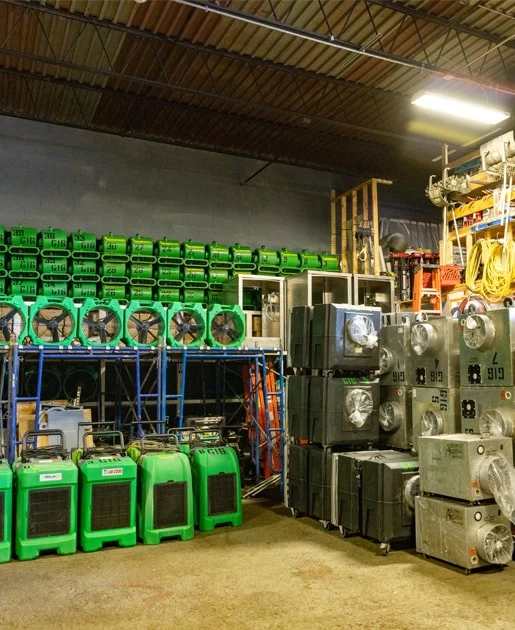
Once the water is out, the real assessment begins. Using calibrated moisture meters and thermal imaging, our crew maps every pocket of hidden moisture in the walls, under the flooring, and inside building cavities that look dry to the naked eye. In a Flatiron-era building with plaster over masonry construction, this step is non-negotiable. Industrial drying equipment is set, containment is established to protect neighboring units, and the drying process is monitored against established targets not declared done because the floor feels dry.
If the assessment reveals asbestos-containing materials, lead paint, or active mold growth common findings in buildings built before 1940 that work is handled under the same contract, by the same licensed team, without bringing in a separate abatement contractor. When drying goals are confirmed, post-remediation air quality testing is completed, and clearance documentation is provided in writing. Your insurance carrier gets what they need. Your building management gets what they need. And you get confirmation the job is actually finished.
Flooded basement cleanup in a Madison Square building isn’t a single-trade job. It’s water extraction, structural drying, mold assessment, potential asbestos abatement, potential lead abatement, and post-remediation verification and in New York City, every one of those scopes has its own licensing requirement. We carry them all. NYS DOL licensure for asbestos and mold remediation isn’t a detail buried in the fine print it’s the legal requirement for doing this work correctly in a pre-war NYC building, and it’s what protects you from liability if the work is later questioned by your insurer or your co-op board.
Our service also includes direct insurance billing. In the co-op and condo ownership environment that defines the Madison Square residential market, flooding claims routinely involve an HO-6 unit policy, a building master policy, and a conversation about where the building’s responsibility ends and the unit owner’s begins. We manage that documentation and adjuster communication process directly, so you’re not left translating between your contractor and your carrier.
For buildings within the Ladies’ Mile Historic District or other designated areas near Madison Square Park, our team is familiar with the NYC Landmarks Preservation Commission requirements that can affect restoration work in landmarked structures. Every job ends with written clearance documentation moisture readings, air quality results, and a record of what was done and how it was confirmed complete.
How does Madison Square's combined sewer system cause basement flooding?
About 60% of New York City including the Madison Square area uses a combined sewer system, meaning stormwater and sewage travel through the same pipe. Under normal conditions, that flow goes to a treatment plant. During heavy rainfall events, the volume exceeds treatment capacity and the system backs up. That backup has nowhere to go except into the lowest connected spaces in nearby buildings which means basements and below-grade mechanical rooms.
This is not a rare scenario. The September 2023 flash floods and Hurricane Ida in 2021 both produced exactly this kind of backup across Manhattan. The NYC Panel on Climate Change projects these extreme rainfall events will become 19 to 24 percent more frequent in coming decades. If your building connects to the combined sewer system through original or aging drainage infrastructure common in Flatiron-era and pre-war construction throughout Madison Square sewer backup during heavy rain is a documented and recurring risk, not a fluke. And because that backup contains sewage, it’s classified as Category 3 black water, which requires a different cleanup protocol than a clean water pipe failure.
How quickly does mold start growing after a basement floods in NYC?
The EPA puts the window at 24 to 48 hours. After 72 hours, materials that could have been dried in place often need to be removed entirely. In a Manhattan pre-war building, that timeline is compressed further by the way water moves through older construction plaster over masonry, original hardwood floors, century-old insulation materials all of which hold moisture longer and release it more slowly than modern materials.
The more immediate concern in a multi-unit building is spread. Mold that starts in a flooded basement mechanical room can travel through shared walls and building systems into the units above it. By the time a neighbor notices a musty smell or a dark spot on their wall, the remediation scope has grown significantly. For Madison Square residents in co-op and condo buildings, response time matters more than it does in a standalone house, because the consequences of delay extend beyond the original space. Calling within the first few hours not the next morning is the decision that keeps a manageable problem from becoming a building-wide one.
Does my co-op or condo insurance cover flooded basement cleanup in Manhattan?
It depends on the source of the water and which policy applies to which part of the damage. In a co-op or condo building, the unit owner’s HO-6 policy typically covers damage to the interior of the unit fixtures, finishes, personal property while the building’s master policy covers common areas, structural elements, and shared building systems. When a basement floods, the line between what’s yours and what’s the building’s isn’t always obvious, and it’s often contested.
Standard homeowner and HO-6 policies generally cover sudden and accidental water damage a burst pipe, for example but frequently exclude flood damage caused by surface water or sewer backup unless you’ve added specific endorsements. Flood insurance through the National Flood Insurance Program (NFIP) covers rising water but has its own limitations on basement contents and improvements. The practical advice is to review your policy for water damage exclusions before you need it, and when a flooding event happens, document everything before any cleanup begins. We bill insurance carriers directly and manage the documentation process, which matters in the layered co-op and condo insurance environment that’s standard in this part of Manhattan.
Does a flooded basement in a pre-war building mean there's asbestos involved?
Not automatically, but the probability is high enough that it has to be assessed. Buildings constructed before 1980 and virtually every residential building in the Madison Square area qualifies may contain asbestos-containing materials. The most common locations in pre-war basement and mechanical spaces are pipe insulation wrapped around steam heat pipes, 9×9 vinyl floor tiles (a well-known asbestos indicator in older buildings), ceiling materials, and boiler room insulation.
When a basement floods, water intrusion can disturb these materials. Disturbed asbestos-containing materials become a regulated hazardous materials situation under New York State law one that requires a licensed abatement contractor, not just a restoration crew that agrees to be careful. A contractor who is not licensed by the NYS DOL for asbestos abatement cannot legally complete the remediation if ACMs are present. We hold that license, which means if asbestos-containing materials are identified during the assessment, the job doesn’t stop and you don’t need to find a second contractor. The abatement and remediation happen under the same contract, with the same team, without the delay that comes from coordinating between separate companies.
What's the difference between water damage restoration and flooded basement cleanup?
Water damage restoration is the broader category it includes any situation where water has damaged a structure, from a slow leak behind a wall to a pipe burst to a full basement flood. Flooded basement cleanup is a specific subset of that, and it tends to be more complex because of what basements contain and how water behaves in below-grade spaces.
In a Madison Square building, a flooded basement typically involves a mechanical room, storage area, parking level, or below-grade residential unit spaces that may contain building systems, older construction materials, and drainage connections that are a century old. The cleanup process has to account for the water category (clean water versus sewer backup), the building materials affected, any hazardous materials present, and the structural drying requirements for the specific construction type. It also has to account for the building’s occupied status running industrial drying equipment in a shared building space, setting containment to protect neighboring units, and coordinating with building management throughout the process. That’s a different operational context than restoring water damage in an empty suburban house, and it requires a company that has actually done it in this type of building before.
How long does flooded basement cleanup typically take in a Manhattan building?
The honest answer is that it depends on what the assessment finds. A straightforward water extraction and structural drying job in a basement that caught clean water from a burst pipe, with no hazardous materials and limited spread, can reach drying goals in three to five days. A basement that flooded from sewer backup, with water that traveled into adjacent spaces and disturbed materials that require abatement, takes longer often one to two weeks from initial response to post-remediation clearance.
In a pre-war building near Madison Square Park, the more complex scenario is more common than the simple one. Older drainage connections, masonry construction that holds moisture longer than modern materials, and the higher probability of asbestos or lead paint in the building fabric all affect the timeline. The drying phase specifically cannot be rushed industrial equipment runs until moisture readings confirm that established drying goals have been met, not until the floor feels dry or the visible water is gone. Cutting that phase short is what produces mold problems three weeks later. The clearance documentation provided at the end of the job moisture readings, air quality results is the record that confirms the timeline was driven by the actual condition of the building, not by a schedule.