When Malverne's Water Table Wins, Here's How You Take It Back
South Shore basements don’t flood on a schedule — and neither does our response. We’re based in Malverne and ready 24/7 to handle flooded basement cleanup before the damage compounds.
I needed a professional consultation explanation of procedure for safe removal of Asbestos in my apartment complex. Without having an account yet, I was very impressed with the caring, knowledgeable and generous advice offered by Jessica, and will look forward to doing business in the future. Thank you so much! I feel much more informed about a sometimes scary endeavor. Peace. Nancy Silva Mineola, NY.
Mia Munoz
Used this company to clean up some water flood in my house. They were fast and easy to work with.very professional, Would recommend to anyone!
Nini Valle
Great company, had a flood and they responded quickly and efficiently. Billed my insurance company directly. I highly recommend this company!
joe colapietro, jr
I had pipe freeze in my basement right before a snow storm and they made to within an hour to help start the clean up process. They we by our side throughout the entire process and even helped with the insurance company. They did such a great job with the cleanup, repair, remidiation, I contracted them to perform the repairs and finishes in the basement. They came with enough manpower and material to get the job done. Leo and Jessica were nothing but a pleasure to deal with!!
Cristian Arredondo c
I had some water damage in my home and Green Island was able to take care of my issue quickly and effectively. I am very pleased with the work they did. They responded quickly and were very professional.
Michael M
Outstanding service! From the office to the field crew everyone was friendly, helpful and responsive. I highly recommend Green Island Group.
Standing water is the part you can see. The part that causes real problems — mold behind walls, moisture locked in subfloor framing, groundwater seeping through foundation gaps that have been widening since the 1930s — that’s invisible until it isn’t. By the time you smell it or see the staining, you’re already dealing with a remediation job, not just a cleanup.
Malverne’s housing stock is old. Nearly half the homes in this village were built before 1939, and the vast majority were constructed before modern waterproofing standards existed. When your basement floods in Malverne — whether it’s from a sump pump that gave out during a nor’easter, groundwater pushing through aging foundation mortar, or a pipe that froze overnight — the water isn’t just sitting on a modern concrete slab. It’s moving through old materials, some of which may include asbestos floor tiles or lead-based finishes that require licensed handling, not just a wet vac and a dehumidifier.
When flooded basement cleanup is done right, you get a dry, documented, fully remediated space — with moisture readings that confirm the job is complete, not just surface-level. You get your basement back. You get the mold risk off the table. And you get documentation that protects you if you ever file an insurance claim or sell the home.
Every License This Job Could Possibly Require — We Hold Them All
We’re based in Malverne, NY. Not nearby — here. That matters when a call comes in at midnight during a storm and a homeowner on Hempstead Avenue needs someone who can be there in an hour, not someone routing calls through a national dispatch center three states away.
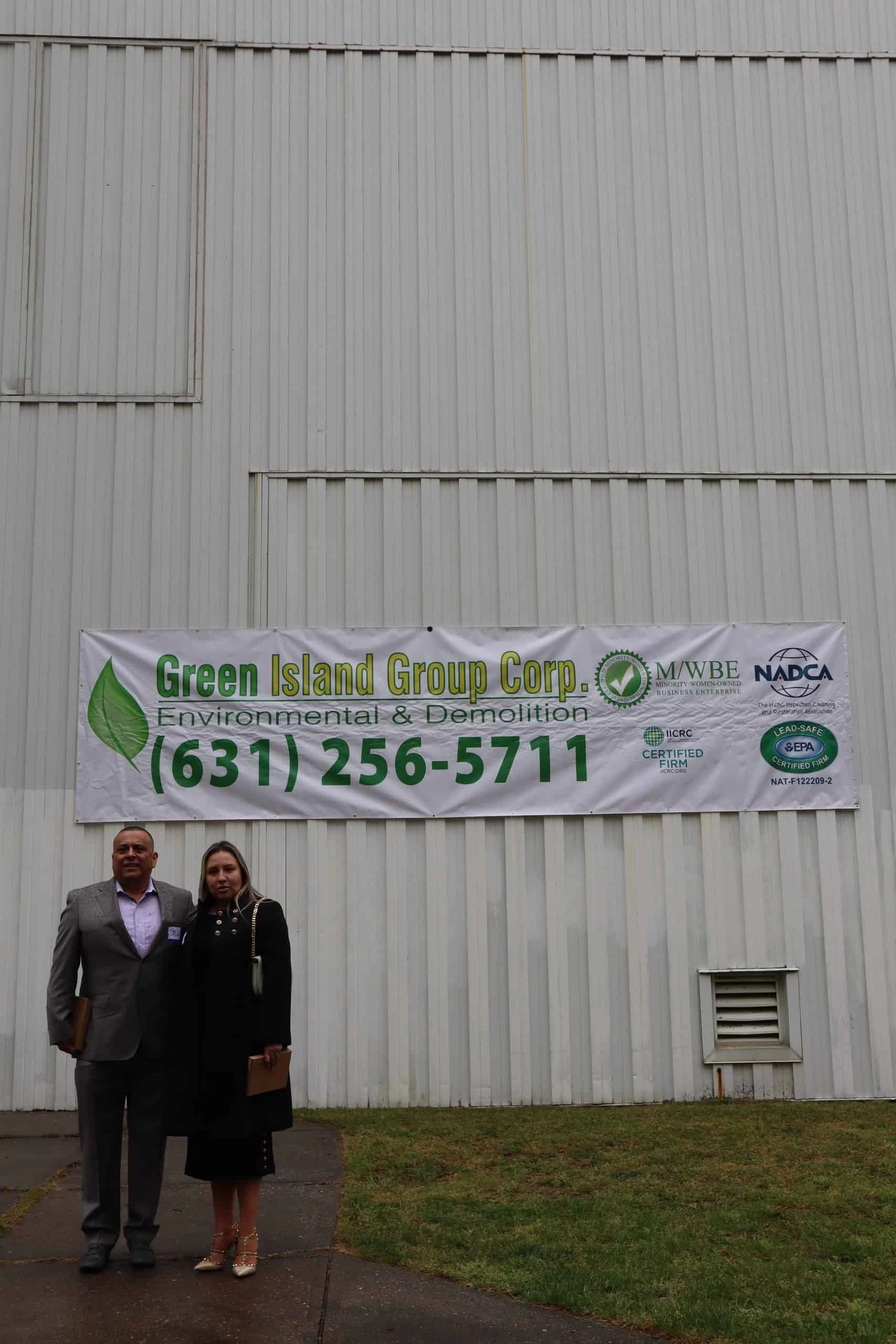
What sets us apart isn’t just speed. It’s the credential stack. NYS DOL Mold Remediation License. NYS DOL Asbestos License. USEPA Lead and RRP certifications. IICRC Water Damage certification. General Contractor licenses for Nassau County, Suffolk County, and NYC — all held simultaneously. In a village like Malverne where more than 90% of homes predate 1970, that combination isn’t a bonus. It’s the only way to legally and safely handle everything a flooded basement might involve.
We also hold NYS MBE, WBE, and NYC MWBE certifications — a distinction no competitor in this market carries. When you call, a real person answers. When the crew arrives, they’re licensed for the full scope of what they find.
No Guesswork — Here's Exactly What Happens When We Arrive
The first thing that happens when we arrive is an assessment — not a sales pitch. Our crew identifies the water source, categorizes the water type (clean water from a burst pipe is handled very differently than a sewage backup or groundwater intrusion), and documents the affected area with moisture readings and photos. This documentation matters from minute one because it’s what supports your insurance claim later.
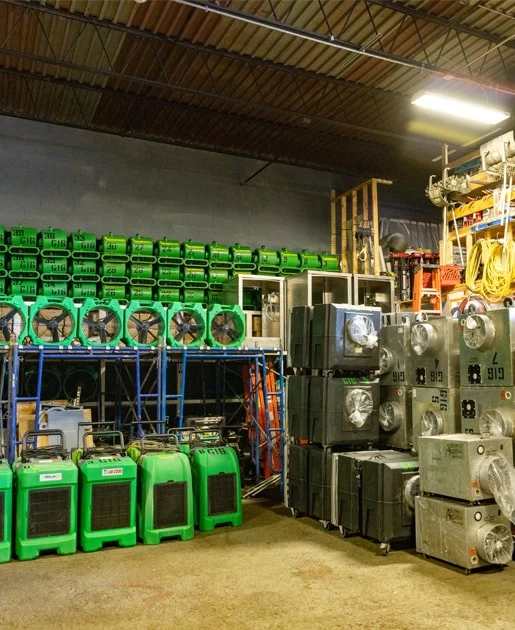
From there, water extraction begins immediately using industrial-grade equipment. Once the standing water is out, the real work starts: drying the structural envelope. That means walls, subfloor, framing, and insulation — not just the visible surface. In Malverne’s older homes, this phase takes longer and requires more precision because pre-war and post-war construction holds moisture in ways that modern materials don’t. If asbestos-containing materials or lead paint are disturbed during the flooding event, our licensed team handles that in the same visit — no subcontracting, no gaps in the chain of custody.
Because Malverne is an incorporated village with its own Building Department, any structural restoration work that follows cleanup requires permits pulled through the Village of Malverne — not the Town of Hempstead. We hold a Nassau County General Contractor license and navigate that process directly, so you’re not left coordinating between a cleanup crew and a separate contractor who doesn’t know the history of the job.
Built for What Malverne Basements Actually Deal With
Flooded basement cleanup in Malverne isn’t a single-step job. Our service covers the full scope: emergency water extraction, structural drying, moisture verification, mold assessment, and — where needed — licensed asbestos and lead remediation. If mold is found, we hold the NYS DOL Mold Remediation License required by state law to legally perform that work. Most companies advertising mold remediation in Nassau County don’t hold this license. We do, and can provide the license number on request.
The shallow water table on Nassau County’s South Shore means that basement flooding in Malverne often isn’t a one-time event — it’s a recurring condition tied to the village’s sandy soil and drainage patterns. Our cleanup process includes identifying the likely intrusion points and documenting them so you have a clear picture of what happened and what a long-term fix would require. That assessment is something a waterproofing contractor or structural engineer can act on directly.
For homeowners dealing with sewage backup — which happens when aging municipal sewer lines get overwhelmed during heavy storms — we’re equipped and licensed for Category 3 black water remediation. This is a biohazard situation, not just a mess, and it requires a different protocol entirely. From the first call to the final moisture clearance reading, the process is documented, licensed, and built to hold up to insurance adjuster scrutiny and future home inspection review.
What actually causes basement flooding in Malverne homes during storms?
The most common cause in Malverne is sump pump failure during heavy rainfall events. Because the village sits on Nassau County’s South Shore, the water table here is shallow — and the sandy, permeable soil means groundwater rises fast when it rains hard. Most Malverne homes depend on a sump pump to manage that groundwater, and when a nor’easter knocks out power or simply overwhelms the pump’s capacity, the basement fills quickly.
Beyond sump pump failure, older foundation walls — particularly the poured concrete and block foundations common in Malverne’s pre-war and early post-war homes — develop cracks and mortar gaps over time. Water finds those pathways even without a dramatic storm event. Sustained rainfall over several days can be enough to push groundwater through aging foundation walls along the basement perimeter. If you’re seeing water collect along the edges of the floor rather than coming in from one point, that’s typically a hydrostatic pressure issue — and it’s one of the most common presentations in Malverne homes.
Does my homeowners insurance cover a flooded basement in Malverne, NY?
It depends on what caused the flooding — and this distinction matters a lot. Standard homeowners insurance in New York generally covers sudden and accidental water damage: a pipe that bursts, a water heater that fails, an appliance that leaks unexpectedly. If your basement flooded because a pipe froze and broke overnight, that’s typically a covered event.
What standard homeowners insurance does not cover is groundwater intrusion — water that enters through the foundation because the water table rose during a storm. That type of flooding requires a separate National Flood Insurance Program policy, which many Malverne homeowners don’t carry because the village isn’t a designated high-risk flood zone in the traditional coastal sense. The gap between what happened and what’s covered is where a lot of homeowners get caught off guard. We assist with the documentation process — moisture readings, extraction logs, photo records — and work directly with insurance adjusters to give your claim the strongest possible foundation, regardless of which policy applies.
How fast does mold grow after a basement floods, and should I be worried?
Mold can begin developing within 24 to 48 hours of water exposure under the right conditions — and basements, with their limited airflow and often-humid baseline, are close to ideal conditions. The EPA recommends starting cleanup within that 24 to 48 hour window. If the basement is fully dried within 72 hours, mold is unlikely to establish. Beyond that window, the risk increases significantly.
In Malverne’s older homes, the concern is amplified because pre-war and post-war construction materials — wood framing, plaster, older insulation — absorb and retain moisture more readily than modern materials. Mold can establish inside a wall cavity or beneath a subfloor without being visible from the surface for weeks. By the time you see it or smell it, it’s already a remediation job. That’s why professional drying — verified with moisture meters, not just visual inspection — matters more than it might in a newer home. Getting the moisture out completely the first time is the only way to actually close the mold risk.
Do I need a permit for basement restoration work in the Village of Malverne?
Yes — and this is a detail that catches a lot of Malverne homeowners off guard. Because Malverne is an incorporated village with its own Building Department, permits for structural restoration work are pulled through the Village of Malverne directly, not through the Town of Hempstead. This applies to work like replacing damaged framing, rebuilding finished walls, or making structural repairs to a foundation after a flood event.
Working without the required permits creates real problems down the road. If you sell the home, unpermitted work can surface during the buyer’s inspection and derail the transaction or reduce the sale price. It can also complicate future insurance claims if undisclosed work is discovered. With median home values in Malverne near $797,573, the financial stakes of cutting corners on documentation are significant. We hold a Nassau County General Contractor license and handle the permitting process as part of the restoration scope — so you’re not left navigating village bureaucracy on your own while also managing a major cleanup.
My Malverne home was built in the 1940s — does that affect how cleanup is handled?
It does, and it’s one of the most important questions to ask before hiring anyone for flooded basement cleanup in an older home. Homes built before 1980 — which covers virtually all of Malverne’s housing stock — may contain lead-based paint. Homes built before the mid-1980s, and particularly those built before 1960, commonly contain asbestos in floor tiles, pipe insulation, ceiling materials, and joint compounds. When a basement floods, the water can disturb these materials, creating a hazard that goes well beyond water damage.
Most flooded basement cleanup companies operating in Nassau County are not licensed to handle asbestos or lead. They can extract the water and run the drying equipment, but if they encounter asbestos floor tiles that have been saturated and loosened, they legally cannot remediate that material — and some may not even flag it correctly. We hold both the NYS DOL Asbestos License and USEPA Lead and RRP certifications, which means the full scope of what a flooded basement in a 1940s Malverne home might involve can be handled by one team, under one documented scope of work, without subcontracting or gaps in the process.
What's the difference between a sewage backup and regular basement flooding — does it matter?
It matters significantly — both for health reasons and for how the cleanup is handled. Regular basement flooding from groundwater or a burst pipe is classified as Category 1 or Category 2 water, depending on the source. Sewage backup is Category 3, also called black water, and it contains bacteria, pathogens, and biological contaminants that make it a genuine health hazard. You cannot clean up a sewage backup the same way you’d clean up a burst pipe — the decontamination protocol is entirely different.
Sewage backups in Malverne happen when the municipal sewer system gets overwhelmed during heavy storm events — a known issue in older South Shore communities where aging infrastructure wasn’t designed for the volume that modern storm events can produce. If the water in your basement has a dark color, a strong odor, or came up through a floor drain during a storm, assume it’s Category 3 until assessed otherwise. We’re equipped and licensed for black water remediation and will assess the water category as part of the initial inspection. Attempting to clean up a sewage backup without proper protective equipment and decontamination protocols puts your health at risk and may not satisfy your insurance carrier’s documentation requirements.