Flooded Basement Cleanup in Malverne Park Oaks, NY
Pre-War Homes Need More Than a Wet-Vac
Most homes in Malverne Park Oaks were built in the 1930s — before modern waterproofing, before modern foundations, and long before anyone thought about what happens when those basements flood. We handle flooded basement cleanup the right way, with the licenses New York State actually requires.
I needed a professional consultation explanation of procedure for safe removal of Asbestos in my apartment complex. Without having an account yet, I was very impressed with the caring, knowledgeable and generous advice offered by Jessica, and will look forward to doing business in the future. Thank you so much! I feel much more informed about a sometimes scary endeavor. Peace. Nancy Silva Mineola, NY.
Mia Munoz
Used this company to clean up some water flood in my house. They were fast and easy to work with.very professional, Would recommend to anyone!
Nini Valle
Great company, had a flood and they responded quickly and efficiently. Billed my insurance company directly. I highly recommend this company!
joe colapietro, jr
I had pipe freeze in my basement right before a snow storm and they made to within an hour to help start the clean up process. They we by our side throughout the entire process and even helped with the insurance company. They did such a great job with the cleanup, repair, remidiation, I contracted them to perform the repairs and finishes in the basement. They came with enough manpower and material to get the job done. Leo and Jessica were nothing but a pleasure to deal with!!
Cristian Arredondo c
I had some water damage in my home and Green Island was able to take care of my issue quickly and effectively. I am very pleased with the work they did. They responded quickly and were very professional.
Michael M
Outstanding service! From the office to the field crew everyone was friendly, helpful and responsive. I highly recommend Green Island Group.
When water gets into a Malverne Park Oaks basement, what you see on the floor is rarely the whole problem. Water wicks into 80-year-old wood framing, soaks into original insulation, and hides behind walls long after the visible puddle is gone. If that moisture isn’t found and eliminated — not just dried on the surface — you’re looking at mold growth within 24 to 48 hours. In a home built in 1938, that’s not a hypothetical. It’s what happens.
The Southern State Parkway runs right along the northern edge of Malverne Park Oaks. During nor’easters and summer storms, runoff from that elevated roadway hits local drainage hard and fast — faster than the infrastructure can handle. That means basements here flood from multiple directions: groundwater pushing up through the floor, storm runoff overwhelming the drains, and in bad events like Ida in 2021 or Sandy in 2012, sewage backing up through the floor drain. Each of those scenarios requires a different response, and a company that can only handle one of them isn’t the right call.
What you actually get at the end of a proper cleanup is a basement that reads dry on a moisture meter — not just dry to the eye — with no hidden moisture left behind to fuel mold, no hazardous materials disturbed without the right protocols, and a clear record of the work for your insurance carrier.
Licensed Basement Flooding Remediation, Malverne Park Oaks
The License Stack Most Companies Around Here Don't Have
We hold NYS DOL Mold Remediation, NYS DOL Asbestos, USEPA Lead/RRP, IICRC Water Damage, and General Contractor licenses for Nassau County simultaneously. That combination matters in Malverne Park Oaks specifically. Under New York Labor Law Article 32, any mold remediation job over 10 square feet must be performed by a licensed NYS DOL contractor. Most companies advertising water damage cleanup in the 11565 ZIP code don’t hold that license. We do.
Our General Contractor license for Nassau County means we can pull permits directly from the Town of Hempstead Building Department — the governing authority for Malverne Park Oaks — and handle structural repairs without you coordinating a second contractor. From water extraction through full reconstruction, it’s one company, one point of contact, and one set of accountability.
We already serve the adjacent Village of Malverne and understand the specific challenges of pre-war Nassau County housing stock — older foundations, legacy materials, and the drainage conditions that come with living near the south shore.
Emergency Water Extraction Process, Malverne Park Oaks NY
What Actually Happens From the First Call to a Dry Basement
When you call, someone answers — around the clock, any day of the week. The 72-hour mold window starts the moment water enters your basement, so the first step is getting a crew dispatched the same day. Before anything gets moved or torn out, our team assesses for hazardous materials. In a home built around 1938, that means checking for asbestos floor tiles, pipe insulation, and lead-based paint before any demolition or drying equipment goes in. Skipping that step isn’t just sloppy — in New York State, it’s a regulatory violation.
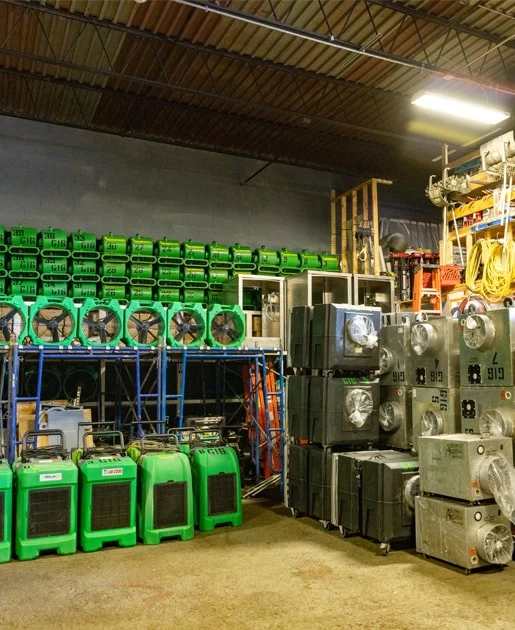
Once the assessment is done, water extraction begins using industrial-grade equipment. After the standing water is out, moisture meters and thermal imaging locate what’s hiding in the walls, subfloor, and framing. That’s the step most DIY attempts miss entirely — and it’s why mold comes back after a cleanup that looked finished. Industrial air movers and dehumidifiers run until the structure reads dry, not just until the floor looks dry.
If the damage requires structural repairs — framing, drywall, flooring — we pull the necessary permits from the Town of Hempstead Building Department and handle the rebuild directly. You don’t need to find a separate contractor or manage two timelines. The job ends when the basement is fully restored, documented, and ready for your insurance carrier.
Flooded Basement Cleaning and Mold Prevention, Nassau County
One Job. Every License It Actually Requires.
Most water damage calls in Malverne Park Oaks aren’t simple clean-water events. Given the age of the housing stock, the proximity to the Southern State Parkway drainage corridor, and the south shore’s history with storms like Sandy and Ida, a significant number of basement floods here involve either groundwater intrusion, storm drain backup, or Category 3 sewage contamination. Each category requires a different level of response — and a company that only handles Category 1 clean water isn’t equipped for what Nassau County’s south shore actually delivers.
Our flooded basement cleanup service covers the full scope: water extraction, structural drying with industrial equipment, moisture mapping with thermal imaging, mold prevention treatment, hazardous material assessment and handling under NYS DOL Asbestos and USEPA Lead/RRP licenses, and full structural restoration under our Nassau County General Contractor license. Insurance documentation and carrier communication are part of the process — not an add-on. We know what adjusters need and how to present damage records that support your claim.
For Malverne Park Oaks homeowners with a home valued near $490,000, the math on professional cleanup is straightforward. One inch of standing water can cause roughly $25,000 in damage according to FEMA. A contaminated basement left unaddressed can run $60,000 or more to fully restore. The cost of a proper cleanup on day one is the investment that keeps the larger number off the table.
Does homeowners insurance cover a flooded basement in Malverne Park Oaks, NY?
It depends entirely on what caused the flooding — and this distinction catches a lot of Nassau County homeowners off guard. Standard homeowners insurance covers sudden and accidental water damage: a burst pipe in January, a washing machine hose that fails, a water heater that gives out. What it does not cover is flooding from natural causes — groundwater rising through your foundation, storm surge, or water entering from outside the home. That type of flooding requires a separate flood insurance policy, typically through the National Flood Insurance Program.
The problem is that many south shore Nassau County homeowners find out about this distinction only after they’ve already filed a claim the wrong way and received a denial. If your basement flooded during a nor’easter or a storm event like Ida, the cause of the flooding matters enormously for your claim. We assist with damage documentation and carrier communication — making sure the damage is recorded correctly and presented in the format adjusters need to process the claim. Getting that documentation right from the start saves significant time and frustration.
How fast does mold actually grow after a basement flood on Long Island?
Faster than most people expect. Under the right conditions — and a flooded basement in a humid Long Island summer absolutely qualifies — mold can begin developing within 24 to 48 hours of water exposure. The EPA recommends starting cleanup within that window. The commonly cited 72-hour threshold is real, but it’s a ceiling, not a comfortable deadline. Waiting until the next morning to call, or spending a day trying to handle it yourself with a shop vac and fans, can put you past the point where cleanup is sufficient.
In a Malverne Park Oaks home built in the 1930s, the risk is compounded by the building materials. Original wood framing, older insulation, and decades of accumulated organic material in wall cavities give mold exactly what it needs to take hold quickly. Once mold is established, the job shifts from a water cleanup to a full mold remediation — a more involved, more expensive process that requires a NYS DOL Mold Remediation license to perform legally in New York State. Calling immediately isn’t an overreaction. It’s the decision that keeps a manageable cleanup from becoming a much larger problem.
Should I be worried about asbestos in my Malverne Park Oaks basement after flooding?
If your home was built before 1980 — and in Malverne Park Oaks, the median build year is 1938 — the honest answer is yes, it’s worth taking seriously. Asbestos was a standard building material through the mid-20th century. Floor tiles, pipe insulation, joint compound, and ceiling tiles in homes from this era commonly contain asbestos. Under normal conditions, intact asbestos-containing materials aren’t an immediate hazard. The problem is that flooding and the cleanup process that follows — pulling up damaged flooring, cutting into walls, removing insulation — can disturb those materials and create an airborne risk.
In New York State, disturbing asbestos-containing materials without a NYS DOL Asbestos license is a regulatory violation. A restoration company that doesn’t hold this license either isn’t assessing for it or is ignoring it — both of which create liability for you as the homeowner. Before we begin any demolition or drying work in a pre-war Malverne Park Oaks home, our team conducts a hazardous material assessment. If asbestos or lead-based paint is present, it’s handled under the appropriate licenses before the rest of the job proceeds. No shortcuts, no liability gaps.
What's the difference between water damage cleanup and mold remediation?
Water damage cleanup addresses the immediate event — extracting standing water, drying out the structure, and preventing conditions that allow mold to develop. If it’s done quickly and thoroughly, mold doesn’t get a foothold and remediation isn’t needed. Mold remediation is a separate, more involved process that becomes necessary when mold has already established itself — typically because cleanup was delayed, incomplete, or missed hidden moisture in walls and framing.
In New York State, mold remediation is regulated under Labor Law Article 32. Any project covering more than 10 square feet must be performed by a licensed NYS DOL Mold Remediation Contractor. This isn’t a voluntary certification — it’s a legal requirement. A company that performs mold remediation in a Malverne Park Oaks home without that license is operating outside of state law, and any work they do isn’t legally compliant. We hold the NYS DOL Mold Remediation license and perform both water damage cleanup and mold remediation under the same roof, which means if a cleanup reveals mold or mold develops before the job is complete, the response doesn’t require bringing in a second company or starting the process over.
How much does flooded basement cleanup typically cost in Nassau County?
The range is wide because the variables are significant. A small, clean-water event in a finished basement — caught quickly and dried out properly — can run as low as $1,600. A larger event involving contaminated water, Category 3 sewage backup, or significant structural damage can reach $12,000 or more for the cleanup alone, with full restoration costs in an unfinished basement averaging around $60,000 when structural repairs are factored in.
For Malverne Park Oaks specifically, a few local factors push costs toward the higher end of the range more often than in newer communities. The pre-war construction means more original materials that require careful handling, higher likelihood of hazardous materials that require licensed protocols, and older foundations that may need structural attention after a significant water event. The south shore’s drainage history — particularly during major storm events — also means contaminated water intrusion is more common here than in areas with newer infrastructure. The most accurate way to understand your specific cost is a same-day assessment, which we provide. What’s consistent across every job is that the cost of a proper cleanup on day one is a fraction of what deferred or incomplete cleanup costs down the road.
Do I need a permit for basement repairs after flooding in the Town of Hempstead?
For cosmetic work — repainting, replacing carpet, swapping out fixtures — generally no. But if the water damage requires replacing structural framing, drywall systems, or flooring assemblies, the Town of Hempstead Building Department typically requires a building permit before that work begins. This is where a lot of homeowners run into delays: they hire a restoration company that handles the cleanup but can’t pull permits for the structural repair, which means finding and coordinating a separate licensed contractor before the rebuild can start.
We hold a Nassau County General Contractor license, which means permits can be pulled directly from the Town of Hempstead — the governing municipality for Malverne Park Oaks — without you needing to manage that process separately. The cleanup, the permit, and the structural restoration all move under one company and one timeline. For a community where homes are valued near $490,000 and the housing stock is nearly a century old, having that full-scope capability under one roof isn’t a convenience — it’s the difference between a job that gets done correctly and one that stalls halfway through because the restoration company hit the edge of their license.