Manhasset's Pre-War Homes Need More Than a Wet-Vac
When your basement floods in Manhasset, the clock starts immediately — and in a home built before World War II, what’s soaking into your walls may be more than just water.
I needed a professional consultation explanation of procedure for safe removal of Asbestos in my apartment complex. Without having an account yet, I was very impressed with the caring, knowledgeable and generous advice offered by Jessica, and will look forward to doing business in the future. Thank you so much! I feel much more informed about a sometimes scary endeavor. Peace. Nancy Silva Mineola, NY.
Mia Munoz
Used this company to clean up some water flood in my house. They were fast and easy to work with.very professional, Would recommend to anyone!
Nini Valle
Great company, had a flood and they responded quickly and efficiently. Billed my insurance company directly. I highly recommend this company!
joe colapietro, jr
I had pipe freeze in my basement right before a snow storm and they made to within an hour to help start the clean up process. They we by our side throughout the entire process and even helped with the insurance company. They did such a great job with the cleanup, repair, remidiation, I contracted them to perform the repairs and finishes in the basement. They came with enough manpower and material to get the job done. Leo and Jessica were nothing but a pleasure to deal with!!
Cristian Arredondo c
I had some water damage in my home and Green Island was able to take care of my issue quickly and effectively. I am very pleased with the work they did. They responded quickly and were very professional.
Michael M
Outstanding service! From the office to the field crew everyone was friendly, helpful and responsive. I highly recommend Green Island Group.
A flooded basement in Manhasset isn’t just an inconvenience — it’s a direct threat to a home worth well over a million dollars. The moment water sits against your foundation, it’s working against you. It’s moving into wall cavities, soaking into concrete block, saturating insulation, and creating the exact conditions mold needs to take hold. Mold begins growing within 24 to 48 hours. That window is real, and it matters.
What makes Manhasset different from a lot of other Nassau County communities is the housing stock. A significant portion of homes here were built before World War II — and that means asbestos floor tiles, lead-based paint, and aging plumbing are common features of basements that look completely normal on the surface. When water floods those spaces, it doesn’t just damage drywall. It can disturb materials that require licensed remediation to handle safely and legally. A contractor without the right credentials isn’t just underqualified — they may be creating a secondary hazmat problem in a home you’ve invested everything in.
The other factor is geography. Manhasset sits on the southwestern edge of the Cow Neck Peninsula, adjacent to Manhasset Bay and within its watershed. The clay-heavy glacial soil throughout this area doesn’t drain quickly. When heavy rain saturates that ground, hydrostatic pressure builds against your foundation walls — and water finds its way in through cracks, joints, and porous concrete whether you can see it coming or not. That’s a specific, local condition that requires more than surface drying to address.
Licensed Basement Flooding Remediation Manhasset NY
Every License This Job Actually Requires — And Why Manhasset Homes Need All of Them
We hold a credential stack that most restoration companies in Nassau County simply can’t match: NYS DOL Mold Remediation License, NYS DOL Asbestos License, USEPA Lead/RRP Certification, IICRC Water Damage Certification, and a Nassau County General Contractor License — all active, all verifiable. New York is one of only a handful of states in the country that requires a dedicated mold license. That requirement exists because improper mold cleanup spreads spores and makes the problem significantly worse. When you’re calling about a flooded basement in Manhasset, you want to know the company you’re hiring can legally and safely handle everything they find — not just what’s visible.
That Nassau County General Contractor License matters specifically here. Manhasset falls under the Town of North Hempstead — North Hempstead Town Hall sits right on Plandome Road — and any structural restoration work after water damage requires proper local licensing. We can extract the water, dry the structure, remediate mold, and rebuild the finished space without handing the job off to a separate contractor. One call, start to finish.
What Actually Happens From the First Call to the Final Walkthrough
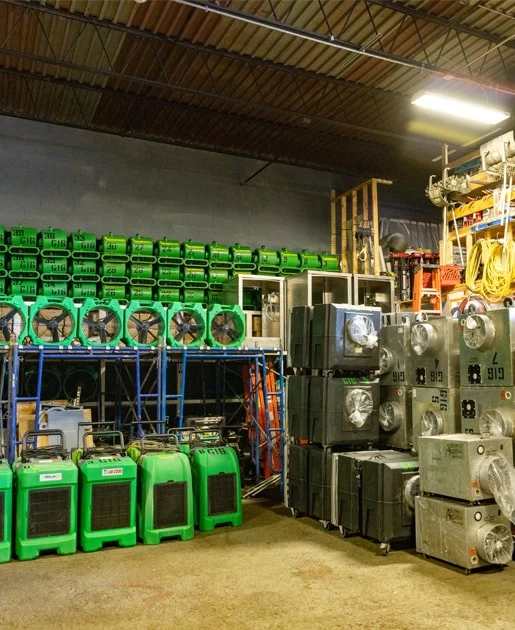
When you call, you reach someone who can actually help — not a call center. We dispatch 24/7 because basement flooding in Manhasset doesn’t wait for business hours, and neither does the 72-hour mold window. Our crew arrives with industrial extraction equipment, commercial-grade dehumidifiers, and air movers — not the kind of setup you rent from a hardware store.
The first priority is getting the standing water out, fast. But extraction is just the beginning. After the water is removed, the real assessment starts. We use professional moisture detection equipment in the walls, under the flooring, and into the structural materials — because the water you can’t see is the water that causes the most damage weeks later. In Manhasset’s older homes, that assessment also includes a hazardous materials check. If there’s any indication that asbestos-containing materials or lead paint have been disturbed — common in pre-war construction throughout the Munsey Park, Plandome, and Strathmore areas — that gets addressed under the proper licensed protocols before any further work continues.
From there, the drying process is monitored and documented until moisture readings confirm the structure is fully dry — not just surface dry. If mold is found, we remediate it under the NYS DOL Mold License with proper containment, air scrubbing, and disposal. If structural repairs are needed — drywall, framing, flooring — we handle that too, under the Nassau County General Contractor License. Throughout the process, we keep all damage documentation in order to support your insurance claim, whether that’s a homeowners policy or a separate flood policy.
One Contractor Handles It All — No Coordination Gap
Most restoration companies can extract water and set up fans. What they can’t do — legally — is handle the full scope of what a flooded basement in a Manhasset home often involves. Our licensed services cover water extraction and emergency response, structural drying with professional moisture verification, mold assessment and full NYS-licensed mold remediation, asbestos and lead-safe protocols for pre-war homes, sewage backup decontamination and Category 3 biohazard cleanup, and complete structural restoration under the Nassau County General Contractor License.
Sewage backup deserves a specific mention here. Manhasset’s aging sewer infrastructure — consistent with a community that has significant pre-war construction — makes sewage backup a real risk during heavy storm events. Category 3 flooding is a biological health hazard. It requires full decontamination, not just drying. Many standard restoration companies are not equipped or licensed for this. We are.
Insurance navigation is also part of our service. There’s an important distinction between sudden, accidental water damage — typically covered by standard homeowners insurance — and flooding from groundwater or storm surge, which requires separate flood coverage. Many Manhasset homeowners carry both. We document damage thoroughly from the first assessment and assist with the reporting process so your claim is supported, not scrambled together after the fact.
Does homeowners insurance cover a flooded basement in Manhasset, NY?
It depends on what caused the flooding — and that distinction matters a lot. Standard homeowners insurance typically covers sudden, accidental water damage: a burst pipe, a failed water heater, an appliance malfunction. It does not cover flooding caused by groundwater, storm surge, or surface water entering from outside. For that, you need a separate flood insurance policy — either through the National Flood Insurance Program or a private carrier.
In Manhasset, this matters more than in a lot of other Nassau County communities. The hamlet’s position on the Cow Neck Peninsula, its proximity to Manhasset Bay, and its clay-heavy soil that resists drainage mean that groundwater flooding during heavy rain events is a real and recurring risk — not a rare scenario. Many Manhasset homeowners carry both types of coverage. If you’re not sure what you have, call your carrier before assuming you’re covered. We document damage thoroughly from the start, which gives your adjuster what they need to process the claim accurately.
How quickly does mold start growing after a basement floods?
Mold can begin growing within 24 to 48 hours of water exposure — and in the right conditions, it moves fast. The 72-hour window is the benchmark the restoration industry works against. If a flooded basement isn’t fully dried within that window, mold growth is likely. What makes this particularly important in Manhasset is that many homes here have older construction with materials that absorb moisture quickly and hold it — plaster walls, wood framing, older concrete block foundations. These materials don’t dry out with fans and time. They require professional-grade dehumidification and moisture verification equipment to confirm they’re actually dry, not just dry on the surface.
The hidden moisture is what causes the most problems. A basement that looks and feels dry can still have elevated moisture levels inside wall cavities and under flooring — and that’s where mold takes hold without any visible warning. By the time you smell it or see it, it’s already established. We use professional moisture detection equipment to verify dryness at the structural level, not just the surface.
My Manhasset home was built before World War II — does that change the cleanup process?
Yes, significantly. Homes built before 1978 — and especially those built before World War II, which describes a large portion of Manhasset’s housing stock — commonly contain asbestos-containing materials and lead-based paint. Asbestos shows up in floor tiles, pipe insulation, ceiling tiles, and joint compound. Lead paint is present on walls, trim, and window components throughout older homes. When a basement floods, water contact can disturb these materials and create a hazmat situation on top of the water damage situation.
A contractor without NYS DOL Asbestos licensure and USEPA Lead/RRP certification cannot legally handle this. More importantly, a contractor who disturbs these materials without proper containment and disposal protocols can spread contamination through the rest of the home. We hold both licenses and perform a hazardous materials assessment as part of the initial evaluation in any pre-war Manhasset property. If asbestos or lead is identified, it’s handled under the proper licensed protocols before any further restoration work proceeds.
What causes basement flooding in Manhasset even when it's not a major storm?
The most common culprit is hydrostatic pressure — and Manhasset’s geology makes this a recurring issue. The area sits on Pleistocene-age glacial sediments with significant clay content. Clay-heavy soil doesn’t drain well. When rain saturates the ground, that water has nowhere to go quickly, so it pools against your foundation walls and exerts outward pressure. Over time — and sometimes very quickly during heavy rain — that pressure forces water through cracks, deteriorating mortar joints, and porous concrete block. You don’t need a named storm or a coastal flood event for this to happen.
Manhasset also drains into the Leeds Pond and Whitney Pond watershed areas, both part of the Manhasset Bay Watershed. When those drainage systems are overwhelmed by sustained rainfall, groundwater levels rise and the hydrostatic pressure against basement foundations increases substantially. This is why some Manhasset homeowners see basement seepage during moderate rainstorms that their neighbors in newer, better-drained communities wouldn’t think twice about. The fix isn’t just drying — it’s understanding the source and addressing the full scope of what got wet.
Is sewage backup cleanup different from regular basement water damage cleanup?
Completely different — and it’s important to understand why. Water damage is categorized by contamination level. Clean water from a burst pipe is Category 1. Gray water from appliances or overflows is Category 2. Sewage backup is Category 3, also called black water, and it contains bacteria, pathogens, and biological waste that pose a direct health risk. You cannot treat a sewage backup the same way you treat a burst pipe. It requires full decontamination, antimicrobial treatment, and proper disposal of affected materials — not just extraction and drying.
Sewage backup is a real risk in Manhasset given the age of the sewer infrastructure throughout much of the community. During heavy storm events, when the system is overwhelmed, backflow into basement drains is not uncommon. If your basement flooding has any sewage involvement — identifiable by odor, color, or the source of the water — do not attempt cleanup yourself, and do not hire a contractor who isn’t equipped for Category 3 work. We are licensed and equipped for full biohazard decontamination. This is not a standard offering across all restoration companies operating in Nassau County.
How long does flooded basement cleanup and restoration actually take in Manhasset?
The honest answer is that it varies — but here’s what actually drives the timeline. Emergency water extraction typically happens within hours of your call. The drying process, using commercial dehumidifiers and air movers with ongoing moisture monitoring, generally takes three to five days to reach verified dryness — though older homes with thicker plaster walls and denser materials, which are common throughout Manhasset’s pre-war neighborhoods, can take longer. Mold remediation, if needed, adds time depending on the extent of growth and the materials involved.
What extends timelines most in Manhasset specifically is the hazardous materials factor. If asbestos or lead paint is identified during the initial assessment — which is not uncommon in homes built before 1940 in this area — those materials have to be properly handled and cleared before structural restoration can begin. That’s not a delay caused by inefficiency; it’s a legal and safety requirement. Once the structure is fully dry and any hazmat issues are resolved, the rebuild phase — drywall, flooring, framing — proceeds under our Nassau County General Contractor License. For most Manhasset homeowners, a complete project from emergency response through finished restoration runs one to three weeks, depending on the scope.