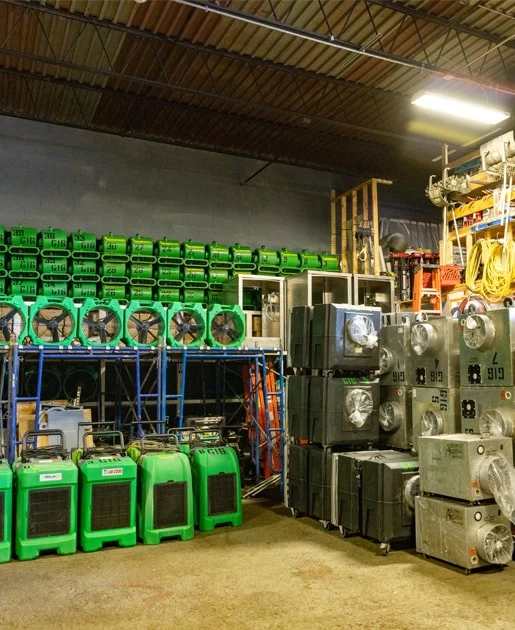
When the Sewer Backs Up Into Your Building, You Need More Than a Shop Vac
Manhattan’s aging combined sewer system doesn’t care what time it is. When a heavy storm overwhelms it and it doesn’t take much that water ends up in basements across the borough. We respond 24/7 with the licenses, equipment, and full-scope capability to handle flooded basement cleanup in Manhattan from start to finish.
I needed a professional consultation explanation of procedure for safe removal of Asbestos in my apartment complex. Without having an account yet, I was very impressed with the caring, knowledgeable and generous advice offered by Jessica, and will look forward to doing business in the future. Thank you so much! I feel much more informed about a sometimes scary endeavor. Peace. Nancy Silva Mineola, NY.
Mia Munoz
Used this company to clean up some water flood in my house. They were fast and easy to work with.very professional, Would recommend to anyone!
Nini Valle
Great company, had a flood and they responded quickly and efficiently. Billed my insurance company directly. I highly recommend this company!
joe colapietro, jr
I had pipe freeze in my basement right before a snow storm and they made to within an hour to help start the clean up process. They we by our side throughout the entire process and even helped with the insurance company. They did such a great job with the cleanup, repair, remidiation, I contracted them to perform the repairs and finishes in the basement. They came with enough manpower and material to get the job done. Leo and Jessica were nothing but a pleasure to deal with!!
Cristian Arredondo c
I had some water damage in my home and Green Island was able to take care of my issue quickly and effectively. I am very pleased with the work they did. They responded quickly and were very professional.
Michael M
Outstanding service! From the office to the field crew everyone was friendly, helpful and responsive. I highly recommend Green Island Group.
Dry Floors Aren't Enough in a Pre-War Manhattan Building
When water enters a basement in an older Manhattan building a Harlem brownstone, a Washington Heights walk-up, a Lower East Side tenement it doesn’t just sit on the floor. It moves through floor joists, into wall cavities, behind paneling, and along plumbing chases that were built over a century ago. What looks dry on the surface can be actively wet inside the structure for days. That hidden moisture is where mold starts, and in a building with limited ventilation and high ambient humidity, it starts fast.
There’s another layer that most water damage companies won’t tell you upfront: a significant portion of basement flooding in Manhattan involves Category 3 water sewage-contaminated water from sewer overflow events, not clean water from a burst pipe. That changes the entire cleanup protocol. Surface extraction and a few fans don’t cut it. The space needs to be treated as a contaminated environment, with proper containment, disposal, and post-remediation verification before anyone calls the job done.
And in a pre-war building, the moment remediation work disturbs pipe insulation, floor tile adhesive, or wall material, you may be dealing with asbestos or lead paint both of which are regulated hazardous materials in New York State. A contractor who isn’t licensed for abatement has to stop work the moment they encounter those materials. That means days of delay, a second contractor to coordinate, and a building board that’s waiting for answers. We carry active NYS DOL licenses for asbestos abatement, lead abatement, and mold remediation alongside water damage restoration so none of that stops us.
One License Set That Covers What Manhattan Buildings Actually Throw at You
We are a New York environmental contracting and restoration company serving Manhattan, Nassau County, and Suffolk County. We’re not a national franchise applying a generic playbook to a Manhattan address. We’re a New York contractor who has worked in pre-war co-ops on the Upper West Side, brownstones in Harlem, converted lofts in SoHo, and flood-zone buildings in Battery Park City and we understand how different each of those jobs actually is.
What sets us apart in this market is straightforward: we hold active NYS DOL licenses for asbestos abatement, lead abatement, and mold remediation simultaneously, in addition to water damage restoration and demolition. In a borough where the majority of the residential building stock predates 1960, that combination isn’t a nice-to-have. It’s the difference between a job that gets finished and one that stalls halfway through because a competitor hit a wall they weren’t licensed to touch.
We also bill insurance carriers directly and manage the adjuster process on your behalf including navigating the interaction between your building’s master policy and your individual HO-6 policy, which is one of the most common sources of confusion and delay for Manhattan co-op and condo owners dealing with a flooding event.
From First Call to Final Clearance No Handoffs, No Gaps
When you call, we assess the situation immediately. If it’s an active emergency water still coming in, a sewer backup in progress, a burst pipe in a building with other units affected we prioritize response accordingly. Manhattan’s density means flooding events escalate quickly. A basement mechanical room that floods in a 20-unit building isn’t just your problem; it affects your neighbors, your building’s systems, and your board’s patience. We move fast because we know what’s at stake.
Once on-site, the first step is identifying the water source and category. If the water came from a sewer overflow which is common in Manhattan during heavy rainfall, given the combined sewer system’s design limits we treat the space as Category 3 contaminated from the start. That means proper containment, appropriate PPE, and a remediation protocol that actually addresses the contamination rather than masking it. We also use moisture meters and thermal imaging to map where water has migrated inside walls, under flooring, and into structural members not just what’s visible on the surface.
If we encounter asbestos-containing materials or lead paint during demolition or material removal which is a real probability in any Manhattan building constructed before the 1970s we handle abatement in-house under our NYS DOL licenses. No work stoppage. No referral to a second contractor. No week-long delay while you wait for someone else to get scheduled. After the space is dry, remediated, and cleared, we provide written post-remediation documentation: moisture clearance readings, air quality results, and verification that the job meets IICRC standards. That documentation matters to your building board, your insurance adjuster, and anyone who asks about the work later.
Manhattan Basement Water Damage Restoration Services
What's Actually Included When We Work in a Manhattan Building
Flooded basement cleanup in Manhattan isn’t a single-step job, and we don’t treat it like one. From the moment we arrive, the scope is driven by what we actually find not a predetermined checklist that ignores the realities of your building. That means water extraction and structural drying, mold assessment and remediation if growth is present or conditions are favorable, and hazardous material abatement if asbestos or lead is disturbed during the process. All of it handled under one roof, one contract, and one point of contact.
For buildings in Lower Manhattan’s FEMA flood zones the Financial District, Tribeca, Battery Park City the work often involves not just cleanup but documentation that supports flood insurance claims and FEMA-related processes. For brownstone and tenement owners in Harlem, Washington Heights, and the Lower East Side, the more common scenario involves sewer backup contamination and the hazardous material considerations that come with older construction. We adjust the scope to the building, the neighborhood, and the specific conditions we find on-site.
We also work directly with your insurance carrier throughout the process. We know how co-op proprietary leases and condo bylaws define the boundary between the building’s master policy and your personal HO-6 policy and we produce the documentation that both sides of that equation require. If your building board needs written clearance before you can close out the claim or return the space to use, we provide it. The goal is a completed job with nothing left unresolved not just a dry floor and a handshake.
Does homeowner's insurance cover basement flooding in a Manhattan co-op?
It depends on the source of the water, and in a Manhattan co-op, it also depends on how your proprietary lease defines the boundary between the building’s master policy and your individual HO-6 policy. Homeowner’s insurance including HO-6 policies for co-op shareholders typically covers sudden and accidental water damage from internal sources, like a burst pipe or an appliance failure. It generally does not cover flooding from external sources, which falls under a separate flood insurance policy.
The complication in a Manhattan co-op is that the master policy covers the building’s structure, while your HO-6 covers your personal property and certain improvements inside your unit. When a basement floods, the question of which policy applies and to what depends on what was damaged and where. Building boards often add another layer by requiring specific documentation before repairs can proceed. We work directly with carriers and understand how this dual-policy structure plays out in real claims, which is one of the reasons Manhattan property owners find it useful to have us manage the adjuster process rather than navigating it alone.
How quickly does mold start growing after a basement floods in New York City?
The EPA’s documented window for mold growth on wet building materials is 24 to 48 hours. In practice, in Manhattan’s older building stock where basement spaces often have limited ventilation, high ambient humidity, and chronic moisture conditions from aging plumbing that window can be shorter. Mold doesn’t wait for you to finish filing your insurance claim or scheduling a contractor for next week.
What makes this particularly important in a Manhattan building is that mold doesn’t stay contained to the space where the flooding happened. It spreads through wall cavities, along shared framing, and into adjacent units. A flooded basement in a brownstone or a pre-war apartment building in Manhattan isn’t just your problem if it’s not addressed quickly it becomes your neighbor’s problem too, and that creates a different kind of urgency. Getting extraction and drying started within the first 24 hours is the single most effective way to prevent a water damage job from becoming a water-plus-mold remediation job that costs significantly more and takes significantly longer.
What is Category 3 water damage and do I have it in my Manhattan basement?
Water damage is classified into three categories based on contamination level. Category 1 is clean water a burst supply line, for example. Category 2 is gray water, which carries some contamination. Category 3 is black water, which is grossly contaminated and includes sewage, floodwater from rivers or storm drains, and sewer overflow. It contains pathogens and bacteria that require a fundamentally different cleanup protocol than a standard water extraction job.
In Manhattan, a large proportion of basement flooding events involve Category 3 water, specifically because of the city’s combined sewer system. That system carries both stormwater and sanitary sewage in the same pipes. When rainfall exceeds the system’s capacity which happens regularly during heavy storms, and dramatically during events like Hurricane Ida in September 2021, when 3.47 inches fell in a single hour at Central Park against a system designed for 1.75 overflow backs up into basement spaces through floor drains, sewer connections, and foundation cracks. If your basement flooded during a rainstorm rather than from a broken pipe, there is a real probability that you are dealing with Category 3 water. We assess water category on arrival and apply the correct protocol from the start.
Can basement flooding in a pre-war Manhattan building disturb asbestos or lead paint?
Yes, and this is one of the most important things to understand before hiring any contractor for flooded basement cleanup in an older Manhattan building. Buildings constructed before the 1970s commonly contain asbestos in pipe insulation, floor tile adhesives, and ceiling materials. New York City banned lead paint in residential buildings in 1960 earlier than the federal standard of 1978 so any building constructed before 1960 is particularly likely to contain lead paint in basement spaces, on walls, framing, and structural elements.
When flood water saturates these materials, or when a contractor begins removing damaged flooring, cutting into walls, or demolishing wet drywall, those materials can become disturbed and release regulated hazardous substances. At that point, the work cannot legally continue without a NYS DOL-licensed abatement contractor on-site. Most water damage companies are not licensed for asbestos or lead abatement which means they have to stop work and refer you to a separate contractor, adding significant time and coordination to an already stressful situation. We hold active NYS DOL licenses for both asbestos abatement and lead abatement, so if we encounter those materials during cleanup, we handle it without stopping the job.
How much does flooded basement cleanup cost in Manhattan, NY?
The honest answer is that cost varies significantly depending on a few key factors: how much water entered the space, how long it sat before remediation began, the category of water involved, whether mold is present, and whether hazardous materials like asbestos or lead paint are encountered during the work. A straightforward Category 1 water extraction and drying job in a finished basement is a very different scope than a Category 3 sewer backup in a pre-war building that requires hazmat protocols and abatement work.
In Manhattan specifically, the age and complexity of the building stock means that the probability of encountering additional scope mold, asbestos, lead is higher than in newer suburban construction. That’s not a reason to avoid calling; it’s a reason to call a contractor who can handle the full scope rather than one who will have to stop and refer out when they hit something unexpected. We assess the full scope on arrival and work directly with your insurance carrier to document the job properly so the claim reflects the actual work required. We can give you a clear picture of what you’re looking at after the initial assessment.
What should I do immediately after my basement floods in Manhattan?
The first thing is to make sure it’s safe to enter the space. If there’s any possibility of electrical exposure water near outlets, panels, or equipment don’t go in until power to that area is confirmed off. In a Manhattan building, that may mean contacting building management or Con Edison before you go downstairs. Once it’s safe, document everything with photos and video before anything is moved or cleaned up. That documentation matters for your insurance claim, and in a co-op or condo, it may also matter for conversations with your building board.
Then call a remediation contractor immediately not tomorrow, not after the weekend. The 24 to 48-hour mold window is real, and in Manhattan’s older, less-ventilated basement spaces, it may be shorter. Don’t run box fans and assume the space will dry on its own; in a building with limited airflow and high ambient humidity, that approach rarely works and often makes things worse by spreading contaminated air. If you’re in a building where other units or common areas are affected, notify building management right away they may have obligations under the building’s master policy that affect how the claim is handled and who coordinates the response.