When the Pine Barrens Water Table Wins, We Come Running
Medford basements flood fast flat terrain, shallow groundwater, and aging foundations don’t give you much warning. We respond 24/7, bill your insurance directly, and handle everything from water extraction to full reconstruction under one Suffolk County-licensed contractor.
I needed a professional consultation explanation of procedure for safe removal of Asbestos in my apartment complex. Without having an account yet, I was very impressed with the caring, knowledgeable and generous advice offered by Jessica, and will look forward to doing business in the future. Thank you so much! I feel much more informed about a sometimes scary endeavor. Peace. Nancy Silva Mineola, NY.
Mia Munoz
Used this company to clean up some water flood in my house. They were fast and easy to work with.very professional, Would recommend to anyone!
Nini Valle
Great company, had a flood and they responded quickly and efficiently. Billed my insurance company directly. I highly recommend this company!
joe colapietro, jr
I had pipe freeze in my basement right before a snow storm and they made to within an hour to help start the clean up process. They we by our side throughout the entire process and even helped with the insurance company. They did such a great job with the cleanup, repair, remidiation, I contracted them to perform the repairs and finishes in the basement. They came with enough manpower and material to get the job done. Leo and Jessica were nothing but a pleasure to deal with!!
Cristian Arredondo c
I had some water damage in my home and Green Island was able to take care of my issue quickly and effectively. I am very pleased with the work they did. They responded quickly and were very professional.
Michael M
Outstanding service! From the office to the field crew everyone was friendly, helpful and responsive. I highly recommend Green Island Group.
Mold starts growing within 24 to 48 hours of flooding. In Medford, where a single summer thunderstorm or a sump pump failure on a February night can push water into your basement fast, that clock starts ticking before you’ve even made a phone call. The longer you wait, the more expensive and complicated the fix becomes.
What you actually want after a flooded basement isn’t just a dry floor. You want to know the moisture is gone from behind the walls, not just off the surface. You want documentation your insurance adjuster will accept. You want one company that can handle the water, the mold, and the rebuild so you’re not managing three separate contractors while your basement sits open.
Medford’s housing stock makes this especially important. A lot of homes here were built in the 1950s, 60s, and 70s, and those basements weren’t built with modern waterproofing standards. Pipe insulation, floor tiles, and joint compound from that era may contain asbestos. Lead paint is common on basement walls and woodwork in pre-1978 homes. When those materials get saturated and disturbed during a flood, you don’t just have a water problem you have a situation that most water damage companies aren’t licensed to touch. We are.
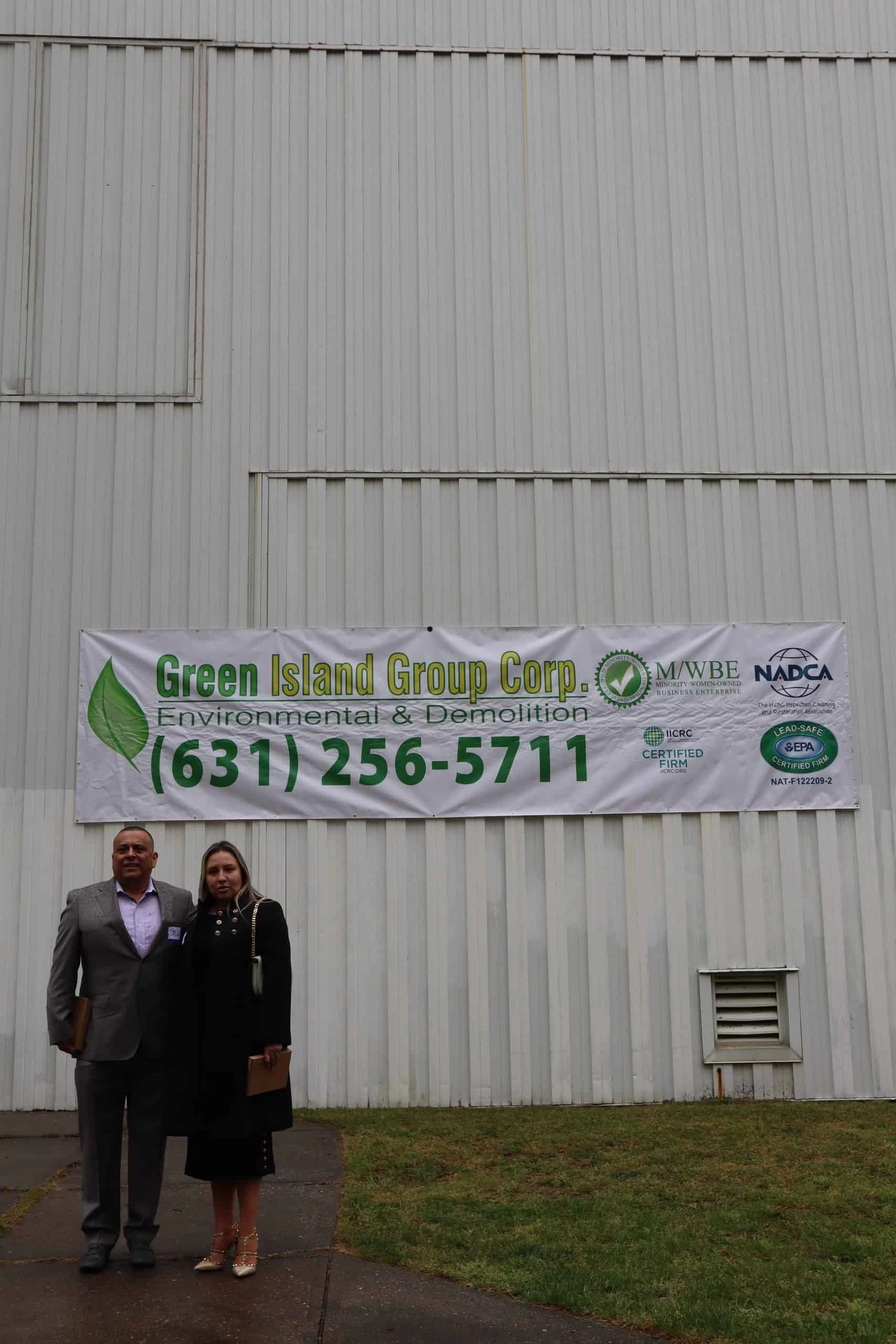
Green Island Group is an independent, locally operated environmental restoration company serving Suffolk County including Medford and the surrounding communities along the Route 112 corridor. CEO Jessica Dussan and VP Leo Torres are personally involved in every project. When you call, you reach people who own the outcome, not a national dispatch center routing your emergency to whoever’s available.
The credentials here go beyond standard water damage work. We hold a Suffolk County General Contractor license, NYS DOL Asbestos and Mold licenses, USEPA Lead and RRP certifications, and are an approved emergency response contractor for the NYS Office of General Services meaning New York State has independently vetted this company to respond to public emergencies. That same standard applies to your home in Medford.
This isn’t a franchise. There’s no corporate playbook dictating how your job gets handled. With more than 5,000 completed restoration projects across New York State and over a decade of experience working in communities just like Medford, we bring real depth to every call including the ones that come in at 2 AM during a nor’easter.
No Guesswork Here's Exactly What Happens When We Arrive
The first thing that happens when we arrive at your Medford home is an assessment not an upsell conversation. Our team uses thermal imaging cameras and moisture meters to map where the water actually is, including behind walls and under flooring where it hides. In a post-WWII block-wall basement, water travels in ways that aren’t always visible. That initial read shapes everything that follows.
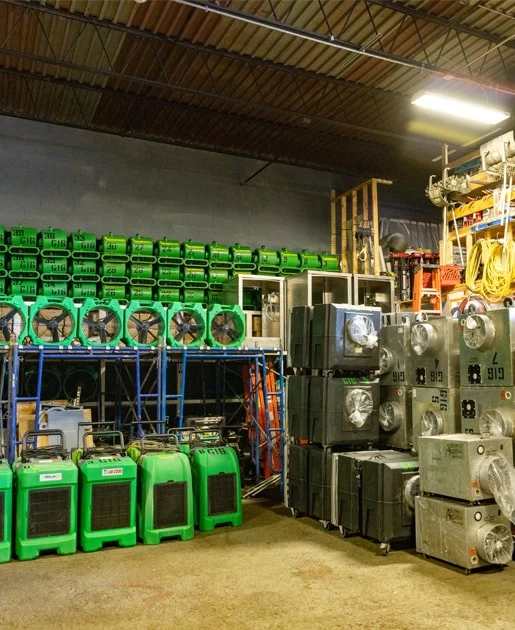
From there, industrial water extraction equipment removes standing water, and high-capacity dehumidifiers and air movers are set up to begin the structural drying process. This isn’t a one-visit job moisture levels are monitored over time to confirm the space is genuinely dry before any reconstruction begins. If asbestos-containing materials were disturbed during the flood a real possibility in Medford homes built before 1980 our team is licensed to handle abatement on the same job, without you needing to bring in a separate contractor.
Once the space is dry and cleared, reconstruction starts. Drywall, flooring, framing whatever the water damaged, we can rebuild it under our Suffolk County General Contractor license. Throughout the entire process, our team documents everything for your insurance claim, communicates directly with your adjuster, and handles the billing so you’re not caught in the middle. If the Town of Brookhaven requires permits for any structural repair work, we handle that too.
Full-Scope Cleanup Built for What Medford Basements Actually Face
Flooded basement cleanup in Medford isn’t a one-size situation. A Category 1 pipe burst in a 1972 ranch off Horse Block Road is a different job than a Category 3 sewage backup in a 1958 cape near the LIRR station and the response has to match the actual conditions, not a generic checklist.
We offer the full range: emergency water extraction, structural drying with real-time moisture monitoring, mold testing and remediation, asbestos and lead abatement for older homes, odor treatment, and complete reconstruction. Our environmental licensing stack NYS DOL Asbestos, NYS DOL Mold, USEPA Lead, USEPA RRP means nothing gets left for a second company to handle later. One contractor, one point of contact, one completed job.
For Medford homeowners with basement apartments and there are plenty of them in this community a flooded unit creates both a cleanup and a compliance issue. The Town of Brookhaven requires Accessory Apartment Licenses for rental units, and significant water damage may trigger permit requirements through Brookhaven’s Building Division. Our team is familiar with these local requirements and can help you navigate what’s needed so the space is restored correctly, not just quickly. Insurance billing is handled directly, and every step of the process is documented in a format your adjuster can actually use.
Does homeowners insurance cover flooded basement cleanup in Medford, NY?
It depends on the source of the water, and that distinction matters more than most people realize. Standard homeowners insurance typically covers sudden, accidental water damage a burst pipe, a failed water heater, an appliance leak. What it usually does not cover is flooding from outside the home, like groundwater rising through your foundation during a heavy storm. That type of damage generally requires a separate flood insurance policy through the National Flood Insurance Program (NFIP) or a private carrier.
In Medford, where flat terrain and the shallow Pine Barrens water table can push groundwater into basements during significant rain events, knowing which type of damage you have is the first step. We document the source and extent of damage thoroughly from the moment we arrive in a format insurance adjusters are looking for. We bill your insurance company directly and communicate with your adjuster throughout the process, so you’re not left figuring out the paperwork on top of everything else.
How quickly does mold grow after a basement floods, and why does it matter?
Mold can begin growing within 24 to 48 hours of a flooding event and once it takes hold inside wall cavities, under flooring, or behind insulation, the remediation becomes significantly more involved than if it had been caught early. The visible surface of your basement might look dry within a few days, but moisture trapped inside block walls or beneath concrete board can sustain mold growth for weeks without any visible sign.
This is why the timing of your response matters as much as who you call. We use thermal imaging and calibrated moisture meters to find moisture that isn’t visible to the eye. In Medford’s older homes many of which have block-wall basements with original waterproofing from the 1960s and 70s water migrates into the wall assembly quickly and doesn’t evaporate on its own. Getting industrial drying equipment running within the first 24 hours is the single biggest factor in preventing a water damage job from becoming a mold remediation job on top of it.
My Medford home was built in the 1960s should I be worried about asbestos during cleanup?
Yes, and it’s worth taking seriously. Homes built before 1980 which covers a large portion of Medford’s housing stock commonly contain asbestos in pipe insulation, 9×9 vinyl floor tiles, ceiling tiles, and drywall joint compound. When a basement floods and these materials get saturated, cracked, or disturbed during the cleanup process, there’s a real risk of asbestos fiber release. Most water damage companies are not licensed to handle this. They’ll clean up the water and leave the hazmat problem behind.
We hold a NYS Department of Labor Asbestos license, along with USEPA Lead and RRP certifications which means if your Medford basement has materials that need to be tested or abated, we can handle it on the same job without bringing in a separate contractor. We don’t skip the assessment to save time. If there’s a question about what’s in your walls or floor, we address it before the reconstruction begins, so the finished space is actually safe not just dry.
What causes basement flooding in Medford, and is my home at higher risk?
Medford sits within the Long Island Central Pine Barrens zone, which means the soil beneath most of the hamlet is sandy glacial outwash porous, flat, and sitting above a relatively shallow water table. During heavy rain events, that groundwater rises quickly and can push through foundation walls, floor cracks, and deteriorated drainage tile with very little warning. The flat elevation of the area there’s not much natural grade to carry water away from your foundation makes this worse.
Add in the age of the housing stock, and the risk compounds. Homes built in the 1950s, 60s, and 70s often have original sump systems that are now undersized or failing, block-wall foundations that have been absorbing hydrostatic pressure for decades, and drainage tile that has long since deteriorated. The August 2024 flash flooding that hit Long Island and triggered a state emergency assistance response was a wake-up call for a lot of Medford homeowners who discovered their basement’s vulnerability for the first time. If your home is in that era and you haven’t had the drainage system evaluated, it’s worth knowing what you’re working with before the next storm.
How much does flooded basement cleanup typically cost, and what affects the price?
The range for flooded basement cleanup is generally $2,000 to $8,000 for water extraction and structural drying, depending on the size of the space, how long the water was present, and what materials were affected. If mold remediation is needed which is likely if more than 24 to 48 hours passed before cleanup began that adds another $1,500 to $6,000 depending on the extent of growth and what’s behind the walls. Asbestos abatement, if required, is priced separately based on what’s found during assessment.
What affects your specific cost most is the category of water involved (clean water from a pipe versus gray or black water from a sewage backup), how much of the structure was saturated, and whether any hazardous materials were disturbed. The good news is that a significant portion of this is often covered by homeowners insurance when the damage source qualifies. We handle the documentation and direct insurance billing from the start, which typically results in more of the job being covered than when homeowners try to manage the claim on their own after the fact.
Can I just dry out my flooded basement myself instead of calling a professional?
You can move standing water with a wet-vac and run box fans but that’s not the same as actually drying a basement. The difference is what happens inside the wall assembly, under the flooring, and in the air space where consumer equipment simply can’t reach. A box fan circulates surface air. Industrial drying equipment removes moisture from the structure itself, which is where mold actually grows.
In a Medford home with block-wall construction common in the post-WWII builds throughout this area water absorbs into the masonry and sits there long after the floor looks dry. Without moisture meter readings confirming the wall cavity is at an acceptable level, you’re essentially guessing. And if you guess wrong and close up the walls, you’ve created a sealed mold environment. Beyond the moisture issue, DIY cleanup in an older home carries real risk if asbestos-containing materials were disturbed during the flood. Handling those without proper licensing isn’t just ineffective it’s a legal and health liability. A professional assessment costs far less than discovering a mold problem six weeks after you thought the job was done.