I needed a professional consultation explanation of procedure for safe removal of Asbestos in my apartment complex. Without having an account yet, I was very impressed with the caring, knowledgeable and generous advice offered by Jessica, and will look forward to doing business in the future. Thank you so much! I feel much more informed about a sometimes scary endeavor. Peace. Nancy Silva Mineola, NY.
Mia Munoz
Used this company to clean up some water flood in my house. They were fast and easy to work with.very professional, Would recommend to anyone!
Nini Valle
Great company, had a flood and they responded quickly and efficiently. Billed my insurance company directly. I highly recommend this company!
joe colapietro, jr
I had pipe freeze in my basement right before a snow storm and they made to within an hour to help start the clean up process. They we by our side throughout the entire process and even helped with the insurance company. They did such a great job with the cleanup, repair, remidiation, I contracted them to perform the repairs and finishes in the basement. They came with enough manpower and material to get the job done. Leo and Jessica were nothing but a pleasure to deal with!!
Cristian Arredondo c
I had some water damage in my home and Green Island was able to take care of my issue quickly and effectively. I am very pleased with the work they did. They responded quickly and were very professional.
Michael M
Outstanding service! From the office to the field crew everyone was friendly, helpful and responsive. I highly recommend Green Island Group.
Merrick sits on former wetlands. The water table along the South Shore runs close to the surface, and when you add the Great South Bay to the south and 46 inches of annual rainfall spread across every season, your basement is working against conditions that most of the country never deals with. A cleanup that doesn’t account for that isn’t really a cleanup — it’s a delay.
When flooded basement cleanup is done right, you get more than dry floors. You get a basement that’s been moisture-mapped down to the walls and subfloor, not just mopped up on the surface. Hidden moisture inside concrete block foundations — which are common in Merrick’s mid-century Cape Cods and ranches — is exactly what turns a manageable water event into a mold situation two weeks later. That’s the outcome nobody wants and the one most homeowners don’t see coming.
More than 62% of Merrick’s housing stock was built in the 1940s through 1960s. Homes that old often have basement floors and pipe insulation that contain asbestos, and walls with lead-based paint. When water disturbs those materials, you’re no longer dealing with a straightforward water removal job. You’re dealing with a multi-hazard situation that requires the right licensing — not just a shop vac and a few fans.
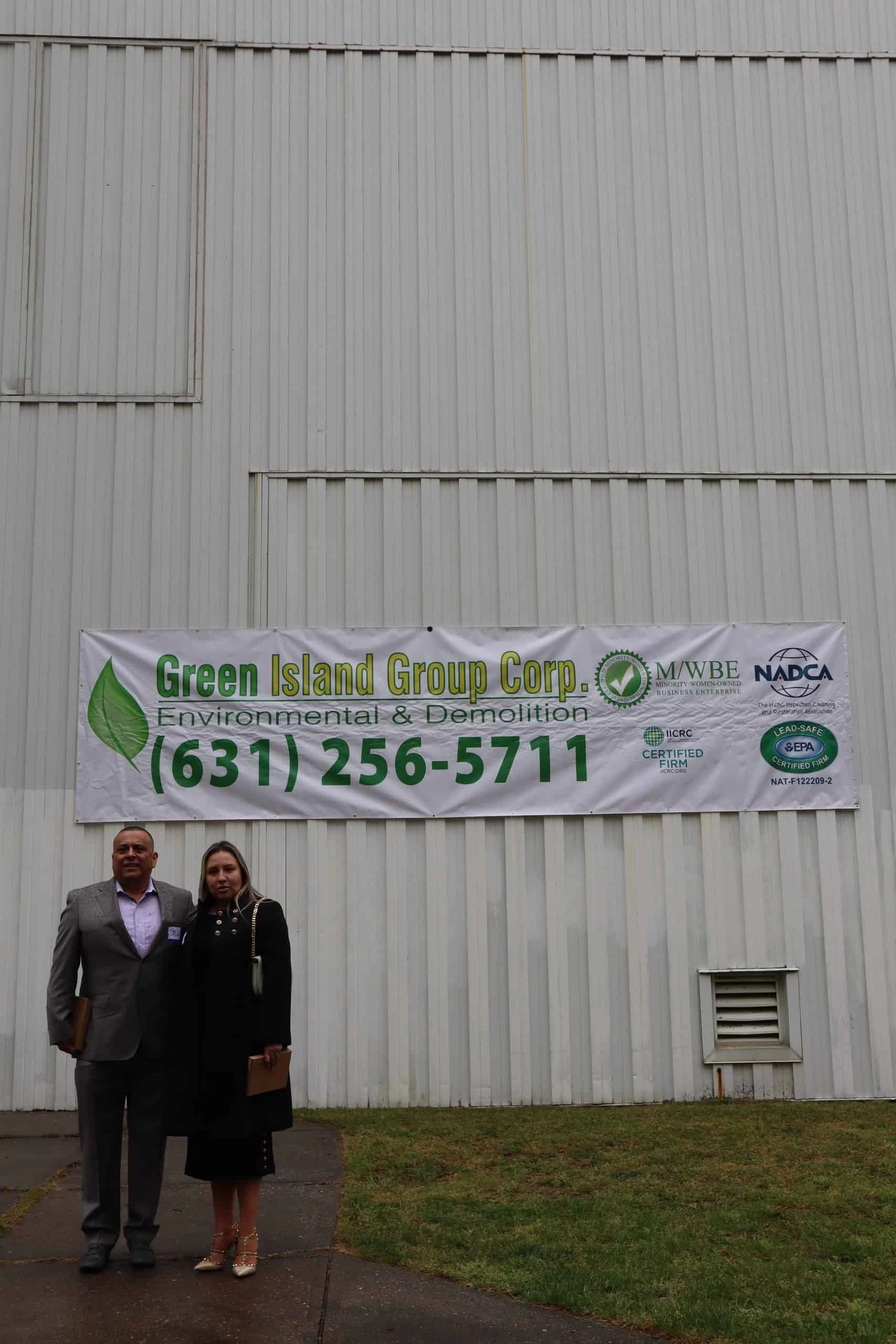
We hold the NYS Department of Labor Mold License, the NYS DOL Asbestos Contractor License, USEPA Lead and RRP certifications, IICRC Water Damage certification, and a General Contractor license for Nassau County. That last one matters more than most people realize — it means that after the water is out and the drying is done, we can legally complete the structural repairs too. Drywall, flooring, framing — all of it, under one roof, without you managing a second contractor.
New York State is one of only a handful of states that requires a dedicated mold remediation license. Most companies advertising in Merrick don’t hold it. We do. And because we’re licensed for asbestos and lead abatement as well, we’re one of the only restoration companies in Nassau County equipped to handle everything a flooded basement in an older Merrick home can throw at you — without subcontracting any of it out.
When you call 631-256-5711, you’re reaching a Long Island-based team, not a national call center. That means faster dispatch, real familiarity with South Shore flooding conditions, and a crew that’s worked in homes from Merrick Woods to the waterfront streets near the bay.
From Standing Water to Dry and Documented — Here's the Process
The first call sets everything in motion. When you reach us, we ask a few quick questions — how much water, what the likely source is, and whether there are any visible signs of sewage or contamination. That shapes how we equip the crew before they arrive. In Merrick, where a single storm can flood dozens of basements at once, we prioritize dispatch based on contamination risk and structural urgency, not just call order.
On-site, the first step is always assessment — not extraction. We use professional moisture detection equipment to map where the water has actually traveled, because what you can see on the floor is rarely the full picture. In homes with concrete block foundation walls, which are common throughout Merrick’s postwar neighborhoods, water wicks laterally through the blocks and sits behind finished surfaces long after the visible puddles are gone. We find it before we dry it.
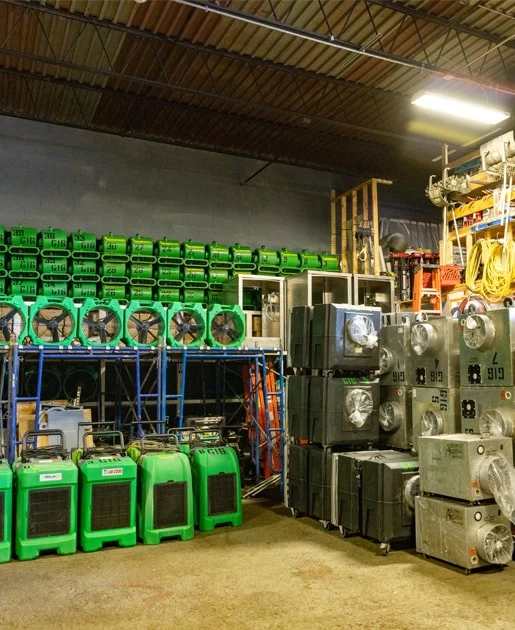
From there, we extract standing water, set industrial air movers and commercial dehumidifiers, and monitor drying progress over the following days. If the assessment identifies asbestos floor tiles, pipe insulation, or lead paint — which is a real possibility in any pre-1978 home in this area — we handle abatement under our NYS DOL licenses before any demolition or restoration work begins. Once the structure is confirmed dry and clear, we can complete all repairs under our Nassau County General Contractor license. We also document everything throughout the process in a format that supports insurance claims, whether you’re filing under a standard homeowners policy or an NFIP flood policy.
Basement Flooding Remediation Services in Merrick, NY
Built for What South Shore Basements Actually Face
Flooded basement cleanup in Merrick isn’t a one-size job. Our service covers emergency water extraction, structural drying with commercial-grade equipment, full moisture mapping, mold prevention treatment, and detailed damage documentation for insurance purposes. For Category 3 flooding — sewage backup, which happens in older Nassau County sewer laterals during heavy rain events when municipal systems get overwhelmed — we bring full biohazard decontamination protocols. That’s not something a general restoration crew is equipped or licensed to handle.
For homes in Merrick’s older neighborhoods, particularly those built before 1978, the service includes a pre-demolition hazard assessment. If asbestos floor tiles or lead-based materials are present, we handle abatement under our NYS DOL Asbestos License and USEPA Lead certification before any structural work begins. Skipping that step isn’t just risky — it’s illegal, and it can spread contamination through the rest of your home.
Because we hold a Nassau County General Contractor license, the service doesn’t stop at dry walls. We can complete full structural restoration — drywall, flooring, framing, and finishing — so you’re not left with a dry but gutted basement and a list of contractors to call. Waterfront properties along Merrick’s southern streets that carry NFIP flood insurance get the detailed damage documentation those claims specifically require. One company, start to finish.
How fast does mold actually grow after a basement floods in Merrick?
Mold can begin developing within 24 to 48 hours in the right conditions — and Merrick’s humid, coastal climate creates those conditions consistently. We recommend starting cleanup within 24 to 48 hours of a flood event. The 72-hour mark is generally considered the threshold after which mold growth becomes likely, not just possible.
What makes this especially relevant in Merrick is the combination of high ambient humidity from the Great South Bay and the porous nature of concrete block foundation walls that are common in the hamlet’s older housing stock. Water doesn’t just sit on the floor — it absorbs into walls, saturates insulation, and gets trapped behind finished surfaces. Even if the floor looks dry, those materials can stay wet long enough to support mold growth. That’s why professional moisture detection matters more than a visual check, and why speed of response is the single most important factor in preventing a water event from becoming a mold remediation project.
Does homeowners insurance cover basement flooding in Merrick, NY?
It depends on the source of the water, and this distinction matters a lot for Merrick homeowners. Standard homeowners insurance typically covers sudden, accidental water events — a burst pipe, a failed water heater, an appliance malfunction. It does not cover flooding that originates outside your home, meaning groundwater seepage, storm surge from the Great South Bay, or overland flooding from a major storm event.
For that type of coverage, you need a separate flood insurance policy — typically through the National Flood Insurance Program (NFIP). Many waterfront properties along Merrick’s southern streets are required to carry NFIP coverage as a condition of their mortgage. If you’re not sure what your policy covers, we can help you identify the source of the flooding and document the damage in a way that supports whichever claim type applies. NFIP claims in particular have specific documentation requirements, and having that paperwork done correctly from the start significantly reduces the back-and-forth with your carrier.
My Merrick home was built in the 1950s — should I be worried about asbestos in the basement?
Yes, and it’s worth taking seriously. Homes built before 1978 — which includes the majority of Merrick’s housing stock — commonly contain asbestos in basement floor tiles (especially the 9×9 inch vinyl floor tiles that were standard in that era), pipe insulation wrapped around boiler lines, and sometimes in ceiling or wall materials. Lead-based paint is also common on walls, trim, and window frames in homes of that age.
Under normal conditions, these materials aren’t necessarily dangerous if they’re intact and undisturbed. A flood changes that. Water can loosen floor tiles, damage pipe insulation, and create conditions where previously stable materials become friable and release fibers. A restoration crew that isn’t licensed for asbestos abatement can inadvertently spread contamination throughout the home during the cleanup process. We hold the NYS DOL Asbestos Contractor License and USEPA Lead certification, so if our assessment identifies these materials, we handle abatement properly before any demolition or restoration work begins. That protects your family and keeps the project legally compliant.
What's the difference between a sump pump failure flood and a storm surge flood in terms of cleanup?
The source of the water determines how the cleanup is classified and what the remediation process looks like. A sump pump failure that lets in groundwater is typically classified as Category 1 or Category 2 water — relatively clean or mildly contaminated — and the cleanup focuses on extraction, drying, and mold prevention. These are the most common flooding scenarios in Merrick’s inland neighborhoods, where the high water table and flat terrain put constant pressure on sump systems during heavy rain.
Storm surge flooding from the Great South Bay — the scenario that Merrick’s waterfront streets faced during Superstorm Sandy — is a different situation. That water carries sediment, bacteria, and contaminants from the bay, which elevates it to Category 3 classification. Category 3 cleanup requires full biohazard decontamination protocols, not just drying. The distinction also matters for insurance purposes: surge flooding is typically only covered under an NFIP flood policy, not a standard homeowners policy. Knowing the source of your flooding before you call helps us arrive with the right equipment and the right team.
How long does flooded basement cleanup take from start to finish?
The water extraction itself can usually be completed within a few hours, depending on the volume of standing water. The drying process is where the timeline extends — commercial structural drying typically takes three to five days, though that can vary based on how much moisture has been absorbed into walls, framing, and concrete. We monitor drying progress with moisture meters throughout, so we’re not guessing when the structure is ready for the next phase.
If the assessment identifies asbestos or lead materials that require abatement, that adds time before any demolition or structural repair work can begin — but it’s time that protects you legally and keeps your family safe. Full structural restoration, including drywall, flooring, and finishing, varies based on the scope of damage. For most Merrick basements, the complete process from initial call to finished restoration runs one to three weeks. We give you a clear timeline after the initial assessment so you’re not left wondering where the project stands.
Why should I hire a licensed company instead of a general handyman for basement flood cleanup?
In New York State, mold remediation legally requires a NYS Department of Labor Mold License. That’s not a voluntary certification — it’s a state requirement. A handyman or unlicensed contractor who performs mold remediation in New York is operating illegally, and if the work is done improperly, you’re left with a mold problem that’s harder to address the second time around and a paper trail that can complicate insurance claims and future home sales.
In Merrick specifically, the age of the housing stock adds another layer. Homes built before 1978 require licensed abatement professionals for asbestos and lead work — and those licenses are separate from the mold license. A general handyman typically holds none of these credentials. Beyond the legal exposure, there’s the practical reality: a crew without proper containment protocols can spread asbestos fibers or mold spores through your HVAC system and living spaces during cleanup, turning a basement problem into a whole-house problem. The licensing stack we carry exists precisely because flooded basements in older Nassau County homes aren’t simple jobs, and cutting corners on credentials is where the real cost shows up — usually months later.