When Middle Village's Combined Sewers Back Up, Your Basement Pays the Price
We respond within the hour fully licensed for water extraction, mold remediation, and complete basement restoration throughout Middle Village and the surrounding neighborhoods. We’re equipped to handle what most water damage companies won’t: the asbestos, lead paint, and sewage contamination that comes standard with basement floods in pre-war homes.
I needed a professional consultation explanation of procedure for safe removal of Asbestos in my apartment complex. Without having an account yet, I was very impressed with the caring, knowledgeable and generous advice offered by Jessica, and will look forward to doing business in the future. Thank you so much! I feel much more informed about a sometimes scary endeavor. Peace. Nancy Silva Mineola, NY.
Mia Munoz
Used this company to clean up some water flood in my house. They were fast and easy to work with.very professional, Would recommend to anyone!
Nini Valle
Great company, had a flood and they responded quickly and efficiently. Billed my insurance company directly. I highly recommend this company!
joe colapietro, jr
I had pipe freeze in my basement right before a snow storm and they made to within an hour to help start the clean up process. They we by our side throughout the entire process and even helped with the insurance company. They did such a great job with the cleanup, repair, remidiation, I contracted them to perform the repairs and finishes in the basement. They came with enough manpower and material to get the job done. Leo and Jessica were nothing but a pleasure to deal with!!
Cristian Arredondo c
I had some water damage in my home and Green Island was able to take care of my issue quickly and effectively. I am very pleased with the work they did. They responded quickly and were very professional.
Michael M
Outstanding service! From the office to the field crew everyone was friendly, helpful and responsive. I highly recommend Green Island Group.
Most cleanup companies extract the standing water, run dehumidifiers for a few days, and hand you a drying report. That’s it. What they leave behind moisture trapped inside walls, contaminated materials from sewage backflow, and the early stages of mold in an enclosed basement becomes your problem weeks later. In Middle Village, that’s not a hypothetical. It’s a pattern.
The neighborhood sits on a combined sewer system. When rainfall hits fast and hard and in Queens it does, regularly stormwater and raw sewage back up together into the lowest drain available: your basement floor. The city spent $32 million upgrading the drainage infrastructure around Penelope Avenue and 74th Street specifically because of how chronic this problem has been here. That upgrade helped. It didn’t fix everything. Residents on 77th Avenue were still posting about flooded streets and homes after the October 2025 storms.
When the job is done right, you get more than a dry floor. You get a basement that’s been properly assessed for mold, cleared of contaminated materials, structurally dried to industry standards, and documented in a way your insurance company will actually accept. For the older attached rowhouses that make up most of Middle Village many built in the 1940s and 1950s that level of thoroughness isn’t optional. It’s the only way to protect a home worth close to $900,000.
Every License the Job Legally Requires We Hold Them
We’re a Queens-based environmental remediation and restoration company with deep roots in Middle Village and the surrounding neighborhoods. We’ve been doing this work across Community District 5 including the streets around Juniper Valley Park, along Metropolitan Avenue, and in the attached rowhouses that run through Middle Village and into neighboring Maspeth long enough to know exactly what these basements look like and what they’re hiding.
The credentials aren’t there for show. New York State requires a NYS DOL Mold Remediation Contractor License for any professional mold work it’s the law. We hold it, along with NYS DOL Asbestos, USEPA Lead, USEPA RRP, IICRC Water and Fire Damage, and NYC General Contractor licensing. In a neighborhood where most homes predate 1960, that combination matters more than it does almost anywhere else.
There’s no handoff to a separate contractor for reconstruction, no gap between mitigation and mold remediation, and no moment where you’re left managing multiple vendors while your basement sits open. We handle the full scope from the first call to the finished floor.
Emergency Basement Water Removal Middle Village NY
From Sewage Backup to Dry Basement Here's What We Actually Do
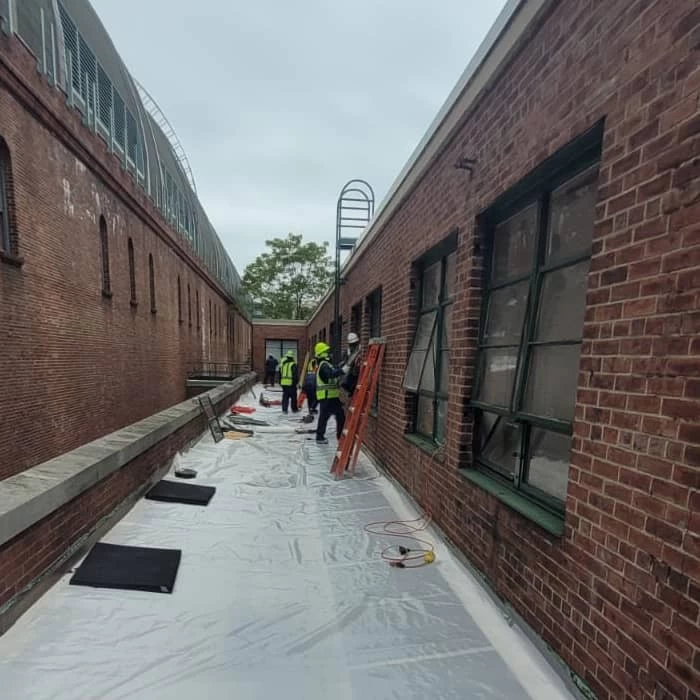
The first call triggers a response. We operate 24/7 and target arrival within one hour because in a Middle Village basement flood, especially one involving sewer backup, every hour you wait is an hour closer to the 72-hour window when mold begins to establish itself. Our team arrives with extraction equipment, moisture meters, and thermal imaging cameras to assess what’s visible and what isn’t.
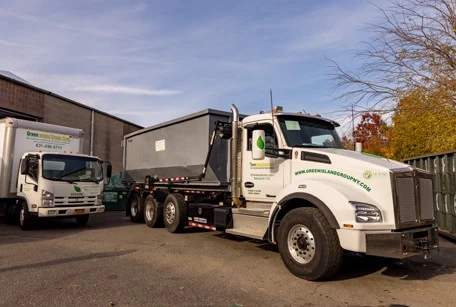
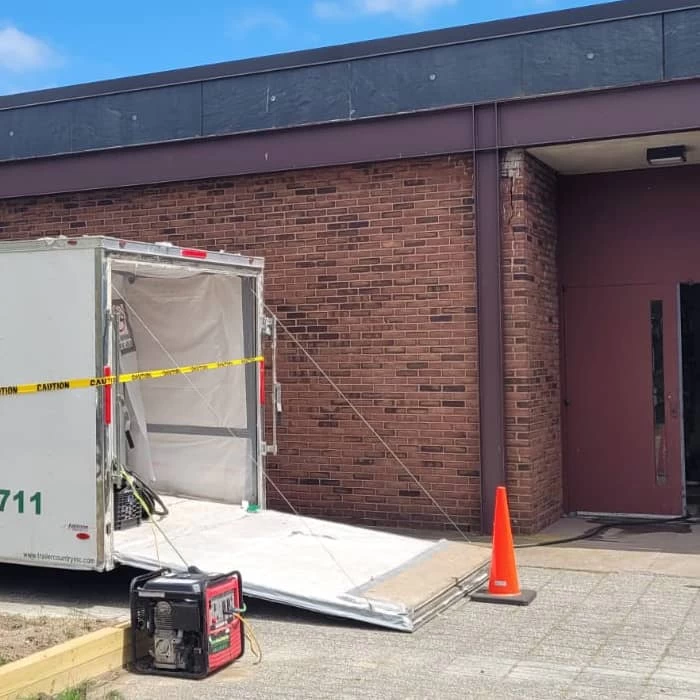
Water removal comes first. Then we evaluate the contamination level. In Middle Village, where combined sewer overflow is the most common cause of basement flooding, that water is classified as black water sewage-contaminated, biohazardous, and requiring a different protocol than a clean water pipe burst. That means proper containment, licensed disposal, and surface decontamination not just drying. If your home was built before 1978, which describes the majority of homes in this ZIP code, we also check for disturbed asbestos pipe insulation and lead paint before any demolition or material removal begins. That’s a legal requirement, and it’s one most water damage companies in this market are not licensed to fulfill.
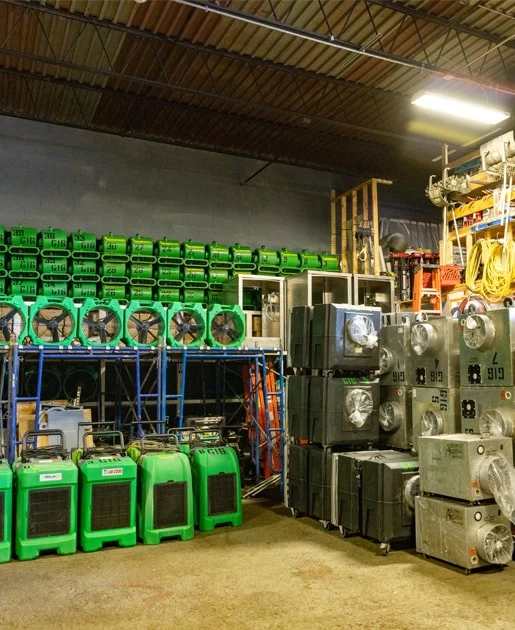
Structural drying follows, using industrial air movers and dehumidifiers, with moisture readings documented throughout. Once the space is clear and dry, we move directly into mold remediation, content restoration, and full basement reconstruction all under one contract, all with permits pulled legally through our NYC General Contractor license.
Flooded Basement Cleaning and Mold Remediation Queens
The Full Scope Most Companies Stop Short Of
What we deliver isn’t a partial fix. It’s the complete arc from emergency water extraction through mold prevention, hazardous material handling, structural drying, content restoration, and full basement reconstruction if needed. For Middle Village homeowners, that full scope is what the situation usually demands.
Because the flooding mechanism here is primarily combined sewer overflow, most basement flood events in ZIP code 11379 involve sewage contamination. That changes everything: the cleanup protocol, the licensing requirements, the insurance documentation, and the timeline. Our team is certified under IICRC Water Damage standards, which is what insurance adjusters look for when reviewing restoration claims. We also bill insurance directly and communicate with adjusters on your behalf not as a courtesy, but as a standard part of how we work. Homeowners have described this as the part that made the biggest difference.
For homes along Juniper Boulevard, off Dry Harbor Road, or anywhere else in Middle Village where pre-war construction is the norm, we’re also equipped to handle the asbestos pipe insulation and lead paint that commonly appear in these basements once water damage forces material removal. That’s not a specialty add-on it’s built into how every job in this neighborhood gets assessed from the start. No surprises, no subcontractors, no gaps in the scope.
Why does my Middle Village basement flood every time it rains hard?
Middle Village is served by a combined sewer system the same pipes that carry sanitary sewage also carry stormwater runoff. New York City’s sewer infrastructure is designed to handle about 1.75 inches of rain per hour. When storms push past that threshold, which happens regularly in Queens, the system gets overwhelmed and the overflow has to go somewhere. The lowest available outlet is usually a basement floor drain.
This isn’t a problem with your home’s plumbing specifically it’s a neighborhood-wide infrastructure issue that the city has been working to address for years. The $32 million drainage upgrade completed in 2020 around Penelope Avenue and 74th Street was a direct response to this chronic problem. That project helped the immediate area, but the broader combined sewer overflow risk across Middle Village hasn’t been eliminated. Until the long-term infrastructure work is complete, heavy rain events will continue to create real flooding risk for homeowners throughout the neighborhood.
Is the water in my flooded basement safe to clean up myself?
It depends entirely on where the water came from. If a pipe burst inside your home and the water is clean, minor cleanup with proper drying equipment is more manageable. But in Middle Village, most basement flooding events involve combined sewer overflow meaning the water contains raw sewage. That’s classified as black water, and it’s biohazardous. Direct contact without proper protective equipment creates real health risks, and standard shop vacs and fans won’t eliminate the contamination.
Beyond the sewage issue, homes in Middle Village are predominantly pre-1960 construction. If your basement has asbestos pipe insulation which is extremely common in homes built before 1960 and that insulation gets wet and disturbed during a flood, you could be releasing hazardous fibers without realizing it. New York State law requires licensed contractors to handle asbestos abatement. Attempting a DIY cleanup in an older Middle Village home without knowing what materials are present can create a much larger and more expensive problem than the flood itself.
How quickly does mold start growing after a basement floods?
Mold can begin colonizing within 24 to 72 hours of a flood event and in an enclosed basement space, especially in the attached and semi-detached rowhouses that make up most of Middle Village, that timeline can move faster than it would in an open or well-ventilated area. Shared walls, limited airflow, and the humid conditions that follow a sewer backup create an environment where mold establishes quickly and spreads into wall cavities before it’s visible on the surface.
Waiting past that 72-hour window doesn’t just increase the mold risk it increases the cost of remediation. What might be a contained mold prevention job at 48 hours can become a full mold remediation project requiring wall demolition and air scrubbing at 96 hours. The difference in cost is typically $2,000 to $8,000 or more. This is why response time matters, and why calling a company that can arrive within the hour not the next business day is worth prioritizing the moment you discover standing water in your basement.
Does homeowners insurance cover basement flooding from a sewer backup in Queens?
Standard homeowners insurance policies cover sudden and accidental internal water damage a burst pipe, a failed appliance, that kind of thing. Sewer backup is a different category, and most standard policies don’t cover it unless you’ve added a specific sewer backup or water backup rider. Flood damage from external sources like stormwater entering through foundation walls typically requires a separate flood insurance policy through the National Flood Insurance Program or a private carrier.
For Middle Village homeowners dealing with combined sewer overflow backup, the coverage question can be complicated. The water entered through your drain, but it originated from an overwhelmed municipal system. How your claim gets categorized matters enormously for what gets paid. This is exactly why we document the damage thoroughly from the moment we arrive the photos, moisture readings, and contamination assessments we produce are what insurance adjusters need to process a claim accurately. We communicate directly with adjusters throughout the process, which has made a measurable difference in claim outcomes for homeowners in this area.
My Middle Village home was built in the 1950s does that affect the cleanup process?
Yes, significantly. Homes built before 1978 which covers the vast majority of Middle Village’s housing stock, given the neighborhood’s median construction year of 1951 may contain asbestos insulation on basement boiler pipes, hot water lines, and heating ducts, as well as asbestos floor tiles and lead paint on basement walls and structural elements. When a basement floods and materials get wet or need to be removed, these hazardous materials can be disturbed.
Under New York State law, asbestos abatement requires a licensed contractor. The same applies to lead paint disturbance under EPA RRP rules. A water damage company that doesn’t hold NYS DOL Asbestos, USEPA Lead, and USEPA RRP certifications cannot legally or safely complete a full cleanup in a pre-1978 home. We hold all three credentials, which means the entire scope of work from water extraction through material removal and structural repair can be handled legally and completely without bringing in separate licensed subcontractors or leaving hazardous materials unaddressed.
How do I find a legitimate basement flood cleanup company in Middle Village, NY?
Start with licensing. In New York State, any company performing mold remediation must hold a valid NYS DOL Mold Remediation Contractor License this is a legal requirement, not a voluntary credential. Ask any company you’re considering to confirm they hold this license before they start work. If they can’t confirm it, move on. Beyond mold licensing, look for IICRC Water Damage certification, which is the standard insurance companies use when reviewing restoration claims, and NYC General Contractor licensing if the job may involve structural repairs or reconstruction.
Be cautious of what shows up in local search results. During the research for this page, at least one company appearing in Middle Village search results was operating with a Texas area code while presenting itself as a local provider a lead-generation site, not an actual restoration company. A legitimate local operator will have a verifiable Queens-based address, documented credentials, and a track record in the specific neighborhoods they claim to serve. Green Island Group has an established service presence in Middle Village and the surrounding communities Maspeth directly to the west, Glendale to the south and carries every license the work in this neighborhood legally requires.