Mineola's Older Homes Deserve More Than a Shop Vac and a Dehumidifier
When your basement floods in a pre-1970 Mineola home, the water is rarely the only problem. We handle the full scope — extraction, drying, mold prevention, and restoration — so you’re not managing five different contractors while the clock runs out.
I needed a professional consultation explanation of procedure for safe removal of Asbestos in my apartment complex. Without having an account yet, I was very impressed with the caring, knowledgeable and generous advice offered by Jessica, and will look forward to doing business in the future. Thank you so much! I feel much more informed about a sometimes scary endeavor. Peace. Nancy Silva Mineola, NY.
Mia Munoz
Used this company to clean up some water flood in my house. They were fast and easy to work with.very professional, Would recommend to anyone!
Nini Valle
Great company, had a flood and they responded quickly and efficiently. Billed my insurance company directly. I highly recommend this company!
joe colapietro, jr
I had pipe freeze in my basement right before a snow storm and they made to within an hour to help start the clean up process. They we by our side throughout the entire process and even helped with the insurance company. They did such a great job with the cleanup, repair, remidiation, I contracted them to perform the repairs and finishes in the basement. They came with enough manpower and material to get the job done. Leo and Jessica were nothing but a pleasure to deal with!!
Cristian Arredondo c
I had some water damage in my home and Green Island was able to take care of my issue quickly and effectively. I am very pleased with the work they did. They responded quickly and were very professional.
Michael M
Outstanding service! From the office to the field crew everyone was friendly, helpful and responsive. I highly recommend Green Island Group.
The difference between a $3,000 cleanup and a $30,000 mold remediation project is often just a matter of hours. Nassau County’s water table sits close to the surface, which means your Mineola basement can take on water after a sustained rain even when there’s no visible flooding on your street. If that water isn’t extracted and dried within 72 hours, mold becomes the next problem — and in an older Mineola home, that’s a much bigger conversation.
Most of Mineola’s residential core was built before 1970, with a significant portion predating 1939. That means aging foundations with hairline cracks, outdated drainage systems, and in many cases, asbestos floor tiles or lead paint on basement walls. When those materials get wet, standard cleanup isn’t enough. You need a company licensed to handle what’s underneath the surface — not just what’s visible on the floor.
When the job is done correctly, you get a dry, documented, fully restored basement — with no hidden moisture left behind, no mold risk lurking in the walls, and a clear record of the work completed. That documentation matters if you ever sell the home. A $700,000 to $800,000 asset deserves to be protected like one.
Licensed Basement Flood Restoration, Nassau County
Every License That Matters — All Under One Roof
We hold a NYS DOL Mold License, NYS DOL Asbestos License, USEPA Lead and RRP certifications, IICRC Water Damage certification, and a Nassau County General Contractor license. That last one matters more than people realize — it means the structural restoration work, the drywall, the flooring, the finishes, can all be completed by the same team that extracted the water. No handoffs. No gaps in accountability.
New York is one of the only states in the country that requires a dedicated mold license for remediation work. Any contractor doing that work without one is operating illegally. In Mineola, where older housing stock creates real hazmat complexity during a flood cleanup, the credentials aren’t a formality — they’re the difference between a job done right and a liability you didn’t see coming.
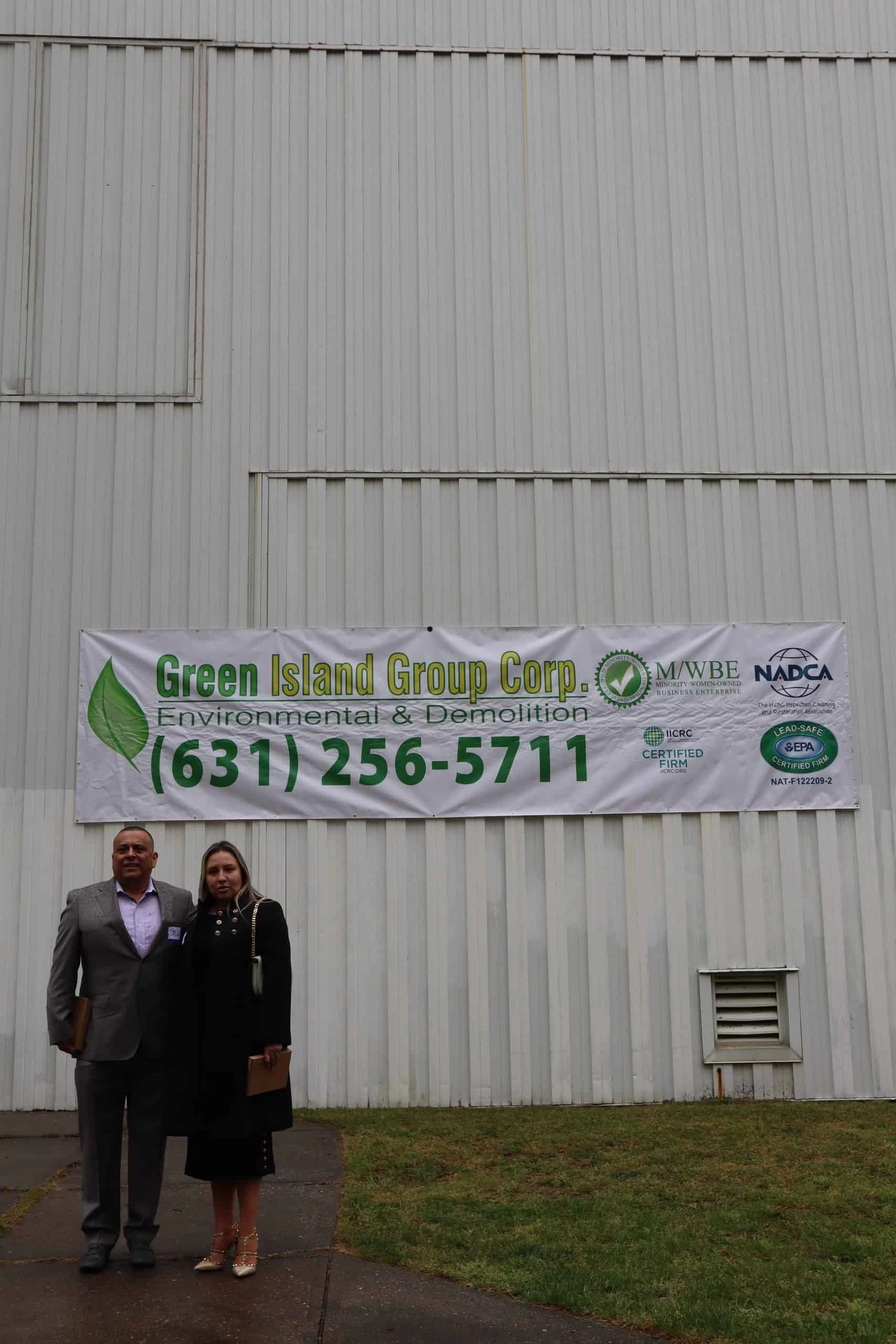
We’re also certified as a NYS Minority Business Enterprise and Women’s Business Enterprise, a distinction no competitor ranking for this service in Mineola currently holds.
From the First Call to the Final Walkthrough — Here's What to Expect
When you call, you reach a live person — not a call center. We keep crews staged during Nassau County weather events, and our target response time for Mineola is within one hour. That matters because the 72-hour mold window starts the moment water enters your basement, not the moment a contractor shows up.
Once on-site, our first step is a full assessment — moisture readings, thermal imaging, and an inspection for any hazardous materials that may have been disturbed. In Mineola’s older housing stock, this step is not optional. Asbestos floor tiles and lead paint are common in basements built before 1978, and disturbing those materials without proper protocols creates a health risk and a legal liability. If hazardous materials are present, we handle them under our NYS DOL Asbestos and USEPA Lead certifications before any further work proceeds.
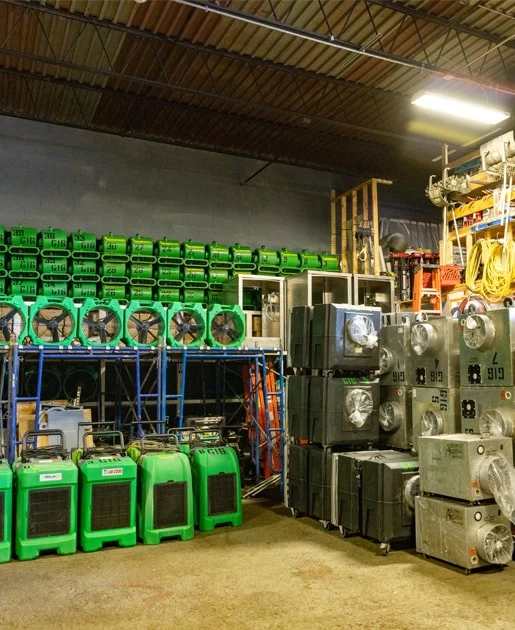
From there, industrial extraction equipment removes standing water, followed by commercial-grade air movers and dehumidifiers to bring moisture levels down to safe thresholds. Thermal imaging confirms that moisture hasn’t migrated into walls or subfloor cavities. If mold is present or the 72-hour window has passed, we perform remediation under the NYS DOL Mold License — not as a separate engagement, but as part of the same job. When the structure is clean and dry, our Nassau County GC license covers full restoration: framing, drywall, flooring, and finishes. We also handle direct billing to your insurance company and assist with the claims process from start to finish.
Built for Nassau County's Water Problems — Not Someone Else's
Nassau County’s high water table is one of the most commonly overlooked flooding risks in Mineola. Unlike storm surge or coastal flooding, groundwater intrusion happens quietly — water pushes through foundation cracks and floor joints under hydrostatic pressure, sometimes on a day with no rain at all. Our teams work in Mineola regularly and understand the difference between surface flooding from an overwhelmed storm drain and groundwater seepage from a saturated water table. The response to each is different, and treating them the same way leads to incomplete drying and recurring problems.
Sewer backup is another risk that Mineola homeowners don’t always think about until it happens. During heavy rain events, older combined sewer systems can force wastewater back into homes through floor drains. That’s Category 3 contamination — a biohazard — and it requires full decontamination protocols, not just extraction and drying. We’re equipped and licensed for sewage backup cleanup. Many restoration companies are not.
The full scope of what we cover in Mineola includes emergency water extraction, structural drying, thermal imaging, mold inspection and remediation, asbestos and lead compliance for pre-1978 homes, sewage decontamination, HVAC inspection under NADCA certification, and complete structural restoration under the Nassau County GC license. Insurance documentation and direct billing are included in every job. If your basement flooded during the August 2024 record rainfall or the September 2023 flash flood event, and you’re still dealing with moisture, odor, or visible mold — that’s a job we can assess and resolve from start to finish.
Why does my Mineola basement keep flooding even when it barely rains?
Nassau County sits just a few feet above the water table in many areas, and Mineola is no exception. What most homeowners don’t realize is that groundwater intrusion doesn’t require a named storm or heavy rainfall — it just requires a sustained period of wet weather that raises the water table high enough to push against your foundation walls. If your basement has hairline cracks, aging mortar joints, or an older poured concrete floor, that pressure finds a way in.
In Mineola’s older housing stock — much of which was built before 1970 — foundations were not built to modern waterproofing standards, and many were never waterproofed at all. If you’re seeing recurring seepage along the base of the walls, a wet floor after a week of rain, or efflorescence (white mineral deposits) on your foundation walls, those are signs of hydrostatic pressure, not just a one-time leak. The fix isn’t just drying it out each time — it’s understanding the source and addressing the structural conditions that allow it to happen. We can assess the full picture and give you an honest read on what’s driving it.
How quickly does mold start growing after a basement flood in Nassau County?
Mold can begin developing within 24 to 48 hours of water exposure, and the EPA recommends starting cleanup within that window. The industry’s critical threshold is 72 hours — if a basement is fully dried within that timeframe, mold growth is unlikely. Beyond it, the situation changes significantly, and what started as a water damage job becomes a mold remediation project.
In Mineola’s climate — humid summers, wet springs, and a water table that stays elevated for days after a rain event — that window closes fast. A basement that floods on a Monday night and doesn’t get professional attention until Wednesday afternoon may already have mold developing in wall cavities and under flooring, even if the floor looks dry. That’s why we stage crews during weather events and target arrival within one hour for Mineola calls. The faster the response, the more likely the job stays in the cleanup category rather than the remediation category — and that difference can be measured in thousands of dollars.
Does homeowners insurance cover flooded basement cleanup in Mineola, NY?
It depends on the cause of the flooding, and this is where most homeowners get caught off guard. Standard homeowners insurance typically covers sudden and accidental water damage — a burst pipe, a failed sump pump, or a washing machine overflow — but it generally does not cover flooding from external groundwater or storm surge. For that, you’d need a separate flood insurance policy, often through the National Flood Insurance Program (NFIP).
That said, many Mineola homeowners have coverage they don’t fully understand, and some policies include water backup endorsements that cover sewer or drain backups — which is a real and common risk in Mineola given the age of the local sewer infrastructure. The best move after a basement flood is to call your insurance company immediately and document everything before cleanup begins. We handle direct billing to insurance companies and assist with the claims process, including damage documentation that supports your claim. If you’re unsure what your policy covers, we can help you understand what documentation you’ll need before the adjuster arrives.
My Mineola home was built in the 1950s — does that affect the cleanup process?
Yes, significantly. Homes built before 1978 commonly contain asbestos floor tiles, asbestos pipe insulation, and lead paint — all of which become a hazard when disturbed during water damage cleanup. In a 1950s Mineola basement, it’s not unusual to find vinyl asbestos floor tiles (VAT), asbestos-wrapped pipes near the boiler, and lead-based paint on the walls. When those materials get wet and need to be removed or disturbed, standard restoration protocols don’t apply.
Any contractor performing that work without a NYS DOL Asbestos License or USEPA Lead/RRP certification is doing so illegally — and more importantly, unsafely. We hold both certifications, which means we can assess for hazardous materials as part of the initial inspection, handle abatement under proper protocols if needed, and continue straight into the water damage restoration without the homeowner having to coordinate a separate abatement contractor. For older Mineola homes, this isn’t a niche scenario — it’s a standard part of the job that a qualified company should be prepared for before they ever walk in the door.
What's the difference between water damage cleanup and mold remediation in Mineola?
Water damage cleanup refers to the extraction of standing water and the structural drying process — removing moisture from surfaces, walls, and cavities to prevent secondary damage. Mold remediation is a separate, regulated process that addresses mold growth that has already occurred. In New York State, mold remediation requires a dedicated NYS DOL Mold License — it is not something a general contractor or an unlicensed restoration company can legally perform.
In practice, the two often overlap. If a Mineola basement floods and isn’t addressed within 72 hours, or if there was pre-existing moisture behind finished walls that the flooding disturbed, mold remediation may be needed alongside or immediately following the water damage cleanup. We hold both the IICRC Water Damage certification and the NYS DOL Mold License, which means we can move from one phase to the next without stopping to bring in a second company. For homeowners in Mineola dealing with a basement that has flooded more than once — or that has a history of seepage from the high water table — a mold inspection as part of the cleanup assessment is worth doing regardless of whether visible mold is present.
How much does flooded basement cleanup typically cost in Mineola, NY?
The range is wide because the scope varies considerably. A straightforward water extraction and structural drying job in a finished Mineola basement might run $1,500 to $4,000. If mold remediation is needed, that can add $3,000 to $10,000 or more depending on the extent of growth and the materials affected. If asbestos abatement is required — which is a real possibility in Mineola homes built before 1978 — that adds cost and time as well. Sewage backup cleanup, which requires full biohazard decontamination, typically runs higher than clean water flooding regardless of square footage.
What drives the final number most is how quickly the job starts and what’s found during the initial assessment. A basement that gets professional attention within the first few hours of flooding is almost always a less expensive job than one that sat for two or three days. For a home worth $700,000 to $800,000 — which is the median range in Mineola — the cost of proper cleanup is a fraction of what deferred or incomplete work can cost in long-term structural damage, mold liability, or complications at the time of sale. We provide a full assessment before any work begins so you know exactly what you’re looking at before you make any decisions.