Flooded Basement Cleanup in Morningside Heights, NY
When Broadway's Old Pipes Flood Your Basement, You Need More Than a Wet Vac
Flooded basement cleanup in Morningside Heights means dealing with century-old buildings, aging infrastructure, and materials that require licensed hands we handle all of it under one call.
I needed a professional consultation explanation of procedure for safe removal of Asbestos in my apartment complex. Without having an account yet, I was very impressed with the caring, knowledgeable and generous advice offered by Jessica, and will look forward to doing business in the future. Thank you so much! I feel much more informed about a sometimes scary endeavor. Peace. Nancy Silva Mineola, NY.
Mia Munoz
Used this company to clean up some water flood in my house. They were fast and easy to work with.very professional, Would recommend to anyone!
Nini Valle
Great company, had a flood and they responded quickly and efficiently. Billed my insurance company directly. I highly recommend this company!
joe colapietro, jr
I had pipe freeze in my basement right before a snow storm and they made to within an hour to help start the clean up process. They we by our side throughout the entire process and even helped with the insurance company. They did such a great job with the cleanup, repair, remidiation, I contracted them to perform the repairs and finishes in the basement. They came with enough manpower and material to get the job done. Leo and Jessica were nothing but a pleasure to deal with!!
Cristian Arredondo c
I had some water damage in my home and Green Island was able to take care of my issue quickly and effectively. I am very pleased with the work they did. They responded quickly and were very professional.
Michael M
Outstanding service! From the office to the field crew everyone was friendly, helpful and responsive. I highly recommend Green Island Group.
Basement Water Damage Restoration, Morningside Heights
Dry Walls Aren't Enough in a Building Built in 1908
When your basement floods in Morningside Heights, the visible water is only part of the problem. The buildings along Riverside Drive, the blocks surrounding Columbia’s campus, the brownstones off Amsterdam Avenue most of them were built between 1900 and 1940, and they were built with materials that nobody talks about until a flood forces the conversation. Asbestos pipe insulation. Lead paint on basement walls. Nine-inch floor tiles that are almost certainly asbestos-containing. When floodwater saturates those materials, you don’t just have a wet floor you have a regulated hazardous materials situation that most water damage companies aren’t licensed to touch.
What you get when the job is done right is more than a dry basement. It’s a basement that’s been properly assessed, correctly dried to industry moisture standards, tested for mold, and cleared with documentation your co-op board or insurance carrier will actually accept. In a neighborhood where buildings are subject to NYC Local Law 55 and where co-op boards have real legal obligations to shareholders, that paperwork matters as much as the drying.
The other thing worth knowing: when heavy rain overwhelms Manhattan’s combined sewer system which it does, and which it did during Hurricane Ida in September 2021 the water backing up into your basement isn’t clean. It’s sewage-contaminated water, and it requires a completely different cleanup protocol than a burst pipe would. That distinction changes everything about how the job needs to be handled, and we handle it correctly.
We hold active New York State Department of Labor licenses for water damage restoration, mold remediation, asbestos abatement, and lead abatement separately, as New York State requires. That’s not common. Most companies operating in Morningside Heights and across Manhattan hold one or two of those licenses and call a subcontractor for the rest, which means delays, split accountability, and gaps in compliance that can create real problems for building owners and co-op boards.
Our team has completed thousands of jobs across New York City’s five boroughs, including the pre-war residential buildings that define Morningside Heights and the surrounding Upper Manhattan neighborhoods. We know what a basement mechanical room in a 1910 building looks like. We know what steam pipe insulation from that era contains. We know what NYC Local Law 55 requires of your building owner, and we produce the documentation to satisfy it.
We also bill insurance carriers directly. That means you’re not fronting the cost and waiting for reimbursement while your building dries out the claim process runs alongside the remediation, not after it.
Basement Water Cleanup Process, Morningside Heights NY
What Actually Happens From the First Call to Final Clearance
The first call triggers a 24/7 dispatch. In a Manhattan building where access requires coordination with building management or a co-op superintendent, we account for that from the start we’re not showing up expecting a suburban driveway. Once on-site, the first step is assessing the water source and category. If this is a combined sewer overflow event which is common in Morningside Heights during heavy rainfall the protocol shifts immediately to Category 3 contamination procedures, including full containment and EPA-compliant disinfection before any other work begins.
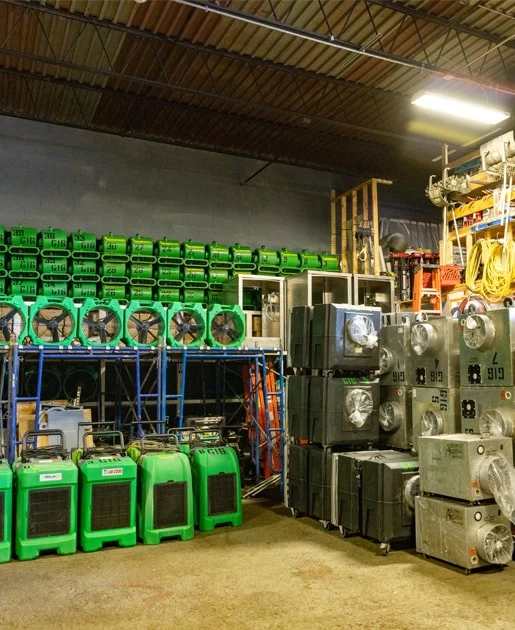
From there, water extraction and structural drying begin using industrial-grade equipment. But drying what you can see is only part of it. Thermal imaging and calibrated moisture meters map the moisture that has migrated into plaster walls, old-growth wood framing, and the cavities behind original building materials the places where mold will grow if they’re missed. In a pre-war building, those hidden pockets are everywhere.
If asbestos-containing materials have been disturbed and in a building constructed before 1980, that’s a serious possibility the licensed abatement work happens concurrently, not as an afterthought. The job doesn’t close until post-remediation air quality testing confirms the space is clear. That final clearance report is documented and deliverable, which matters when your co-op board, your insurance adjuster, or a future buyer asks for proof the work was done correctly.
Built for Pre-War Buildings, Not Cookie-Cutter Cleanups
Flooded basement cleanup in Morningside Heights isn’t a one-size job. Our service covers water extraction, structural drying, moisture mapping with thermal imaging, mold testing, mold remediation, asbestos assessment, asbestos abatement where required, lead paint management, and post-remediation clearance testing all performed under active NYS DOL licenses, all under one contract. If structural demolition is needed because materials are too saturated or contaminated to save, we handle that too.
The regulatory piece is built into every job, not added on. NYC Local Law 55 compliance documentation, NYS Article 32 mold remediation requirements, asbestos abatement records these are standard outputs of every completed project, not extras you have to request. For co-op boards and building managers in Morningside Heights who have legal obligations to their residents and shareholders, this documentation isn’t optional, and we treat it that way.
Direct insurance billing is part of the process from day one. We work with your carrier, handle adjuster communication, and document damage in the format insurers require. Whether you’re an individual unit owner with an HO-6 policy, a co-op board navigating a master policy claim, or a building manager dealing with a commercial property loss, the billing process is handled on your behalf not handed back to you to figure out after the crew leaves.
Does basement flooding in a Morningside Heights pre-war building mean there's asbestos?
Not every flooded basement in Morningside Heights has asbestos, but if your building was constructed before 1980 which describes the vast majority of residential buildings in the neighborhood the probability is high enough that it needs to be assessed before any demolition or material removal begins. Asbestos was standard in buildings of that era. It was used to wrap steam pipes and hot water lines in basement mechanical rooms, in floor tiles, in ceiling materials, and in joint compound. Floodwater that saturates those materials can disturb them, which is when exposure risk becomes real.
Under New York State Department of Labor regulations, any work that disturbs asbestos-containing materials must be performed by a licensed asbestos contractor with a licensed supervisor on-site. We hold both licenses. If an assessment finds asbestos-containing materials in your basement, abatement is handled as part of the same job you don’t need to stop the remediation and find a separate contractor, which is what would happen with most water damage companies that don’t hold asbestos licensing.
How quickly does mold start growing after a basement flood in Manhattan?
The EPA puts the window at 24 to 48 hours that’s how long it takes for mold to begin colonizing wet building materials under normal conditions. In a Morningside Heights building with thick plaster walls, old-growth wood framing, and compressed insulation in pipe chases, the hidden moisture that feeds mold growth can persist long after the visible water is gone. The surface dries. The wall cavity doesn’t. And six weeks later, you’re dealing with a mold problem that’s invisible from the outside but actively growing behind the plaster.
This is why moisture mapping matters as much as water extraction. Thermal imaging and calibrated moisture meters find the wet spots that eyes can’t. In pre-war construction specifically where walls are thick, materials are dense, and building cavities aren’t designed for easy inspection this step is what separates a complete remediation from one that leaves a mold problem behind. The 48-hour clock is real, and it doesn’t pause while you wait to see if the basement dries on its own.
What does NYC Local Law 55 require after basement flooding in a residential building?
NYC Local Law 55 of 2018 requires building owners of multiple dwellings buildings with three or more units, which is virtually every residential building in Morningside Heights to maintain their buildings free of indoor allergen hazards, including mold. After a flooding event, that means investigating for mold, remediating it if found, and doing so using licensed professionals under NYS Article 32 of the Labor Law, which requires separately licensed professionals for mold assessment and mold remediation.
In practical terms, this means your building owner or co-op board has a legal obligation to act after a flood not just to dry the basement, but to assess for mold and document that the remediation was performed by a licensed contractor. If that documentation doesn’t exist and a city inspector or a tenant complaint triggers a review, the building owner is exposed. We produce the compliance documentation assessment records, remediation logs, post-clearance air quality results as a standard deliverable on every job, not something you have to ask for separately.
Is the water in my flooded basement safe, or could it be sewage contaminated?
It depends on the source, and the source isn’t always obvious. If your basement flooded during or immediately after heavy rainfall in Morningside Heights, there’s a real possibility the water contains sewage contamination. Manhattan’s combined sewer system carries both stormwater and sewage in the same underground pipes. When intense rain overwhelms the system as it did during Hurricane Ida in September 2021, when 3.15 inches fell in a single hour at Central Park sewage backs up into building basements throughout the neighborhood. That’s Category 3 water under IICRC industry standards, meaning it contains pathogens and bacteria that require a completely different cleanup protocol than a clean water pipe burst would.
If the flooding came from a burst pipe or an appliance failure with no rain event involved, it’s more likely to be Category 1 or Category 2 water cleaner, but still requiring professional extraction and drying. The category assessment happens on arrival and determines the entire protocol for the job. Treating Category 3 water like a simple wet floor is how people end up with health hazards left behind in their basement walls. Don’t assume let the assessment tell you what you’re actually dealing with.
Will my homeowner's insurance or co-op policy cover flooded basement cleanup in Morningside Heights?
Coverage depends on the cause of the flooding and the specific policies involved, and in a Morningside Heights co-op or condo building, there are often multiple layers of coverage to navigate the building’s master policy, your individual HO-6 unit owner’s policy, and potentially flood insurance if the building carries it. Standard homeowner’s and HO-6 policies typically cover sudden and accidental water damage, like a burst pipe, but may exclude flooding from external sources like sewer backup unless a specific rider is in place.
The documentation you submit to the carrier matters enormously. Adjusters want to see the cause of loss clearly identified, the damage scope documented with photos and moisture readings, and the remediation performed by licensed professionals. We bill insurance carriers directly and manage the adjuster communication and documentation process. That means you’re not navigating the claim alone while also trying to deal with a flooded basement the process runs in parallel, and the paperwork is handled by people who do this every day.
How long does flooded basement cleanup actually take in a Morningside Heights apartment building?
The honest answer is that it varies, and the variables specific to Morningside Heights buildings tend to push timelines longer than a suburban job would run. The structural drying phase alone typically takes three to five days for a straightforward water damage situation longer if the building’s thick plaster walls and dense old-growth framing have absorbed significant moisture. If asbestos-containing materials are found and abatement is required, that adds time because abatement work follows a regulated process with specific containment, removal, and clearance steps that cannot be rushed.
Mold remediation, if mold has already begun growing which can happen within 48 hours of flooding adds additional time depending on the extent of colonization. Post-remediation air quality testing and final clearance happen at the end, and the job isn’t considered complete until those results confirm the space is clean. In a large multi-unit building with complex basement access and mechanical systems, coordinating all of this with building management adds logistical time as well. A realistic range for a complete remediation in a pre-war Morningside Heights building, including asbestos assessment and mold clearance, is one to two weeks though emergency water extraction and initial drying begin on day one.