When the North Shore Storms, Your Mount Sinai Basement Pays the Price
Mount Sinai gets hit hard and when 7-plus inches of rain fall overnight, flooded basement cleanup can’t wait until morning. We respond 24/7 with the equipment and expertise to handle what the North Shore throws at your home.
I needed a professional consultation explanation of procedure for safe removal of Asbestos in my apartment complex. Without having an account yet, I was very impressed with the caring, knowledgeable and generous advice offered by Jessica, and will look forward to doing business in the future. Thank you so much! I feel much more informed about a sometimes scary endeavor. Peace. Nancy Silva Mineola, NY.
Mia Munoz
Used this company to clean up some water flood in my house. They were fast and easy to work with.very professional, Would recommend to anyone!
Nini Valle
Great company, had a flood and they responded quickly and efficiently. Billed my insurance company directly. I highly recommend this company!
joe colapietro, jr
I had pipe freeze in my basement right before a snow storm and they made to within an hour to help start the clean up process. They we by our side throughout the entire process and even helped with the insurance company. They did such a great job with the cleanup, repair, remidiation, I contracted them to perform the repairs and finishes in the basement. They came with enough manpower and material to get the job done. Leo and Jessica were nothing but a pleasure to deal with!!
Cristian Arredondo c
I had some water damage in my home and Green Island was able to take care of my issue quickly and effectively. I am very pleased with the work they did. They responded quickly and were very professional.
Michael M
Outstanding service! From the office to the field crew everyone was friendly, helpful and responsive. I highly recommend Green Island Group.
When your basement floods, the visible water is only part of the problem. Moisture wicks into wall cavities, insulation, and subfloor materials and in a Mount Sinai home where humidity is already elevated and basements sit below the water table, that hidden saturation is where the real damage happens. Mold can start growing within 24 to 48 hours. By the time you smell it, you’re looking at a much bigger job.
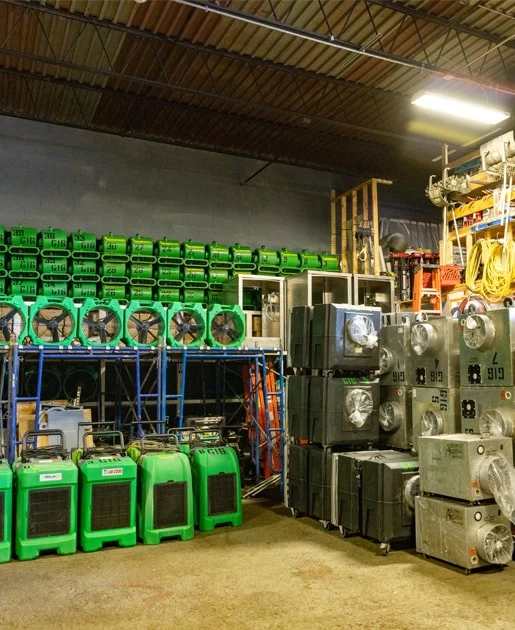
What you actually need is a crew that treats the whole picture not just what’s visible on the floor. That means industrial drying equipment, moisture readings taken at every stage, and documentation your insurance adjuster can work with. For Mount Sinai homeowners with properties valued well above $600,000, getting this right the first time isn’t optional.
A significant portion of homes in this area were built before 1980. That matters because when water damages walls and insulation, what’s inside those walls can become a serious concern asbestos, lead paint, materials that require licensed handling. Most water damage companies stop when that becomes relevant. We don’t, because we hold the certifications to take the job all the way through.
Licensed Basement Flood Remediation Suffolk County
One Company, Every License, No Handoffs Serving Mount Sinai and the North Shore
We’ve completed more than 5,000 restoration projects across New York State over 12-plus years. We hold a Suffolk County General Contractor license, NYS DOL Mold certification, NYS DOL Asbestos certification, and USEPA Lead certification the full stack required to legally and properly handle whatever a flooded basement in an older Mount Sinai home uncovers. We’re also an approved emergency response contractor for the NYS Office of General Services, which means the State of New York has independently verified our credentials.
We’ve worked the entire North Shore corridor Stony Brook, Port Jefferson Station, Miller Place, Sound Beach, and Mount Sinai the same communities that share glacial terrain, coastal exposure, and housing stock. We know what these homes look like, how they drain, and what storms like the August 2024 nor’easter leave behind. Green Island Group is also NYS certified as both a Minority Business Enterprise and a Woman-Owned Business Enterprise, led by CEO Jessica Dussan and VP Leo Torres.
What Happens From Your First Call to a Dry Mount Sinai Basement
When you call, we pick up around the clock, every day of the year. We dispatch immediately and aim to be on-site within the hour. During major storm events on the North Shore, every restoration company in the area is fielding calls at once. We stay staffed for exactly that scenario, because we’ve lived through enough of them here to know it’s not a question of if, it’s when.
Once we’re on-site, we assess the full scope not just standing water, but moisture levels inside walls, under flooring, and behind finished surfaces. We use thermal imaging and moisture meters to find what you can’t see. If there are signs of asbestos-containing materials or lead paint in disturbed areas common in pre-1980 homes throughout Mount Sinai we address that under the same job, with the proper licensing, so you’re not scrambling to find a second contractor.
From there, we extract the water, set industrial drying equipment, and monitor moisture readings until structural dryness is confirmed. Every step is documented for your insurance claim. We bill your insurance company directly and work with your adjuster so you’re not managing that process yourself during an already stressful situation. When we leave, you’ll have a dry basement and a complete paper trail.
Flooded basement cleanup in Mount Sinai covers a lot of ground depending on what caused the flooding and what the water touched. A pipe burst in a finished basement is a different job than a sewage backup after a storm overwhelms the drainage system and both are different from a harbor-area home that took on groundwater during a coastal flooding event along Harbor Beach Road. We handle all of it.
For water intrusion events, the work includes emergency extraction, structural drying, and moisture verification. For sewage backups which are a real risk here when North Shore drainage systems get overwhelmed during heavy rainfall the job requires Category 3 contamination protocols, proper PPE, and disposal procedures that unlicensed crews legally cannot perform. For homes near the water table or in lower-lying sections of Mount Sinai, we also assess for ongoing moisture intrusion that will keep causing problems if the source isn’t identified.
When mold is present or at risk, we handle remediation under our NYS DOL Mold license. When structural repairs are needed after drying is complete drywall, framing, flooring we carry that through under our Suffolk County General Contractor license. If hazardous materials are involved, our NYS DOL Asbestos and USEPA Lead certifications cover that too. The Town of Brookhaven requires proper permitting for structural repair work, and we handle that process as part of the job.
Does homeowners insurance cover flooded basement cleanup in Mount Sinai, NY?
It depends on what caused the flooding, and this is one of the most important things to understand before you file a claim. Standard homeowners insurance typically covers sudden, accidental water damage a pipe that bursts, a washing machine that fails, a water heater that gives out. What it generally does not cover is flooding from external sources like storm surge, groundwater intrusion, or overland water flow. For that type of flooding, you’d need a separate flood insurance policy, typically through FEMA’s National Flood Insurance Program.
For Mount Sinai homeowners in harbor-adjacent areas or lower-lying sections of the hamlet, this distinction matters a lot. If your basement flooded during the August 2024 storm because stormwater entered from outside, that’s likely a flood claim not a standard homeowners claim. We provide documentation that covers both scenarios, and we bill insurance directly so the process moves without you having to manage the back-and-forth.
How fast does mold grow after a basement floods on Long Island?
Mold can begin growing within 24 to 48 hours of a flooding event. On Long Island’s North Shore where ambient humidity is elevated, basements are often partially or fully below grade, and moisture has nowhere to escape quickly that window can feel even shorter. The conditions that make Mount Sinai a desirable place to live are some of the same conditions that make incomplete drying genuinely risky.
The bigger issue is that surface drying isn’t the same as structural drying. A basement that looks and feels dry after a flood can still have moisture trapped in wall cavities, behind baseboards, under flooring, and inside insulation. That’s where mold takes hold, and it’s often weeks before it becomes visible or detectable by smell. By that point, the remediation job is significantly larger than it would have been if the drying had been done thoroughly the first time.
What should I do immediately after my basement floods in Mount Sinai?
First, don’t go into a flooded basement if the water level is significant or if there’s any chance the electrical panel or outlets were submerged. Cut power to the basement at the breaker if you can do it safely from a dry area. If there’s any sewage odor or visible sewage contamination, treat the space as a health hazard and stay out entirely until a professional can assess it.
Once it’s safe, document everything with photos and video before anything is moved or removed this is critical for your insurance claim. Then call a licensed restoration contractor immediately. Every hour of delay increases the moisture load in your walls and floors and moves you closer to mold growth. During major storm events in Mount Sinai and across the North Shore, response windows can get tight as multiple households are calling at once, so reaching out early gives you a better position in the queue.
Can a flooded basement in an older Mount Sinai home contain asbestos or lead?
Yes, and it’s a legitimate concern in this area. A large portion of Mount Sinai’s housing stock was built before 1980, when asbestos was commonly used in pipe insulation, floor tiles, ceiling tiles, and wall joint compounds and lead-based paint was standard. When a basement floods and water contacts these materials, or when a restoration crew needs to open walls and remove damaged materials to dry structural cavities, the presence of asbestos or lead becomes a legal and health issue that most water damage contractors are not equipped to handle.
New York State law requires specific licensing to legally perform asbestos abatement and lead remediation the NYS DOL Asbestos certification and USEPA Lead certification. We hold both. We assess for hazardous materials as part of every job in older homes, and when they’re present, we handle them properly under the same contract. Hiring an unlicensed contractor to open walls in a pre-1980 Mount Sinai home isn’t just risky it can create liability and potentially void your insurance coverage.
Why did my Mount Sinai basement flood even though it wasn't near the water?
Mount Sinai’s terrain was shaped by glacial activity, and that geology has a direct effect on how water moves through the ground here. The hamlet sits on glacially-deposited soils that include pockets of clay-rich material, which doesn’t drain well. In lower-lying areas particularly near the harbor, along Crystal Brook Hollow Road, and in sections closer to the Route 25A and CR 83 corridor the water table sits relatively close to the surface. During extended wet periods or after an intense rainfall event, the water table can rise high enough to push groundwater up through basement floors and walls, even in homes that aren’t near any visible body of water.
Sump pump failure is the other common culprit. North Shore homes are heavily dependent on sump pumps to manage groundwater, and during the power outages that accompany nor’easters and major storms, those pumps go offline. When that happens, basements can fill quickly sometimes within hours. If your sump pump failed during a storm and your basement flooded, that’s a covered event under many homeowners policies, but the documentation needs to clearly support the cause.
How long does flooded basement cleanup take in a typical Mount Sinai home?
The extraction phase removing standing water typically takes a few hours depending on the volume. The drying phase is what takes real time. Achieving structural dryness in a finished basement, where moisture has penetrated walls, flooring, and framing, generally takes three to five days with industrial drying equipment running continuously. In older Mount Sinai homes with plaster walls or dense insulation, it can take longer.
We monitor moisture levels throughout the drying process using calibrated meters and don’t call the job complete until readings confirm the structure has reached acceptable dryness standards. If mold remediation or structural repairs are needed after drying, that adds additional time but those phases are scoped and communicated clearly before work begins. The goal is to give you an accurate timeline upfront so you’re not waiting on an open-ended job with no visibility into where things stand.