When your basement floods in Munsey Park, the clock starts immediately — and what’s hiding inside those older walls matters just as much as the water on the floor.
I needed a professional consultation explanation of procedure for safe removal of Asbestos in my apartment complex. Without having an account yet, I was very impressed with the caring, knowledgeable and generous advice offered by Jessica, and will look forward to doing business in the future. Thank you so much! I feel much more informed about a sometimes scary endeavor. Peace. Nancy Silva Mineola, NY.
Mia Munoz
Used this company to clean up some water flood in my house. They were fast and easy to work with.very professional, Would recommend to anyone!
Nini Valle
Great company, had a flood and they responded quickly and efficiently. Billed my insurance company directly. I highly recommend this company!
joe colapietro, jr
I had pipe freeze in my basement right before a snow storm and they made to within an hour to help start the clean up process. They we by our side throughout the entire process and even helped with the insurance company. They did such a great job with the cleanup, repair, remidiation, I contracted them to perform the repairs and finishes in the basement. They came with enough manpower and material to get the job done. Leo and Jessica were nothing but a pleasure to deal with!!
Cristian Arredondo c
I had some water damage in my home and Green Island was able to take care of my issue quickly and effectively. I am very pleased with the work they did. They responded quickly and were very professional.
Michael M
Outstanding service! From the office to the field crew everyone was friendly, helpful and responsive. I highly recommend Green Island Group.
Basement Water Damage Restoration near Munsey Park
Dry, Safe, and Back to Normal — For Real
The goal isn’t just getting the water out. It’s making sure nothing is left behind that turns a one-day problem into a six-month nightmare. Mold, hidden moisture in walls, disturbed insulation, compromised framing — these are the things that cost Munsey Park homeowners far more than the original flood ever did.
Here’s what’s different about homes in Munsey Park specifically. Most of the homes on Sargent Place, Eakins Road, Ryder Road, and throughout the village were built between the late 1920s and 1950s. That means asbestos floor tiles, asbestos pipe insulation, and lead paint are not hypothetical — they’re likely present in your basement right now. When floodwater moves through those materials, it doesn’t just damage them. It can disturb them. And a cleanup company that isn’t licensed to handle what they find is legally prohibited from finishing the job correctly.
The other reality is the water table. Munsey Park sits on the North Shore near Manhasset Bay, and Long Island’s groundwater runs high — especially after a nor’easter or a sustained summer storm overwhelms your sump pump. That water doesn’t just pool on the floor. It wicks into walls, soaks through subfloor materials, and saturates insulation that looks dry on the outside. When we finish the job right, your basement is genuinely dry — measured, documented, and verified — not just visually clear.
Licensed Basement Flood Cleanup near Munsey Park, NY
Every License the Job in Munsey Park Actually Requires
We hold the NYS DOL Mold License, NYS DOL Asbestos License, USEPA Lead and RRP certifications, IICRC Water Damage certification, and an active General Contractor license for Nassau County — all at once. That combination is genuinely uncommon. Most restoration companies competing for flooded basement work in Nassau County hold one or two of these credentials. We hold all of them, which means we can take your basement from emergency water extraction through mold remediation, hazmat handling, and complete structural restoration without bringing in a second or third contractor.
For homeowners in Munsey Park, that matters more than it does almost anywhere else on Long Island. Your home was built under architectural standards set when the Metropolitan Museum of Art developed this village, and it deserves to be restored by a contractor who understands what’s inside those walls — and is actually licensed to deal with it. We know the village building department, we pull the permits, and we handle the whole job.
Flooded Basement Remediation Process near Munsey Park
What Actually Happens From First Call to Finished Basement
When you call, we respond immediately — 24 hours a day, seven days a week. The first thing we do on-site is assess the full scope: where the water came from, how far it’s traveled, what materials it’s contacted, and whether any hazardous materials have been disturbed. In a Munsey Park home built in the 1930s or 1940s, that assessment includes looking specifically for asbestos-containing materials and lead paint — because if they’re present and compromised, that changes the entire protocol. We don’t skip that step.
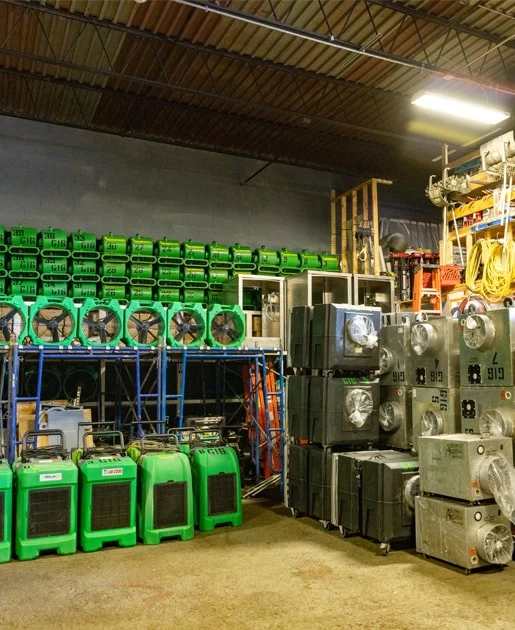
From there, we extract standing water using industrial-grade equipment, then set up commercial dehumidifiers and air movers to begin structural drying. This isn’t a process you can rush with box fans. Moisture inside wall cavities and under flooring requires days of measured drying, tracked with moisture meters, not guesswork. We document everything throughout — photos, moisture readings, material conditions — because that documentation is what supports your insurance claim and protects you if questions come up later.
Once the space is dry and cleared, any structural restoration — drywall, framing, flooring, or foundation repair — is handled under our Nassau County General Contractor license, with proper permits pulled through Munsey Park’s village building department. You get one team, one point of contact, and one process from start to finish.
Basement Flooding Remediation Services near Munsey Park, NY
Built for Pre-War Homes, Not Cookie-Cutter Cleanups
Flooded basement cleanup in Munsey Park isn’t a straightforward extraction job — and any company telling you otherwise hasn’t spent much time in these homes. The combination of older construction, high groundwater, and the architectural character the village actively protects means the work has to be done carefully, correctly, and by contractors who are licensed for everything they might encounter.
What’s included in a full-scope flooded basement cleanup with us: emergency water extraction, structural drying with commercial equipment, moisture mapping and documentation, mold assessment and remediation under our NYS DOL Mold License, asbestos and lead evaluation and handling under our NYS DOL Asbestos and USEPA Lead certifications, insurance claim documentation support, and complete structural restoration under our Nassau County General Contractor license. If your flooding involved sewage backup — which happens in older Nassau County properties on cesspool systems during heavy rain — we handle Category 3 biohazard cleanup as well. That’s a meaningfully different scope than a standard water extraction call, and it requires licensed protocols, not just extra cleaning.
The village of Munsey Park requires building permits for structural work through its own building department at 516-365-7790, separate from Nassau County. We handle that process. You shouldn’t have to navigate permit applications while you’re also managing an emergency.
Does my Munsey Park home likely have asbestos in the basement?
If your home was built between the late 1920s and the 1950s — which covers most of the original housing stock in Munsey Park — there’s a meaningful probability that asbestos-containing materials are present somewhere in the basement. The most common locations are floor tiles, the mastic adhesive used to install them, pipe insulation wrapping around older heating and plumbing systems, and certain types of ceiling and wall insulation used in that era.
The critical issue during a flood is disturbance. Asbestos materials that are intact and undisturbed generally don’t pose an immediate risk. But when floodwater soaks through floor tiles, loosens pipe insulation, or saturates older building materials, those materials can become compromised — and at that point, handling them requires a contractor with a specific NYS DOL Asbestos license. We hold that license. We assess for asbestos presence as part of our initial inspection on every job in a pre-WWII home, so you’re not finding out about a problem after someone has already made it worse.
How quickly does mold actually start growing after a basement flood?
Mold can begin developing within 24 to 48 hours in the right conditions — and a wet basement in a Munsey Park home from the 1930s or 1940s offers exactly those conditions. Older construction typically includes wood framing, plaster walls, and cellulose-based insulation, all of which are highly organic and extremely susceptible to mold colonization when they stay wet.
The EPA recommends starting cleanup within 24 to 48 hours. The widely referenced 72-hour window is real, but it’s a ceiling, not a comfortable deadline. Once mold takes hold in the wall cavities of an older Munsey Park home, you’re no longer dealing with a water damage job — you’re dealing with a mold remediation project, which is a different scope, a different cost, and a different timeline entirely. The fastest thing you can do after a basement flood is call a company that can respond immediately and bring the right equipment, not schedule an appointment for later in the week.
Will my homeowners insurance cover basement flooding in Munsey Park?
It depends entirely on what caused the flooding, and the distinction matters a lot. Standard homeowners insurance typically covers sudden, accidental water damage — a burst pipe, a failed water heater, or an appliance malfunction. What it generally does not cover is groundwater flooding, surface water intrusion, or water that entered your home from outside during a storm. That type of flooding requires a separate flood insurance policy, typically through FEMA’s National Flood Insurance Program.
For Munsey Park homeowners, sump pump failure is a particularly common scenario — and whether it’s covered depends on whether you have a water backup endorsement on your policy. Many homeowners don’t realize they’re missing that endorsement until they file a claim and get denied. Throughout every job, we document the damage thoroughly — photos, moisture readings, material conditions — so that whatever your coverage situation is, you have the professional documentation needed to support your claim. We can also help you understand what you’re looking at before you file, so you’re not making a costly mistake on the front end.
What causes most basement flooding in Munsey Park specifically?
Sump pump failure is the most documented local cause. Many homes in Munsey Park rely on sump pumps to manage groundwater, and when those pumps fail — whether from a power outage during a nor’easter, mechanical breakdown, or simply being overwhelmed by volume — basements flood quickly. The North Shore’s proximity to Manhasset Bay and Long Island’s naturally high water table mean that sustained heavy rainfall raises groundwater levels faster than many people expect.
Beyond sump pump failure, foundation seepage is common in homes built in the 1920s through 1950s. Older poured concrete and stone block foundations develop cracks over time, and hydrostatic pressure from saturated soil pushes water through those cracks during and after major rain events. Snowmelt in late winter — especially when the ground is still frozen and can’t absorb water — is another seasonal factor. And in some older Nassau County properties on cesspool systems, heavy rainfall can overwhelm the system and push sewage backward through basement drains, which is a Category 3 contamination event requiring full biohazard protocols, not just standard cleanup.
Do I need a permit for basement restoration work in Munsey Park, NY?
Yes — and this is a detail that catches a lot of homeowners off guard. Munsey Park is an incorporated village with its own building department, separate from Nassau County. Any structural work resulting from water damage — replacing drywall, repairing or replacing framing, foundation work, or flooring — requires a building permit through the village’s building department, which you can reach at 516-365-7790.
The village also reviews alterations and additions to ensure they’re consistent with the community’s architectural character, which has been protected since the Metropolitan Museum of Art developed the village in the late 1920s. That means restoration work that affects the structure of your home needs to be done by a licensed general contractor who understands local code — not an unlicensed handyman who will skip the permit process. We hold an active Nassau County General Contractor license and handle the permit process as part of every structural restoration job in Munsey Park. You don’t have to figure out the paperwork while you’re managing a water emergency.
How do I know if the basement is actually dry after cleanup is done?
Visual inspection isn’t enough — and this is one of the most common mistakes homeowners make after a basement flood. A basement can look completely dry while wall cavities, subfloor materials, and insulation are still holding significant moisture. That hidden moisture is what leads to mold growth, structural deterioration, and air quality problems weeks or months after the event, often in a home that the homeowner believed was fully remediated.
The correct way to verify dryness is with calibrated moisture meters and thermal imaging, used to measure moisture content inside walls, floors, and structural materials — not just on surfaces. We track moisture readings throughout the drying process and document them, so you have a verifiable record that the space reached acceptable dryness levels before we closed anything up. In a Munsey Park home worth over $2 million, with older construction that holds moisture differently than modern materials, that documentation isn’t just peace of mind — it’s protection against future liability, insurance disputes, and the far more expensive problems that come from a job that looked finished but wasn’t.