Gold Coast Estates Deserve More Than a Wet-Vac and a Prayer
When your basement floods in Muttontown, you’re not dealing with a small problem. You’re dealing with thousands of square feet, high-end finishes, and a home that deserves a fully licensed team — not a crew that’s winging it.
Water damage in Muttontown moves fast. The village’s glacial terrain and North Shore drainage patterns mean that when the ground saturates — especially during spring snowmelt — hydrostatic pressure builds against foundation walls and finds every weak point. The average home here was built around 1977, and a meaningful share predate modern waterproofing standards entirely. That means water intrusion in Muttontown often isn’t a one-time event. It’s a recurring pattern that needs to be understood and stopped, not just mopped up.
I needed a professional consultation explanation of procedure for safe removal of Asbestos in my apartment complex. Without having an account yet, I was very impressed with the caring, knowledgeable and generous advice offered by Jessica, and will look forward to doing business in the future. Thank you so much! I feel much more informed about a sometimes scary endeavor. Peace. Nancy Silva Mineola, NY.
Mia Munoz
Used this company to clean up some water flood in my house. They were fast and easy to work with.very professional, Would recommend to anyone!
Nini Valle
Great company, had a flood and they responded quickly and efficiently. Billed my insurance company directly. I highly recommend this company!
joe colapietro, jr
I had pipe freeze in my basement right before a snow storm and they made to within an hour to help start the clean up process. They we by our side throughout the entire process and even helped with the insurance company. They did such a great job with the cleanup, repair, remidiation, I contracted them to perform the repairs and finishes in the basement. They came with enough manpower and material to get the job done. Leo and Jessica were nothing but a pleasure to deal with!!
Cristian Arredondo c
I had some water damage in my home and Green Island was able to take care of my issue quickly and effectively. I am very pleased with the work they did. They responded quickly and were very professional.
Michael M
Outstanding service! From the office to the field crew everyone was friendly, helpful and responsive. I highly recommend Green Island Group.
Dry Walls, No Mold, No Callbacks — Done Right the First Time
The moment water gets into your basement, the clock starts. Mold can begin growing in as little as 24 to 72 hours — and in a finished lower level with custom drywall, wood framing, and high-end flooring, the damage compounds fast. Getting the space dry isn’t just about pulling water out. It’s about what happens in the walls, under the floor, and behind the finishes where moisture hides.
What you get on the other side of a proper cleanup is a basement that’s structurally sound, moisture-free, and cleared for whatever comes next — whether that’s a rebuild, an insurance claim, or simply peace of mind. No lingering odor. No hidden mold. No question about whether the job was actually finished.
Licensed Basement Flooding Remediation, Nassau County
Every License the Job Requires — Under One Roof
We’re a full-service disaster restoration and environmental remediation company serving Nassau County, Suffolk County, and the broader New York metro area. When it comes to flooded basement cleanup in Muttontown, the credential stack matters more than most homeowners realize until something goes wrong.
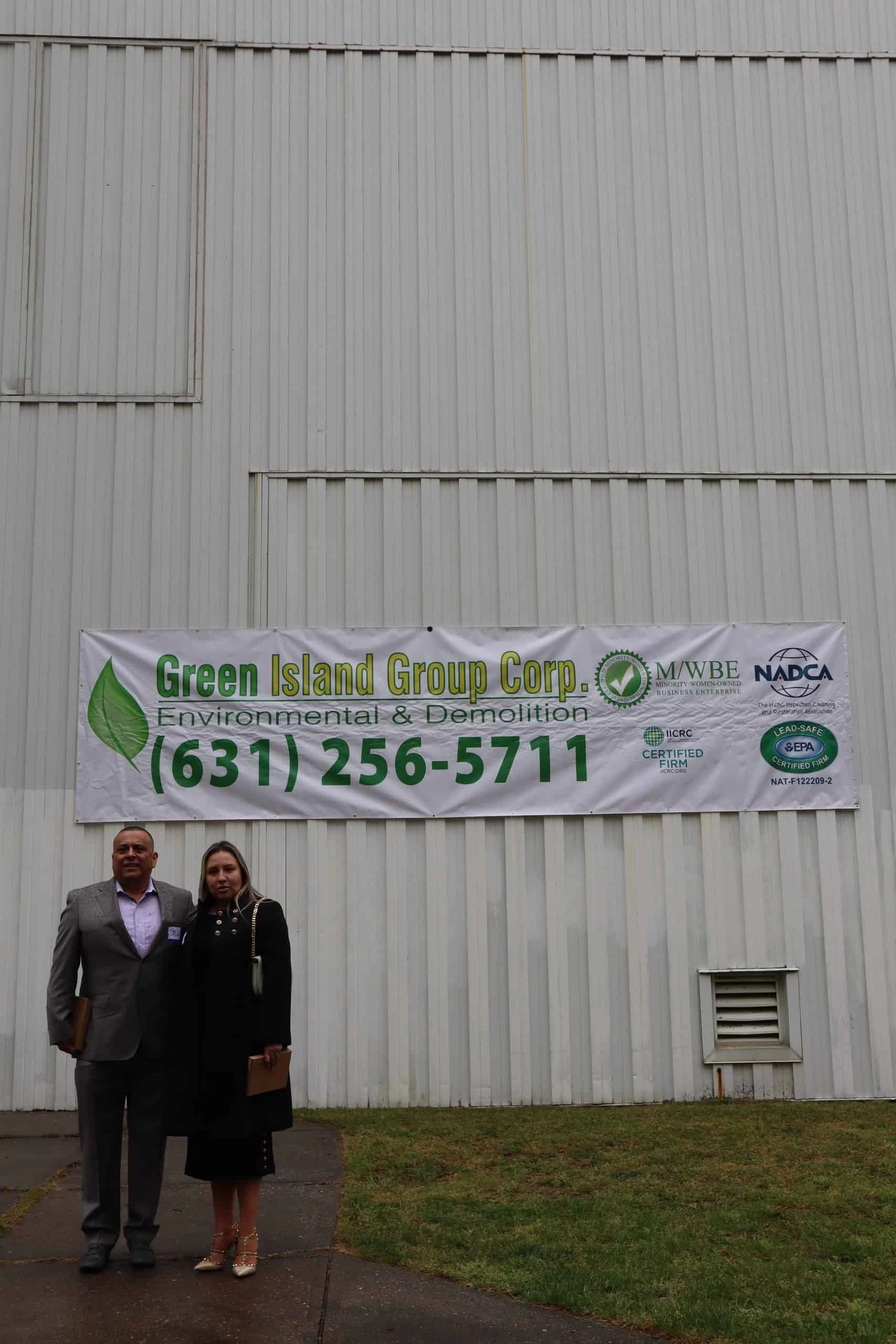
We hold the NYS DOL Mold License, NYS DOL Asbestos License, USEPA Lead and RRP certifications, IICRC Water and Fire Damage certification, and a Nassau County General Contractor license — simultaneously. That’s not common. In fact, most water damage companies hold one or two of those. We hold all of them, which means we can legally and professionally handle every layer of a flood event in your Muttontown home, from the water itself through any hazardous materials that get disturbed, all the way through permitted structural restoration.
For homeowners in communities like Stone Hill at Muttontown — where contractors need to be vetted before they’re even let through the gate — that credential package isn’t a nice-to-have. It’s the baseline.
What Actually Happens From the First Call to the Final Walkthrough
It starts with a call — and you’ll reach a real person, not a voicemail. From there, we dispatch a crew to assess the situation, identify the water source, and determine what category of water you’re dealing with. Clean water from a burst pipe is handled differently than groundwater intrusion or a sewage backup. That distinction matters both for the remediation approach and for how your insurance claim gets documented.
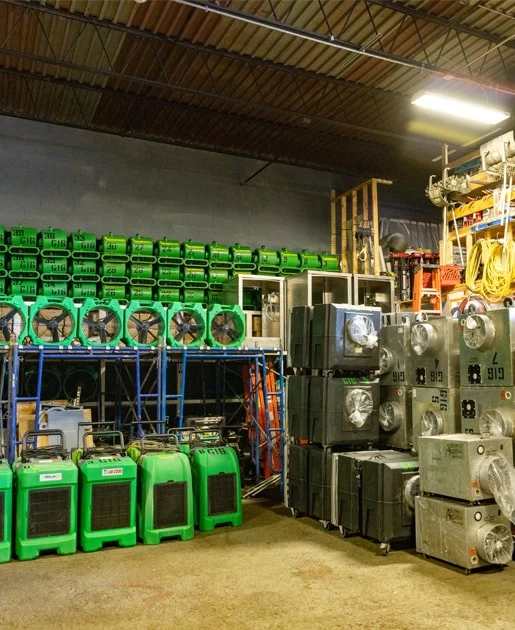
Once the source is identified and contained, industrial extraction equipment pulls the standing water out. From there, it’s not just about what you can see. We use moisture meters and thermal imaging to locate water that has migrated into walls, under flooring, and into insulation — places a visual inspection won’t catch. High-capacity dehumidifiers and air movers run until readings confirm the structure is genuinely dry, not just surface-dry.
For homes in Muttontown built before 1978, the assessment also includes checking whether floodwater has disturbed any regulated materials — asbestos floor tiles, pipe insulation, or lead-based paint are real possibilities in pre-war and mid-century construction. If those materials are present, we’re licensed to handle them legally under New York State law. Once the space is clean, dry, and cleared, any permitted structural restoration — drywall, flooring, framing — can be completed under our Nassau County General Contractor license, with proper permits pulled from the Village of Muttontown.
Built for Estate Homes — Not the Average Basement Job
The average home in Muttontown is over 6,000 square feet. A flooded basement here isn’t a 400-square-foot utility room — it can be a multi-room finished space with custom woodwork, a wine cellar, a home theater, or a guest suite. The scope of what needs to happen after a flood event scales accordingly, and the company handling it needs to be equipped for that scale — not just in equipment, but in licensing.
Our flooded basement cleanup service covers the full chain: emergency water extraction, structural drying with industrial dehumidifiers and air movers, moisture mapping, mold testing and remediation, and full reconstruction of damaged finished spaces. If your home is in one of Muttontown’s gated communities — Stone Hill or The Legend — our licensing and insurance documentation is exactly what HOA management and gatehouse security require before any contractor is cleared to work on the property.
Insurance assistance is part of our process as well. We document damage thoroughly and communicate with carriers professionally, which matters when you’re dealing with a high-value property and a policy that needs to be handled correctly. From the first extraction to the final permitted inspection, the entire scope stays with one team — no subcontractor gaps, no finger-pointing, no incomplete handoffs.
How quickly does mold grow after a basement floods in Muttontown?
Mold can begin growing within 24 to 72 hours of water exposure — and that timeline doesn’t slow down because your home is large or well-built. In Muttontown, where finished basements often include drywall, wood framing, carpet, and custom millwork, the organic materials that mold feeds on are everywhere. The bigger the finished space, the more surface area is at risk.
What makes this especially important on the North Shore is the seasonal flooding pattern. Spring snowmelt combined with heavy rain events can saturate the glacial soils around your foundation quickly, and if water intrusion goes unnoticed for even a day — say, in a lower level that isn’t checked daily — you can cross that 72-hour threshold before you’ve even made a call. Getting a licensed remediation team on-site fast isn’t just about cleanup. It’s about keeping a water problem from becoming a mold problem, which is a categorically different and more expensive situation to resolve.
Does homeowners insurance cover flooded basement cleanup in Nassau County?
It depends on the cause of the flooding, and this is one of the most common points of confusion homeowners run into. Standard homeowners insurance typically covers sudden and accidental water events — a burst pipe, a failed water heater, a washing machine overflow. What it generally does not cover is flooding from groundwater, storm surge, or surface water that enters from outside. That type of flooding requires a separate flood insurance policy, often through the National Flood Insurance Program.
For Muttontown homeowners, the distinction matters because the most common flooding mechanisms here — hydrostatic pressure from saturated soils, sump pump failure during a heavy rain event, or stormwater that overwhelms a drainage system — can fall into a gray area between the two coverage types. Having a certified restoration company like ours document the damage properly and communicate the cause clearly to your carrier can make a significant difference in how your claim is evaluated. Thorough documentation from an IICRC-certified team carries weight with adjusters in a way that a handyman’s estimate simply doesn’t.
My Muttontown home was built in the 1960s — is asbestos a concern after a basement flood?
Yes, and it’s worth taking seriously. Homes built before the 1980s — and especially those built in the 1950s and 1960s — commonly contain asbestos in floor tiles, pipe insulation, ceiling materials, and joint compound. In a dry, undisturbed state, those materials are generally not an immediate hazard. But when floodwater saturates them, breaks them apart, or causes them to crumble, the situation changes. Disturbed asbestos becomes airborne, and airborne asbestos is a regulated health hazard under New York State law.
The legal requirement in New York is clear: asbestos remediation must be performed by a contractor holding a NYS DOL Asbestos License. Most water damage cleanup companies do not hold that license, which means they either leave the problem behind or handle it without the proper credentials — both of which create liability for the homeowner. We hold the NYS DOL Asbestos License and can legally assess and remediate asbestos-containing materials as part of the same flooded basement cleanup scope, without requiring you to coordinate a separate abatement contractor.
What's the difference between water extraction and actually drying out a basement?
Water extraction removes what you can see — the standing water on the floor. Structural drying addresses everything you can’t see, and that’s where most of the real damage lives. Moisture migrates into concrete block foundations, behind finished drywall, underneath engineered hardwood or tile flooring, and into fiberglass insulation. Once it’s there, it doesn’t evaporate on its own in any reasonable timeframe — especially in a below-grade space with limited airflow.
Professional structural drying uses industrial dehumidifiers and high-velocity air movers to pull moisture out of the building materials themselves, not just the air. Moisture meters and thermal imaging cameras are used to map where water has traveled and confirm when readings return to acceptable levels. In a large Muttontown basement — which may span several rooms and thousands of square feet — this process can take several days of continuous equipment operation. Pulling equipment too early because the floor looks dry is one of the most common mistakes in this industry, and it’s exactly how mold problems develop weeks after a cleanup that seemed complete.
How much does flooded basement cleanup typically cost for a large home?
The range is wide because the variables are significant. For a clean-water event in a smaller unfinished space, costs can start around $1,600. For a contaminated water event — sewage backup, for example — in a large finished basement, total remediation and repair costs can reach $12,000 or well beyond, particularly when structural restoration is involved. Industry averages run roughly $4 to $12 per square foot for the cleanup and drying phase alone.
In Muttontown specifically, where basements are often finished with high-end materials and the spaces themselves are large, the cost of restoration is shaped by what was in the space before the water arrived. Replacing standard builder-grade drywall is one thing. Restoring custom millwork, hardwood flooring, or a finished wine room is another. The more accurate framing for a Muttontown homeowner isn’t “how much does cleanup cost” — it’s “what is the cost of incomplete cleanup.” Mold remediation after a failed drying job, unpermitted repairs that fail inspection, or hazmat issues left unaddressed all cost significantly more to fix than getting the right team in from the start.
Can a contractor get access to work inside Stone Hill at Muttontown during an emergency?
Stone Hill at Muttontown is a double-gated community with 24-hour manned security — which means any contractor arriving on-site needs to be verifiable before they’re cleared through. In a non-emergency situation, that means pre-approval through the HOA. In a middle-of-the-night emergency, it means the contractor needs to have documentation ready: licensing, insurance certificates, and a clear explanation of the scope of work.
Our full credential package — NYS DOL Mold and Asbestos licenses, USEPA Lead certification, IICRC Water Damage certification, and Nassau County General Contractor license — is exactly the kind of documentation gatehouse staff and HOA management are looking for. An unlicensed or under-credentialed contractor doesn’t just do a worse job; in a community like Stone Hill, they may not get through the gate at all. When you’re dealing with a flooded basement at 2 a.m. and every hour counts, having a company that can clear security and get to work immediately is not a minor detail — it’s the whole difference.