When the Nissequogue River Rises, Your Basement Shouldn't Pay for It
Groundwater flooding along the Nissequogue River corridor moves fast and so does mold. We dispatch licensed crews 24/7 to get on-site before the damage compounds.
I needed a professional consultation explanation of procedure for safe removal of Asbestos in my apartment complex. Without having an account yet, I was very impressed with the caring, knowledgeable and generous advice offered by Jessica, and will look forward to doing business in the future. Thank you so much! I feel much more informed about a sometimes scary endeavor. Peace. Nancy Silva Mineola, NY.
Mia Munoz
Used this company to clean up some water flood in my house. They were fast and easy to work with.very professional, Would recommend to anyone!
Nini Valle
Great company, had a flood and they responded quickly and efficiently. Billed my insurance company directly. I highly recommend this company!
joe colapietro, jr
I had pipe freeze in my basement right before a snow storm and they made to within an hour to help start the clean up process. They we by our side throughout the entire process and even helped with the insurance company. They did such a great job with the cleanup, repair, remidiation, I contracted them to perform the repairs and finishes in the basement. They came with enough manpower and material to get the job done. Leo and Jessica were nothing but a pleasure to deal with!!
Cristian Arredondo c
I had some water damage in my home and Green Island was able to take care of my issue quickly and effectively. I am very pleased with the work they did. They responded quickly and were very professional.
Michael M
Outstanding service! From the office to the field crew everyone was friendly, helpful and responsive. I highly recommend Green Island Group.
A Dry Basement and a Clean Bill of Health for Your Home
When a basement floods in Nissequogue, the visible water is only part of the problem. The real issue is what’s happening inside your walls, under your flooring, and behind your foundation especially in the older estates and historic colonials that define this village. Moisture trapped in those cavities becomes mold within 24 to 48 hours, and mold in a $1.2 million home is not a cosmetic issue. It’s a health risk, a structural risk, and a serious threat to your property value.
What you get on the other side of a properly executed cleanup is more than a dry floor. You get documented moisture readings showing the job was done to IICRC standards which matters when your insurance adjuster is reviewing the claim. You get a basement that has been dried, decontaminated, and cleared of any contamination that came in with the water. And if the flooding involved the Nissequogue River or tidal sources from the Sound or Stony Brook Harbor, that water is classified as Category 3 meaning it carries biological contaminants that require a licensed environmental response, not just a shop vac and a dehumidifier.
The difference between a fast, professional cleanup and a delayed one is often measured in thousands of dollars. Waiting past 72 hours typically adds $2,000 to $8,000 in mold remediation costs on top of the original water damage bill. In a village where the water table can rise from groundwater pressure alone without any surface flooding visible outside acting quickly isn’t just smart. It’s the only move that protects what you’ve built here.
Licensed Basement Flooding Remediation Nissequogue NY
Every License the Job Requires No Exceptions, No Subcontractors
We’ve been handling water damage, environmental remediation, and full restoration work across Suffolk County for over 12 years. We’ve completed more than 5,000 projects across New York State including extensive work throughout the Smithtown corridor and the Nissequogue River watershed, where the flooding dynamics are specific and the regulatory environment is more demanding than most of Long Island.
That regulatory piece matters in Nissequogue. Work near the village’s tidal wetlands or within 150 feet of the Nissequogue River may require NYSDEC permits in addition to a village building permit. Certificates of Occupancy here can require Suffolk County Board of Health certification and Village Engineer sign-off on drainage. We hold a Suffolk County General Contractor license, a NYS DOL Mold license, a NYS DOL Asbestos license, and USEPA Lead and RRP certifications the full stack required to legally and properly handle a flood event in this environment, from first extraction through final reconstruction.
Our CEO Jessica Dussan and VP Leo Torres lead every project. They’re reachable by name, and their names are attached to the result. That’s not marketing it’s confirmed in independent customer reviews, and it’s the kind of accountability that matters when you’re protecting a property of this significance.
From the First Call to a Signed Certificate of Occupancy
The moment you call, our response starts. We operate 24 hours a day, every day of the year because flooding along the Nissequogue River corridor doesn’t wait for business hours, and neither do we. A crew is dispatched immediately, and the first thing that happens on-site is an assessment of the water source and category. That distinction matters: water from a burst pipe is handled differently than water that has entered from groundwater pressure, river overflow, or tidal surge from the Sound. Each source carries different contamination risks and requires different protocols.
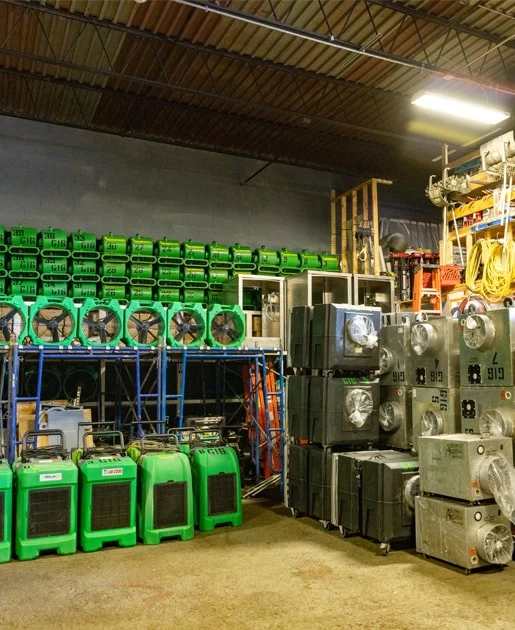
Once the source is identified and controlled, extraction begins using industrial-grade equipment not consumer dehumidifiers. Every affected surface is measured with calibrated moisture meters before and after drying to establish a documented baseline. This documentation isn’t just for our records; it’s what your insurance carrier needs to process the claim correctly and completely. We bill insurance directly, which removes the back-and-forth from your plate during an already stressful situation.
If the scope extends beyond water extraction mold remediation, asbestos testing in older building materials, structural drying, drywall replacement, or drainage improvements we handle all of it under one contract. In Nissequogue, where building permits require NYSDEC sign-off for work near wetlands or the river, having a licensed general contractor managing the full scope means your path to a Certificate of Occupancy is straightforward, not complicated by gaps between subcontractors who don’t communicate with each other.
Flooded Basement Cleaning and Mold Remediation Nissequogue
Built for North Shore Homes, Not Generic Flood Calls
Flooded basement cleanup in Nissequogue requires a different level of preparation than a standard water call. The village sits on three sides of water exposure the Nissequogue River to the west, Long Island Sound to the north, and Stony Brook Harbor to the east and its glacial till soils drain slowly, meaning groundwater can build hydrostatic pressure against foundation walls even when there’s no visible surface flooding. The homes here are also older, often historically significant, and may contain asbestos pipe insulation, lead paint, or aging drainage systems that become environmental concerns the moment floodwater contacts them.
Every flooded basement cleanup we handle starts with a full assessment: water category, moisture penetration depth, material composition of affected surfaces, and any environmental hazards present. From there, we define the scope honestly what needs to come out, what can be dried in place, and what the permit requirements look like given the specific location of the property within the village. For homes near the river or the village’s tidal wetland boundaries, that may include coordination with NYSDEC and the village building department before reconstruction begins.
We offer water extraction and structural drying, sewage backup decontamination, mold remediation, asbestos and lead abatement, complete drywall and flooring restoration, and general contractor reconstruction with Suffolk County licensing under one roof. Most homeowners in Nissequogue spend between $3,000 and $8,000 on flooded basement cleanup depending on the scope and given what these properties are worth, that investment is straightforward when the alternative is hidden mold, a failed CO inspection, or a denied insurance claim.
What causes basement flooding in Nissequogue, and is it different from other towns?
Yes and the difference is meaningful. Most Long Island towns deal with basement flooding primarily from storm runoff or burst pipes. Nissequogue has those risks too, but it also sits directly on the Nissequogue River, which is the largest tributary to Long Island Sound on all of Long Island and is entirely groundwater-fed. When prolonged rainfall saturates the watershed, the river rises from below not just from surface runoff and groundwater pressure builds against foundation walls across Nissequogue, including properties that have no direct river frontage.
Suffolk County’s own planning documents identify the Northeast Branch of the Nissequogue River Basin as one of the most widely recognized areas affected by shallow groundwater flooding in the county, with documented flooding events going back to 1936. The glacial till soils of the North Shore drain more slowly than the sandy outwash deposits found elsewhere on Long Island, which compounds the problem. Add Nissequogue’s coastal exposure to Long Island Sound and Stony Brook Harbor, and you have a multi-vector flooding risk that requires a contractor who understands the specific hydrology of this area not just a generic flood response team.
How quickly does mold grow after a basement floods, and why does timing matter so much?
Mold begins growing within 24 to 48 hours of a flooding event. By 72 hours, active mold colonies can be established inside wall cavities, under flooring, and in insulation areas that aren’t visible during a surface inspection. In Nissequogue’s older housing stock, where walls may contain materials that hold moisture longer than modern construction, that window closes even faster than it would in a newer build.
The financial stakes of waiting are real. Delaying professional cleanup past the 72-hour mark typically adds $2,000 to $8,000 in mold remediation costs on top of the original water damage restoration bill. Mold remediation in New York State also requires a NYS DOL Mold license, which means not every contractor who shows up with a dehumidifier is legally permitted to handle it. We hold that license and can address both the water damage and any resulting mold under one scope of work.
Does homeowners insurance cover a flooded basement in Nissequogue, NY?
It depends entirely on the source of the water, and that distinction is where most homeowners get surprised. Standard homeowners insurance typically covers sudden and accidental water damage a burst pipe, a failed water heater, an appliance malfunction. It generally does not cover flooding from external sources, including river overflow, storm surge from Long Island Sound, or groundwater seepage through foundation walls. That type of flooding is covered by a separate flood insurance policy, typically through FEMA’s National Flood Insurance Program.
In Nissequogue, where the village’s own zoning code designates Coastal High-Hazard Areas per FEMA Flood Insurance Rate Maps, and where groundwater flooding from the Nissequogue River Basin is a documented and recurring event, understanding which policy applies to your specific loss is critical before the cleanup begins. We document the water source, water category, and extent of damage from the first moment on-site exactly the way insurance carriers need it documented to process the claim correctly. We bill insurance directly and work with adjusters throughout the process so you’re not navigating that conversation alone.
Is the water that enters my basement from the Nissequogue River safe to handle myself?
No and this is one of the most important distinctions in the entire cleanup process. Water that enters a basement from river overflow, tidal surge, or groundwater that has passed through soil and drainage systems is classified as Category 3 water under IICRC S500 standards. Category 3 water sometimes called blackwater contains biological contaminants, bacteria, and potentially sewage. It is not safe to handle without proper protective equipment and OSHA-compliant decontamination protocols.
This is especially relevant in Nissequogue given the village’s proximity to the Nissequogue River, its tidal wetlands, and Long Island Sound. During significant storm events like the August 2024 flooding that caused the Nissequogue River to crest and break a dam, requiring emergency water rescues of residents the water entering basements along the river corridor is definitively Category 3. Attempting to clean that up with consumer equipment and no protective protocol is a health risk. It also creates problems with your insurance claim, because carriers require documented Category 3 handling procedures to process those losses correctly. Our team arrives equipped and trained for Category 3 response from the first call.
Do I need a permit to repair my basement after a flood in Nissequogue?
For basic water extraction and drying removing standing water and drying affected surfaces a permit is generally not required. But once the scope extends to structural work, drywall removal and replacement, drainage modifications, or any reconstruction, Nissequogue’s building permit requirements come into play. The village’s building permit process is more involved than in most surrounding communities. Certificates of Occupancy can require Suffolk County Board of Health certification, Village Engineer certification on drainage and site work, and potentially a NYSDEC Tidal Wetlands Act permit if the work is within 100 feet of a wetland boundary or 150 feet of the mean high water line of the Nissequogue River.
That last point is relevant to a significant number of properties in the village given how much of Nissequogue’s land area is adjacent to the river, the Sound, or tidal wetlands. Hiring a contractor who is not properly licensed for general contracting and environmental work in Suffolk County creates real risk not just for the quality of the repair, but for your ability to get a CO when the work is complete. We hold a Suffolk County General Contractor license and the full environmental licensing stack, and we’re familiar with the village’s permit process specifically.
How much does flooded basement cleanup typically cost for a home in Nissequogue?
Most homeowners in Nissequogue spend between $3,000 and $8,000 on flooded basement cleanup, with the average landing around $5,000 for a standard water extraction, structural drying, and restoration scope. The final number depends on the square footage affected, the water category, how long the water was present before cleanup began, and whether any materials insulation, drywall, flooring need to be removed and replaced.
In Nissequogue specifically, a few factors can push costs toward the higher end of that range. Older homes with materials that hold moisture longer and that may contain asbestos or lead paint requiring licensed abatement add scope that a standard cleanup crew isn’t equipped to handle legally. Properties near the river or tidal wetlands that require NYSDEC coordination before reconstruction add time. And any delay past 72 hours adds mold remediation costs on top of the base water damage bill. Given that the median home value in Nissequogue is around $1.2 million, a properly executed cleanup at $5,000 to $8,000 represents less than one percent of the asset being protected. The more relevant cost question isn’t what the cleanup costs it’s what an incomplete or improperly licensed cleanup costs when the mold shows up six weeks later or the CO gets held up.